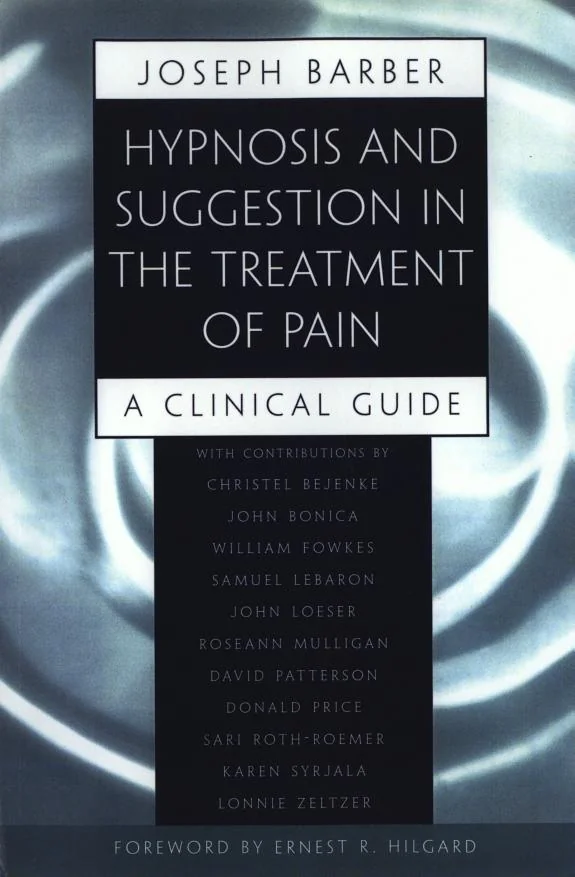
Hypnosis and Suggestion in the Treatment of Pain: A Clinical Guide
 78
78

Hypnosis and Suggestion in the Treatment of Pain: A Clinical Guide
Christel J. Bejenke's compilation, *Hypnosis and Suggestion in the Treatment of Pain*, arrives with the sober authority of 13 university scholars, aiming to elevate hypnosis from the fringes to a recognized analgesic. Its strength lies in this academic rigor, presenting a robust case for hypnotic pain relief grounded in medical disciplines like anesthesiology and psychiatry. The discussion on evaluating patients with chronic pain, particularly the nuanced approach to cancer pain, offers valuable clinical direction. However, the work occasionally feels weighted by its academic origins, with some sections more theoretical than immediately practical for a busy practitioner. A notable point is the exploration of how suggestion can reframe the patient's perception of pain, a concept Bejenke presents with clear evidence from clinical studies. While it successfully argues for hypnosis as a legitimate pain treatment, its depth in detailing specific hypnotic induction techniques for each pain type could have been expanded. It’s a vital text for understanding the *why* of hypnotic analgesia, less so for the granular *how* in every instance.
📝 Description
78
Published in 1996, this clinical guide details hypnosis as a potent analgesic for pain management.
Christel J. Bejenke's 1996 guide, Hypnosis and Suggestion in the Treatment of Pain, presents hypnosis as a direct method for pain relief. The book details how to assess patients experiencing chronic pain and adapt hypnotic techniques for specific conditions like headaches, cancer pain, and burns. It combines insights from anesthesiology, psychiatry, and family medicine to establish hypnosis as a valid analgesic tool, moving beyond its perception as mere entertainment.
This work is aimed at medical practitioners, including anesthesiologists, psychiatrists, psychologists, and therapists, who want to incorporate psychological methods into their pain management strategies. It also provides valuable information for academics and researchers studying pain and psychophysiology, offering a look at the theoretical basis and practical uses of hypnotic analgesia. The book emerged during a time when the medical field was more open to understanding psychosomatic influences and the mind-body connection.
While framed as a clinical guide, Bejenke's work touches upon the esoteric tradition of exploring altered states of consciousness for healing. The focus on suggestion and the manipulation of subjective experience aligns with historical practices that viewed the mind as a direct interface with physical well-being. This approach resonates with traditions that emphasize the power of focused intention and inner states to influence bodily sensations, positioning the practitioner as a guide to an internal landscape of healing, rather than solely relying on external agents.
💡 Why Read This Book?
• Learn specific hypnotic strategies for managing diverse pain conditions, from cancer pain to burn pain, as detailed by university scholars in anesthesiology and psychiatry. • Understand the 1996 academic perspective on hypnosis as a legitimate analgesic, moving beyond skepticism to clinical application. • Gain insights into psychological assessment techniques for chronic pain patients, enabling more effective integration of hypnotic treatments.
⭐ Reader Reviews
Honest opinions from readers who have explored this book.
❓ Frequently Asked Questions
What is the primary focus of 'Hypnosis and Suggestion in the Treatment of Pain'?
The book's primary focus is on the clinical application of hypnosis and suggestion as therapeutic tools for pain management, presenting it as a valid analgesic approach supported by research from anesthesiology and psychiatry.
Who authored 'Hypnosis and Suggestion in the Treatment of Pain'?
The book was compiled and edited by Christel J. Bejenke, featuring contributions from 13 university scholars in fields such as anesthesiology, psychiatry, and family medicine.
When was 'Hypnosis and Suggestion in the Treatment of Pain' first published?
The first edition of 'Hypnosis and Suggestion in the Treatment of Pain' was published on June 4, 1996.
What types of pain does the book address?
The book addresses various types of pain, including cancer pain, headaches, dental pain, and burn pain, exploring tailored hypnotic treatments for each.
What is the academic background of the contributors?
The contributors are university scholars from the fields of anesthesiology, psychiatry, and family medicine, lending an academic and clinical perspective to the study of hypnosis in pain treatment.
What is the core argument regarding hypnosis in pain treatment?
The core argument is that hypnosis should be viewed not as a fringe practice but as a legitimate and effective form of analgesia, supported by psychological assessment and clinical implementation.
🔮 Key Themes & Symbolism
Hypnotic Analgesia as Standard Care
This volume champions the integration of hypnosis into mainstream pain management, challenging historical skepticism. It presents a compelling case for viewing hypnotic states as potent analgesic tools, supported by academic research from disciplines like anesthesiology and psychiatry. The work details how to assess patients and implement these techniques for various chronic pain conditions, moving beyond anecdotal evidence to clinical application. It argues for a rethinking where hypnotic interventions are considered alongside pharmacological and physical therapies.
Psychological Assessment of Pain
A critical element is the emphasis on thorough psychological assessment of individuals experiencing chronic pain. The book outlines methodologies to understand a patient's pain perception, history, and psychological profile, which are crucial for tailoring effective hypnotic treatments. This approach recognizes that pain is a complex phenomenon influenced by mental and emotional states, requiring a holistic evaluation before therapeutic intervention. The goal is to identify how best to apply suggestion and hypnosis for optimal patient outcomes.
Targeted Hypnotic Interventions
The guide provides specific frameworks for applying hypnosis to distinct pain syndromes. It explores nuanced strategies for conditions such as cancer pain, where psychological distress is often intertwined with physical discomfort, and acute pain like that from burns or dental procedures. By detailing how to adapt hypnotic approaches for these varied contexts, the book offers practical insights for clinicians aiming to enhance pain relief and improve the quality of life for their patients.
Interdisciplinary Medical Perspectives
The collaborative nature of this work, featuring contributions from 13 university scholars across anesthesiology, psychiatry, and family medicine, is central to its authority. This interdisciplinary approach underscores the complex nature of pain and its treatment. By drawing on diverse medical expertise, the book offers a comprehensive view of hypnosis, bridging the gap between psychological theory and clinical practice in pain management, and fostering a more integrated understanding of patient care.
💬 Memorable Quotes
Direct passages from the work, attributed to the author.
“Hypnosis as a form of analgesia”
— This phrase captures the core argument that hypnosis is not merely a psychological curiosity but a tangible method for reducing pain perception, comparable to established medical treatments.
“Psychological assessment and treatment of pain”
— This highlights the book's focus on understanding the mental and emotional dimensions of pain as a precursor to applying hypnotic techniques for relief.
“Evaluating the patient with chronic pain”
— This points to the practical, clinical aspect of the guide, emphasizing the need for careful diagnosis and assessment before implementing hypnotic therapies.
“Cancer pain, headache, dental pain, and burn pain”
— These specific examples demonstrate the broad applicability of hypnotic techniques discussed within the book across a range of painful conditions.
“New attitudes toward hypnosis”
— This suggests the book aims to shift perceptions and encourage greater acceptance and utilization of hypnosis within conventional medical practice.
🌙 Esoteric Significance
Tradition
While not explicitly occult, this work touches upon the esoteric tradition of mind-over-matter and the manipulation of consciousness for physical effect, a lineage present in Hermeticism and certain branches of Western esotericism. It aligns with the principle of 'As Above, So Below' by asserting that internal states (consciousness) can directly influence external reality (physical sensation of pain). It departs from purely mystical interpretations by grounding these principles in empirical, clinical data, bridging esoteric concepts with scientific methodology.
Symbolism
The act of suggestion within hypnosis can be seen as a form of symbolic language, where the hypnotist uses words and imagery to bypass the conscious, critical mind and speak directly to the subconscious. This echoes alchemical processes of transformation, where symbolic language is used to effect change. The 'pain' itself can be viewed as a symbolic manifestation of deeper imbalances or distress, which hypnosis seeks to reframe or resolve through altered perception, akin to a symbolic healing ritual.
Modern Relevance
Contemporary fields such as mindfulness-based stress reduction (MBSR), cognitive behavioral therapy for pain (CBT-P), and even certain somatic therapies implicitly or explicitly draw from the principles explored in this book. Thinkers and practitioners in integrative medicine and pain psychology continue to build upon the foundation laid by works like Bejenke’s, seeking to combine psychological and pharmacological approaches. The ongoing research into neuroplasticity and the brain's ability to modify pain pathways further validates the core concepts presented in this 1996 guide.
👥 Who Should Read This Book
• Medical practitioners (anesthesiologists, psychiatrists, family physicians) seeking to incorporate evidence-based psychological techniques into pain management protocols. • Psychologists and therapists specializing in chronic pain, looking for structured approaches to utilizing hypnosis and suggestion. • Researchers in pain management and psychophysiology interested in the intersection of mind-body interaction and clinical application.
📜 Historical Context
The publication of *Hypnosis and Suggestion in the Treatment of Pain* in June 1996 occurred at a time when the mind-body connection was increasingly recognized in academic medicine, though skepticism towards practices like hypnosis persisted. This volume directly confronted that skepticism by assembling 13 university scholars from anesthesiology, psychiatry, and family medicine. Their collective work aimed to establish hypnosis as a valid analgesic tool, challenging the prevailing reliance on purely pharmacological interventions. This era saw a rise in psychoneuroimmunology and psychosomatic medicine, making the book’s interdisciplinary approach timely. While not facing overt censorship, works advocating for alternative or complementary therapies often navigated a cautious reception within established medical institutions. The compilation effectively contributed to the ongoing discourse on integrating psychological techniques into comprehensive pain management strategies, aligning with broader trends in late 20th-century medical research.
📔 Journal Prompts
Hypnotic analgesia as a therapeutic approach: initial thoughts on its place in modern medicine.
The role of psychological assessment in chronic pain management: key considerations.
Specific applications of hypnosis for cancer pain: potential benefits and challenges.
Revisiting attitudes towards hypnosis: how can skepticism be overcome in clinical settings?
The effectiveness of suggestion in altering pain perception: personal reflections.
🗂️ Glossary
Hypnotic Analgesia
The reduction or elimination of pain perception through the induction of a hypnotic state, achieved via suggestion and focused attention.
Psychological Assessment
The process of evaluating a patient's mental and emotional state, including their pain history, coping mechanisms, and psychological factors influencing their experience of pain.
Chronic Pain
Pain that persists for an extended period, typically defined as lasting longer than three to six months, often requiring multidisciplinary treatment approaches.
Suggestion
In hypnosis, a communication or idea presented to the subject, intended to influence their perceptions, feelings, thoughts, or behaviors.
Anesthesiology
The branch of medicine concerned with anesthesia, including its administration and the physiological effects on the patient, often relevant in pain management.
Psychiatry
The medical specialty devoted to the diagnosis, prevention, study, and treatment of mental disorders, often overlapping with pain management due to psychological components.
Family Medicine
A medical specialty focused on providing continuing, comprehensive healthcare for the individual and family across all ages, genders, diseases, and parts of the body, often serving as a primary point of care for pain management.
This book appears in 1 collection
🔮 Readers Also Liked
Browse all →









From the “Hypnosis” Collection
View all →









More Free Occult Philosophy Books
View all →