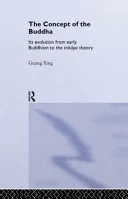
The Concept of the Buddha
 84
84

The Concept of the Buddha
Guang Xing's "The Concept of the Buddha" offers a precise, scholarly examination of the Mahayana trikaya doctrine. The author's strength lies in his methodical breakdown of how this complex philosophy, particularly the Sambhogakaya, evolved. He avoids speculative embellishment, presenting a clear lineage of thought from its origins. A passage detailing the Sambhogakaya's function as an object of devotion, distinct from the historical Buddha, is particularly illuminating. However, the book’s academic rigor, while commendable, can make it dense for the uninitiated; a more extensive glossary for absolute beginners might have enhanced accessibility. Despite this, the work provides a solid scholarly foundation for understanding a pivotal Mahayana concept. It is an essential resource for serious students of Buddhist philosophy.
📝 Description
84
Guang Xing's 2004 study dissects the Mahayana Buddhist doctrine of the Buddha's three bodies.
Guang Xing's "The Concept of the Buddha" examines the Mahayana Buddhist doctrine of the trikaya, or the three bodies of the Buddha. This theory, central to Mahayana philosophy, asserts that a Buddha exists in three distinct forms: the Dharmakaya (truth body), the Sambhogakaya (enjoyment body), and the Nirmanakaya (emanation body). The book traces the historical and philosophical origins of this concept, detailing its evolution within Buddhist thought.
The work is intended for students and scholars of Mahayana Buddhism. Its academic rigor makes it a valuable resource for those seeking a deep understanding of Buddhist philosophical foundations. Individuals interested in comparative religion, Eastern philosophies, and the development of spiritual ideas will also find its analysis beneficial. The trikaya doctrine significantly shapes Mahayana thought, addressing questions about Buddhahood, the Buddha's worldly presence, and the path to enlightenment. Comprehending the trikaya is key to understanding how Mahayana practitioners view the Buddha as an eternal principle rather than solely a historical figure.
A specific focus is placed on the Sambhogakaya, the celestial form of the Buddha inspiring devotion. This body bridges the ultimate reality of the Dharmakaya with the human realm of the Nirmanakaya, playing a vital role in devotional practices.
This study situates itself within the Mahayana tradition, a major branch of Buddhism that developed distinct philosophical and soteriological paths. The trikaya doctrine is a core Mahayana concept, arising from attempts to reconcile the transcendent nature of Buddhahood with the Buddha's historical manifestation and accessibility to practitioners. It addresses complex questions about ultimate reality, enlightened consciousness, and the means by which Buddhas interact with the world and guide beings toward liberation, forming a crucial element of Mahayana contemplative and philosophical systems.
💡 Why Read This Book?
• Gain a precise understanding of the trikaya doctrine, specifically the Sambhogakaya, as detailed in Chapter 3, which illuminates the idealized form of the Buddha central to Mahayana devotion. • Explore the historical development of Buddhist philosophy, tracing how the concept of the three bodies emerged in response to specific philosophical questions discussed in the book's early sections. • Appreciate the philosophical underpinnings of Mahayana Buddhism, learning how the trikaya doctrine functions as a foundational element for later schools and practices, as examined throughout the text.
⭐ Reader Reviews
Honest opinions from readers who have explored this book.
❓ Frequently Asked Questions
What is the primary focus of Guang Xing's "The Concept of the Buddha"?
The book's primary focus is an in-depth analysis of the Mahayana Buddhist concept of the trikaya, or the three bodies of the Buddha (Dharmakaya, Sambhogakaya, and Nirmanakaya), examining its philosophical formation and significance.
When was "The Concept of the Buddha" first published?
The work by Guang Xing was first published in 2005, providing a modern scholarly perspective on ancient Buddhist philosophical concepts.
Is "The Concept of the Buddha" suitable for beginners in Buddhism?
While written accessibly for an academic text, it is best suited for students and scholars of Mahayana Buddhism. Beginners might benefit from supplementary introductory materials on Buddhism first.
What is the significance of the Sambhogakaya in Mahayana Buddhism, according to the book?
The book explains the Sambhogakaya as the celestial, idealized body of the Buddha, serving as the primary object of worship and devotion for Mahayanists, bridging the ultimate and manifest realms.
What foundational Mahayana philosophy does this book explore?
It explores the trikaya theory, which is considered a fundamental pillar of Mahayana philosophy, influencing understanding of Buddhahood and spiritual realization.
Who is the author of "The Concept of the Buddha"?
The author is Guang Xing, a scholar whose work provides an outstanding research text on Mahayana Buddhist philosophy.
🔮 Key Themes & Symbolism
The Trikaya Doctrine
This central theme examines the Mahayana understanding of Buddhahood as manifesting in three bodies: the Dharmakaya (ultimate reality), the Sambhogakaya (celestial enjoyment body), and the Nirmanakaya (earthly emanation body). Guang Xing elucidates how this framework provides a nuanced view of the Buddha's presence, both transcendent and immanent, serving as a reference for Mahayana philosophical and devotional practices. The book details the philosophical necessity and implications of these distinct yet unified aspects of enlightened being.
Sambhogakaya as Object of Devotion
A significant portion of the work is dedicated to the Sambhogakaya, the Buddha's 'enjoyment body' experienced in pure lands. Guang Xing explains its critical role as the idealized, radiant form worshipped by Mahayanists. This body is not merely symbolic but an accessible manifestation that facilitates devotion and spiritual connection, distinct from the historical Buddha's physical presence, thus bridging the gap between ultimate truth and the practitioner's aspiration.
Philosophical Genesis of Buddhahood
The book traces the historical and intellectual currents that led to the formulation of the trikaya theory. It explores the Mahayana need to reconcile the Buddha's ultimate transcendence with his compassionate engagement in the world. By examining the development of these concepts, Guang Xing sheds light on the evolving understanding of enlightened nature and its salvific function within Buddhist thought, particularly from the early centuries CE.
Mahayana Soteriology
Understanding the trikaya is intrinsically linked to Mahayana soteriology – the doctrine of salvation. The book implicitly explores how the different bodies of the Buddha offer various paths and means for beings to attain enlightenment. The Sambhogakaya, in particular, functions as a celestial guide and source of merit, while the Nirmanakaya offers direct teachings, all stemming from the ultimate reality of the Dharmakaya.
💬 Memorable Quotes
Direct passages from the work, attributed to the author.
“The Sambhogakaya is the Buddha to be worshipped by all Mayahanists.”
— This statement highlights the practical and devotional significance of the Sambhogakaya within Mahayana Buddhism. It signifies the idealized, accessible form of Buddhahood that inspires worship and guides practitioners on their spiritual path.
“The trikaya Theory, which is considered the foundation of Mahayana philosophy.”
— This emphasizes the absolute centrality of the three bodies doctrine. It posits that a deep comprehension of the Dharmakaya, Sambhogakaya, and Nirmanakaya is essential for grasping the entire philosophical edifice of Mahayana Buddhism.
“He examines how and why the philosophical concept of three bodies was formed.”
— This points to the book's analytical approach, focusing not just on *what* the trikaya is, but on its historical and intellectual *origins*. It suggests an exploration into the specific questions and needs that prompted Buddhist thinkers to develop this complex doctrine.
“Written in an accessible way, this work is an outstanding research text for students and scholars.”
— This suggests the book balances scholarly depth with clarity. While rigorous enough for academic research, it aims to be understandable, making it a valuable resource for those actively studying Mahayana Buddhism.
“Particularly the Sambhogakaya, which is the Buddha to be worshipped by all Mayahanists.”
— This reiterates the Sambhogakaya's an important role in devotional practice. It underscores that this celestial form is not merely a theoretical concept but a focal point for the religious aspirations and practices of Mahayana Buddhists.
🌙 Esoteric Significance
Tradition
While Mahayana Buddhism is a vast tradition with both exoteric and esoteric dimensions, Guang Xing's work focuses on a philosophical concept that underpins advanced contemplative and devotional practices. The trikaya doctrine itself is not exclusive to esoteric Buddhism but forms the conceptual framework upon which various Vajrayana and Tantric practices, which are more explicitly esoteric, are built. It provides the ontological map for understanding the nature of enlightened mind and manifestation.
Symbolism
The trikaya doctrine is rich in symbolism. The Dharmakaya represents emptiness and ultimate reality, often symbolized by formless space or pure light. The Sambhogakaya is depicted as a radiant, adorned Buddha in celestial realms, symbolizing the fullness of enlightened qualities and the bliss of liberation. The Nirmanakaya, as the historical Buddha or other emanations, symbolizes compassionate action and the direct transmission of Dharma into the world.
Modern Relevance
Contemporary Buddhist scholars and practitioners, particularly within Mahayana and Vajrayana lineages, continue to engage deeply with the trikaya doctrine. Thinkers influenced by figures like Chögyam Trungpa Rinpoche often explore these concepts in relation to meditation and the nature of perception. Modern Buddhist psychology and contemplative science also draw upon the conceptual distinctions within the trikaya to understand states of consciousness and enlightened potential.
👥 Who Should Read This Book
• Students of Mahayana Buddhism: Individuals seeking a scholarly and accessible explanation of the foundational trikaya doctrine, crucial for understanding Mahayana philosophy. • Comparative religion scholars: Researchers interested in the development of religious concepts and the philosophical distinctions between various Buddhist schools and other spiritual traditions. • Advanced practitioners of meditation: Those who wish to deepen their understanding of the nature of Buddhahood and the different manifestations of enlightened presence discussed within Mahayana frameworks.
📜 Historical Context
Published in 2005, Guang Xing's "The Concept of the Buddha" emerges within a contemporary scholarly environment deeply engaged with Buddhist philosophy. The Mahayana trikaya doctrine itself has a long history, evolving significantly from its roots in early Mahayana sutras like the Prajnaparamita and Lotus Sutras, likely developing prominence around the 2nd century CE. It served as a sophisticated response to earlier Buddhist traditions that focused more narrowly on the historical Buddha, Siddhartha Gautama. Scholars like Edward Conze extensively studied these early Mahayana texts, providing a foundation for later analyses like Guang Xing's. The trikaya theory became a critical element distinguishing Mahayana's ontological view of Buddhahood from other Buddhist schools, such as Theravada, which emphasizes the historical Buddha's enlightenment and subsequent passing into Parinirvana.
📔 Journal Prompts
The Sambhogakaya's role in devotion.
The philosophical necessity of the trikaya.
Nirmanakaya as an emanation of ultimate truth.
The relationship between Dharmakaya and Sambhogakaya.
How the trikaya concept shapes Mahayana practice.
🗂️ Glossary
Trikaya
The Mahayana Buddhist doctrine of the three bodies of a Buddha: Dharmakaya (truth body), Sambhogakaya (enjoyment body), and Nirmanakaya (emanation body).
Dharmakaya
The first body of the trikaya, representing the ultimate truth, formless reality, or the essence of Buddhahood itself, beyond conceptualization.
Sambhogakaya
The second body of the trikaya, the celestial or 'enjoyment' body, a radiant form of the Buddha experienced in pure lands, accessible through meditative vision and devotion.
Nirmanakaya
The third body of the trikaya, the 'emanation' body, which manifests in the ordinary world, such as the historical Buddha Siddhartha Gautama, to teach the Dharma.
Mahayana Buddhism
A major branch of Buddhism characterized by its emphasis on the Bodhisattva path and the concept of universal Buddhahood, originating around the 1st century BCE.
Soteriology
The branch of theology concerned with the doctrine of salvation; in Buddhism, it refers to the teachings and practices leading to liberation from suffering and rebirth.
Kaya
Sanskrit word meaning 'body,' 'corporeal form,' or 'aggregate,' used in Buddhism to denote the different aspects or manifestations of a Buddha.