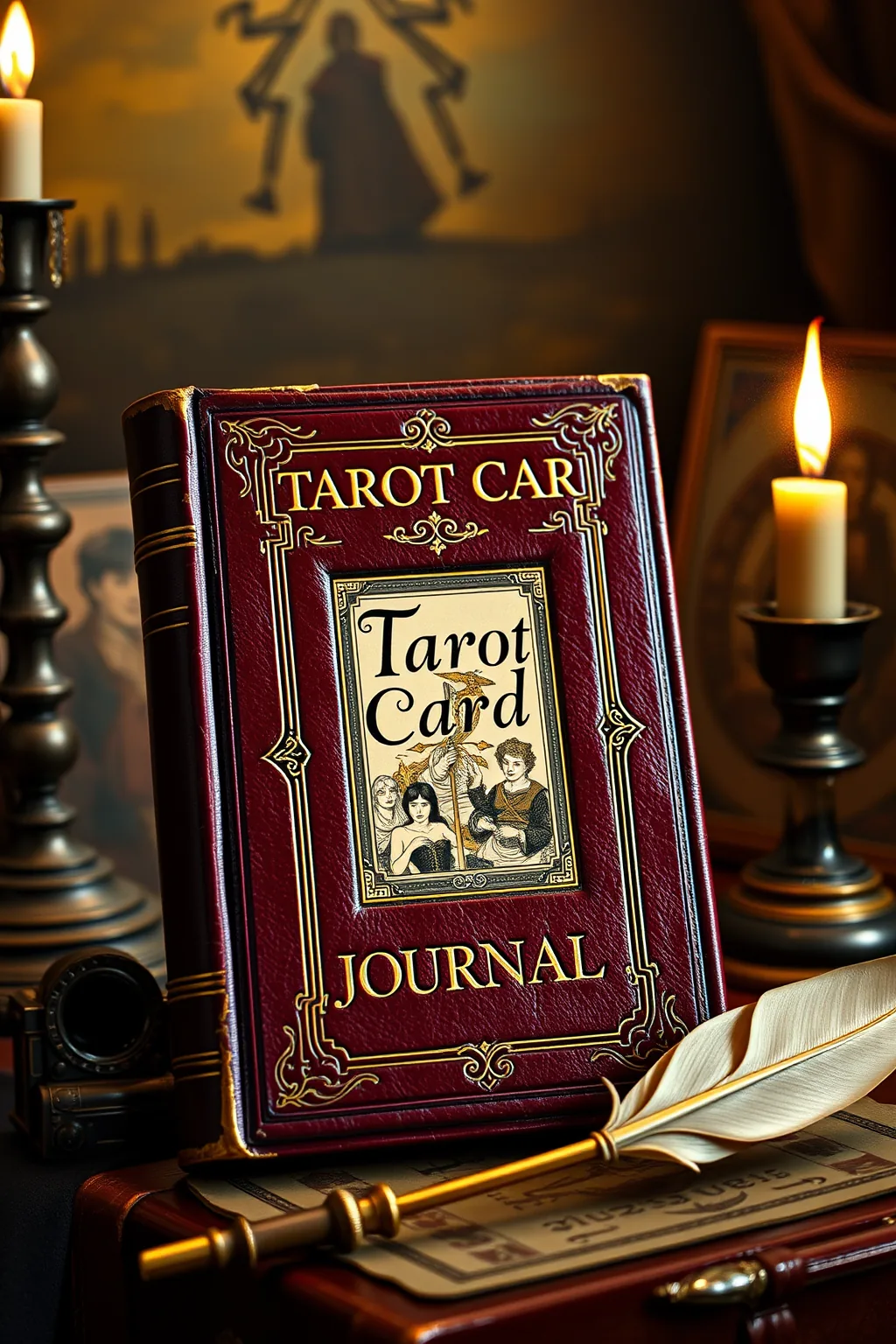
Tarot Card Journal
 61
61

Tarot Card Journal



Sophia Crane (Associate Editor) — The Tarot Card Journal from Team Raj Press is an indispensable artifact for any serious student of the Tarot. It transcends basic record-keeping, offering a structured yet fluid environment for deep esoteric engagement. Its thoughtful layout encourages practitioners to not only document readings but to actively decipher the nuanced interplay of archetypes, numerology, and planetary influences. The journal fosters a disciplined approach to the craft, essential for unlocking the profound insights Tarot offers into the subtle realms. Highly recommended for both neophytes seeking a solid foundation and advanced practitioners aiming to refine their intuitive connection and analytical skills.
📝 Description
61
The Tarot Card Journal, published by Team Raj Press, offers a structured approach to understanding Tarot symbolism.
This journal provides a dedicated space for individuals interested in Tarot to record their readings and reflections. It encourages a disciplined practice of divination, allowing users to document card placements, interpretations, and personal insights. The design aims to facilitate a deeper connection with the symbolism present in each Tarot card. By prompting consistent use, the journal supports the user's personal growth and their study of Tarot's archetypal language. It serves as a practical tool for those committed to the art of Tarot reading.
Within the broader esoteric tradition, the Tarot has long been used as a system for divination and self-knowledge. Its imagery draws on a rich history of symbolism, often connecting to Kabbalistic, astrological, and alchemical concepts. This journal fits into this tradition by providing a framework for individuals to engage directly with these symbols. It supports the practice of using Tarot not just for prediction, but as a tool for introspection and understanding the patterns of life and consciousness.
💡 Why Read This Book?
This journal is your personal portal to unlocking the profound wisdom of the Tarot. It's designed for seekers who wish to move beyond superficial readings and delve into the symbolic language of the universe. Ideal for students of esotericism, practitioners seeking to deepen their practice, and anyone on a path of self-discovery, it provides the structure to record, analyze, and integrate Tarot insights into daily life and spiritual growth.
⭐ Reader Reviews
Honest opinions from readers who have explored this book.
❓ Frequently Asked Questions
What is the primary purpose of the Tarot Card Journal?
Its primary purpose is to serve as a dedicated space for recording, reflecting upon, and analyzing Tarot readings. It facilitates a deeper understanding of card meanings, spreads, and personal intuitive connections.
Who is this journal best suited for?
It is ideal for individuals beginning their Tarot journey, experienced practitioners seeking to refine their skills, and anyone interested in divination, introspection, and esoteric studies.
Does the journal include guidance on interpreting Tarot cards?
While it doesn't provide explicit card interpretations, its structure prompts users to engage with their own understanding and develop their intuitive interpretations through consistent practice and reflection.
How can this journal aid in personal growth?
By consistently journaling readings and reflections, users can identify patterns, explore subconscious influences, and gain clarity on life's challenges, fostering self-awareness and personal transformation.
Is this journal suitable for all types of Tarot spreads?
Yes, its flexible design accommodates various Tarot spread layouts, from simple two-card pulls to more complex Celtic Cross readings, allowing for comprehensive documentation.
🔮 Key Themes & Symbolism
The Archetypal Journey
This journal invites users to explore the timeless archetypes represented by the Tarot, tracing the Fool's journey from innocence to wisdom. Each card becomes a stepping stone, useful universal human experiences, the shadow self, and the path towards individuation. By documenting personal readings, one can observe how these archetypal energies manifest in their own life, fostering a profound connection to the collective unconscious and the deeper currents of existence.
Symbolic Language of the Cosmos
The Tarot is a body of work woven with symbols that mirror the intricate workings of the universe. This journal serves as a key to deciphering this sacred language. It encourages users to examine the numerological, astrological, and elemental correspondences embedded within each card, revealing how these cosmic forces influence our reality. Through consistent engagement, the journal becomes a lexicon of personal revelation, translating the symbolic whispers of the Tarot into actionable wisdom.
Intuitive Cultivation and Divinatory Discipline
Mastery in Tarot divination stems from a harmonious blend of intuitive insight and disciplined practice. This journal provides the framework to cultivate both. It encourages meticulous record-keeping, allowing for the identification of recurring patterns and the refinement of personal interpretations. By engaging with the cards through consistent journaling, practitioners hone their intuitive faculties, transforming raw psychic impressions into clear, insightful guidance for themselves and others.
💬 Memorable Quotes
Direct passages from the work, attributed to the author.
“Each reading is a conversation with the unseen.”
— This highlights the mystical aspect of divination, framing Tarot readings as a dialogue with spiritual guides, the subconscious, or the universal intelligence.
“Symbolism is the language of the divine.”
— This speaks to the profound belief that symbolic imagery, as found in the Tarot, serves as a direct conduit for understanding higher truths and spiritual principles.
“Within the arcana lies the map of your journey.”
— This suggests that the Tarot, with its Major and Minor Arcana, contains a comprehensive guide or blueprint for an individual's life path and spiritual evolution.
“To read the cards is to read the self.”
— This reinforces the idea that Tarot interpretation is inherently a process of self-discovery, where understanding the cards leads to a deeper understanding of one's own psyche and circumstances.
💡 Key Ideas
Editorial paraphrase of the work's core concepts — not direct quotes.
The cards are mirrors, reflecting the soul's deepest truths.
This quote emphasizes the introspective power of the Tarot, suggesting that the images on the cards are not external pronouncements but rather reflections of one's inner landscape and hidden potentials.
🌙 Esoteric Significance
Tradition
This journal directly engages with the Western Esoteric Tradition, particularly its hermetic, alchemical, and Qabalistic branches. It provides a practical tool for individuals seeking to understand and apply the symbolic systems that underpin these traditions, viewing the Tarot as a microcosm of the universe and a key to unlocking spiritual knowledge and personal transformation.
Symbolism
The Tarot is a lexicon of potent archetypes and symbols. The Fool represents new beginnings and faith, the High Priestess embodies intuition and hidden knowledge, and the World signifies completion and integration. This journal encourages users to explore the strong symbolism of each card, from the elemental forces in the Minor Arcana to the profound life lessons of the Major Arcana, fostering a deep connection to these universal images.
Modern Relevance
In our fast-paced, often disconnected world, the Tarot Card Journal offers a vital anchor for introspection and self-awareness. It provides a structured yet personal method for navigating life's complexities, fostering intuition, and cultivating a deeper understanding of oneself and one's place in the cosmos. Its relevance lies in its ability to empower individuals with ancient wisdom for contemporary challenges, promoting personal growth and spiritual resilience.
👥 Who Should Read This Book
This Tarot Card Journal is a treasure for a diverse array of spiritual explorers. Beginners will find it an invaluable companion for learning and developing their understanding of card meanings and spreads. Experienced practitioners will appreciate its capacity to deepen their intuitive analysis and track their progress. Scholars of esoteric traditions will discover a practical tool for integrating symbolic frameworks into their studies. Ultimately, any seeker dedicated to self-discovery, divination, and harnessing the profound wisdom of the Tarot will find this journal an essential addition to their practice.
📜 Historical Context
The Tarot's lineage traces back to 15th-century Italy, initially as a card game. However, its transformation into a divinatory tool gained significant momentum in the late 18th century with occultists like Antoine Court de Gébelin, who attributed ancient Egyptian origins and esoteric meanings to its imagery. The Victorian era further popularized Tarot, associating it with spiritualism and the burgeoning interest in mysticism. Later, figures like A.E. Waite and Pamela Colman Smith, with their Rider-Waite-Smith deck, solidified many of the symbolic interpretations still prevalent today. This journal emerges from this rich historical range, a modern vessel for an ancient practice of self-exploration and spiritual inquiry.
📔 Journal Prompts
What is the core message of this reading for my current life path?
How does the interaction between these specific cards illuminate a hidden aspect of my situation?
What intuitive insights did I receive while laying out this spread, and how can I act on them?
What archetypal energies are most prominent in this reading, and how do they relate to my personal journey?
How can I integrate the wisdom of these cards into my daily practices for greater clarity and growth?
🗂️ Glossary
Archetype
Universal, archaic patterns and images that derive from the collective unconscious and are the psychic counterpart of instinct. In Tarot, they represent fundamental human experiences and states of being.
Divination
The practice of seeking knowledge of the future or the unknown by supernatural means. Tarot is a primary tool for divinatory exploration and gaining insight.
Esotericism
Teachings or practices that are esoteric, meaning intended for or understood by only a small number of people with a specialized knowledge or interest. It often involves hidden wisdom and spiritual disciplines.
Arcana
The divisions within a Tarot deck. The Major Arcana represent significant life events and spiritual lessons, while the Minor Arcana depict everyday situations and challenges.
Intuition
The ability to understand something immediately, without the need for conscious reasoning. In Tarot, it is the primary faculty used to interpret the cards beyond rote memorization.
This book appears in 3 collections
🔮 Readers Also Liked
Browse all →









From the “Tarot” Collection
View all →








More Free Divination & Tarot Books
View all →