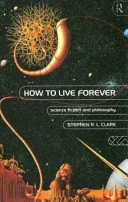
How to Live Forever
 77
77

How to Live Forever
Stephen R. L. Clark’s 1995 study, "How to Live Forever," provides a refreshingly analytical approach to immortality in speculative fiction, steering clear of both hagiography and simplistic dismissal. The book’s primary strength lies in its methodical deconstruction of narrative tropes, treating them as genuine philosophical puzzles. Clark demonstrates effectively how science fiction, often seen as escapist, can serve as a fertile ground for exploring fundamental questions about identity, existence, and the human condition. For instance, his analysis of reincarnation narratives as a means to explore continuity of self is particularly insightful. A limitation, however, is that the prose, while precise, can sometimes feel dense for readers less accustomed to academic philosophical discourse, occasionally obscuring the engaging core ideas. Despite this, the work offers a compelling framework for understanding our perennial fascination with unending life. It is a valuable, if demanding, scholarly intervention.
📝 Description
77
Stephen R. L. Clark's 1995 book examines immortality through science fiction.
Stephen R. L. Clark's "How to Live Forever," published in 1995, scrutinizes the philosophical questions surrounding immortality as depicted in science fiction. The book moves past simple plot recounting to analyze the consequences of resurrection, the idea of consciousness without a body, and life extension technologies within fictional narratives. It is written for students of philosophy, literature, and religious studies, and for those readers interested in how speculative fiction engages with existential questions. The work is notable for its rigorous analysis of fantastical ideas.
Published in the mid-1990s, Clark's study coincided with a growing academic interest in the philosophical aspects of science fiction. At a time when literary analysis increasingly considered genre fiction, this book stood apart from earlier tendencies to dismiss such stories as mere entertainment. Clark's arguments draw on the work of philosophers like Gilbert Ryle and J. L. Mackie, employing their frameworks to dissect fictional scenarios.
While examining science fiction, Clark's work touches upon perennial philosophical and theological questions about the nature of the soul, the body, and existence beyond death. It engages with classical paradoxes of identity, such as the Ship of Theseus, which have long been debated in metaphysics and theology. The book's focus on disembodied consciousness and the possibility of continued existence through technological or other means echoes themes found in various mystical traditions that posit forms of spiritual survival or transcendence.
💡 Why Read This Book?
• Gain a philosophical lens for analyzing speculative fiction, understanding how concepts like resurrection in works such as Mary Shelley's Frankenstein offer distinct avenues for exploring identity beyond simplistic plot points. • Grasp the philosophical implications of disembodied survival by examining Clark's treatment of consciousness and the self, using fictional scenarios to question the necessity of a physical form. • Appreciate the critical role of narrative in philosophical inquiry, recognizing how fictional explorations of life-extension devices, as discussed in the book, serve as practical thought experiments for ethical and existential contemplation.
⭐ Reader Reviews
Honest opinions from readers who have explored this book.
❓ Frequently Asked Questions
What specific philosophical concepts does Stephen R. L. Clark use to analyze immortality in science fiction?
Clark employs concepts such as personal identity continuity, the mind-body problem, and thought experiments like the Ship of Theseus paradox to dissect fictional narratives about immortality, examining the logical and metaphysical challenges presented.
When was "How to Live Forever" first published and what was the intellectual climate like?
The book was first published in 1995, during a period of increasing academic acceptance of science fiction as a valid subject for literary and philosophical analysis, moving beyond earlier dismissals.
Does the book discuss specific science fiction authors or works?
Yes, the book references various science fiction narratives and authors who have explored themes of immortality, using them as case studies for philosophical inquiry into concepts like resurrection and extended life.
What is the primary focus of "How to Live Forever"?
Its primary focus is the philosophical examination of immortality as depicted in science fiction, using these fictional concepts as a resource for rigorous inquiry into human nature and existence.
Is "How to Live Forever" suitable for beginners in philosophy?
While accessible to those with some interest in philosophy and literature, its academic rigor means it might be more challenging for absolute beginners compared to introductory texts.
How does Clark's work relate to traditional esotericism or occultism?
Clark's work primarily engages with philosophical analysis of secular speculative fiction rather than directly exploring traditional esoteric doctrines or occult practices, though it touches upon universal human desires for longevity.
🔮 Key Themes & Symbolism
Narrative as Philosophical Tool
Clark demonstrates how fictional accounts of immortality, from resurrection narratives to advanced life-extension technologies, function as potent thought experiments. These narratives allow for the exploration of complex philosophical dilemmas concerning personal identity, the nature of consciousness, and the ethical implications of overcoming mortality. By analyzing these speculative scenarios, the book argues that science fiction provides a unique space for rigorous philosophical inquiry into what it means to be human.
The Problem of Personal Identity
A central theme is the challenge immortality poses to our understanding of personal identity. Clark examines how concepts like reincarnation or digital consciousness raise questions about continuity of self. If one's body is replaced, or memories are transferred, is it still the same person? The book uses these fictional explorations to engage with enduring philosophical debates about the criteria for sameness over time.
Desire for Eternal Life
The book addresses the deep-seated human fascination with immortality, often explored in myth and now prevalent in science fiction. Clark analyzes why we are drawn to narratives of unending life and what these desires reveal about our current existence, our fears, and our aspirations. It positions the fictional pursuit of immortality as a reflection of fundamental human hopes and anxieties.
Consciousness and Embodiment
Clark investigates the philosophical implications of disembodied survival and consciousness transfer. These speculative concepts, common in science fiction, force a confrontation with the relationship between mind and body. The book uses these narratives to explore whether consciousness can exist independently of a physical form and what that would mean for our definition of life and selfhood.
💬 Memorable Quotes
Direct passages from the work, attributed to the author.
“Fantasy accounts of issues such as resurrection, disembodied survival, reincarnation and devices or drugs for preserving life can be used as a resource for philosophical inquiry.”
— This core statement captures Clark's thesis: that speculative fiction is not mere entertainment but a valuable laboratory for testing philosophical ideas about fundamental aspects of existence, including life and death.
“Immortality is a subject which has long been explored by science fiction writers.”
— This observation highlights the historical and narrative prevalence of the immortality theme in science fiction, setting the stage for Clark's analysis of its philosophical underpinnings.
“He shows how fantasy accounts... can be used as a resource for philosophical inquiry.”
— This emphasizes the book's methodological approach: leveraging imaginative literary scenarios to rigorously examine profound questions about identity, existence, and the human condition.
“What these suggest about our present lives and natures.”
— This points to the book's broader aim: to connect the speculative exploration of immortality with insights into our current human reality, our inherent characteristics, and our lived experiences.
“Clark examines the ways in which science fiction writers have imagined it.”
— This indicates the book's focus on the creative and imaginative aspects of science fiction, specifically how authors have conceptualized and depicted various forms of immortality.
🌙 Esoteric Significance
Tradition
While "How to Live Forever" is primarily a work of philosophical analysis grounded in secular speculative fiction, its exploration of immortality touches upon themes resonant within various esoteric traditions. The perennial human quest for longevity, transcendence, and continued existence is a common thread in Hermeticism, Gnosticism, and Theosophy, which often posit methods or states of being that circumvent physical death. Clark's work engages with these desires indirectly by analyzing their modern fictional manifestations.
Symbolism
The book itself doesn't focus on traditional esoteric symbols. However, the concepts it examines—resurrection, disembodied survival, and life-extension devices—can be seen as modern symbolic analogues for esoteric aspirations. Resurrection mirrors themes of rebirth and spiritual transformation found in mystery traditions. Disembodied survival echoes concepts of astral projection or the survival of the soul/consciousness after death prevalent in many occult philosophies. Life-extension devices can be metaphorically linked to alchemical pursuits of longevity or elixirs of life.
Modern Relevance
Contemporary thinkers in transhumanism and digital consciousness studies often grapple with issues that Clark’s book, published in 1995, presciently addresses. Concepts like mind uploading, artificial intelligence, and radical life extension are now mainstream topics in both scientific and philosophical discourse. Clark's analytical framework for dissecting the philosophical implications of these ideas, using science fiction as a springboard, remains highly relevant for anyone engaging with the future of human existence and consciousness.
👥 Who Should Read This Book
['• Students of philosophy and literature: Readers interested in applying rigorous philosophical analysis to genre fiction, particularly concerning themes of identity, consciousness, and existence.', '• Science fiction enthusiasts: Those who appreciate speculative fiction and wish to explore its deeper philosophical underpinnings beyond plot and character.', "• Researchers of existential and metaphysical concepts: Individuals examining humanity's enduring fascination with immortality and what it reveals about our nature and current lives."]
📜 Historical Context
Published in 1995, Stephen R. L. Clark's "How to Live Forever" emerged within a fertile period for the academic study of science fiction. The late 20th century saw a growing recognition of genre literature's intellectual weight, challenging earlier perceptions that relegated it to pulp entertainment. Clark’s work engaged with a philosophical tradition that had long grappled with concepts of identity and existence, drawing upon figures like Gilbert Ryle. It stood in contrast to purely literary analyses of science fiction, offering a more direct philosophical dissection. While not a direct engagement, it operated in a similar intellectual space as scholars like Darko Suvin, who were developing theoretical frameworks for analyzing the genre's unique modes of thought. The book contributed to a broader academic discourse that increasingly valued speculative fiction as a serious subject for critical examination, rather than dismissing it as escapist fantasy.
📔 Journal Prompts
The concept of disembodied survival as presented in fictional narratives.
Resurrection narratives and their implications for personal identity.
The philosophical value of life-extension devices in speculative fiction.
How fictional explorations of immortality reflect contemporary human desires.
The relationship between consciousness and embodiment in science fiction.
🗂️ Glossary
Disembodied Survival
The speculative concept of consciousness or identity existing independently of a physical body, often explored in science fiction through means like digital uploading or non-physical consciousness.
Personal Identity
The philosophical problem of determining what makes a person the same person over time, especially when significant changes occur to their body or mind.
Resurrection
In the context of the book, this refers to fictional narratives where individuals return to life after death, examined for their implications on identity and continuity.
Life-Extension Technologies
Fictional or hypothetical scientific or technological means, such as drugs or advanced medical procedures, aimed at significantly prolonging human lifespan or achieving immortality.
Thought Experiment
A hypothetical scenario devised to explore the potential consequences of a principle or theory, often used in philosophy to test concepts against imagined situations.
Reincarnation
The philosophical or religious concept of a soul or consciousness being reborn into a new body after death, analyzed by Clark regarding its impact on personal identity.
Ship of Theseus Paradox
A paradox concerning identity over time, questioning whether an object that has had all its components replaced remains the same object.
This book appears in 1 collection
🔮 Readers Also Liked
Browse all →









From the “Neoplatonism” Collection
View all →





More Free Occult Philosophy Books
View all →