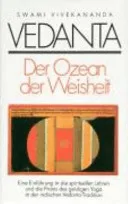
Vedanta
 74
74

Vedanta
Vivekananda's exposition of Vedanta, particularly Advaita, offers a starkly rational, almost scientific, approach to the nature of existence. The strength lies in its clarity and the sheer intellectual force with which it dismantles conventional notions of self and reality. The limitation, however, is that its very rigor can sometimes feel abstract, demanding a significant intellectual commitment from the reader before its experiential implications become clear. The discussion on Maya, for instance, masterfully illustrates how perceived duality arises from a fundamental non-dual substratum, a concept that requires careful contemplation. It’s a rigorous intellectual framework for spiritual inquiry.
📝 Description
74
Swami Vivekananda delivered lectures on Advaita Vedanta in the late 19th century, compiled here as a guide.
This book presents the core philosophy of Advaita Vedanta, a prominent school within Hindu thought. It clarifies complex metaphysical ideas, particularly the concept of Brahman as the ultimate reality and Atman as the true self. The text emphasizes non-duality, the idea that the individual consciousness is one with universal consciousness. It also details the path to liberation, known as moksha, achieved through wisdom and self-understanding, moving past ignorance and illusion.
This work is best suited for serious students of Eastern philosophies and comparative religion. It offers a clear look at the intellectual and spiritual foundations of a major Indian philosophical tradition. Those interested in metaphysics, the nature of consciousness, and spiritual freedom will find valuable insights. The book requires engagement with abstract concepts and a readiness for deep philosophical inquiry.
Vivekananda's lectures, given in the late 1800s, arrived at a time of growing Western interest in Indian spirituality. This interest was partly fueled by groups like the Theosophical Society. His presentations, notably at the 1893 Parliament of Religions in Chicago, introduced Vedanta to a global audience. His clear articulation provided a sophisticated Indian philosophical viewpoint, which interacted with contemporary Western esoteric and philosophical thought, fostering a significant cross-cultural exchange.
💡 Why Read This Book?
• Gain a precise understanding of Brahman and Atman, the core concepts of Advaita Vedanta, enabling a philosophical framework for contemplating ultimate reality beyond everyday dualities. • Grasp the nature of Maya as presented by Vivekananda, learning how illusion functions to obscure the non-dual truth and shape our perception of the world. • Explore the path to Moksha as a process of self-realization, moving beyond the cycle of Samsara through direct knowledge rather than mere ritual or belief.
⭐ Reader Reviews
Honest opinions from readers who have explored this book.
❓ Frequently Asked Questions
When was Swami Vivekananda's Vedanta first published?
The compilation of Swami Vivekananda's lectures on Vedanta, forming the book "Vedanta," was first published in 1989, though the lectures themselves were delivered much earlier in the late 19th century.
What is the central philosophy presented in Vedanta?
The book primarily presents Advaita Vedanta, a non-dualistic school of Hindu philosophy, emphasizing the oneness of the individual soul (Atman) with the ultimate reality (Brahman).
Who was Swami Vivekananda and why is he significant?
Swami Vivekananda was a key disciple of the mystic Ramakrishna. He introduced Vedanta and Yoga to the Western world, notably at the 1893 Parliament of Religions in Chicago, becoming a pivotal figure in interfaith dialogue.
What is Maya in the context of Vedanta?
Maya refers to the cosmic illusion or the power that conceals the true nature of reality. It creates the perception of a world of separate objects and individuals, obscuring the underlying unity of Brahman.
What is the ultimate goal of the teachings in Vedanta?
The ultimate goal is Moksha, liberation from the cycle of birth and death (Samsara). This is achieved through the realization of the identity between Atman and Brahman, dispelling ignorance.
Does this book discuss practical spiritual practices?
While primarily philosophical, the book discusses the path to self-realization which involves knowledge and discrimination, implying practices like meditation and contemplation to achieve this understanding.
🔮 Key Themes & Symbolism
The Nature of Brahman
The work meticulously defines Brahman not as a personal God in the conventional sense, but as the singular, undifferentiated, absolute reality underlying all existence. It is the substratum from which the entire universe emanates and into which it ultimately dissolves. Vivekananda stresses that Brahman is beyond all attributes, descriptions, and conceptualizations, challenging the reader to move beyond dualistic thinking and recognize this ultimate oneness as the source of all manifestation.
Atman and its Identity
A core tenet explored is the nature of Atman, the innermost self or soul. The book argues powerfully for the identity of Atman with Brahman. This is not merely a metaphorical connection but an ontological truth. The perceived individual self, bound by ego and sensory experience, is seen as an illusion. Realizing Atman as Brahman is the key to transcending limitations and achieving liberation from suffering and the cycle of rebirth.
The Illusory Veil of Maya
Maya is presented as the cosmic power that veils the absolute reality, creating the appearance of a pluralistic world. It is the source of ignorance (avidya) that leads individuals to mistake the transient and phenomenal for the real. The book explains how Maya operates through names and forms, causing attachment and suffering. Understanding Maya is crucial for dismantling the false identification with the ego and the physical body.
The Path to Liberation (Moksha)
The ultimate aim of Vedanta, Moksha, is thoroughly examined. It is portrayed not as an afterlife reward but as the immediate realization of one's true nature as Brahman. The book outlines that this liberation is achieved through Jnana Yoga, the path of knowledge, which involves discrimination, detachment, and direct experiential insight into the non-dual reality. It is a process of unlearning and self-discovery, not acquisition.
💬 Memorable Quotes
Direct passages from the work, attributed to the author.
“The goal is to know that 'I am He'.”
— This concise statement expresses the Advaita Vedanta's ultimate aim: the direct realization of the identity between the individual self (Atman) and the universal absolute reality (Brahman). It signifies the transcendence of ego-consciousness and the attainment of spiritual liberation.
“The only way to get rid of Maya is to know Brahman.”
— This highlights the epistemological solution to perceived illusion. It posits that the veil of Maya, which creates multiplicity and suffering, can only be lifted through the direct knowledge and realization of the singular, absolute reality, Brahman.
“We are not the body, nor the mind, but the Atman.”
— This interpretation emphasizes the core Vedantic distinction between the transient, phenomenal self (body and mind) and the eternal, true self (Atman). It is a fundamental assertion for understanding one's true identity beyond empirical limitations.
“The universe is a manifestation of the Absolute.”
— This concept explains the relationship between the phenomenal world and ultimate reality. It suggests that all observable phenomena, despite their apparent diversity and changeability, are expressions or projections of a single, unchanging Absolute (Brahman).
💡 Key Ideas
Editorial paraphrase of the work's core concepts — not direct quotes.
All this universe is in that one, and that one is in all this.
This paraphrase highlights the concept of immanence and transcendence. It suggests that the ultimate reality is both the container and the contained, illustrating the non-dual perspective where individuality and universality are not separate but intrinsically interconnected.
🌙 Esoteric Significance
Tradition
Vedanta, particularly Advaita, shares lineage with Indic Dharmic traditions but has profound resonance within Western esotericism. Its non-dualistic metaphysics and emphasis on the identity of the individual soul with the Absolute align with certain Hermetic principles (e.g., "As above, so below") and Gnostic ideas of divine spark within. Vivekananda's work provided a sophisticated philosophical framework that Western esotericists could integrate with their existing traditions, offering a bridge between Eastern and Western mystical thought.
Symbolism
While not heavily reliant on overt symbols in the Western esoteric sense, Vedanta employs potent conceptual symbols. 'Brahman' itself functions as the ultimate, ineffable symbol of Absolute Reality, representing formless unity. 'Atman' symbolizes the divine spark within, the true Self obscured by ignorance. 'Maya' acts as a symbol of illusion, the veil of multiplicity that hides the underlying oneness, akin to the Gnostic concept of the Demiurge's flawed creation.
Modern Relevance
Vivekananda's interpretation of Vedanta continues to influence contemporary spiritual thought, particularly in circles exploring consciousness, non-duality, and meditation. Thinkers and teachers in the mindfulness movement, transpersonal psychology, and modern Advaita Vedanta communities often draw directly from his explanations. His emphasis on the practical application of philosophy for personal transformation remains relevant for those seeking spiritual growth beyond dogma.
👥 Who Should Read This Book
• Students of comparative religion and philosophy: Gain a foundational understanding of one of India's most influential spiritual philosophies from a key proponent. • Seekers of non-dualistic perspectives: Explore the intellectual architecture of Advaita Vedanta, which posits the ultimate oneness of existence beyond apparent separations. • Individuals interested in consciousness studies: Understand Vedantic concepts of Brahman and Atman as frameworks for contemplating the nature of reality and the self.
📜 Historical Context
Swami Vivekananda's lectures, compiled into this work, emerged during a period of intense intellectual and spiritual curiosity in the late 19th century. The West was beginning to engage with Eastern philosophies, influenced by colonial encounters and the efforts of scholars and spiritual seekers. Vivekananda's presentation of Vedanta, particularly at the 1893 Parliament of Religions in Chicago, was important. He offered a sophisticated philosophical counterpoint to both prevailing Christian theology and nascent Western esoteric movements like Theosophy, which also explored Eastern ideas. His articulate and rational approach resonated widely, bringing the concept of Advaita Vedanta to global prominence and stimulating comparative religious studies. This era also saw figures like Max Müller translating and popularizing Indian texts.
📔 Journal Prompts
The concept of Brahman as attributeless reality.
Your understanding of Atman versus the ego-self.
The role of Maya in perceiving the world.
The practical implications of realizing non-duality.
The path to Moksha as described in the text.
🗂️ Glossary
Brahman
The ultimate, unchanging, absolute reality in Hinduism. It is the supreme cosmic spirit, the ground of all existence, considered to be infinite, eternal, and beyond all attributes and descriptions.
Atman
The individual soul or self. In Advaita Vedanta, Atman is identical with Brahman, representing the true, eternal essence of a being, distinct from the physical body, mind, and ego.
Advaita Vedanta
A school of Hindu philosophy emphasizing non-duality. It asserts that Brahman is the sole reality, and the individual soul (Atman) is identical with Brahman. All perceived multiplicity is considered illusory.
Maya
Cosmic illusion or the power that conceals the true nature of reality. Maya creates the appearance of a diverse and dualistic world, leading to ignorance and attachment.
Moksha
Liberation or release from the cycle of birth, death, and rebirth (Samsara). It is achieved through the realization of the true nature of the self and its identity with Brahman.
Samsara
The continuous cycle of birth, death, and rebirth, driven by karma and ignorance. It is considered a state of suffering from which liberation (Moksha) is sought.
Jnana Yoga
The yoga or path of knowledge. It involves intellectual inquiry, discrimination, and direct realization of the truth to achieve spiritual liberation.