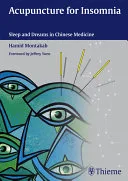
Acupuncture for Insomnia
 80
80

Acupuncture for Insomnia
Hamid Montakab’s "Acupuncture for Insomnia" presents a well-structured argument for TCM's efficacy in treating sleep disorders, moving beyond superficial symptom management. The strength lies in its clear articulation of complex TCM diagnostics applied specifically to insomnia, linking patterns of disharmony to distinct treatment strategies. A particularly insightful section discusses the role of the Shen in sleep disturbances, a concept often overlooked in Western approaches. However, for readers entirely new to TCM, the density of terminology might present a steep learning curve, even with the inclusion of some foundational explanations. The work's limitation is its assumed reader familiarity with acupuncture point prescriptions and meridian theory, which could be more extensively elaborated for a broader audience. Despite this, Montakab provides a valuable resource for those seeking to understand the energetic underpinnings of sleeplessness.
📝 Description
80
Hamid Montakab's 2012 book applies Traditional Chinese Medicine to insomnia.
Published in 2012, Acupuncture for Insomnia by Hamid Montakab details Traditional Chinese Medicine (TCM) principles for addressing sleeplessness. The book systematically presents therapeutic strategies from TCM, aiming to treat both chronic and acute insomnia. It looks beyond simple symptom relief to examine the deeper energetic imbalances causing sleep problems. Montakab frames acupuncture and related methods as a complete healing approach.
This text is primarily for acupuncture and TCM practitioners wanting to improve their understanding and treatment of insomnia. People experiencing ongoing sleep issues who are interested in non-drug, holistic options will also find it useful. Students of esoteric medicine and comparative healing systems can gain from its thorough explanation of TCM's core ideas about sleep and dreams.
This work is situated within the broader esoteric tradition of Traditional Chinese Medicine, which views the body and mind as interconnected energetic systems. Sleep disturbances are understood not merely as physiological malfunctions but as reflections of disharmony in the flow of Qi and the balance of Yin and Yang. The text engages with concepts like Shen (spirit/mind) and its connection to the nervous system, framing acupuncture as a method to restore this vital energetic equilibrium. It bridges ancient TCM diagnostics with modern sleep science.
💡 Why Read This Book?
• Gain practical acupuncture point prescriptions and diagnostic patterns specifically for insomnia, directly from Hamid Montakab's research, allowing for targeted treatment beyond generic advice. • Understand the TCM concept of 'Shen disturbance' as a root cause of sleeplessness, offering a new framework for analyzing and addressing emotional and mental agitation that disrupts sleep. • Explore the historical application of acupuncture for sleep disorders, providing context from the original publication year of 2012 and its place within the contemporary CAM landscape.
⭐ Reader Reviews
Honest opinions from readers who have explored this book.
❓ Frequently Asked Questions
What percentage of adults suffer from insomnia according to the book?
The book states that insomnia and related sleep disorders affect 30-40% of the adult population, highlighting the widespread need for effective treatments like acupuncture.
Besides adults, who else does the book mention is affected by sleep disorders?
Hamid Montakab's work notes that sleep disorders can impact children as well, with up to 25% of the pediatric population experiencing such issues.
What are the main health risks associated with chronic insomnia mentioned in the text?
The book outlines increased risks for depression, cardiovascular disease, and hypertension, underscoring the systemic impact of untreated sleeplessness.
What medical tradition forms the basis for the treatments described in Acupuncture for Insomnia?
The therapeutic strategies presented are primarily derived from Traditional Chinese Medicine (TCM), integrating classical theories with modern applications.
Does the book focus only on chronic insomnia?
No, Acupuncture for Insomnia addresses both chronic and acute forms of sleeplessness, offering varied therapeutic strategies applicable to different durations of the condition.
What is the significance of 'Shen' in the context of sleep according to TCM?
In TCM, 'Shen' refers to the spirit or mind. Disturbances in Shen are considered a key factor in insomnia, relating to mental restlessness and emotional imbalance that prevent restful sleep.
🔮 Key Themes & Symbolism
TCM Approach to Sleep
The work meticulously details how Traditional Chinese Medicine views sleep not merely as a physiological state but as a profound energetic process. It posits that imbalances in Qi (vital energy) and the Yin-Yang dynamic are fundamental causes of insomnia. Montakab outlines specific TCM diagnostic patterns, such as Liver Qi Stagnation or Heart Blood Deficiency, that manifest as distinct sleep disturbances. This perspective offers a holistic understanding, moving beyond Western symptom-based classifications to address the root energetic disharmonies contributing to sleeplessness.
Acupuncture as Therapy
Central to the book is the application of acupuncture and acupressure as primary therapeutic modalities. Montakab identifies key acupuncture points and meridians that directly influence the Shen (spirit/mind) and regulate the nervous system, promoting relaxation and sleep. The text likely provides specific point prescriptions and needling techniques tailored to different TCM diagnoses of insomnia, emphasizing a precise, individualized approach to treatment that is characteristic of classical TCM practice.
The Energetics of Dreams
Beyond simply curing insomnia, the book explores the TCM perspective on dreams, often viewing them as indicators of underlying energetic states. Unusual or disturbing dreams can signal specific organ system imbalances or Qi disruptions. Montakab likely explores how the restoration of energetic harmony through acupuncture can lead not only to sound sleep but also to more peaceful and restorative dream states, reflecting a holistic view of mental and spiritual well-being.
Holistic Health and Insomnia
The book frames insomnia within the broader context of overall health, highlighting its detrimental effects on alertness, memory, emotional stability, and physical well-being, as noted in the original blurb. By presenting acupuncture as an effective treatment, it underscores the interconnectedness of mind, body, and spirit in TCM philosophy. This holistic approach positions the book as a guide to restoring balance not just for sleep, but for comprehensive health.
💬 Memorable Quotes
Direct passages from the work, attributed to the author.
“Insomnia affects 30-40% of adults and up to 25% of children.”
— This statistic, cited early in the work, immediately grounds the discussion in the widespread prevalence of sleep disorders, emphasizing the urgent need for effective interventions like those proposed by TCM.
“Treating sleeplessness using therapeutic strategies from both TCM as well as Classical Chinese Medicine.”
— This phrase highlights the book's dual approach, suggesting it synthesizes classical TCM theory with potentially more contemporary applications or interpretations of its principles for insomnia treatment.
“Putting the individual at increased risk for depression, cardiovascular disease, hypertension.”
— This emphasizes the serious, long-term health hazards associated with chronic insomnia, positioning effective treatment not just as a comfort measure but as a vital preventative health strategy.
“Therapeutic strategies from both, TCM as well as Clas”
— This indicates the book's comprehensive scope, promising to draw upon the entirety of Traditional Chinese Medicine's rich diagnostic and treatment modalities for addressing sleep disorders.
💡 Key Ideas
Editorial paraphrase of the work's core concepts — not direct quotes.
Affecting alertness and memory, causing emotional and physical fatigue.
This concisely summarizes the debilitating consequences of insomnia, illustrating the lasting impact sleep deprivation has on daily functioning and overall quality of life.
🌙 Esoteric Significance
Tradition
This work firmly resides within the esoteric tradition of Traditional Chinese Medicine, which, while often presented as a secular medical system, is deeply intertwined with Taoist philosophy and cosmology. Esoterically, TCM views the body as a microcosm reflecting the macrocosm, with health dependent on maintaining harmony with universal energies (Qi). Montakab's approach to insomnia, focusing on energetic imbalances (Yin/Yang, Qi deficiency/stagnation) and the spiritual aspect (Shen), directly engages with these foundational esoteric principles.
Symbolism
Key symbols in this context include the concept of Qi, the vital life force that must flow smoothly for health; Yin and Yang, representing the fundamental complementary opposites whose balance is crucial for physiological and psychological equilibrium; and the Shen, representing the spirit or consciousness, whose disturbance is a primary cause of insomnia in TCM. The acupuncture points themselves can be seen as symbolic gateways or regulators within the body's energetic landscape, facilitating the restoration of balance.
Modern Relevance
Montakab's work remains highly relevant for contemporary esoteric practitioners and researchers interested in mind-body medicine and consciousness studies. It provides a concrete, therapeutic application of ancient Taoist principles to a widespread modern ailment. Thinkers and practitioners in fields like somatic psychology, energy healing, and even transpersonal psychology can draw upon its insights into the energetic and spiritual dimensions of sleep and wakefulness, demonstrating the enduring applicability of TCM's esoteric underpinnings.
👥 Who Should Read This Book
• Licensed acupuncturists and TCM practitioners seeking to refine their diagnostic skills and treatment protocols for patients suffering from insomnia. • Individuals experiencing chronic sleep disturbances who are interested in exploring holistic, non-pharmacological approaches rooted in ancient medical traditions. • Students and scholars of comparative medicine, esoteric philosophy, and the history of healing who wish to understand the integration of TCM principles with contemporary health concerns.
📜 Historical Context
Published in 2012, Hamid Montakab's "Acupuncture for Insomnia" emerged during a period of significant growth in the acceptance and integration of Traditional Chinese Medicine (TCM) within Western healthcare paradigms. While acupuncture's roots stretch back millennia, the early 21st century saw a surge in research validating its efficacy for various conditions, including pain management and, increasingly, psychological and neurological issues like insomnia. Montakab’s work contributes to this trend by offering a systematic TCM framework for understanding and treating sleep disorders, a common complaint that often eludes purely Western pharmacological solutions. At this time, the field of sleep medicine was dominated by biomedical approaches, including sleep studies and prescription medications like benzodiazepines and Z-drugs, which Montakab's work implicitly offers an alternative to. The book reflects a broader intellectual current seeking to bridge ancient healing systems with modern health challenges, aligning with practitioners and researchers who viewed TCM as a sophisticated, holistic system rather than mere folk remedy.
📔 Journal Prompts
The energetic imbalances causing insomnia, as outlined by Hamid Montakab.
The role of Shen disturbance in preventing restful sleep.
Specific acupuncture points for calming the spirit.
The connection between Yin/Yang balance and sleep quality.
The impact of insomnia on physical and emotional fatigue.
🗂️ Glossary
Qi (Chi)
The fundamental concept of vital life force or energy in Traditional Chinese Medicine. Its smooth flow and balance are considered essential for health, and disruptions can lead to illness, including insomnia.
Yin and Yang
The two complementary, opposing forces that govern all phenomena in the universe according to TCM. Health requires their dynamic balance; imbalance, particularly excess Yang or deficient Yin at night, can cause sleeplessness.
Shen
Often translated as spirit, mind, or consciousness. In TCM, the Shen resides in the Heart and is responsible for mental activity, emotions, and awareness. Disturbance of the Shen is a primary cause of insomnia.
Meridians
Invisible pathways or channels through which Qi flows throughout the body in TCM theory. Acupuncture points are located along these meridians.
Acupuncture Points
Specific locations on the body, typically along meridians, where the skin is thought to be more permeable to Qi. Stimulating these points with needles is believed to regulate Qi flow and restore balance.
TCM Diagnostic Patterns
Specific combinations of signs and symptoms that indicate a particular type of energetic imbalance within the body according to TCM theory, such as Liver Qi Stagnation or Heart Blood Deficiency.
Wu Xing (Five Phases)
The theory of Five Elements (Wood, Fire, Earth, Metal, Water) used in TCM to explain interactions and relationships between different phenomena, including organ systems and their impact on health and disease.