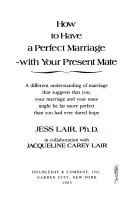
How to Have a Perfect Marriage
 76
76

How to Have a Perfect Marriage
The Lairs' 1985 volume, "How to Have a Perfect Marriage," offers a surprisingly robust, if somewhat dated, blueprint for marital longevity. Its strength lies in the concept of the "marriage contract," which encourages couples to articulate their expectations and commitments explicitly. This moves beyond vague notions of love and into the practicalities of partnership. The emphasis on "shared dreaming" also provides a valuable framework for couples to align their future visions. However, the book occasionally falters under the weight of its own prescriptive nature; the idea of a "perfect" marriage itself can feel aspirational to the point of intimidation. A passage discussing the "four pillars of marital strength" highlights the book's core thesis but could benefit from more nuanced exploration of how these pillars might shift over decades. Ultimately, the Lairs provide a solid, if earnest, guide for those willing to undertake the deliberate work of building a strong union.
📝 Description
76
Jess and Jacqueline Lair published 'How to Have a Perfect Marriage' in 1985, offering a structured approach to marital connection.
This 1985 book by Jess and Jacqueline Lair provides a structured framework for marital harmony, moving beyond common advice to address deeper partnership dynamics. It offers practical guidance and philosophical considerations for couples aiming to build lasting connection and mutual understanding. The authors suggest that intentional effort and specific practices are central to a successful marriage's endurance.
The book is suited for individuals and couples actively invested in improving their marital relationship, particularly those willing to engage in introspection and apply structured approaches. It speaks to readers who find conventional relationship advice insufficient or who seek a more thorough understanding of marital longevity and happiness. The work blends psychological insight with actionable steps, catering to those who appreciate a comprehensive perspective on partnership.
Published in 1985, 'How to Have a Perfect Marriage' emerged within a self-help milieu that increasingly incorporated psychological concepts into personal development. While not overtly mystical, its focus on intentional practices and the 'internal architecture' of a marriage suggests an esoteric inclination toward conscious creation and structured spiritual disciplines applied to domestic life. It engaged with contemporary relationship discourse by emphasizing actionable, almost ritualistic, methods for fostering marital longevity and happiness, distinguishing itself from more purely observational or empirical approaches.
💡 Why Read This Book?
• Learn the "marriage contract" concept, which guides couples in defining explicit agreements and responsibilities, fostering clarity and reducing unspoken expectations. • Understand the principle of "shared dreaming," a technique to align future aspirations and create a unified vision for the couple's life path. • Discover practical methods for reinforcing the "four pillars of marital strength"—communication, shared activities, mutual support, and individual growth—as outlined in the 1985 publication.
⭐ Reader Reviews
Honest opinions from readers who have explored this book.
❓ Frequently Asked Questions
When was "How to Have a Perfect Marriage" first published?
The book "How to Have a Perfect Marriage" was first published in 1985, authored by Jess Lair and Jacqueline Carey Lair.
What is the core philosophy behind the "marriage contract" as presented by the Lairs?
The "marriage contract" concept encourages couples to openly discuss and agree upon their expectations, values, and responsibilities within the marriage, moving beyond assumptions to create a clear foundation.
Does the book offer advice on handling conflict?
Yes, the work emphasizes constructive conflict resolution as a key component of a strong marriage, suggesting that a "perfect" marriage is not one without disagreements, but one that handles them effectively.
What does "shared dreaming" mean in the context of this book?
"Shared dreaming" refers to the practice of couples actively discussing and aligning their future aspirations and goals, ensuring they are working towards a common vision for their lives together.
Are the concepts in "How to Have a Perfect Marriage" still relevant today?
While the book was published in 1985, its core principles regarding clear communication, mutual commitment, and shared vision remain relevant for couples seeking to build a resilient and fulfilling partnership.
Who are Jess Lair and Jacqueline Carey Lair?
Jess Lair and Jacqueline Carey Lair are the co-authors of "How to Have a Perfect Marriage." Jess Lair was known for his work on personal growth and relationships.
🔮 Key Themes & Symbolism
The Marriage Contract
This central theme posits that a successful marriage requires explicit articulation of agreements, values, and responsibilities, much like a formal contract. It moves beyond the romantic ideal to the practical architecture of partnership. The Lairs encourage couples to define their individual and shared roles, expectations regarding finances, family, and personal development. This concept is fundamental to fostering mutual understanding and preventing the erosion of a relationship through unspoken assumptions, thereby creating a more stable and predictable marital environment. It’s about conscious co-creation rather than passive cohabitation.
Shared Dreaming
Beyond daily routines, "shared dreaming" is the practice of couples actively cultivating a unified vision for their future. This involves regular dialogue about long-term goals, aspirations, and desired life experiences. It's about ensuring that individual dreams are either integrated into the couple's trajectory or supported individually within the marital framework. This theme emphasizes that a marriage thrives when partners are not just sharing a present, but actively building a shared future. It requires consistent communication and a willingness to adapt individual desires to the collective path.
The Four Pillars
The book identifies four critical pillars supporting marital strength: communication, shared activities, mutual support, and individual growth within the union. Each pillar represents an active commitment to nurturing the relationship. Effective communication involves not just talking, but deep listening and understanding. Shared activities create common ground and positive experiences. Mutual support is the bedrock of resilience during challenging times. Crucially, individual growth is seen not as a threat, but as a vital component that enriches the partnership, preventing stagnation and bringing new vitality to the couple.
Conscious Cultivation of Intimacy
Intimacy, in the Lairs' view, is not a passive state but an active practice that requires dedicated effort. The book suggests that couples must intentionally carve out time and space for nurturing their emotional, physical, and spiritual connection. This involves regular rituals, date nights, and moments of vulnerability. It's about recognizing that the demands of daily life can easily overshadow the needs of the intimate relationship, and therefore, proactive measures are essential to maintain and deepen the bond over time, preventing a drift into mere companionship.
💬 Memorable Quotes
Direct passages from the work, attributed to the author.
“A perfect marriage is not one without conflict, but one that handles conflict perfectly.”
— This interpretation highlights the book's pragmatic approach, suggesting that marital success lies not in avoiding disagreements, but in developing constructive strategies and mutual respect for navigating them.
“Couples must learn to 'dream together' to build a shared future.”
— This captures the essence of 'shared dreaming,' illustrating the importance of couples actively aligning their aspirations and future visions as a cohesive unit.
“Individual growth within the marriage strengthens, rather than weakens, the bond.”
— This interpretation underscores the Lairs' perspective that personal development by each partner is not detrimental but can actively enhance the vitality and resilience of the overall marital union.
“Intimacy is a practice, not a given.”
— This concise phrase captures the book's argument that nurturing closeness requires ongoing, intentional effort and dedicated time from both partners.
💡 Key Ideas
Editorial paraphrase of the work's core concepts — not direct quotes.
The marriage contract is the foundation upon which all future agreements are built.
This paraphrased concept emphasizes the book's core idea that clearly defined mutual expectations and responsibilities form the essential groundwork for a stable and enduring marital partnership.
🌙 Esoteric Significance
Tradition
While not explicitly tied to a single esoteric lineage like Hermeticism or Kabbalah, "How to Have a Perfect Marriage" draws upon principles found in psychological and philosophical traditions that inform esoteric thought. Its emphasis on conscious creation, structured agreements (akin to magical pacts), and the cultivation of inner harmony within a relationship can be seen as echoing Gnostic ideas of self-knowledge and deliberate shaping of reality. The focus on the marriage as a vehicle for mutual spiritual growth aligns with certain Neoplatonic or Theosophical concepts of soul mates and evolutionary partnerships.
Symbolism
The "marriage contract" functions as a primary symbol, representing the conscious, deliberate act of establishing sacred union, elevated beyond mere social convention. The "four pillars" symbolize the foundational, structural integrity required for any enduring edifice, here applied to the relationship's architecture. "Shared dreaming" symbolizes the collective consciousness and unified purpose that a couple can achieve, acting as a guiding star for their journey together, akin to a shared astral projection or vision quest.
Modern Relevance
Contemporary relationship coaches and therapists, particularly those focusing on conscious relationships and intentional living, often echo the Lairs' core tenets. The emphasis on clear communication, setting boundaries, and co-creating a shared vision speaks to modern approaches to partnership, including elements found in the conscious uncoupling movement and positive psychology applications to couples counseling. The idea of a "marriage contract" is also a precursor to modern discussions on non-traditional relationship agreements and polyamorous structures, emphasizing explicit consent and negotiation.
👥 Who Should Read This Book
• Couples seeking to move beyond generic advice and establish a clearly defined framework for their partnership, benefiting from the "marriage contract" concept. • Individuals interested in the psychological and practical aspects of relationship building, particularly those who appreciate structured approaches and actionable steps for marital success. • Readers exploring the intersection of personal growth and relational dynamics, who will find value in the emphasis on "individual growth within the union" as a strength.
📜 Historical Context
The mid-1980s saw a burgeoning self-help industry, influenced by humanistic psychology and a growing public interest in personal development. "How to Have a Perfect Marriage," published in 1985, emerged within this landscape, offering a structured, almost contractual, approach to marital success. While authors like Stephen Covey were popularizing principles of effectiveness, the Lairs focused specifically on the dynamics of partnership. The book arrived at a time when societal norms around marriage were shifting, with increasing rates of divorce but also a persistent desire for lasting unions. It offered a counter-narrative to superficial advice, advocating for deliberate cultivation of marital harmony. Unlike the more empirical, observational methods beginning to be explored by researchers like John Gottman, the Lairs' work leaned towards actionable frameworks and conscious agreements, reflecting a more prescriptive, yet deeply invested, approach to relationship building.
📔 Journal Prompts
The "marriage contract": what core values underpin your current understanding of your partnership?
Reflect on a recent instance of "shared dreaming" with your partner. What emerged?
How do the "four pillars of marital strength" manifest in your daily interactions?
Identify one specific practice you can implement this week to consciously cultivate intimacy.
Consider the concept of "individual growth within the union." How can you support your partner's growth?
🗂️ Glossary
Marriage Contract
A conceptual framework encouraging couples to explicitly define their mutual expectations, responsibilities, values, and goals within the marriage. It emphasizes conscious agreement over assumption.
Shared Dreaming
The practice of couples actively discussing and aligning their long-term aspirations, visions, and life goals, fostering a unified direction for their future together.
Four Pillars of Marital Strength
The book's identified foundational elements for a robust marriage: effective communication, engaging in shared activities, providing mutual support, and fostering individual growth within the relationship.
Conscious Cultivation of Intimacy
The intentional and ongoing effort by partners to nurture and deepen their emotional, physical, and spiritual connection through dedicated practices and open communication.
Individual Growth within the Union
The principle that personal development and self-actualization of each partner are not only permissible but beneficial to the overall health and vitality of the marital relationship.
Perfect Marriage
As defined by the authors, not a marriage devoid of conflict, but one where conflict is handled constructively and with mutual respect, leading to enduring harmony.
Actionable Framework
A structured approach or set of principles that provides concrete steps and practical guidance for achieving a desired outcome, in this case, marital fulfillment.
This book appears in 1 collection
🔮 Readers Also Liked
Browse all →







From the “Spiritual Awakening” Collection
View all →


More Free Magic & Ritual Books
View all →