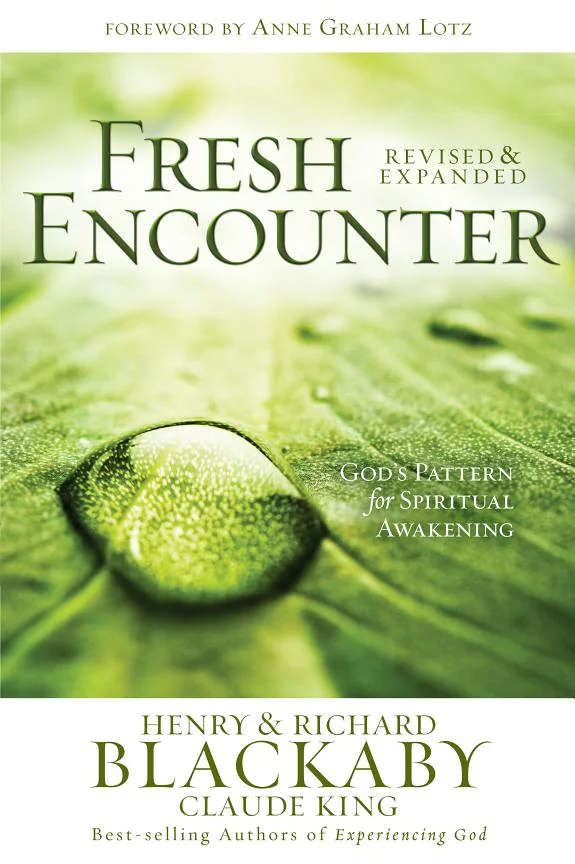
Fresh Encounter
 77
77

Fresh Encounter
The Blackabys' "Fresh Encounter" offers a practical, if somewhat predictable, approach to spiritual renewal. Its strength lies in its persistent focus on God's initiative in revival, a concept often obscured by human-centric methods. The authors skillfully draw from biblical accounts, presenting them not as historical curiosities but as blueprints for present-day engagement. However, the work sometimes leans into a prescriptive tone that can feel overly familiar to those acquainted with evangelical revival literature. A notable passage discusses the "pattern of revival" seen in the Old Testament, specifically referencing the spiritual decline and subsequent reawakening under figures like Elijah. While this provides a solid historical anchor, the application to modern contexts occasionally lacks nuance, assuming a uniform spiritual landscape. The revised edition’s inclusion of new material attempts to address contemporary issues, but the core message remains consistent. "Fresh Encounter" serves as a solid, if familiar, call to spiritual attentiveness for its intended audience.
📝 Description
77
Fresh Encounter, revised in 2009, argues God initiates revival and individuals must respond.
This theological work, first appearing in its updated form in 2009, concerns personal and corporate spiritual revival. Authors Henry T. Blackaby, Claude V. King, and Richard Blackaby construct a model for spiritual awakening, using biblical stories and historical religious movements as their basis. The book serves as a guide for both everyday church members and those in leadership positions.
The text targets individuals and groups within Christian traditions who desire a more active spiritual existence. It speaks to those experiencing spiritual stagnation or a yearning for a closer connection to the divine. Church leaders and congregants are specifically addressed as potential users of this resource for starting and maintaining spiritual renewal in their communities. The 2009 edition builds upon the authors' 1996 work, 'Experiencing God,' and includes forty percent new content addressing current issues affecting spiritual vitality.
While grounded in a Christian framework, Fresh Encounter engages with the broader tradition of seeking direct divine encounter and transformative spiritual experience. It aligns with movements that emphasize a personal, active relationship with God, moving beyond purely ritualistic or intellectual faith. The focus on discerning God's initiative and responding with obedience echoes themes found in various mystical and revivalist traditions that have historically sought to rekindle fervent religious life and direct spiritual apprehension.
💡 Why Read This Book?
• Learn how biblical figures like Elijah responded to God's call for spiritual renewal, providing concrete examples for contemporary application, as detailed in the 'Historical Context' sections. • Understand the concept of "God's pattern and plan" for revival, moving beyond generic spiritual aspirations to actionable steps outlined by the authors. • Gain practical guidance for personal and congregational spiritual awakening, directly applicable to fostering a "fresh encounter" with the divine, as presented in the book's core message.
⭐ Reader Reviews
Honest opinions from readers who have explored this book.
❓ Frequently Asked Questions
What is the primary difference between the 1996 edition and the 2009 revised edition of 'Fresh Encounter'?
The 2009 edition of 'Fresh Encounter' significantly expands upon the original 1996 work, incorporating approximately forty percent new material. This revision aims to update the concepts and applications for a contemporary audience while retaining the core message of spiritual revival.
Which biblical figures are frequently referenced in 'Fresh Encounter' to illustrate revival?
The book frequently draws examples from Old Testament figures such as Elijah and Elisha, using their ministries and the spiritual conditions of their times to illustrate patterns of spiritual decline and subsequent revival.
Is 'Fresh Encounter' intended for a specific religious denomination?
While the book is rooted in Christian theology and uses biblical examples, its focus on personal and corporate spiritual awakening makes it relevant to a broad spectrum of Christian denominations and individuals seeking spiritual growth.
What does the book mean by 'God's pattern and plan for personal revival'?
It refers to discernible principles and actions seen throughout biblical history where God brought about spiritual renewal. The book interprets these historical events as indicators of how God operates and how believers can align themselves with His will for revival.
Who are the main authors of 'Fresh Encounter' and what is their background?
Henry T. Blackaby, Claude V. King, and Richard Blackaby are the authors. Henry T. Blackaby is known for 'Experiencing God,' and the team has a background in theological education and ministry, focusing on spiritual formation and revival.
What is the core message about the role of individuals in revival according to the book?
The core message emphasizes that while God is the ultimate initiator of revival, individuals are called to discern and respond to His Spirit through prayer, obedience, and active participation in His work.
🔮 Key Themes & Symbolism
Divine Initiative in Revival
The central tenet of Fresh Encounter is that spiritual revival originates with God. The authors argue against human-centric strategies, insisting that true awakening occurs when individuals and communities align with God's predetermined actions. This theme is explored through biblical narratives where God intervenes directly, prompting figures like Elijah to confront spiritual decay and initiate a return to divine principles. The work encourages readers to seek God's timing and methods rather than imposing their own agendas, highlighting the importance of discernment and faithful obedience in recognizing and participating in divine movements.
Biblical Patterns of Awakening
Fresh Encounter meticulously examines historical instances of spiritual revival recorded in the Bible, presenting them as repeatable patterns. The authors analyze the conditions that preceded these awakenings, the key individuals involved, and the resulting societal and spiritual transformations. Specific attention is given to the prophetic ministries in the Old Testament, such as those of Elijah and Elisha, whose actions often precipitated significant spiritual shifts. By dissecting these biblical accounts, the book aims to provide readers with a framework for understanding how God has historically worked to bring about renewal and how these principles can be applied today.
The Role of Obedience
While stressing God's sovereignty, Fresh Encounter places a significant emphasis on the believer's responsibility to obey. The authors interpret biblical accounts of revival as calls to action for individuals to respond faithfully to God's prompting. This obedience is not seen as a means to earn revival but as a necessary posture of receptivity and partnership. The book details how figures like Elijah, despite facing immense opposition, demonstrated unwavering obedience, which was instrumental in God's work. Readers are challenged to examine their own willingness to follow God's directives, even when difficult or unpopular.
Contemporary Spiritual Stagnation
The revised edition of Fresh Encounter addresses the perceived spiritual apathy and decline prevalent in contemporary society and within religious institutions. It serves as a diagnosis of the issues hindering spiritual vitality, attributing them to a departure from biblical principles and a reliance on human effort. The authors' critique is aimed at stirring a sense of urgency and a desire for authentic spiritual transformation. By contrasting the state of modern spiritual life with the revivals of the past, the book aims to inspire a collective yearning for a 'fresh encounter' with the divine, prompting readers to seek tangible change.
💬 Memorable Quotes
Direct passages from the work, attributed to the author.
“God is not dependent on anyone or anything. He can do what He wants to do, when He wants to do it, and with whom He wants to do it.”
— This statement underscores the authors' core belief in God's absolute sovereignty. It serves as a foundational principle for understanding revival, suggesting that human efforts are secondary to divine will and timing. The quote encourages humility and reliance on God rather than self-sufficiency in spiritual matters.
“When God moves in revival, He is moving in response to prayer.”
— This highlights the crucial role of prayer in initiating and sustaining revival. It suggests a partnership where human intercession is a key element that God uses to enact His plans. The quote implies that active, persistent prayer is a gateway to experiencing God's intervention.
“The church is called to be the instrument of God's presence in the world.”
— This interpretation speaks to the communal aspect of revival. It posits that the collective body of believers, when rightly aligned with God, becomes the primary vehicle through which divine power and purpose are manifested in society.
“When God moves, there is a definite response from the people.”
— This concept points to the observable impact of genuine revival. It suggests that when God is actively at work, His presence and power will elicit a tangible and often widespread response from individuals and communities, leading to spiritual and moral change.
💡 Key Ideas
Editorial paraphrase of the work's core concepts — not direct quotes.
The pattern of revival throughout the Bible is that God always initiates.
This paraphrased concept emphasizes the authors' consistent argument that revival is not a human program but a divine work. It calls readers to look for God's hand and follow His lead, rather than attempting to engineer spiritual movements themselves.
🌙 Esoteric Significance
Tradition
While not strictly an esoteric text in the vein of Hermeticism or Gnosticism, "Fresh Encounter" engages with concepts that touch upon deeper spiritual realities often explored in esoteric traditions. Its emphasis on discerning God's direct action and experiencing His presence can be seen as a contemporary manifestation of the mystical quest for divine encounter. The work aligns with traditions that prioritize immediate, personal spiritual experience over purely intellectual or ritualistic adherence, echoing themes found in Christian mysticism and certain Pietist movements.
Symbolism
The book's primary symbolic motif is the 'encounter' itself—a direct, transformative meeting with the divine. This concept symbolizes a breakthrough from the mundane or spiritually dormant into a area of divine power and presence. Another implicit symbol is the 'pattern of revival,' representing a divine blueprint or sacred geometry of spiritual awakening that recurs throughout history, waiting to be recognized and followed by the faithful.
Modern Relevance
Contemporary movements focused on spiritual formation, revivalism, and charismatic renewal often draw upon the principles articulated in "Fresh Encounter." Thinkers and practitioners within these spheres, particularly those within evangelical and Pentecostal traditions, continue to reference the Blackabys' work for its emphasis on God's initiative and the believer's responsive obedience. Its message also finds resonance in discussions about discipleship and the pursuit of authentic spiritual experience in an increasingly secularized world.
👥 Who Should Read This Book
• Christian laypeople feeling a spiritual disconnect and seeking tangible ways to experience God's presence and power in their daily lives. • Church leaders and pastors looking for a biblically grounded framework to foster spiritual awakening and renewal within their congregations. • Students of Christian history and theology interested in understanding the dynamics of revivalism and its historical precedents, particularly through the lens of Old Testament prophets.
📜 Historical Context
Published in its revised form in 2009, "Fresh Encounter" emerged during a period of sustained theological discourse within American evangelicalism concerning spiritual renewal and the efficacy of revival. The book builds upon the legacy of earlier revivalist movements that swept through America, such as the Great Awakenings of the 18th and 19th centuries, which profoundly shaped the nation's religious landscape. Authors Blackaby and King were already established figures, their 1996 work "Experiencing God" having sold millions of copies and influencing a generation of believers. The 2009 edition revisits themes previously explored by figures like Charles Finney, a prominent 19th-century evangelist and theologian who wrote extensively on revival, and Jonathan Edwards, whose theological insights on religious affections remain influential. Unlike the more academic or philosophical approaches to spirituality found in certain liberal Protestant circles of the time, "Fresh Encounter" offered a distinctly experiential and biblically-grounded perspective, aligning with a broader evangelical emphasis on personal faith and divine intervention. Its reception was largely positive within its target demographic, reinforcing existing paradigms of revival theology.
📔 Journal Prompts
God's pattern of revival as seen in Elijah's ministry.
The nature of a 'fresh encounter' with the divine.
Identifying personal spiritual stagnation.
The response of people when God moves.
Discernment of God's will for revival.
🗂️ Glossary
Revival
A period of intense spiritual awakening and renewal within a community or church, characterized by increased devotion to God, repentance, and often a significant increase in religious conversions.
Spiritual Awakening
A broad term referring to a renewed sense of spiritual vitality and connection with the divine, which can occur on an individual or corporate level.
The authors' concept referring to discernible principles and actions historically demonstrated by God in bringing about spiritual renewal, serving as a guide for believers.
Discernment
The ability to perceive or recognize God's will, presence, and actions, particularly in the context of initiating or participating in spiritual revival.
Obedience
The act of complying with God's commands and directives, viewed not as a means to earn revival but as a necessary posture of receptivity and partnership.
Divine Initiative
The principle that spiritual revival originates with God's sovereign action, rather than being primarily a result of human planning or effort.
Elijah
A significant Old Testament prophet whose ministry and confrontation with idolatry serve as a key biblical example of God initiating spiritual renewal in a time of widespread apostasy.
This book appears in 1 collection
🔮 Readers Also Liked
Browse all →








From the “Spiritual Awakening” Collection
View all →









More Free Magic & Ritual Books
View all →