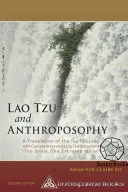
Lao Tzu and Anthroposophy
 73
73

Lao Tzu and Anthroposophy
Kwan-Yuk Claire Sit's exploration of Lao Tzu and Anthroposophy is a commendable effort to bridge disparate philosophical landscapes. The author's strength lies in her ability to draw parallels between the Daodejing's enigmatic pronouncements and the systematic cosmology of Rudolf Steiner, particularly in the section discussing the paradox of a scientifically comprehended yet spiritually barren world. Sit highlights how both traditions grapple with the limitations of purely intellectual understanding when faced with the qualitative aspects of human experience, such as a smile or moral life. However, the work occasionally feels constrained by the very attempt at strict correlation; at times, the Anthroposophical framework seems to impose itself rather than organically emerge from the Taoist text, leading to interpretations that might stretch the original intent of Lao Tzu. A particularly insightful passage examines 'wu wei' not as passive resignation but as a dynamic, intelligent engagement with cosmic flows, aligning it with certain Anthroposophical concepts of spiritual work. Despite this occasional imposition, the book offers a valuable perspective for those seeking to integrate Eastern wisdom with Western esoteric thought.
📝 Description
73
Published in May 2012, this volume connects Lao Tzu's philosophy with Rudolf Steiner's Anthroposophy.
This book examines the philosophical connections between the ancient Chinese sage Lao Tzu and the spiritual science of Anthroposophy. It considers how the wisdom of the Daodejing, often seen as Eastern mysticism, can be interpreted and applied through Rudolf Steiner's ideas on human evolution, cosmic forces, and consciousness. The work aims to bridge different cultural and intellectual traditions, finding common ground in their views of humanity and its cosmic place.
Scholars of comparative philosophy, students of Eastern religions, and Anthroposophists will find this work relevant. It is also for those interested in alternative views on science and spirituality, who question purely materialistic worldviews, or who wonder how old texts can inform modern spiritual growth. The book assumes some familiarity with philosophy but makes its arguments accessible.
Emerging in the early 21st century, this work is situated within a growing global interest in merging Eastern philosophies with Western esoteric traditions. It reflects a period questioning the limits of scientific materialism. The book engages with Sinology, comparative religion, and Anthroposophical studies, offering a synthesis that re-frames Lao Tzu's teachings for contemporary Western spiritual seekers.
💡 Why Read This Book?
• Gain a unique perspective on the Tao as an active, intelligent cosmic principle, challenging purely materialist understandings of reality, as explored in the book's discussion of spiritual hierarchies. • Understand the concept of 'wu wei' through the lens of Anthroposophy, revealing it not as passive inaction but as conscious, spiritually informed engagement with the world, a core idea from the 2012 publication. • Discover how ancient Chinese philosophy can inform modern spiritual development by examining the human relationship to the material and spiritual worlds, a central theme addressed in the work's analysis of nature and supersensible perception.
⭐ Reader Reviews
Honest opinions from readers who have explored this book.
❓ Frequently Asked Questions
What is the primary aim of 'Lao Tzu and Anthroposophy'?
The book aims to explore the philosophical connections and potential synthesis between the ancient Chinese wisdom of Lao Tzu, particularly the Daodejing, and the modern spiritual science of Anthroposophy, founded by Rudolf Steiner.
Who is the author, Kwan-Yuk Claire Sit?
Kwan-Yuk Claire Sit is the author of 'Lao Tzu and Anthroposophy,' with the first edition published in May 2012, contributing to the field of comparative esoteric studies.
How does the book address the limitations of modern science?
It uses the original blurb's paradox—that scientific effort creates a machine-like world which then excludes human qualities like morality or the description of a smile—to illustrate how both Lao Tzu and Anthroposophy offer perspectives beyond purely materialistic comprehension.
What key concepts from Lao Tzu are discussed?
Key concepts include the Tao, often interpreted as the ultimate principle or Way, and 'wu wei,' which is explored in relation to conscious action and spiritual practice within the Anthroposophical framework.
Is this book suitable for beginners in Anthroposophy?
While it assumes some familiarity with philosophical concepts, the book attempts to make its arguments accessible to those interested in comparative philosophy and spiritual development, including those new to Anthroposophy but familiar with Eastern thought.
What is the significance of the 2012 publication date?
The 2012 publication date places the work within a contemporary intellectual environment increasingly open to integrating Eastern philosophies with Western esoteric traditions and questioning scientific materialism.
🔮 Key Themes & Symbolism
The Tao and Spiritual Science
This theme investigates the concept of the Tao, the fundamental principle of the universe in Taoism, and its potential parallels with Anthroposophy's understanding of spiritual hierarchies and cosmic order. The work explores how Lao Tzu's notion of the Tao as an ineffable, generative force can be understood through the more defined spiritual scientific research of Rudolf Steiner. It seeks to reconcile the seemingly abstract nature of the Tao with Steiner's concrete descriptions of spiritual beings and forces that guide the evolution of consciousness and the cosmos.
'Wu Wei' and Conscious Action
The principle of 'wu wei,' often translated as non-action or effortless action, is a central focus. The book examines this concept not as passivity but as a form of intelligent, spontaneous action aligned with the natural flow of the Tao. This is contrasted and compared with Anthroposophical ideas of developing conscious will and spiritual activity. The work suggests that true 'wu wei' involves a profound understanding of cosmic rhythms and a cultivated inner state, enabling action that arises from wisdom rather than egoic impulse, a concept relevant to spiritual practice.
Humanity's Place in the Cosmos
This theme addresses how both Lao Tzu and Anthroposophy conceive of the human being's relationship to the material world and the spiritual realms. Lao Tzu's emphasis on returning to nature and living in harmony with the Tao is juxtaposed with Steiner's detailed accounts of human evolution through mineral, plant, animal, and human kingdoms, and the development of spiritual faculties. The book explores how understanding this cosmic context can inform our contemporary lives, especially in overcoming a purely materialistic worldview that neglects the spiritual dimensions of existence.
Critique of Materialism
The work engages with the limitations of a purely mechanistic or materialistic worldview, as hinted at in the original blurb's mention of scientists 'haunting this machine uneasily.' It analyzes how both Taoist philosophy and Anthroposophy offer antidotes to this intellectual predicament by pointing towards the reality of spiritual forces, consciousness, and qualitative experience that lie beyond the scope of current scientific paradigms. This includes the inability of science to account for phenomena like a smile or the moral life of a physicist.
💬 Memorable Quotes
Direct passages from the work, attributed to the author.
“The Tao that can be told is not the eternal Tao.”
— This foundational statement from the Daodejing highlights the ineffable, transcendent nature of the ultimate reality. It suggests that any attempt to define or capture the Tao through language or conceptual thought will inevitably fall short of its true essence, a concept that invites contemplation beyond intellectual grasp.
“The universe is a long-enduring existence.”
— This aphorism speaks to the cosmic scale and enduring nature of existence as understood in Taoism. It contrasts with transient human concerns and encourages a broader perspective, seeing individual lives and events within a vaster, ongoing cosmic process.
“Science is unable to describe a smile.”
— This observation points to the inherent limitations of a purely objective, mechanistic scientific method when dealing with subjective human experience and qualitative aspects of life, a core tension the book explores through both Lao Tzu and Anthroposophy.
“The moral life of a physicist is his or her own private affair.”
— This statement from the original blurb underscores the perceived separation between the objective world of science and the subjective field of ethics and personal character, a division that esoteric traditions often seek to bridge.
💡 Key Ideas
Editorial paraphrase of the work's core concepts — not direct quotes.
The sage manages affairs without acting.
This quote expresses the principle of 'wu wei,' illustrating that effective leadership or management, in the Taoist view, comes from aligning with natural processes rather than imposing one's will forcefully. It implies a deep wisdom and understanding of the underlying currents of reality.
🌙 Esoteric Significance
Tradition
This work sits within the broad stream of Western Esotericism, specifically engaging with Anthroposophy, which itself draws from Theosophy, Gnosticism, and Hermeticism. It seeks to integrate this lineage with the profound philosophical and spiritual insights of Taoism. Unlike purely academic studies, it positions itself as a bridge for spiritual seekers, suggesting that the wisdom of Lao Tzu can serve as a complementary path to understanding human evolution and cosmic realities as illuminated by Rudolf Steiner's spiritual science.
Symbolism
Key symbols include the Tao, representing the ineffable, generative source of all existence, akin to a primordial spiritual impulse. The concept of 'wu wei' functions symbolically, representing a state of being in harmony with cosmic flow, not merely passive non-doing. The 'machine-like world' serves as a modern symbol for a materialistic consciousness that has lost touch with its spiritual origins and the qualitative richness of life.
Modern Relevance
Contemporary thinkers and practitioners in fields such as integral spirituality, consciousness studies, and comparative religion find value in Sit's work. It speaks to a modern yearning to reconcile scientific understanding with spiritual experience, offering a framework for those exploring the intersection of Eastern wisdom traditions and Western esoteric thought. Anthroposophists, in particular, may find it a useful tool for deepening their understanding of universal spiritual principles through the lens of Taoist philosophy.
👥 Who Should Read This Book
• Students of comparative philosophy and religion seeking to understand the dialogue between Eastern and Western esoteric traditions. • Practitioners of Anthroposophy looking to explore potential correlations and enrich their understanding of spiritual science through Taoist concepts. • Individuals critical of purely materialistic worldviews interested in alternative frameworks for comprehending consciousness, nature, and the human place in the cosmos.
📜 Historical Context
Published in May 2012, Kwan-Yuk Claire Sit's 'Lao Tzu and Anthroposophy' emerged in an era increasingly characterized by the globalization of spiritual ideas and a burgeoning critique of scientific materialism. The early 21st century saw a growing interest in synthesizing Eastern philosophies with Western esoteric traditions, a trend exemplified by this work. It appeared within an intellectual milieu where thinkers like Ken Wilber were exploring integral theory, and amidst ongoing discussions within Anthroposophical circles about integrating diverse wisdom sources. While the specific reception of this particular book in 2012 is not widely documented, it contributed to a broader academic and spiritual conversation that sought to find common ground between ancient Chinese thought and the insights of Rudolf Steiner, whose work had been influential throughout the 20th century in fields ranging from education to agriculture and medicine.
📔 Journal Prompts
The Tao that can be told, its essence beyond words.
Contrasting 'wu wei' with the modern drive for constant productivity.
The paradox of the machine-like world and unscientific human qualities.
Rudolf Steiner's spiritual science as a modern interpretation of cosmic laws.
Reconciling Lao Tzu's emphasis on nature with Anthroposophy's view of spiritual evolution.
🗂️ Glossary
Tao
The fundamental, ineffable principle of the universe in Taoism. It is the Way, the source, and the underlying order of all existence, often described as both immanent and transcendent.
'Wu Wei'
A central concept in Taoism, often translated as 'non-action,' 'effortless action,' or 'action without intention.' It signifies acting in accordance with the natural flow of the Tao, without force or egoic striving.
Anthroposophy
A spiritual philosophy founded by Rudolf Steiner, seeking to understand the human being and the cosmos through spiritual scientific research, emphasizing the development of higher cognition and spiritual perception.
Daodejing
The foundational text of Taoism, traditionally attributed to Lao Tzu. It consists of verses exploring the nature of the Tao, 'wu wei,' and the principles of natural living and governance.
Spiritual Science
In the context of Anthroposophy, this refers to a method of investigation aimed at perceiving and understanding spiritual realities, complementing the empirical methods of natural science.
Materialism
A philosophical viewpoint that matter is the fundamental substance in nature, and that all phenomena, including mental states and consciousness, are ultimately results of material interactions.
Cosmic Order
The principle or system that governs the universe, understood in both Taoism and Anthroposophy as having a profound spiritual basis and intelligibility.