Mummy
 83
83

Mummy
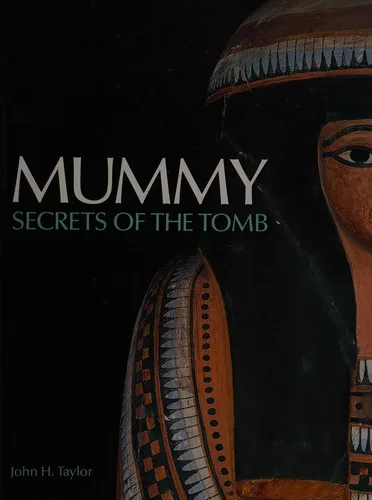
John H. Taylor’s "Mummy" offers a rigorously researched exploration that elevates the subject beyond mere forensic detail. What distinguishes this work is its persistent attention to the *why* behind the preservation, connecting the physical act to profound cosmological beliefs. Taylor meticulously details the chemical processes involving natron and the meticulous removal of organs, but crucially, he frames these actions within the Egyptian understanding of ensuring post-mortem existence and a transition to divine status. A minor limitation might be its dense academic tone, which, while appropriate for the subject, could challenge readers unfamiliar with Egyptological terminology. The chapter discussing the funerary rituals accompanying the interment of the mummy provides a particularly strong illustration of the integration of physical preservation and spiritual passage. "Mummy" succeeds in illuminating a fundamental aspect of ancient Egyptian spiritual life.
📝 Description
83
John H. Taylor's 2011 book "Mummy" examines mummification beyond history to its symbolic and ritualistic dimensions.
Published in 2011, John H. Taylor's "Mummy" moves beyond a simple historical account to investigate the practice of mummification and its deeper symbolic and ritualistic meanings. The book scrutinizes the materials, methods, and theological ideas that made body preservation central to ancient cultures. It considers how these practices aimed to ensure continuity beyond physical existence, linking them to ancient conceptions of the afterlife and cosmic order.
This text is for students of ancient Egyptian religion and funerary practices, and for those interested in the cross-cultural study of death rituals and their spiritual implications. Scholars of comparative mythology, archaeology, and the history of magic will find its detailed analysis of preservation techniques and their symbolic weight valuable. Readers drawn to the esoteric aspects of ancient civilizations will also find its exploration of the philosophical and religious frameworks behind mummification illuminating.
Taylor's work engages with the esoteric traditions surrounding ancient Egyptian beliefs about death and rebirth. It focuses on the practical and philosophical underpinnings of mummification, viewed not merely as a funerary custom but as a method to facilitate the deceased's transition and continued existence in the afterlife. The book delves into how the physical body's preservation was essential for the survival of the soul's aspects, a concept central to many ancient spiritual systems that sought to bridge the material and immaterial worlds.
💡 Why Read This Book?
• Gain a nuanced understanding of the *ka* and *ba* concepts, learning how the physical preservation of the mummy was intrinsically linked to the Egyptian belief in the soul's eternal existence, a detail often glossed over in general histories. • Grasp the specific significance of natron in the mummification process, understanding its dual role as a chemical agent and a ritualistic element facilitating transformation, as detailed in the book's sections on preservation techniques. • Explore the integral connection between funerary texts, such as the Book of the Dead, and the physical state of the mummy, recognizing how spells and rituals were designed to aid the preserved individual in their perilous journey through the Duat.
⭐ Reader Reviews
Honest opinions from readers who have explored this book.
❓ Frequently Asked Questions
What specific chemical agents were central to the mummification process described in John H. Taylor's "Mummy"?
The primary chemical agent highlighted in "Mummy" is natron, a naturally occurring salt mixture. Taylor details how this substance was crucial for the desiccation of the body, effectively preventing decomposition and preparing it for eternal preservation.
How does "Mummy" by John H. Taylor connect mummification to Egyptian concepts of the afterlife?
Taylor's "Mummy" posits that the preservation of the physical body was essential for the continuity of the *ka* (life force) and *ba* (soul or personality) in the afterlife. The mummy served as an anchor for these spiritual components.
What is the significance of the *ka* and *ba* in the context of ancient Egyptian beliefs about mummification?
The *ka* represented the vital essence or life force, while the *ba* embodied the individual's unique character and spirit. "Mummy" explains that both were believed to require the intact physical body to survive and function in the Duat.
Does "Mummy" discuss the role of specific funerary texts in the mummification process?
Yes, John H. Taylor's "Mummy" explores the function of funerary texts, such as the Book of the Dead. These texts provided spells and guidance for the deceased, ensuring their safe passage and successful transition in the underworld.
When was John H. Taylor's "Mummy" first published?
John H. Taylor's "Mummy" was first published in 2011. This allows the work to incorporate more recent archaeological findings and scholarly interpretations alongside established Egyptological knowledge.
Beyond historical description, what deeper dimensions does "Mummy" explore regarding mummification?
"Mummy" delves into the symbolic and ritualistic aspects of preservation, examining it as a transformative act that conferred divinity upon the deceased and ensured cosmic order, rather than just a funerary custom.
🔮 Key Themes & Symbolism
Body as Cosmic Anchor
The central argument in "Mummy" posits that the physical body, meticulously preserved through mummification, was not merely a relic but a vital conduit for the deceased's continued existence. Taylor details how the Egyptians viewed the body as a stable anchor for the incorporeal aspects, such as the *ka* and *ba*. This preservation ensured that these vital spiritual components could work through the perilous journey through the Duat and achieve a form of divine immortality, thereby maintaining a connection between the earthly and celestial realms.
Ritual Transformation and Divinity
Taylor's work emphasizes that mummification was understood as a profound ritual of transformation, aiming to elevate the deceased from mortal to divine status. The elaborate process, from the removal of organs to the bandaging and enshrinement, was imbued with sacred meaning. This transformation was not just about preventing decay but about conferring an eternal, god-like existence upon the individual, mirroring the resurrection myths central to Egyptian cosmology, particularly those associated with Osiris.
The Duat and the Preserved Self
The book elucidates the critical relationship between the physical mummy and the spiritual journey through the Duat, the Egyptian underworld. Taylor highlights how funerary texts, like the Book of the Dead, were essential guides, offering spells and knowledge necessary for the deceased to overcome obstacles and judges. The intact, preserved body was believed to be crucial for the successful manifestation and continued existence of the individual's spiritual essence within this complex afterlife landscape.
Materiality and Symbolism of Preservation
"Mummy" scrutinizes the materials and methods employed, such as the use of natron, linen, and resins, not just for their practical efficacy in preservation but for their symbolic resonance. Taylor explains how these elements were integral to the ritual, contributing to the body's transformation and its symbolic representation as an idealized, divine form. The very act of preservation thus became a powerful symbolic statement about the desire for eternal life and cosmic continuity.
💬 Memorable Quotes
Direct passages from the work, attributed to the author.
“The preservation of the physical body was inseparable from the Egyptians' conception of continued existence beyond death.”
— This statement underscores the core thesis that mummification was not merely a funerary practice but a theological necessity for the soul's persistence in the afterlife, highlighting the integral link between corporeal integrity and spiritual immortality.
“Natron served as both a desiccant and a purificatory agent in the ritual of transformation.”
— This highlights the dual function of natron, emphasizing its practical role in drying the body to prevent decay while also acknowledging its ritualistic significance in purifying the deceased for their divine transition.
“The mummy was the physical anchor for the *ka* and *ba* in their post-mortem journey.”
— This interpretation explains the mummy's role as a stable, tangible point of reference for the intangible spiritual aspects of the individual, crucial for their survival and function in the Egyptian afterlife, the Duat.
“Funerary texts provided the essential knowledge for reading through the trials of the Duat.”
— This emphasizes the practical and spiritual guidance offered by texts like the Book of the Dead, framing them as indispensable tools for the deceased to successfully traverse the underworld and achieve eternal life.
“Mummification was an act of conferring divinity upon the deceased.”
— This interpretation captures the transformative goal of the practice, suggesting that the preservation process aimed to elevate the individual from mortal status to a divine or semi-divine state, aligning them with the gods.
🌙 Esoteric Significance
Tradition
The work "Mummy" by John H. Taylor situates itself within the broader study of ancient Egyptian religion, which has significant intersections with esoteric traditions like Hermeticism and Gnosticism. These traditions often draw upon Egyptian cosmology, viewing the preservation of the body as a metaphor for spiritual regeneration and the preservation of divine essence. Taylor's detailed examination of mummification practices provides source material for understanding ancient conceptions of death, resurrection, and the soul's journey, concepts frequently reinterpreted in later esoteric movements seeking to unlock the secrets of immortality and cosmic consciousness.
Symbolism
Central symbols explored include the mummy itself, representing the transformed, eternal self, and the organs, often preserved separately in canopic jars, symbolizing different aspects of the deceased's being requiring protection. The Book of the Dead, frequently discussed, acts as a symbolic map and guide for the soul's journey through the Duat. Furthermore, the desiccation process using natron can be interpreted esoterically as a purification rite, stripping away the transient earthly form to reveal the incorruptible, divine essence within, mirroring alchemical processes of separation and purification.
Modern Relevance
Contemporary esoteric practitioners and scholars of comparative religion continue to draw upon the rich symbolic language of ancient Egyptian mummification as explored in works like Taylor's. Modern occult orders and spiritual movements often incorporate Egyptian motifs and concepts into their rituals and teachings on initiation, death, and rebirth. The emphasis on preserving the physical form as a vehicle for eternal consciousness appeals to modern discussions on consciousness transfer and the nature of the soul, making the ancient practice a continued source of fascination and symbolic interpretation.
👥 Who Should Read This Book
• Students of ancient Egyptian religion and funerary customs seeking a detailed, academic exploration of mummification beyond introductory texts. • Comparative religion scholars interested in death rituals, the concept of the soul, and ancient beliefs about the afterlife across different cultures. • Individuals drawn to the esoteric dimensions of ancient civilizations, wishing to understand the philosophical and spiritual underpinnings of practices aimed at achieving immortality.
📜 Historical Context
The late 19th and early 20th centuries witnessed a surge of interest in ancient Egypt, fueled by archaeological expeditions that unearthed vast quantities of funerary materials. This era, marked by the work of scholars like Flinders Petrie and the discovery of Tutankhamun's tomb in 1922, brought Egyptian burial practices, including mummification, into sharp global focus. Early scholarship often focused on cataloging and material culture. However, a deeper engagement with the religious and cosmological underpinnings began to emerge. John H. Taylor's "Mummy" (2011) enters this ongoing scholarly dialogue, benefiting from decades of cumulative research and advanced analytical techniques. While earlier works might have focused on the empirical aspects, Taylor's text builds upon the interpretive frameworks established by Egyptologists who sought to understand the spiritual motivations behind these elaborate rituals, placing it within a continuous academic tradition of exploring Egyptian eschatology.
📔 Journal Prompts
The role of the mummy as an anchor for the *ka* and *ba*.
The ritualistic significance of natron in the desiccation process.
How the Book of the Dead functioned as a guide for the preserved individual.
The concept of the deceased achieving divine status through mummification.
The connection between the physical preservation of the body and spiritual continuity.
🗂️ Glossary
Ka
In ancient Egyptian belief, one of the spiritual components of a person, often translated as 'life force' or 'vital essence'. The *ka* was believed to require sustenance and a dwelling place, often provided by the tomb and offerings.
Ba
Another spiritual component, typically translated as 'soul' or 'personality'. The *ba* was often depicted as a human-headed bird, capable of leaving the tomb during the day and rejoining the body at night.
Natron
A naturally occurring mixture of sodium carbonate decahydrate and sodium bicarbonate, found in dried lake beds. It was crucial in ancient Egyptian mummification for its desiccating properties, effectively drying out the body.
Duat
The ancient Egyptian concept of the underworld or area of the dead. It was a complex place through which the sun god Ra traveled at night and where the deceased faced judgment and transformation.
Book of the Dead
A modern name for an ancient Egyptian funerary text, consisting of a collection of spells intended to assist a dead person's journey through the Duat to the afterlife. It was not a single book but a compilation customized for individuals.
Evisceration
The surgical removal of the internal organs from the body cavity. In mummification, this was a key step to prevent rapid decomposition, with organs often preserved separately in canopic jars.
Canopic Jars
Containers used by ancient Egyptians to store the eviscerated internal organs (stomach, intestines, lungs, liver) of a deceased person, intended for use in the afterlife. They were often topped with lids representing the four sons of Horus.
🔮 Readers Also Liked
Browse all →








More Free Occult Philosophy Books
View all →