Hindu Mythology
 72
72

Hindu Mythology
W. J. Wilkins' Hindu Mythology offers a methodical and encyclopedic survey of a subject that can often be overwhelming. The text excels in its detailed cataloging of deities, their attributes, and their associated myths, providing a clear structural map of the Hindu pantheon. For instance, the detailed exposition on the lineage and roles of figures within the Ramayana provides a solid foundation for understanding that epic. However, the book's strength in systematic presentation becomes its limitation; it sometimes feels more like a scholarly index than a living exploration of myth. The prose, while accurate, rarely conveys the vibrant, dynamic spirit inherent in these narratives. Wilkins' 1986 publication date also means it lacks engagement with more recent scholarship and interpretations that have emerged since. Despite this, for a foundational, fact-driven understanding of Hindu myths, it remains a valuable, if dry, reference.
📝 Description
72
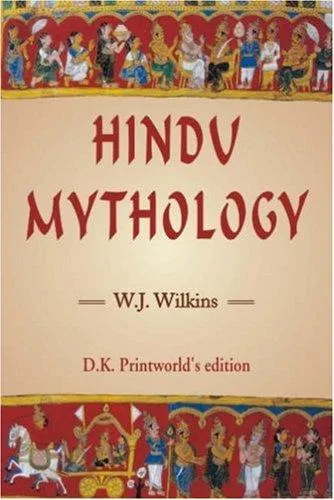
Published in 1986, W. J. Wilkins' Hindu Mythology systematically catalogs the deities and cosmic cycles central to Hinduism.
W. J. Wilkins' Hindu Mythology provides a detailed account of the deities, cosmic cycles, and philosophical ideas that shape Hinduism. The author describes the origins and characteristics of gods and goddesses, explaining their roles in the universe's creation, maintenance, and dissolution. The book seeks to clarify the relationships among divine figures and their impact on human life and destiny.
This work is structured as a descriptive catalog of myths, aiming for a factual approach rather than a devotional or interpretive one. It is suited for readers who prefer clear historical and mythological accounts. The book covers fundamental concepts such as Brahman, Atman, samsara, and karma, detailing the significance of avatars and celestial genealogies. It examines the path to moksha through the interplay of divine forces and human action.
Wilkins' work emerged in 1986, a time when Western interest in Eastern religions was growing, partly due to the Theosophical movement's earlier engagement with Indic traditions. While figures like Swami Vivekananda had been active in bridging Eastern and Western thought, Wilkins' Hindu Mythology offers a more academic and descriptive catalog. It distinguishes itself from more immediate, experiential interpretations by focusing on a systematic presentation of myths and cosmology.
💡 Why Read This Book?
• Gain a structured understanding of the Hindu pantheon's complex hierarchy and relationships, as detailed in the book's systematic cataloging of deities and their genealogies. • Grasp the foundational concepts of *samsara* and *karma* through the mythological narratives presented, providing context for their significance in Hindu philosophy. • Access a clear, factual overview of major Hindu epics and their characters, serving as a reliable reference point distinct from more interpretive or devotional texts.
⭐ Reader Reviews
Honest opinions from readers who have explored this book.
❓ Frequently Asked Questions
What is the original publication year of W. J. Wilkins' Hindu Mythology?
The original publication year for W. J. Wilkins' Hindu Mythology is 1986, making it a significant reference work from that era of Western scholarship on Eastern religions.
Does the book cover the philosophical aspects of Hinduism alongside mythology?
Yes, the book explores key philosophical underpinnings such as Brahman, Atman, samsara, and karma, explaining how these concepts are woven into the mythological narratives.
Who is W. J. Wilkins and what is his approach in this book?
W. J. Wilkins was a scholar focused on presenting a comprehensive and systematic overview of Hindu mythology, emphasizing factual cataloging and historical context over deeply interpretive or devotional approaches.
Are the major Hindu deities like Vishnu and Shiva discussed?
Absolutely. The book meticulously details the origins, characteristics, and roles of major deities, including Vishnu, Shiva, Brahma, and numerous goddesses, within the Hindu cosmology.
Is this book suitable for beginners in the study of Hinduism?
Yes, its structured approach and clear explanations of core concepts and characters make it a suitable starting point for beginners seeking a factual introduction to Hindu mythology.
What specific Hindu texts or epics are referenced in Hindu Mythology?
The work draws upon and references foundational Hindu texts and epics, including detailed discussions of narratives found within the Ramayana and Mahabharata, among others.
🔮 Key Themes & Symbolism
The Trimurti and Cosmic Cycles
The book details the Hindu concept of the Trimurti—Brahma the creator, Vishnu the preserver, and Shiva the destroyer—as fundamental forces governing the cosmic cycles of creation, maintenance, and dissolution. It explains how these deities embody the perpetual flux of existence, and how their interactions and individual myths illustrate the philosophical principles of *samsara* and the unfolding of time within Hindu cosmology. The narrative structure often follows these cyclical patterns, demonstrating the interconnectedness of divine actions and universal processes.
Avatars and Divine Incarnations
A significant theme is the doctrine of avatars, particularly the ten principal incarnations of Vishnu. Wilkins meticulously outlines these manifestations, from Matsya (the fish) to Kalki (the future horseman), interpreting them as divine interventions in earthly affairs to restore cosmic order (*dharma*). Each avatar’s story is presented as a mythological narrative that carries moral and philosophical lessons, illustrating Vishnu's role in guiding humanity through various epochs and crises.
Goddesses and Divine Feminine Power
The work also provides substantial coverage of the various goddesses within the Hindu pantheon, such as Lakshmi, Saraswati, and Durga, alongside their more prominent male consorts. It explores their distinct attributes, powers, and symbolic significance, highlighting the crucial role of the divine feminine in creation, knowledge, and protection. The book examines how these goddesses represent different facets of Shakti, the primordial cosmic energy.
Karma, Dharma, and Moksha
Central to the mythological narratives are the concepts of *karma* (action and its consequences), *dharma* (righteous duty and cosmic order), and *moksha* (liberation from the cycle of rebirth). Wilkins connects these philosophical tenets to the actions and destinies of gods and mortals within the myths, showing how adherence to or transgression of *dharma* influences one's *karma* and spiritual progression towards *moksha*. The stories serve as allegories for these profound spiritual principles.
💬 Memorable Quotes
Direct passages from the work, attributed to the author.
“The universe is represented as revolving in cycles, each followed by destruction and renewal.”
— This interpretation highlights the cyclical nature of existence central to Hindu cosmology, where creation, preservation, and destruction are not linear but recurring phases governed by divine forces.
“Deities often manifest in human or animal form to interact with the mortal realm.”
— This refers to the concept of avatars and divine interventions, emphasizing the permeable boundary between the divine and the mundane in Hindu mythology and the purpose behind such manifestations.
“Duty, or Dharma, dictates the moral and social order.”
— This succinctly captures the foundational principle of Dharma, presenting it as the linchpin for ethical conduct and societal structure within the Hindu philosophical framework.
“Saraswati is the goddess of knowledge, music, and the arts.”
— This defines the domain and significance of Saraswati, a prominent goddess in the Hindu pantheon, representing intellectual and creative pursuits.
💡 Key Ideas
Editorial paraphrase of the work's core concepts — not direct quotes.
The ultimate goal is liberation from the endless cycle of birth and death.
This paraphrase points to Moksha, the supreme objective in Hinduism, articulating the desire to escape Samsara, the continuous process of reincarnation driven by karma.
🌙 Esoteric Significance
Tradition
While not strictly within a single Western esoteric lineage like Hermeticism or Kabbalah, Wilkins' work serves as a crucial bridge for those exploring Eastern traditions from an esoteric perspective. It provides the foundational mythological and cosmological knowledge that underpins many Western occult interpretations of Eastern concepts that became popular through movements like Theosophy. The book's factual cataloging allows practitioners to ground their understanding of symbols and deities that appear in syncretic magical systems.
Symbolism
Key symbols like the *Om* (ॐ), representing the primal sound and ultimate reality, and the *Lotus flower*, symbolizing purity, enlightenment, and cosmic creation, are implicitly explored through the narratives. The cyclical imagery of the Wheel of *Samsara* and the divine serpents (*Nagas*) associated with creation and protection are also significant motifs that Wilkins' work helps to contextualize within their mythological frameworks, offering esoteric practitioners a richer understanding of their symbolic weight.
Modern Relevance
Contemporary practitioners of yoga, meditation, and various forms of comparative spirituality frequently draw upon the foundational knowledge presented in works like Wilkins'. Modern esotericists engaged with concepts of karma, reincarnation, and archetypal deities find this text useful for understanding the source material. Thinkers and groups exploring conscious evolution, the nature of consciousness, and cross-cultural spiritual symbolism continue to reference such comprehensive mythological surveys.
👥 Who Should Read This Book
• Students of comparative mythology and religion: They will benefit from a structured, factual overview of a vast and complex religious tradition, providing essential context for cross-cultural studies. • Seekers of Eastern spiritual philosophies: Readers interested in the philosophical underpinnings of Hinduism, such as karma, dharma, and moksha, will find clear explanations tied to mythological narratives. • Academic researchers and writers: Individuals requiring a reliable reference for Hindu deities, epics, and cosmological concepts will appreciate the book's systematic cataloging and historical approach.
📜 Historical Context
W. J. Wilkins' Hindu Mythology, first published in 1986, entered a landscape significantly shaped by earlier Orientalist scholarship and the burgeoning interest in Eastern religions during the latter half of the 20th century. The post-World War II era saw a continued engagement with Indic traditions, partly spurred by figures associated with the Theosophical Society in the late 19th and early 20th centuries, though Wilkins' approach is notably more academic and less overtly mystical. While scholars like Wendy Doniger were producing influential works on Hindu myths and sexuality around the same period, Wilkins' volume offered a more systematic, almost encyclopedic, cataloging of deities and narratives. It distinguished itself from more devotional or philosophical treatises by focusing on descriptive ethnography and mythological structure, aiming to provide a comprehensive overview for Western readers rather than a spiritual guide.
📔 Journal Prompts
The Trimurti's cosmic roles (creation, preservation, destruction) and their symbolic representation.
The concept of *Dharma* as illustrated through the actions of a specific deity or hero.
The significance of Vishnu's avatars and their impact on the world.
The attributes and powers of a chosen Hindu goddess.
Personal reflections on the cyclical nature of existence as depicted in Hindu mythology.
🗂️ Glossary
Brahman
The ultimate, unchanging reality or absolute consciousness in Hinduism. It is the supreme cosmic spirit, the source and sustainer of all existence, beyond all attributes and description.
Atman
The individual soul or self, often considered to be identical with Brahman. It represents the eternal, unchanging essence of a living being, distinct from the physical body and mind.
Samsara
The continuous cycle of birth, death, and rebirth (reincarnation) that sentient beings undergo. It is driven by karma and is considered a state of suffering from which liberation is sought.
Karma
The law of cause and effect, where actions (karma) in this life and past lives determine one's future circumstances and rebirths. It encompasses both moral and physical consequences.
Dharma
One's duty, righteousness, ethical conduct, and cosmic order. It encompasses social, religious, and moral obligations that maintain balance and harmony in the universe.
Moksha
Liberation or release from the cycle of Samsara. It is the ultimate spiritual goal in Hinduism, signifying union with Brahman or attainment of eternal peace.
Avatar
A divine incarnation or manifestation of a deity, most notably Vishnu, who descends to earth in physical form to restore cosmic order or guide humanity.
🔮 Readers Also Liked
Browse all →









More by W. J. Wilkins
All books →

More Free Occult Philosophy Books
View all →