Death's Shadow

 83
83

Death's Shadow
Darren Shan's "Death's Shadow" presents a stark, unflinching look at the consequences of a life lived without regard for others. The premise, focusing on a soul's accounting after death, is fertile ground for exploring morality. Shan excels at creating a palpable sense of dread and introspection, particularly in passages detailing the protagonist's confrontation with specific past actions. However, the narrative occasionally falters under the weight of its own grimness; the relentless focus on despair, while thematically relevant, can become monotonous without sufficient moments of genuine hope or intellectual breakthrough. The conceptual framework for the afterlife, while intriguing, feels somewhat underdeveloped compared to the character's internal torment. It's a somber, if not entirely satisfying, exploration of judgment.
📝 Description
83
Darren Shan's Death's Shadow, published in 2008, examines mortality and the soul's journey.
This 2008 novel follows a soul's passage after death, confronting the consequences of earthly actions. Shan's narrative delves into themes of regret, the possibility of redemption, and the nature of judgment. The story does not shy away from the darker elements of existence, using a fictional plot to explore existential questions.
Readers interested in philosophical fiction that dissects the human condition through the lens of mortality will find material for thought. Those who appreciate allegorical storytelling that questions common beliefs about the end of life will recognize its contemplative nature. The book is suited for individuals seeking spiritual or metaphysical concepts woven into a story.
Published in 2008, "Death's Shadow" engages with themes common in spiritualist and esoteric traditions concerning the afterlife. While not directly affiliated with a specific historical movement, its exploration of the soul's journey and judgment echoes concepts found in spiritualism, Theosophy, and various afterlife belief systems that have been present for centuries. The work contributes to a literary tradition that uses narrative to explore existential and metaphysical questions, a tradition that has seen renewed interest in popular culture.
💡 Why Read This Book?
• Gain a visceral understanding of karmic consequence through the protagonist's journey, illustrating how actions in life directly shape the afterlife experience as depicted in the narrative. • Explore the nature of personal accountability by witnessing the protagonist confront specific past deeds, offering a fictionalized model for self-reflection and reckoning. • Contemplate the subjective reality of existence beyond death, as the book details the protagonist's perception of the post-mortem realm, prompting questions about consciousness and reality.
⭐ Reader Reviews
Honest opinions from readers who have explored this book.
❓ Frequently Asked Questions
What is the main theme explored in Darren Shan's "Death's Shadow"?
The primary theme is the soul's journey after death, focusing on the accounting of one's life, the consequences of actions, and the potential for judgment or transformation.
When was "Death's Shadow" by Darren Shan first published?
"Death's Shadow" was first published in 2008, placing it within a period of contemporary interest in supernatural and existential narratives.
Does "Death's Shadow" offer a hopeful perspective on death?
The book presents a more somber and introspective view, emphasizing accountability and consequence. While there's potential for transformation, hope is depicted as hard-won through confrontation with past actions.
Is "Death's Shadow" part of a series?
Yes, "Death's Shadow" is part of Darren Shan's "The Demonata" series, specifically the sixth book in that sequence.
What kind of philosophical ideas does the book touch upon?
It explores ideas related to existentialism, the nature of good and evil, personal responsibility, and the subjective experience of reality, particularly in the context of an afterlife.
Who is the author Darren Shan and what is he known for?
Darren Shan is an Irish author known for his dark fantasy and horror works for young adults, including the popular "Cirque du Freak" series and "The Demonata" series.
🔮 Key Themes & Symbolism
The Soul's Reckoning
The book centers on the concept of a soul's post-mortem accounting. It posits that upon death, an individual confronts the totality of their actions, both good and bad. This isn't a passive judgment but an active process where memories and experiences are re-evaluated, leading to a form of existential consequence. The narrative explores how the weight of past deeds dictates the nature of the soul's subsequent existence, emphasizing personal responsibility over external decree.
Subjectivity of Afterlife
Shan presents the afterlife not as a fixed, objective realm but as one profoundly shaped by the individual's consciousness and perception. The landscape and experiences encountered by the protagonist are manifestations of their internal state, fears, and regrets. This theme suggests that the 'hell' or 'heaven' one experiences is largely a construct of their own making, a reflection of their unresolved issues and their capacity for self-awareness.
Confrontation with Regret
A significant element is the deep dive into the protagonist's regrets. The narrative forces the character to relive and re-examine moments of failure, cruelty, or missed opportunities. This process is depicted as agonizing but necessary for any form of progression or understanding. It highlights the idea that true peace or resolution can only come through facing uncomfortable truths about oneself.
The Nature of Identity
As the protagonist navigates the post-mortem state, their sense of self is challenged. Stripped of their physical form and earthly identity, they must grapple with what remains. The book explores whether identity is tied to actions, memories, or an intrinsic essence. This deconstruction of identity serves to underscore the book's focus on internal states and personal accountability.
💬 Memorable Quotes
Direct passages from the work, attributed to the author.
“Every moment of my life flashed before my eyes, not as a pleasant recollection, but as a series of accusations.”
— This highlights the book's focus on a judgmental afterlife, where past actions are not recalled fondly but serve as evidence against the individual, emphasizing guilt and consequence.
“The landscape shifted with my thoughts, a mirror to the turmoil within.”
— This illustrates the theme of subjective reality in the afterlife, suggesting that the environment is a projection of the soul's internal state rather than an external, objective place.
“Even in death, the thirst for understanding remained, a desperate need to comprehend the chaos I had sown.”
— This speaks to the enduring nature of consciousness and the pursuit of meaning, even after physical demise, framing the post-mortem experience as a quest for self-knowledge.
“The shadows were not empty; they were filled with the traces of choices I could no longer undo.”
— This vividly portrays the inescapable nature of past actions in the afterlife, suggesting that consequences manifest as lingering presences or reminders of decisions made during life.
💡 Key Ideas
Editorial paraphrase of the work's core concepts — not direct quotes.
I had always believed in judgement, but I never imagined it would be a judgement I inflicted upon myself.
This quote directly addresses the idea of self-inflicted damnation or reckoning, positioning the afterlife as a consequence of one's own conscience and moral framework.
🌙 Esoteric Significance
Tradition
The work engages with themes resonant in Gnostic and Hermetic traditions, particularly the idea of the soul's journey through realms influenced by its own spiritual state and past actions. It departs from strict adherence by focusing on a more psychological and less cosmologically defined afterlife, emphasizing personal responsibility over complex divine hierarchies or archontic forces.
Symbolism
The 'shadows' represent not just darkness but the lingering presence of past actions and unresolved guilt. The shifting landscape symbolizes the subjective nature of consciousness and how one's internal state dictates their perceived reality, a concept explored in various mystical traditions where the mind shapes the outer world.
Modern Relevance
Contemporary thinkers exploring consciousness studies, the psychology of death and dying, and narrative therapy might find "Death's Shadow" a compelling fictional case study. Its exploration of self-created realities and internal judgment aligns with modern discussions on mindfulness and the power of subjective perception in shaping well-being.
👥 Who Should Read This Book
• Readers interested in existential philosophy and the nature of consciousness after death, seeking fictional explorations of post-mortem judgment. • Fans of Darren Shan's darker fantasy works, particularly those within "The Demonata" series, who appreciate allegorical storytelling. • Individuals seeking narratives that challenge conventional views of morality and consequence, offering a stark perspective on personal accountability.
📜 Historical Context
Published in 2008, "Death's Shadow" arrived during a period of sustained popular engagement with supernatural fiction and explorations of mortality, influenced by trends seen in series like "Supernatural" and a continued interest in spiritualism. While not directly aligned with a single historical esoteric school, its themes echo concerns present in Gnosticism's focus on the soul's journey through perilous spiritual realms and the concept of ignorance leading to entrapment. The work emerged decades after the foundational texts of modern occultism, such as those by Aleister Crowley and the Hermetic Order of the Golden Dawn in the late 19th and early 20th centuries, had popularized intricate mythologies of the afterlife. Shan's narrative, however, offers a more personal and psychological interpretation of these concepts, diverging from the more ritualistic or codified systems of earlier esoteric movements. Its reception was within the broader fantasy and young adult literature market, rather than specific esoteric circles, yet it tapped into a widespread fascination with what lies beyond.
📔 Journal Prompts
The accusations presented by the shadows: What past actions would be most prominent in your personal reckoning?
Confrontation with regret: Identify a specific instance where you wish you had acted differently and explore its impact.
The shifting range of the afterlife: How would your internal state manifest visually in a subjective realm?
The thirst for understanding: What fundamental questions about life and death drive your own quest for meaning?
Self-inflicted judgment: Reflect on moments where your own conscience served as the harshest judge.
🗂️ Glossary
The Reckoning
The post-mortem process where a soul confronts and is judged by its past actions and life experiences, often depicted as a deeply personal and introspective ordeal.
Subjective Reality
The concept that an individual's perception and consciousness shape their experience of the world, particularly emphasized in the afterlife where the environment mirrors the soul's internal state.
Soul's Journey
The narrative arc of a consciousness or spirit as it transitions from physical life into an afterlife, facing trials, judgments, or transformations.
Traces of Choices
Manifestations or lingering presences in the afterlife that represent the consequences and impacts of decisions made during one's mortal life.
Internal State
The psychological condition, emotions, memories, and unresolved issues of an individual, which are portrayed as directly influencing their experience of the post-mortem world.
Personal Accountability
The ethical principle that individuals are responsible for their own actions and decisions, a core theme driving the protagonist's post-mortem experience.
The Demonata
The series to which "Death's Shadow" belongs, known for its dark fantasy themes, graphic content, and exploration of demonic forces and the apocalypse.
🔮 Readers Also Liked
Browse all →








More by Darren Shan
All books →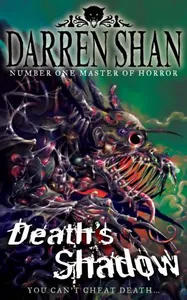



More Free Occult Philosophy Books
View all →