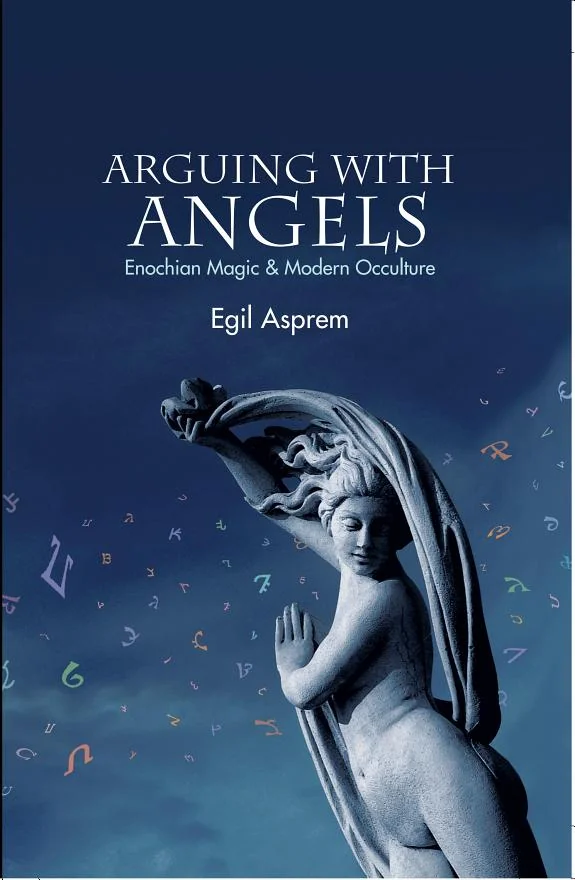
Arguing with Angels
 82
82

Arguing with Angels
Egil Asprem’s "Arguing with Angels" offers a welcome corrective to the often-hagiographic or dismissive treatments of John Dee's Enochian system. Rather than simply recounting Dee's angelic visions, Asprem meticulously dissects the historical context and the intellectual framework that made such an undertaking possible in the late 16th century. The book's strength lies in its rigorous scholarship, presenting Enochian magic not as mere fantasy but as a product of its time, deeply intertwined with Renaissance Neoplatonism and Kabbalah. A particularly illuminating section details the later adaptations of the Enochian system by figures like William Wynn Westcott and Samuel Liddell MacGregor Mathers within the Hermetic Order of the Golden Dawn, illustrating how the original material was both preserved and transformed. Its primary limitation, perhaps, is that its academic tone may prove dense for readers without prior exposure to esoteric history. Asprem's nuanced exploration of the "angel contact" phenomenon, however, provides a vital lens for understanding its persistent influence on modern occultism. This is essential reading for anyone serious about the history of Western magic.
📝 Description
82
Egil Asprem's 2012 book examines John Dee's 16th-century Enochian magic system.
Arguing with Angels analyzes John Dee's 16th-century system for communicating with angels, known as Enochian magic. The book details the origins of this practice, Dee's personal experiences, and the complex angelic language he claimed to have received. It places Dee's work within its historical context, a time marked by religious change and a strong interest in the occult. Asprem's study is written for those seriously interested in Western esotericism, especially ceremonial magic, Renaissance occultism, and religious history.
Readers benefit from some prior knowledge of esoteric ideas and historical research. The book is suitable for academics studying magic, historians of science and religion, and practitioners who want a scholarly look at Enochian practices, moving beyond simple explanations. Asprem discusses how Dee's system fits into Elizabethan England's intellectual and spiritual environment. It considers how Dee's work built on Hermetic and Kabbalistic traditions while also creating something new. The analysis includes Dee's partnerships, like the one with Edward Kelley, and the difficulties he had in sharing and proving his angelic messages.
This book situates John Dee's Enochian system within the Hermetic and Kabbalistic traditions that were active during the Renaissance. Dee's attempts at angelic communication represent a significant, though often misunderstood, branch of Western esotericism. His work, particularly his creation of a unique language for angelic discourse, reflects a period where the boundaries between magic, religion, and science were not clearly defined. The book addresses how later esoteric groups, such as the Hermetic Order of the Golden Dawn and figures like Aleister Crowley, reinterpreted and utilized Dee's system.
💡 Why Read This Book?
• Learn about the specific historical conditions in Elizabethan England that fostered John Dee's unique system of angelic communication, providing context beyond simple occult fascination. • Understand the structural intricacies and purported divine origins of the Enochian language, including its grammar and vocabulary, as detailed in Dee's original records. • Discover how later esoteric orders, such as the Hermetic Order of the Golden Dawn in the late 19th century, reinterpreted and utilized Dee's Enochian magic, revealing its adaptive legacy.
⭐ Reader Reviews
Honest opinions from readers who have explored this book.
❓ Frequently Asked Questions
When was John Dee's Enochian magic system first developed?
John Dee's work on the Enochian system, involving purported angelic communications, primarily took place between 1582 and 1589. His diaries and manuscripts from this period are the primary sources for this complex magical framework.
Who was Edward Kelley in relation to John Dee's angelic system?
Edward Kelley was John Dee's scryer and assistant. Kelley claimed to receive angelic messages and languages during scrying sessions, which Dee meticulously recorded and attempted to integrate into his magical practice.
What is the Enochian language?
The Enochian language is an constructed language that John Dee and Edward Kelley claimed was revealed to them by angels. It features a unique alphabet and grammar, and forms the basis of Dee's complex system of ceremonial magic.
How did the Hermetic Order of the Golden Dawn engage with Enochian magic?
In the late 19th century, members of the Hermetic Order of the Golden Dawn, such as William Wynn Westcott and Samuel Liddell MacGregor Mathers, studied and adapted John Dee's Enochian system, incorporating elements into their own magical teachings and rituals.
Is 'Arguing with Angels' a practical guide to performing Enochian magic?
No, 'Arguing with Angels' is primarily an academic and historical exploration of John Dee's Enochian system. It focuses on the origins, context, and evolution of the practice rather than providing step-by-step instructions for its performance.
What was the intellectual climate like during John Dee's work with angels?
During the late 16th century, there was significant interest in Hermeticism, Kabbalah, and Neoplatonism. John Dee's work occurred amidst religious tensions and a burgeoning scientific inquiry, influencing how his angelic system was perceived and developed.
🔮 Key Themes & Symbolism
The Nature of Angelic Contact
The book critically examines John Dee's concept of "angel contact," distinguishing it from later spiritualist or mediumistic phenomena. Asprem analyzes Dee's meticulous methods for recording these purported communications, emphasizing the intellectual and theological framework that informed Dee's belief in direct divine or angelic interaction during the late 16th century. The work explores the challenges in verifying such experiences and how Dee himself attempted to legitimize his angelic dialogues within the context of Renaissance occult philosophy and Christian angelology.
Enochian Language and Structure
Central to the study is the Enochian language, a key component of Dee's system. Asprem details its unique alphabet, grammar, and vocabulary, presenting it as more than mere glossolalia. The book investigates theories regarding its origin—whether divinely inspired, cryptographically encoded, or a product of Dee and Kelley's subconscious. The linguistic structure is analyzed in relation to contemporary knowledge of languages and its function within the ceremonial magic designed to invoke angelic beings.
Legacy and Reinterpretation
Asprem traces the enduring legacy of Enochian magic from Dee's era through subsequent esoteric movements. The work highlights how groups like the Hermetic Order of the Golden Dawn in the late 19th century adopted and adapted Dee's system, often for purposes different from Dee's original intent. This section explores the evolution of Enochian practices, the debates surrounding their authenticity, and their continued presence in modern occultism, demonstrating the system's resilience and capacity for transformation across centuries.
Renaissance Occultism
The book contextualizes Dee's Enochian system within the broader range of Renaissance occultism. It examines the confluence of Hermeticism, Kabbalah, alchemy, and Christian mysticism that characterized the intellectual environment of the 16th century. Asprem illustrates how Dee's work, while unique, was deeply embedded in these traditions, reflecting a period where magic, science, and religion were often indistinguishable, and where the exploration of hidden knowledge was pursued with intense scholarly rigor.
💬 Memorable Quotes
Direct passages from the work, attributed to the author.
“The Enochian system emerged from a specific historical moment, blending existing esoteric currents with novel claims of angelic revelation.”
— This highlights that Dee's magic wasn't created in a vacuum but was a product of its time, integrating established occult ideas with his unique visionary experiences.
“Dee's meticulous recording of angelic dialogues suggests a rigorous, scholarly approach to his occult pursuits.”
— This interpretation emphasizes Dee's dedication and methodical nature, portraying him as a serious researcher rather than a mere dabbler in the supernatural.
“Later esoteric orders significantly adapted the Enochian language and practices for their own ceremonial frameworks.”
— This points to the evolution of Enochian magic, noting how subsequent magical groups modified Dee's original system to fit their own doctrines and rituals.
“The reception of Dee's angelic system varied greatly, from outright dismissal to fervent adoption.”
— This suggests that John Dee's controversial work faced a spectrum of reactions throughout history, underscoring its contentious nature and impact.
“Understanding the intellectual currents of the Elizabethan era is crucial to grasping Dee's engagement with angelic beings.”
— This emphasizes the importance of historical context, arguing that Dee's beliefs and practices can only be fully understood by examining the prevailing philosophical and religious ideas of his time.
🌙 Esoteric Significance
Tradition
Arguing with Angels situates John Dee's Enochian magic within the Western Esoteric Tradition, specifically drawing from Hermeticism and Kabbalah, prevalent during the Renaissance. It departs from purely theoretical magic by presenting a system allegedly derived from direct angelic dictation. Unlike earlier Hermetic texts focused on divine emanations or alchemical transformation, Dee's system introduced a complex, divinely revealed language and a detailed angelic hierarchy intended for practical invocation and communication, marking a unique development.
Symbolism
Key symbols include the "Enochian Tables ofXVII" and the "Aethyrs." The Tables are intricate charts representing the angelic hierarchy and realms, serving as focal points for ritual. The Aethyrs represent successive spiritual planes or "heavens" that the magician ascends through, a concept deeply rooted in Neoplatonic cosmology. These symbols are not mere allegories but are presented as functional tools within the magical system, designed to facilitate spiritual travel and communication.
Modern Relevance
Contemporary occultists and scholars continue to engage with Dee's Enochian system. Modern practitioners, often working within traditions influenced by Aleister Crowley or the Golden Dawn, utilize and adapt the Enochian language and rituals. Scholars of esotericism frequently cite Dee's work as an important moment in the history of ceremonial magic and the development of constructed languages for magical purposes, highlighting its lasting impact on how Western magic is conceptualized and practiced today.
👥 Who Should Read This Book
• Students of Renaissance history and philosophy interested in the intersection of religion, science, and occultism during a period of significant intellectual upheaval. • Practitioners of Western ceremonial magic seeking a scholarly and historically grounded understanding of the origins and evolution of Enochian practices. • Comparative religion scholars examining the phenomenon of claimed divine revelation and the development of unique magical systems within specific cultural and historical contexts.
📜 Historical Context
Published in 2012, "Arguing with Angels" arrives at a time of renewed academic and popular fascination with John Dee, a figure previously often marginalized. The late 16th century, Dee's active period, was a crucible of intellectual change, marked by intense religious conflict following the Reformation and a vibrant resurgence of Hermetic, Kabbalistic, and Neoplatonic thought. This era saw the lines between nascent science, theology, and magic blur considerably. Dee's work with Edward Kelley occurred against this backdrop, where divine inspiration and intellectual inquiry were not mutually exclusive. While contemporaries like Giordano Bruno explored cosmic theories, Dee focused on direct angelic communication. The book implicitly engages with the historical reception of Dee's work, which oscillated between viewing him as a learned scholar, a misguided mystic, or even a charlatan, particularly after the sensational aspects of his angelic experiments became known.
📔 Journal Prompts
The structure and reception of the Enochian language.
John Dee's methods for verifying angelic communication.
The influence of Renaissance Neoplatonism on Dee's angelic system.
How later esoteric orders reinterpreted the Enochian Tables.
The perceived differences between Dee's angel contact and modern mediumship.
🗂️ Glossary
Enochian Magic
A system of ceremonial magic derived from the purported communications between John Dee and angelic beings, primarily involving a unique language, alphabet, and detailed cosmology.
John Dee
An English mathematician, astronomer, astrologer, occultist, and consultant to Queen Elizabeth I, known for his extensive diaries detailing his work with angels and the Enochian system.
Edward Kelley
Dee's associate and scryer, who claimed to receive angelic messages and languages during their joint magical operations in the late 16th century.
Enochian Language
A complex, constructed language presented by Dee and Kelley as divinely revealed by angels, featuring its own alphabet, grammar, and vocabulary used in magical workings.
Aethyrs
In Dee's cosmology, these are thirty-one spiritual realms or planes of existence that the magician ascends through during certain Enochian rituals.
Hermetic Order of the Golden Dawn
A late 19th-century secret society that played a significant role in developing and disseminating modern Western esoteric traditions, including the adaptation of Enochian magic.
Renaissance Neoplatonism
A revival of Platonic and Neoplatonic philosophy during the Renaissance, emphasizing concepts of divine emanations, the spiritual ascent of the soul, and the hidden order of the cosmos.
This book appears in 1 collection
🔮 Readers Also Liked
Browse all →








From the “Enochian Magic” Collection
View all →



More Free Magic & Ritual Books
View all →