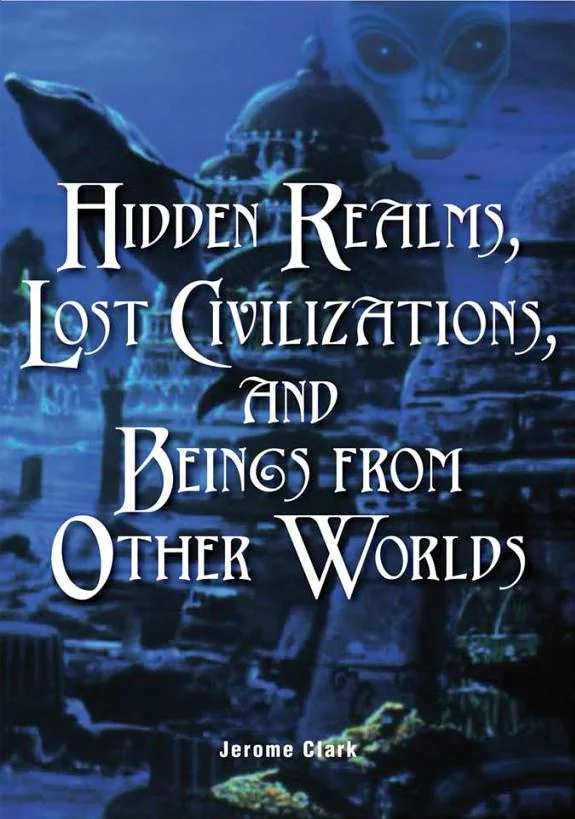
Hidden Realms, Lost Civilizations, and Beings from Other Worlds
 83
83

Hidden Realms, Lost Civilizations, and Beings from Other Worlds
Jerome Clark's extensive catalog of the unexplained often focuses on UFOs, but "Hidden Realms, Lost Civilizations, and Beings from Other Worlds" broadens his scope considerably. The book's primary strength lies in its sheer breadth, touching upon everything from the sunken continent of Atlantis to the lore surrounding subterranean civilizations and alleged alien encounters. Clark’s meticulous research, evident in his careful examination of source material, lends credibility to even the most outlandish claims he presents. A notable passage discusses the persistence of Lemurian myths, linking them to early 20th-century esoteric thought. However, the work occasionally suffers from a lack of deep critical engagement; while Clark presents information thoroughly, he sometimes stops short of offering definitive conclusions or fully dissecting the psychological or sociological underpinnings of the phenomena he describes. Despite this, the book serves as an invaluable compendium for anyone seeking a comprehensive overview of humanity's enduring myths of hidden worlds. It remains a solid reference for speculative history and anomalous phenomena.
📝 Description
83
Jerome Clark's 2010 book examines humanity's long-standing interest in mythical places and alleged otherworldly visitors.
Published in 2010, Jerome Clark's "Hidden Realms, Lost Civilizations, and Beings from Other Worlds" surveys humanity's persistent curiosity about the unknown. The book gathers and analyzes accounts of legendary locations, vanished cultures, and purported extraterrestrial visitors. Clark, a researcher known for his work on unexplained phenomena, covers a broad spectrum of subjects, moving from ancient myths to contemporary UFO reports. The work is suited for readers interested in the connections between mythology, history, and speculation. Those drawn to legends of Atlantis or the survival of Lemuria will find substantial material here. It also serves those who study anomalous phenomena and desire a structured overview of various claims about non-human intelligence and ancient advanced societies.
The book originates from a long history of exploring hidden histories and alternative cosmologies, a lineage that includes figures like Helena Blavatsky and Charles Fort. Clark's effort is to provide a curated, critically examined compilation, separating folklore from speculative fiction and reported phenomena. Central to the book is the idea of the 'hidden realm' itself, whether a physical, lost continent like Mu, an interdimensional space, or a symbolic representation of lost knowledge. Clark also addresses the concept of 'otherworldly beings,' including not only extraterrestrials but also figures from folklore and esoteric traditions. The book assesses the evidence, or lack thereof, for these entities and places, prompting readers to differentiate between.
This book enters a tradition of inquiry into hidden histories and alternative worldviews, following in the footsteps of researchers like Charles Fort and Helena Blavatsky. Published in 2010, it appeared at a time when the internet readily spread both credible research and widespread misinformation on these subjects. Clark's aim was to offer a carefully selected and evaluated collection, distinguishing between folklore, imaginative fiction, and actual reported phenomena. He examines the concept of 'hidden realms,' which can be physical, interdimensional, or symbolic, and the idea of 'otherworldly beings,' encompassing both aliens and figures from myth and esoteric lore.
💡 Why Read This Book?
• Gain a structured overview of legendary lost continents like Atlantis and Mu, understanding the historical accounts and speculative theories surrounding their existence, as detailed in Clark's research. • Explore the concept of 'otherworldly beings,' from ancient myths to modern UFO lore, and learn how Jerome Clark differentiates between folklore and reported phenomena. • Understand the historical context of esoteric exploration, recognizing how ideas about hidden realms and advanced civilizations have evolved since the early 20th century.
⭐ Reader Reviews
Honest opinions from readers who have explored this book.
❓ Frequently Asked Questions
What is the primary focus of Jerome Clark's book "Hidden Realms, Lost Civilizations, and Beings from Other Worlds"?
The book focuses on compiling and examining accounts of legendary and mythical places, lost ancient civilizations, and alleged encounters with beings from other worlds, including extraterrestrials.
Does the book discuss Atlantis or Mu?
Yes, "Hidden Realms, Lost Civilizations, and Beings from Other Worlds" extensively discusses both Atlantis and Mu, exploring the legends, theories, and historical contexts associated with these lost continents.
Who is Jerome Clark and what is his background?
Jerome Clark is a respected researcher of unexplained phenomena, known for his extensive work cataloging and analyzing UFO reports and other anomalous events since the mid-20th century.
What kind of 'beings from other worlds' does the book cover?
The book covers a range of beings, including extraterrestrials described in UFO reports, as well as beings from mythology, folklore, and esoteric traditions that are believed to inhabit hidden realms.
Is the book presented as factual or speculative?
Clark presents a comprehensive overview of claims and lore, encouraging critical examination rather than outright belief, distinguishing between folklore, speculation, and reported phenomena.
When was "Hidden Realms, Lost Civilizations, and Beings from Other Worlds" first published?
The book was first published on June 1, 2010.
🔮 Key Themes & Symbolism
Mythical Geography
The book critically examines the persistent human fascination with lost continents and hidden lands, such as Atlantis and Mu. Clark explores the origins of these myths, tracing their evolution through historical texts, esoteric literature, and popular culture. He presents evidence and theories that attempt to locate these places, whether as physical lands beneath the sea or as dimensions beyond our ordinary perception. The exploration studies how these geographical myths serve as reflections of collective hopes, fears, and the innate human desire for undiscovered frontiers.
Ancient Civilizations and Their Legacy
A significant theme is the concept of advanced, ancient civilizations that predate recorded history, leaving behind enigmatic ruins and influencing subsequent cultures. Clark investigates claims of Lemurians and other lost peoples, considering their potential existence and impact. The work probes whether these civilizations possessed knowledge or technologies far beyond their time, and how their stories have persisted as archetypes of lost golden ages or cautionary tales of societal collapse. This theme connects ancient myth with speculative archaeology and esoteric history.
Encounters with the Otherworldly
The book synthesizes accounts of beings from non-human origins, ranging from folkloric entities to modern extraterrestrial visitors. Clark analyzes the patterns and commonalities in these reports, exploring the nature of perceived intelligences that operate outside conventional human understanding. He examines the implications of these encounters for humanity's place in the cosmos and the potential for contact. This theme bridges mythology, ufology, and speculative philosophy, questioning the boundaries of reality and consciousness.
The Nature of Evidence and Belief
Underpinning the entire work is a critical inquiry into how we evaluate evidence for extraordinary claims. Clark distinguishes between folklore, personal testimony, speculative theorizing, and potential physical evidence. He encourages readers to approach subjects like Atlantis or UFO sightings with a discerning eye, acknowledging the power of belief while grounding the discussion in research and critical analysis. This theme addresses the epistemological challenges inherent in studying phenomena that lie at the edges of accepted knowledge.
💬 Memorable Quotes
Direct passages from the work, attributed to the author.
“The secrets of mystical and legendary places—revealed!”
— This blurb highlights the book's core promise: to explain and explore the enduring allure of places that exist more in legend than in verified geography, appealing to the reader's sense of discovery.
“Have you ever wondered about mythical and legendary worlds such as the lost continent of Atlantis?”
— This question directly engages the reader, tapping into a widely recognized myth and serving as an entry point to the book's broader exploration of hidden realms and lost civilizations.
“Have you ever heard of Mu and the Lemurians, who some say still exist among us?”
— This prompts reflection on less common but equally intriguing legends, specifically those concerning the lost continent of Mu and its supposed surviving inhabitants, indicating the book's depth beyond mainstream myths.
“Respected researcher of unexplained phenomena, Jerome Clark, provides a comprehensive and trustworthy look at ancient mysteries, fictional fantasy lands, and extraterrestrial civilizations.”
— This positions Clark as a credible guide through complex and often controversial subjects, assuring the reader of a thorough and reliable examination of diverse unexplained phenomena.
“The book offers a comprehensive and trustworthy look at ancient mysteries, fictional fantasy lands, and extraterrestrial civilizations.”
— This statement underscores the book's value as a well-researched compilation that covers a wide spectrum of speculative topics, aiming to provide a balanced perspective on these intriguing subjects.
🌙 Esoteric Significance
Tradition
While not strictly adhering to a single esoteric lineage, Clark's work draws heavily from the Theosophical and post-Theosophical interest in lost continents like Lemuria and Atlantis, and the concept of hidden masters or surviving ancient races. It aligns with a broader Western esoteric tradition that seeks knowledge beyond mainstream historical and scientific paradigms, focusing on suppressed histories and alternative cosmologies.
Symbolism
The concept of 'lost continents' like Atlantis and Mu functions as a potent symbol of lost paradise, forgotten wisdom, and humanity's potential for both great advancement and catastrophic downfall. 'Beings from other worlds' symbolizes the unknown, the divine, or the alien – entities that challenge our anthropocentric view of reality and consciousness, representing forces that are either transcendent or fundamentally different.
Modern Relevance
Contemporary thinkers and communities interested in fringe archaeology, ufology, ancient mysteries, and speculative history find Clark's work a valuable resource. Groups exploring alternative histories, sites like Ancient Origins, and online forums dedicated to unexplained phenomena often reference his meticulously compiled data as a starting point for further investigation or discussion.
👥 Who Should Read This Book
• Students of comparative mythology and folklore: Those seeking to understand the cross-cultural prevalence and evolution of myths surrounding lost lands and advanced ancient civilizations. • Researchers of unexplained phenomena: Individuals interested in a comprehensive, critically examined overview of UFO lore, alleged cryptids, and anomalous historical accounts. • Skeptical inquirers: Readers who enjoy exploring speculative theories but appreciate a methodical approach that distinguishes between unsubstantiated claims and verifiable information.
📜 Historical Context
Jerome Clark's "Hidden Realms, Lost Civilizations, and Beings from Other Worlds" (2010) arrived at a time when the internet had democratized the dissemination of esoteric theories, making critical discernment more crucial than ever. The book sits within a tradition stretching back to figures like Charles Fort, who meticulously cataloged anomalies and unexplained events in the early 20th century. Clark's work can be seen as a modern update, applying his extensive research background, primarily from his UFO investigations, to a broader range of mysterious topics. Unlike the more overtly mystical or philosophical approaches of Helena Blavatsky or Rudolf Steiner, Clark’s method leans towards empirical compilation and critical examination of reported phenomena. While not directly engaging in public debates, his work implicitly addresses the burgeoning New Age movement and the widespread interest in ancient astronaut theories that gained traction throughout the late 20th century, often drawing from sources like Erich von Däniken.
📔 Journal Prompts
The concept of Atlantis as a lost civilization: what societal ideals does its myth represent?
Lemurian lore: consider the parallels between ancient myths and modern speculative accounts.
Extraterrestrial beings: reflect on the common traits described across different cultural encounters.
The nature of evidence: how does Clark's approach to 'trustworthy look' shape your own skepticism?
Fictional fantasy lands versus historical speculation: where do you draw the line?
🗂️ Glossary
Atlantis
A legendary island or continent, first mentioned by Plato, believed by many to have been a highly advanced civilization that sank into the ocean thousands of years ago.
Mu
A hypothetical lost continent, often placed in the Pacific Ocean, proposed in the 19th century. It is frequently associated with ancient civilizations and esoteric theories.
Lemurians
In esoteric traditions, inhabitants of the lost continent of Lemuria. They are often depicted as an ancient, highly evolved race with spiritual or psychic abilities.
Unexplained Phenomena
Events or occurrences that lack a conventional scientific or historical explanation, often including UFO sightings, paranormal activity, and anomalies in the historical or geological record.
Esoteric
Relating to or accessible only by a small number of people with a specialized knowledge or interest; intended for or likely to be understood by only a small number of people with a specialized knowledge or interest.
Ufology
The study or investigation of unidentified flying objects (UFOs) and related phenomena, often involving analysis of eyewitness accounts, physical evidence, and cultural impact.
Ancient Mysteries
Enigmatic aspects of history, archaeology, and mythology that challenge conventional understanding, such as the construction of ancient monuments, lost civilizations, and cryptic texts.
This book appears in 1 collection
🔮 Readers Also Liked
Browse all →








From the “Lost Civilizations” Collection
View all →






More Free Occult Philosophy Books
View all →