Heilpraktiker für Psychotherapie - Mündliche Prüfung
 84
84

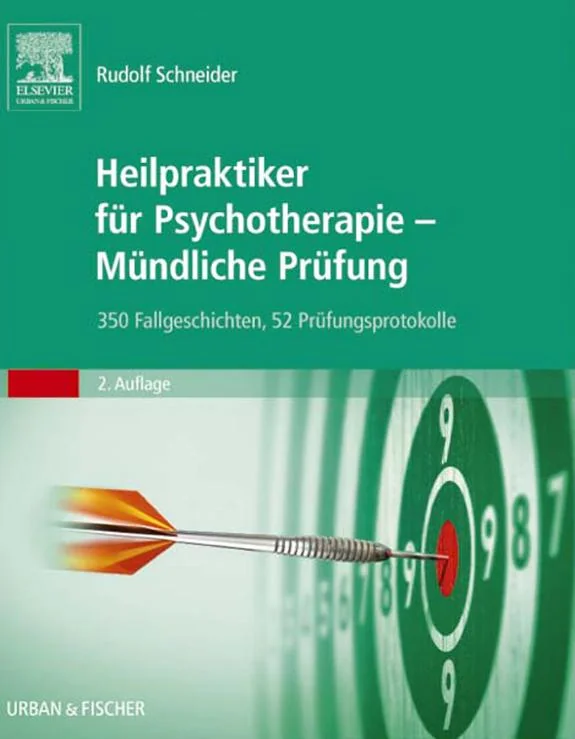
Heilpraktiker für Psychotherapie - Mündliche Prüfung
Rudolf Schneider's "Heilpraktiker für Psychotherapie - Mündliche Prüfung" presents a highly practical, if somewhat dry, approach to exam preparation. Its strength lies in the sheer volume of applied examples; the 350 case studies, each meticulously broken down by symptom and classified under ICD 10, offer substantial training in diagnostic thinking. The inclusion of 52 examination protocols is invaluable, demystifying the often-anxiety-inducing oral exam format. However, the text’s focus is almost exclusively on the mechanics of passing the exam. While effective for that purpose, it offers little in the way of deeper theoretical exploration or therapeutic philosophy that might inform a practitioner beyond the examination room. The constant barrage of case facts and diagnostic codes, while efficient, can feel overwhelming and lacks narrative engagement. It serves its stated purpose with remarkable thoroughness but doesn't aspire to be a text that expands one's understanding of the human psyche in a broader sense. Ultimately, for the candidate focused solely on certification, it's a functional tool.
📝 Description
84
Rudolf Schneider's 2015 guide prepares candidates for the German Heilpraktiker psychotherapy oral exam.
Rudolf Schneider's "Heilpraktiker für Psychotherapie - Mündliche Prüfung" is a study guide for individuals preparing for the German oral examination to become a Heilpraktiker for Psychotherapy. First published in 2015, the book is organized into twelve units that cover the necessary knowledge for this professional qualification. It condenses complex psychological and therapeutic information into a format intended for exam success.
The manual is specifically designed for those seeking certification as a Heilpraktiker for Psychotherapy. It is useful for students who have finished their initial studies and are in the final stages of preparing for their oral exams. The inclusion of case examples and diagnostic frameworks is particularly helpful for students needing to improve their grasp of clinical presentations and differential diagnoses using the ICD 10 classification. The book addresses psychopathology systematically, focusing on symptom analysis and differential diagnosis.
While primarily a technical manual for a specific German psychotherapy certification, the role of the Heilpraktiker itself touches upon alternative and complementary approaches to mental health. This qualification allows practitioners to work with psychological issues outside the traditional medical doctor or clinical psychologist framework, often integrating methods that may not be fully encompassed by mainstream scientific psychology. The focus on diagnosis according to ICD 10, while standardized, is applied within a system that permits a broader range of therapeutic interventions than might be found in more strictly regulated medical contexts.
💡 Why Read This Book?
• Gain direct exposure to 350 case examples, each dissected by symptom and classified using the ICD 10 framework, offering unparalleled practice in differential diagnosis beyond textbook descriptions. • Understand the exact structure and questioning style of the oral examination through 52 detailed examination protocols, providing a clear roadmap for your preparation. • Sharpen diagnostic skills with 100 short cases at the end of each learning unit, specifically designed to test and train your ability to quickly differentiate between similar psychological disorders.
⭐ Reader Reviews
Honest opinions from readers who have explored this book.
❓ Frequently Asked Questions
What is the primary purpose of Rudolf Schneider's "Heilpraktiker für Psychotherapie - Mündliche Prüfung"?
The book is designed as a comprehensive study guide specifically for individuals preparing for the oral examination to become a Heilpraktiker for Psychotherapy in Germany, focusing on knowledge consolidation and exam simulation.
How does the book help with diagnostic skills?
It illustrates diagnostic skills through 350 case examples, where each case is analyzed by its typical symptoms and classified according to the ICD 10 system, plus 100 additional short cases for practice.
What is the structure of the learning material?
The content is organized into 12 distinct learning units, covering essential knowledge for the examination, with each unit concluding with testing cases and diagnostic exercises.
Are there examples of the actual exam process included?
Yes, the book features 52 detailed examination protocols that illustrate the typical flow and types of questions encountered during the oral examination for Heilpraktiker for Psychotherapy.
When was this guide first published?
Rudolf Schneider's "Heilpraktiker für Psychotherapie - Mündliche Prüfung" was first published on March 12, 2015, providing relatively recent preparation material.
What diagnostic system is primarily used in the book?
The book extensively utilizes the International Classification of Diseases, 10th Revision (ICD 10) system for classifying the psychological disorders presented in the case studies and examination examples.
🔮 Key Themes & Symbolism
ICD 10 Diagnostics
The book places significant emphasis on the International Classification of Diseases, 10th Revision (ICD 10), as the definitive framework for understanding and diagnosing psychological disorders. Each of the 350 case examples is systematically 'deconstructed' according to symptoms and then explicitly classified using ICD 10 codes. This rigorous adherence to the classification system is crucial for candidates, as it mirrors the diagnostic approach expected in the German oral examination for Heilpraktiker für Psychotherapie.
Oral Examination Simulation
A core component of Schneider's guide is its direct preparation for the oral examination. This is achieved through the inclusion of 52 detailed examination protocols. These protocols are not mere summaries but illustrate the typical progression of an oral exam, including the types of questions asked, the expected depth of answers, and how candidates are assessed. This practical simulation aims to reduce anxiety and build confidence by familiarizing aspirants with the examination environment and demands.
Symptom-Based Case Analysis
The methodology employed in the book centers on dissecting clinical presentations based on observable symptoms. Rather than focusing on broad theoretical constructs, Schneider breaks down each of the 350 case histories into their characteristic symptom clusters. This analytical approach trains the reader to identify key indicators of specific disorders, a critical skill for both diagnosis and for performing well in an oral exam where clear, symptom-driven explanations are paramount.
Differential Diagnosis Training
Beyond simple identification, the book actively trains candidates in differential diagnosis. The 100 short cases presented at the end of each learning unit are specifically designed to challenge the reader's ability to distinguish between disorders that share overlapping symptoms. This practical exercise is vital for the oral exam, where examiners often probe the candidate's capacity to differentiate between similar conditions, ensuring a nuanced understanding of psychopathology.
💬 Memorable Quotes
Direct passages from the work, attributed to the author.
“Das gesamte Wissen, das Sie für die mündliche Prüfung zum Heilpraktiker für Psychotherapie benötigen, ist in 12 Lerneinheiten vorgestellt und mit 350 Fallbeispielen veranschaulicht.”
— This statement, from the original blurb, highlights the book's comprehensive scope and practical focus, promising all necessary knowledge for the oral exam presented through extensive case examples.
“Jede Fallgeschichte wird nach den für die Störung typischen Symptomen "zerlegt" und nach ICD 10 klassifiziert.”
— This emphasizes the book's core pedagogical method: dissecting case studies by symptoms and then classifying them according to the ICD 10 diagnostic system, a crucial skill for exam candidates.
“52 Prüfungsprotokolle veranschaulichen den typischen Ablauf einer mündlichen Prüfung.”
— This points to the practical utility of the examination protocols, which serve to explain the oral exam format and prepare candidates for its specific structure and demands.
“Am Ende jeder Lerneinheit Tests mit 100 weiteren Kurzfällen zur Schulung der differenzialdiagnostischen Kenntnisse.”
— This highlights a key feature for skill development: end-of-unit tests with numerous short cases designed to hone differential diagnostic abilities.
“Neu in d”
— This incomplete phrase suggests the book has been updated or includes new material, though specifics are not provided in the excerpt, hinting at ongoing relevance or revisions.
🌙 Esoteric Significance
Tradition
While the book is primarily a technical guide for a specific professional examination, its category as 'Esoteric' suggests an underlying perspective that views psychotherapy not merely as a scientific discipline but as a practice that can engage with deeper aspects of the human psyche. Within Esotericism, the healing of the mind is often intertwined with understanding the soul, consciousness, and personal transformation. This work, by focusing on diagnostic structures and examination protocols, can be seen as a gateway to these deeper explorations, providing the foundational knowledge necessary for those who wish to practice psychotherapy from a more holistic or spiritually-informed viewpoint.
Symbolism
The primary 'symbolism' within this text lies not in overt mystical imagery but in the diagnostic categories themselves. The ICD 10 codes, such as 'F41.1' for Generalized Anxiety Disorder, function as modern sigils, encapsulating complex psychological states into concise, universally understood (within the professional context) identifiers. The 'case study' format itself can be viewed as a modern form of parable or allegorical narrative, where the unfolding symptoms and diagnostic journey represent the individual's struggle and path toward healing, mirroring archetypal patterns of suffering and resolution.
Modern Relevance
In contemporary therapeutic circles, there is a growing interest in integrating various modalities and understanding the patient holistically. Practitioners and thinkers who draw on Jungian psychology, transpersonal psychology, or even certain branches of spiritual counseling may find Schneider's structured approach to diagnosis a useful, if pragmatic, tool. While the book itself is not esoteric in its content, it serves as a necessary entry point for those seeking to practice psychotherapy within a regulated framework, allowing them to then apply more esoteric or depth-oriented therapeutic lenses once licensed. It bridges the gap between clinical necessity and broader psychological inquiry.
👥 Who Should Read This Book
• Aspiring Heilpraktiker für Psychotherapie: Individuals who have completed their initial training and are specifically preparing for the rigorous oral examination required for licensing in Germany. • Students of Clinical Psychology: Those studying clinical psychology who wish to gain practical experience with diagnostic case analysis and understand the ICD 10 system as applied in a professional licensing context. • Mental Health Professionals Seeking Exam Practice: Therapists or counselors from other backgrounds who need to pass the German Heilpraktiker for Psychotherapy examination and require a focused resource on diagnostic criteria and exam simulation.
📜 Historical Context
The range of psychotherapy and mental health regulation in Germany has been shaped by evolving legal frameworks and professional standards. The role of the Heilpraktiker, a non-physician practitioner allowed to treat illnesses, including psychological conditions, has been a subject of ongoing discussion and refinement since its inception. Rudolf Schneider's "Heilpraktiker für Psychotherapie - Mündliche Prüfung," first published in 2015, emerged in an era where standardized examination requirements and adherence to international diagnostic manuals like the ICD 10 were becoming increasingly critical. This period saw a professionalization of psychotherapy training, moving beyond more eclectic or less regulated approaches that might have characterized earlier decades. Schneider’s work directly addresses the need for structured, test-oriented learning materials that reflect these contemporary demands, distinguishing it from broader psychological texts that might not focus on the specific licensing examination. The emphasis on ICD 10 aligns with a broader European trend towards harmonized diagnostic practices, a significant development compared to the more fragmented diagnostic systems that existed prior to the late 20th century.
📔 Journal Prompts
Analysis of symptoms within Case Study X from the 350 examples.
Comparison of diagnostic pathways for ICD 10 code F32.1 versus F41.1.
The role of examination protocols in explaining the oral exam.
Reflecting on the deconstruction of a specific case's symptom presentation.
Personal preparedness for differential diagnosis challenges presented by the short cases.
🗂️ Glossary
Heilpraktiker für Psychotherapie
A licensed non-physician practitioner in Germany authorized to provide psychotherapy and treat mental health conditions, requiring specific examinations and qualifications.
Mündliche Prüfung
The oral examination, a mandatory part of the qualification process for Heilpraktiker für Psychotherapie, assessing practical knowledge and diagnostic skills.
Lerneinheit
A learning unit; the book is structured into twelve such units, each covering a specific area of knowledge required for the examination.
Fallbeispiel
A case study or example illustrating a specific psychological condition or patient scenario, used here extensively for learning and practice.
ICD 10
International Classification of Diseases, 10th Revision; a standard diagnostic tool for epidemiology, health management, and clinical purposes, widely used for classifying diseases and health problems.
Prüfungsprotokoll
An examination protocol or record, detailing the structure, questions, and typical flow of an oral examination.
Differenzialdiagnostische Kenntnisse
Differential diagnostic knowledge; the ability to distinguish between two or more conditions that present with similar symptoms.
This book appears in 1 collection
🔮 Readers Also Liked
Browse all →








From the “Aura Reading” Collection
View all →







More Free Occult Philosophy Books
View all →