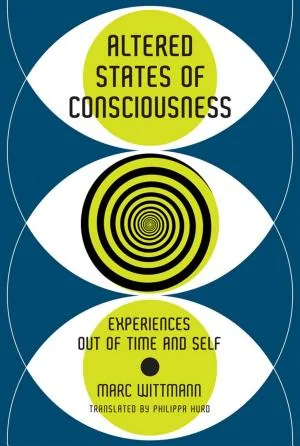
Altered States of Consciousness
 73
73

Altered States of Consciousness
Wittmann's approach to altered states is commendably empirical, attempting to ground the often-elusive phenomena of out-of-body experiences and ego dissolution in observable cognitive shifts. The strength lies in its systematic categorization of these states and its consistent effort to link subjective reports to potential neurological underpinnings. However, the text can occasionally become dense, requiring a reader well-versed in cognitive science terminology. A particularly compelling section discusses the 'depersonalization-derealization' spectrum, which Wittmann uses to bridge clinical conditions with more transient, profound experiences of self-loss. While meticulously researched, the book sometimes feels more like a detailed academic report than a narrative exploration. It is a valuable resource for specialists, though perhaps less accessible for the casual reader seeking broader philosophical musings.
📝 Description
73
Marc Wittmann's 2018 book analyzes subjective experiences deviating from normal awareness.
Marc Wittmann's *Altered States of Consciousness* examines experiences beyond ordinary waking awareness, including out-of-body episodes, drug-induced states, and moments of shock or revelation. The author investigates how these states, often marked by a loss of normal time perception and selfhood, can reveal fundamental aspects of consciousness. Wittmann uses scientific and philosophical methods to study these unusual states, moving past simple anecdotes to assess their cognitive and phenomenological effects.
This work is for individuals serious about consciousness, psychology, and contemplative traditions. Those interested in the connections between neuroscience, philosophy of mind, and personal experience will find considerable depth here. The book appeals to readers who question the limits of perception, the nature of the self, and the unique insights non-ordinary states might provide. Readers familiar with meditation, psychedelic research, or altered states through other avenues will appreciate its structured approach.
Wittmann's work engages with a long history of studying consciousness that includes figures like William James and early investigations into hypnosis. Published in 2018, it arrives as scientific inquiry becomes more receptive to phenomena previously dismissed. It builds on research into psychedelics and advances in neuroscience, contributing to a renewed academic interest in consciousness studies.
💡 Why Read This Book?
• Understand the neurocognitive underpinnings of ego dissolution, a key feature of many mystical and psychedelic states, as detailed in Wittmann's analysis of subjective reports. • Gain insights into how the subjective experience of time is constructed and can be radically altered, informed by Wittmann's research into shock and meditative states. • Explore the relationship between clinical conditions like depersonalization and extraordinary experiences, providing a unique bridge discussed within the book's framework.
⭐ Reader Reviews
Honest opinions from readers who have explored this book.
❓ Frequently Asked Questions
What are the primary examples of altered states of consciousness discussed by Marc Wittmann?
Marc Wittmann primarily examines out-of-body experiences, drug intoxication, shock, and meditative or mystical revelations as key examples of altered states of consciousness in his 2018 work.
What is the central question Marc Wittmann seeks to answer regarding altered states?
Wittmann investigates what these altered states, characterized by a dissolution of time and self, can reveal about the fundamental mystery of consciousness itself.
What kind of reader would benefit most from 'Altered States of Consciousness'?
Readers interested in psychedelics, psychology, meditation, neuroscience, and the philosophy of mind will find this book particularly relevant and informative.
When was Marc Wittmann's 'Altered States of Consciousness' first published?
The original publication date for Marc Wittmann's 'Altered States of Consciousness' was September 4, 2018.
Does the book explore the neurological basis of altered states?
Yes, Wittmann's work attempts to connect subjective experiences of altered states with potential neurological and cognitive mechanisms.
What specific phenomena related to the self are examined in the book?
The book extensively discusses the dissolution or alteration of the sense of self (ego dissolution) as a core feature of many extraordinary states of consciousness.
🔮 Key Themes & Symbolism
Ego Dissolution
Wittmann's work critically analyzes the phenomenon of ego dissolution, where the boundaries of the personal self become fluid or cease to exist. This state, often reported during intense mystical experiences or psychedelic journeys, is examined not as mere delusion but as a potential window into the construction of selfhood. The book explores how the typical feeling of being a distinct, enduring 'I' can temporarily vanish, leading to experiences of profound unity or boundarylessness. This theme connects directly to contemplative traditions that seek to transcend the ego.
Perception of Time
A recurring element in altered states is the radical distortion or complete loss of the linear experience of time. Wittmann investigates how our standard perception of past, present, and future can unravel, giving way to a sense of timelessness or an eternal present. This challenges the notion of time as an objective, fixed reality, suggesting instead its deep entanglement with our conscious awareness. The book examines this through shock states and deep meditation, linking it to cognitive processing.
Consciousness as a Mystery
The fundamental mystery of consciousness serves as the backdrop for Wittmann's investigations. By studying the extreme edges of human experience—states where normal perception and self-identity break down—the author posits that we can gain crucial clues about the underlying mechanisms of awareness. The book frames these altered states not as aberrations but as valuable data points that can help clarify the nature of subjective experience and the mind-body problem.
Phenomenology of Extraordinary Experience
Wittmann focuses on the 'what it is like'—the subjective phenomenology—of extraordinary experiences. This includes analyzing the qualitative feel of out-of-body sensations, the cognitive shifts during drug intoxication, and the intense emotional and perceptual changes during shock. By detailing these subjective landscapes, the book aims to provide a structured understanding of experiences that often defy ordinary language and categorization, bridging them with scientific inquiry.
💬 Memorable Quotes
Direct passages from the work, attributed to the author.
“During extraordinary moments of consciousness—shock, meditative states and sudden mystical revelations, out-of-body experiences, or drug intoxication—our senses of time and self are altered.”
— This statement expresses the core focus of Wittmann's research, highlighting the specific conditions and the dual phenomena (time and self) that are central to his analysis of consciousness.
“A groundbreaking study of out-of-body-experiences, drug intoxication, and shock”
— This phrase from the original blurb points to the specific phenomena Wittmann investigates, framing them as subjects of serious academic inquiry beyond popular sensationalism.
“perfect for readers interested in psychedelics, psychology and meditation.”
— This indicates the intended audience and the interdisciplinary nature of the book, bridging scientific psychology with practices often associated with spiritual or altered states.
“our senses of time and self are altered; we may even feel time an”
— This fragment emphasizes the profound subjective shift that occurs in altered states, suggesting a fundamental alteration in how reality is perceived and experienced.
“What can altered states of consciousness—the dissolution of feelings of time and self—tell us about the mystery of consciousness?”
— This question sets the central thesis of the book: that by studying the breakdown of our usual temporal and personal frameworks, we can unlock deeper understandings of awareness itself.
🌙 Esoteric Significance
Tradition
While not strictly adhering to a single esoteric lineage, Wittmann's work engages with themes central to contemplative and mystical traditions across various cultures. The exploration of ego dissolution and the transcendence of linear time speaks to Buddhist concepts of emptiness (sunyata) and non-duality, as well as Gnostic ideas of escaping temporal illusion. The book provides a scientific framework for understanding phenomena often described in esoteric texts, bridging the gap between subjective spiritual experience and empirical investigation.
Symbolism
The primary symbols explored are the dissolution of the 'self' and the distortion of 'time'. The self, typically understood as a bounded individual, becomes a fluid construct in altered states, symbolizing the illusory nature of ego-identity often discussed in Advaita Vedanta or Hermeticism's 'As above, so below' principle applied to internal states. Time's malleability symbolizes the unreliability of ordinary perception and the potential for accessing a different mode of reality, akin to the concept of eternity or the 'eternal now'.
Modern Relevance
Wittmann's research is highly relevant to contemporary psychedelic-assisted therapy, mindfulness-based stress reduction (MBSR), and consciousness hacking movements. Thinkers and practitioners exploring neurofeedback, advanced meditation techniques, and the therapeutic potential of psychedelics (e.g., within the field of psychedelic psychiatry) draw upon the kind of empirical data Wittmann synthesizes. His work informs discussions on the nature of reality, selfhood, and the potential for human consciousness to transcend ordinary limitations.
👥 Who Should Read This Book
• Students of psychology and neuroscience interested in the empirical study of subjective experience and the brain. • Practitioners of meditation, yoga, or other contemplative disciplines seeking a scientific perspective on altered states and ego dissolution. • Researchers and enthusiasts of psychedelic culture and its potential implications for understanding consciousness and mental well-being.
📜 Historical Context
Marc Wittmann's *Altered States of Consciousness*, first published in 2018, arrives at a moment of renewed scientific and cultural interest in non-ordinary states of mind. The mid-20th century saw significant research into psychedelics, notably by figures like Aldous Huxley and later Timothy Leary, which explored consciousness expansion but often faced significant societal and political backlash, leading to periods of censorship and skepticism. Wittmann's work participates in the modern resurgence of consciousness studies, building on advancements in neuroscience and cognitive psychology that now offer more sophisticated tools for investigating subjective experience. While earlier thinkers like William James documented mystical experiences in *The Varieties of Religious Experience* (1902), Wittmann's approach is more empirically grounded, seeking to integrate phenomenological accounts with neuroscientific data. His work exists alongside contemporary discussions in philosophy of mind, with thinkers like Daniel Dennett and David Chalmers debating the nature of consciousness, though Wittmann focuses specifically on the data provided by extreme subjective states.
📔 Journal Prompts
The feeling of time distortion during altered states: what triggers it?
Reflecting on ego dissolution: how does the 'sense of self' manifest and dissipate?
Phenomenology of shock: what are the core subjective elements reported in extreme stress?
The role of drug intoxication in accessing non-ordinary awareness.
Connecting meditative states to neurological changes discussed by Wittmann.
🗂️ Glossary
Altered States of Consciousness (ASC)
Subjective experiences that deviate significantly from normative waking consciousness, often characterized by changes in perception, cognition, emotion, and sense of self or time.
Ego Dissolution
A state where the usual sense of personal identity and self-boundaries breaks down, leading to feelings of unity, boundlessness, or a loss of the distinct 'I'.
Phenomenology
The philosophical study of the structures of experience and consciousness from the first-person perspective.
Out-of-Body Experience (OBE)
A subjective sensation of perceiving oneself from a location outside one's physical body, often associated with near-death experiences or certain altered states.
Depersonalization
A dissociative symptom where an individual feels detached from their own body, thoughts, feelings, or actions, as if observing themselves from the outside.
Derealization
A symptom characterized by a sense of unreality or detachment from one's surroundings, where the external world seems strange or dreamlike.
Cognitive Mechanisms
The underlying mental processes and operations that enable cognition, such as attention, memory, perception, and problem-solving.
This book appears in 1 collection
🔮 Readers Also Liked
Browse all →








From the “Altered States of Consciousness” Collection
View all →







More Free Occult Philosophy Books
View all →