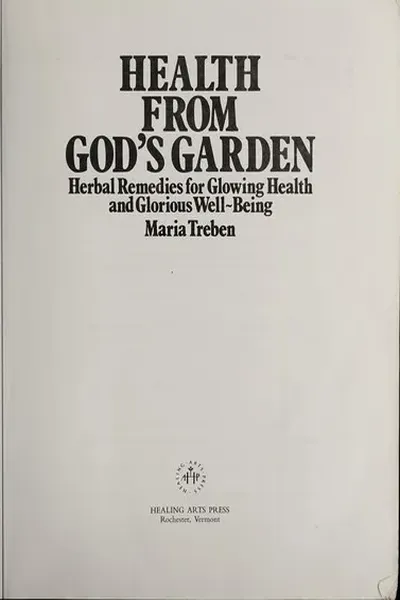
Heilkräuter aus dem Garten Gottes

 71
71

Heilkräuter aus dem Garten Gottes
Maria Treben's "Heilkräuter aus dem Garten Gottes" offers a dense compendium of herbal lore, largely eschewing modern pharmacopoeia for a deep dive into folk tradition. Its strength lies in the sheer breadth of plants covered and the author's earnest, almost devotional, approach to their application. Treben presents herbalism not merely as a science but as a sacred practice, a perspective often lost in contemporary wellness literature. However, the work sometimes lacks rigorous scientific validation for its claims, relying heavily on anecdotal evidence and traditional attributions. A passage detailing the use of yarrow (Achillea millefolium) for wound healing, for example, is grounded in centuries of practice but could benefit from more explicit discussion of its biochemical actions. The book is a valuable historical document of folk herbalism, best approached with a critical eye for those seeking scientific backing, but invaluable for understanding traditional perspectives. It serves as a potent reminder of nature's enduring medicinal legacy.
📝 Description
71
Maria Treben's Heilkräuter aus dem Garten Gottes, first published in 1987, details the medicinal and spiritual uses of herbs.
This book serves as a detailed guide to the practical and spiritual applications of various herbs. It draws from traditional folk medicine and older herbal practices, cataloging numerous plants and their uses for physical health and energetic balance. The text carefully describes how to identify, grow, and employ these herbs therapeutically. It often connects their physical benefits to less tangible, energetic, or spiritual qualities.
It is suited for people engaged in traditional herbalism, those interested in folk remedies, and anyone curious about the links between nature, spirituality, and healing. The book appeals to those wishing to rediscover old plant knowledge, gain a better grasp of natural cures, and study the energetic characteristics of plants. Individuals focused on self-reliance, natural living, and the historical spiritual uses of plants will find it very useful.
Published in 1987, Maria Treben's work appeared during a period of renewed interest in natural healing. Her approach to plant vitality and their energetic influence aligns with European nature philosophies, though she was not directly tied to movements like Anthroposophy. The book resonated with a growing demand for accessible, nature-based remedies, standing apart from the mainstream pharmaceutical sector. Its continued readership indicates a lasting fascination with older systems of knowledge regarding plants.
💡 Why Read This Book?
• Gain practical knowledge on identifying and using over 200 herbs, as detailed in the extensive plant descriptions, offering a direct connection to traditional European folk medicine. • Understand the concept of plant vitality and energetic properties, as explored throughout the book, providing a framework for viewing herbs beyond their chemical constituents. • Discover historical applications for common ailments, referencing practices prevalent before the widespread adoption of modern pharmaceuticals, as documented in Treben's detailed remedies.
⭐ Reader Reviews
Honest opinions from readers who have explored this book.
❓ Frequently Asked Questions
What is the primary focus of Heilkräuter aus dem Garten Gottes?
The book primarily focuses on the medicinal and spiritual properties of herbs, drawing extensively from European folk traditions and presenting a wide range of plant-based remedies and their historical uses.
When was Heilkräuter aus dem Garten Gottes first published?
Heilkräuter aus dem Garten Gottes was first published in 1987, making it a relatively modern compilation of older herbal knowledge.
Who is the author, Maria Treben?
Maria Treben was an Austrian herbalist and author known for her extensive work on traditional herbal remedies and their spiritual significance, gaining international recognition for her books on natural healing.
Does the book provide scientific evidence for its herbal remedies?
The book relies heavily on traditional knowledge, folk wisdom, and anecdotal evidence rather than modern scientific studies. It emphasizes the holistic and energetic aspects of healing.
What is the 'Garden of God' concept in the book's title?
The title 'Garden of God' reflects Treben's view of nature as a divine gift, with herbs possessing inherent healing powers provided by a higher source, underscoring a spiritual dimension to their use.
Is this book suitable for beginners in herbalism?
Yes, it is suitable for beginners interested in traditional herbalism due to its detailed descriptions and accessible presentation of plant uses, though it also offers depth for experienced practitioners.
🔮 Key Themes & Symbolism
Folk Herbalism Traditions
The work meticulously documents and preserves a vast body of European folk herbalism, passed down through generations. It details the practical application of numerous plants, from common garden herbs to more esoteric wild flora, emphasizing their use in everyday life for a multitude of ailments. Treben acts as a conduit for this ancestral knowledge, presenting it in a structured yet accessible manner that honors the empirical wisdom accumulated over centuries of direct experience with the plant kingdom.
Spiritual and Energetic Properties of Plants
Beyond their physical constituents, Treben explores the subtle energies and spiritual essences attributed to herbs. This perspective aligns with older traditions that viewed plants as living beings with distinct vital forces. The book suggests that a plant's effectiveness is not solely chemical but also energetic, influenced by its environment, the time of harvest, and the intention of the user, framing herbalism within a divinely ordained natural order.
The 'Garden of God' Philosophy
The title itself, 'Garden of God,' captures a core theme: the belief that the natural world, particularly its botanical elements, represents a divine provision for human well-being. This perspective imbues the practice of herbalism with a sacred quality, suggesting a partnership between humanity and nature under divine guidance. It encourages a respectful and mindful approach to gathering and utilizing plants, viewing them as gifts from a benevolent creator.
Holistic Healing Approaches
Treben's approach integrates physical, energetic, and spiritual dimensions of healing. The book advocates for remedies that address the whole person, not just isolated symptoms. This holistic view encourages readers to consider the interconnectedness of mind, body, and spirit in their pursuit of health, positioning herbal remedies as part of a broader natural lifestyle that supports overall vitality and balance.
💬 Memorable Quotes
Direct passages from the work, attributed to the author.
“The knowledge of healing herbs is a gift from God.”
— This statement underscores Treben's fundamental belief that herbalism is not merely a human endeavor but a divinely inspired practice, positioning the natural world as a source of sacred wisdom and healing.
“Nature provides remedies for all ills.”
— This concise idea reflects the book's overarching theme of divine providence through the natural world, asserting that the Earth's flora holds the solutions to many human ailments if properly understood and applied.
“The intention of the healer is crucial.”
— This concept emphasizes the importance of the practitioner's mindset and spiritual focus when preparing or administering herbal remedies, suggesting that conscious intent amplifies the plant's healing power.
“Herbs are best gathered with gratitude and respect.”
— This sentiment points to the ethical and spiritual dimension of harvesting plants, advocating for a mindful approach that acknowledges the life being taken and expresses appreciation for the plant's gifts.
💡 Key Ideas
Editorial paraphrase of the work's core concepts — not direct quotes.
Every plant has its own spirit and energy.
This paraphrase highlights the animistic or vitalistic perspective prevalent in traditional herbalism, suggesting that plants possess an inherent life force and energetic signature that contributes to their therapeutic efficacy.
🌙 Esoteric Significance
Tradition
Treben's work draws heavily from European folk herbalism, a tradition interwoven with animistic, shamanic, and later Christianized mystical elements. It aligns with vitalist philosophies that posit an inherent life force (élan vital) in all living things, including plants. While not strictly Hermetic or Kabbalistic, it shares with these traditions an interest in the hidden virtues and correspondences within nature. The emphasis on divine provision and the spiritual essence of plants connects it to a broader stream of nature mysticism, where the natural world is seen as a manifestation of the sacred.
Symbolism
The book implicitly uses plant forms and affinities as symbolic language. For instance, the use of plants with 'heart-shaped' leaves for heart conditions reflects sympathetic correspondences. The widespread use of specific herbs like St. John's Wort (Hypericum perforatum) for melancholy or protection, often associated with light and warding off negative influences, carries deep symbolic weight rooted in folklore and pagan/Christian syncretism. The very act of cultivating a 'Garden of God' symbolizes humanity's stewardship over creation and the divine abundance available for healing.
Modern Relevance
Contemporary practitioners of traditional Western herbalism, bioregional herbalists, and those interested in ancestral healing practices often reference Treben's work. Her holistic approach, emphasizing the energetic and spiritual dimensions of plant medicine, finds echoes in modern fields like ecological spirituality, ecopsychology, and various forms of somatic experiencing. Thinkers and practitioners focusing on reconnecting with nature, rediscovering folk traditions, and advocating for plant-based, sustainable wellness solutions continue to draw inspiration from her extensive catalog of herbal knowledge.
👥 Who Should Read This Book
• Aspiring herbalists and home remedy enthusiasts seeking to learn about traditional European plant uses and their applications for common ailments. • Individuals interested in the historical and cultural aspects of medicine, particularly the role of folk wisdom and natural healing before modern pharmacology. • Those exploring the spiritual or energetic dimensions of plant medicine, looking for a perspective that integrates natural remedies with a sense of reverence for the natural world.
📜 Historical Context
Maria Treben's "Heilkräuter aus dem Garten Gottes," published in 1987, emerged in an era marked by a burgeoning interest in alternative health and a growing disillusionment with purely pharmaceutical approaches. This period saw a revival of esoteric and nature-based philosophies, influenced partly by the enduring legacy of figures like Rudolf Steiner and the broader European nature-cure movements of the late 19th and early 20th centuries. Treben’s work, while deeply rooted in Austrian folk traditions, resonated with a global audience seeking pre-industrialized, holistic healing modalities. It gained significant traction in contrast to the increasingly standardized and often impersonal medical landscape. While not directly engaging with academic circles, her popular success spurred renewed interest in traditional herbalism, sometimes viewed with skepticism by the medical establishment but embraced by a public keen on reconnecting with ancient wisdom and natural remedies. Her approach stood apart from the more scientifically focused botanical studies, emphasizing a spiritual and energetic connection to plants.
📔 Journal Prompts
The concept of the "Garden of God" in relation to specific plants discussed.
Reflections on the energetic properties attributed to Yarrow (Achillea millefolium) in healing.
Consider the folk uses of Nettle (Urtica dioica) and its symbolic representation.
How does the emphasis on intention in herbal preparation align with your personal practices?
Meditate on the belief that "Nature provides remedies for all ills."
🗂️ Glossary
Vital Force
The inherent life energy or animating principle believed to exist within all living organisms, including plants. In herbalism, it's often considered crucial for a plant's healing efficacy beyond its chemical compounds.
Folk Wisdom
Traditional knowledge and practices, particularly concerning health and healing, passed down orally through generations within a community or culture.
Sympathetic Magic
A belief system where objects or substances that resemble each other or have a perceived connection can influence one another, often applied to herbalism where plant appearance suggests medicinal use.
Energetic Properties
The subtle, non-physical qualities or vibrational frequencies attributed to plants, believed to interact with the human energetic system for therapeutic effect.
Holistic Healing
An approach to health and wellness that considers the interconnectedness of the mind, body, and spirit, aiming to treat the whole person rather than just isolated symptoms.
Divine Provision
The theological concept that a higher power has intentionally provided natural resources, such as plants, for the benefit and sustenance of humanity.
Anthroposophy
A spiritual philosophy founded by Rudolf Steiner, emphasizing the development of human potential through a combination of intellectual, artistic, and practical activities, often including a view of nature and agriculture.
🔮 Readers Also Liked
Browse all →








More by Maria Treben
All books →
More Free Occult Philosophy Books
View all →