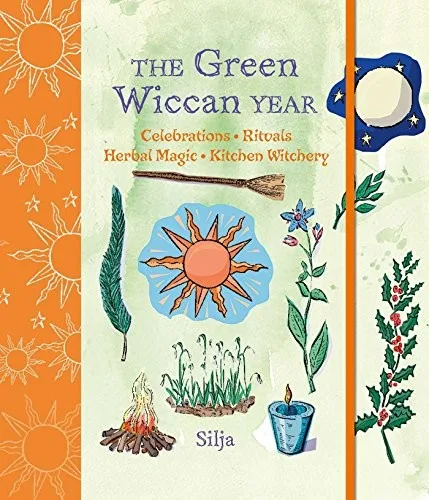
Green Wiccan Herbal

 76
76

Green Wiccan Herbal
Silja’s 'Green Wiccan Herbal' attempts to bridge the gap between practical herbalism and contemporary Wiccan practice, a noble endeavor. The text's strength lies in its detailed descriptions of individual herbs, moving beyond simple correspondences to explore their energetic signatures. However, the work occasionally feels somewhat generalized, particularly in its discussion of ritual applications. A passage detailing the use of mugwort for scrying, for instance, is informative but lacks the specific, sensory detail that would truly elevate it. While it offers a solid foundation, readers seeking profound theoretical innovation might find it treads familiar ground. It serves as a competent, if not revolutionary, guide for the aspiring green witch.
📝 Description
76
Silja's 'Green Wiccan Herbal', published in 2016, details the energetic properties and traditional uses of numerous botanicals.
This book examines plant lore and its use in nature-attuned spiritual practices. It goes beyond simple plant identification, showing how herbs are crucial for ritual, healing, and connecting with Earth's cycles. The text provides practical guidance for integrating plant allies into one's spiritual life.
'Green Wiccan Herbal' is best suited for those already involved in or curious about Wiccan traditions, especially those focused on nature and herbalism. It will appeal to practitioners wanting a deeper grasp of plants' magical and medicinal qualities, and how to harvest, prepare, and use them respectfully in sacred work. Both beginners looking for a solid introduction to plant magic and experienced herbalists aiming to broaden their spiritual framework for working with plants will find value here.
Published in 2016, 'Green Wiccan Herbal' arrives during a revival of interest in earth-based spirituality and traditional herbalism. It builds on earlier works in Wicca and witchcraft that promoted a nature-focused path. Silja's book offers specific herbal knowledge that supports broader spiritual ideas, meeting a modern demand for practical nature magic.
💡 Why Read This Book?
• Gain specific techniques for integrating plant allies into ritual practice, moving beyond generic correspondences to understand the energetic signatures of herbs like mugwort, as detailed in the book's sections on ritual use. • Learn the principles of ethical harvesting and sustainable foraging, understanding the concept of reciprocity with nature that Silja emphasizes, ensuring respect for plant spirits. • Develop a deeper connection to the Wheel of the Year by understanding how specific plants align with seasonal festivals and celestial events, enhancing your seasonal celebrations.
⭐ Reader Reviews
Honest opinions from readers who have explored this book.
❓ Frequently Asked Questions
What is the primary focus of the 'Green Wiccan Herbal'?
The book focuses on the spiritual and magical applications of herbs within a Wiccan framework. It explores plant lore, energetic properties, and their use in rituals, healing, and connecting with nature, emphasizing a green, earth-attuned practice.
Is this book suitable for beginners in herbalism or Wicca?
Yes, it is suitable for beginners interested in nature-based spirituality and herbalism. It provides foundational knowledge on plant allies, ethical harvesting, and practical applications within a Wiccan context.
When was 'Green Wiccan Herbal' first published?
The book was first published in 2016, placing it within the contemporary resurgence of interest in earth-based spiritual practices and traditional herbalism.
Does the book discuss medicinal uses of herbs?
While the primary focus is spiritual and magical, the book often touches upon traditional medicinal uses as they intertwine with the energetic and healing properties of plants in a holistic sense.
What is the 'Green Wiccan' approach mentioned in the title?
The 'Green Wiccan' approach emphasizes a deep connection to the Earth, nature cycles, and the spiritual essence of plants, integrating herbalism directly into Wiccan practice and philosophy.
Are there specific rituals or spells detailed in the book?
Yes, the book provides guidance on various ritual applications, including the use of specific herbs for cleansing, protection, divination, and connecting with nature spirits, aligning with Wiccan traditions.
🔮 Key Themes & Symbolism
Plant Allies and Relationships
The work posits that plants are not mere resources but conscious entities, termed 'plant allies.' Silja encourages practitioners to foster reciprocal relationships with specific herbs, understanding their unique energetic signatures and spiritual contributions. This moves beyond a utilitarian view of botany, framing each plant as a potential partner in magical and spiritual endeavors. The book details how to approach these allies with respect, inviting their assistance in rituals and personal growth, fostering a deeper, animistic connection to the green world.
The Wheel of the Year and Herbal Cycles
A central theme is the alignment of herbalism with the annual cycle of festivals and natural rhythms, known as the Wheel of the Year. Silja illustrates how different plants come into their power at specific solstices, equinoxes, and cross-quarter days. Understanding these correspondences allows practitioners to utilize herbs that are naturally abundant and energetically potent for the corresponding season, enhancing the efficacy of rituals and magical workings tied to specific times of the year.
Ethical Harvesting and Reciprocity
Integral to Silja's 'Green Wiccan' philosophy is the principle of ethical harvesting and deep respect for the natural world. The book stresses the importance of asking permission from plant spirits before gathering, taking only what is needed, and offering gratitude or making offerings in return. This concept of reciprocity ensures that the practitioner's relationship with the plant kingdom is sustainable and honors the life force of each herb, fostering a balanced and respectful spiritual practice.
Green Magic and Earth Attunement
The core of the book lies in 'green magic,' a practice that emphasizes the inherent spiritual energy within all living plants. Silja guides readers in attuning themselves to these energies, using herbs not just for their physical properties but for their ability to connect individuals to the pulse of the Earth. This involves developing sensory awareness, understanding planetary associations, and employing herbs to enhance magical intent and spiritual connection to the natural world.
💬 Memorable Quotes
Direct passages from the work, attributed to the author.
“Each herb is a spirit, a teacher, and a helper.”
— This concept underscores the animistic perspective central to green witchcraft, viewing plants not as inanimate objects but as sentient beings deserving of respect and capable of offering spiritual guidance and assistance.
“The energy of the plant is strongest when it is in season and harvested with intention.”
— This highlights the importance of timing and mindful practice in herbal magic, suggesting that aligning magical work with natural cycles amplifies the potency of plant allies.
“We must learn to listen to the whispers of the leaves and the wisdom of the roots.”
— This speaks to the development of intuitive and sensory perception necessary for effective communication with the plant kingdom, encouraging a deeper, more connected form of practice.
“A true green witch honors the cycle of life, death, and rebirth inherent in all plant life.”
— This emphasizes the holistic understanding of nature's processes that informs green Wiccan practice, accepting all phases of the life cycle as sacred and integral.
“Magic is woven from the threads of the Earth, and herbs are its vibrant fibers.”
— This metaphor illustrates the fundamental role of plants in magical workings, portraying them as essential components that imbue spells and rituals with terrestrial power and vitality.
🌙 Esoteric Significance
Tradition
This work aligns primarily with the modern Wiccan tradition, specifically its nature-attuned and earth-centered branches often referred to as 'Green Witchcraft' or 'Ecofeminist Witchcraft.' It departs from more ceremonial or Kabbalistically-focused traditions by grounding its practice firmly in the tangible world of plants and natural cycles, emphasizing animism and immanent divinity within the Earth.
Symbolism
Key symbols include specific herbs themselves, each representing aspects of nature, healing, and magic (e.g., Mugwort for divination, Rosemary for purification). The Wheel of the Year serves as a potent symbolic framework, mapping the flow of life, death, and rebirth through the seasons and linking it to the growth cycles of plants. The concept of the 'Green Man' or nature spirits also features prominently, symbolizing the vital, generative force of the wild.
Modern Relevance
Contemporary practitioners of eco-spirituality, modern witchcraft, and permaculture often draw inspiration from 'Green Wiccan Herbal.' Its emphasis on sustainable practices, plant communication, and earth-based ritual speaks to movements seeking to reconnect with nature in an era of ecological crisis. Thinkers and practitioners focused on animism and re-wilding often find its accessible approach valuable.
👥 Who Should Read This Book
• Aspiring Green Witches seeking a foundational guide to understanding and working with plant allies for magical and spiritual purposes. • Experienced herbalists interested in expanding their practice by integrating the energetic and spiritual dimensions of plants within a Wiccan or nature-based framework. • Individuals drawn to earth-centered spirituality who wish to deepen their connection to the natural world through practical, hands-on engagement with botanical magic.
📜 Historical Context
Silja’s 'Green Wiccan Herbal,' published in 2016, arrives amidst a significant modern resurgence of interest in earth-based spirituality and folk herbalism. It carries the accessible, nature-focused ethos found in earlier Wiccan literature, such as Scott Cunningham's influential 'Wicca: A Guide for the Solitary Practitioner' (1988). While Cunningham laid groundwork for solitary practice, Silja’s work provides a more granular focus on specific herbal applications within that framework. The late 20th and early 21st centuries saw a diversification within Neopaganism, with movements like Ecofeminism and deep ecology influencing spiritual practices. 'Green Wiccan Herbal' fits within this lineage, offering practical, hands-on knowledge that empowers individuals to connect directly with the natural world, often as a counterpoint to more abstract or ceremonial magical traditions. The reception of such works generally falls within the Neopagan and witchcraft communities, valuing practical application and spiritual connection over academic scrutiny.
📔 Journal Prompts
Reflect on your personal relationship with a specific plant ally mentioned in the text.
Consider the energetic properties of rosemary and how they might apply to your current life.
Map the seasonal cycle of a local plant and its connection to the Wheel of the Year.
Explore the concept of reciprocity when interacting with the natural world, as discussed in the book.
Document a ritual using plant allies, noting intentions and observed energies.
🗂️ Glossary
Plant Ally
A specific plant with which a practitioner cultivates a relationship, recognizing its unique spiritual energy, properties, and willingness to assist in magical or healing work.
Green Magic
A branch of magic focused on the energies and spirits of the plant kingdom, emphasizing connection to the Earth and the use of herbs for spiritual, healing, and magical purposes.
Wheel of the Year
The cycle of eight seasonal festivals observed in many Wiccan and Neopagan traditions, marking the solstices, equinoxes, and cross-quarter days, and representing the eternal cycle of life, death, and rebirth.
Energetic Signature
The unique spiritual or magical vibration or essence attributed to a plant, person, or object, influencing its effects in magical workings.
Reciprocity
The principle of mutual exchange and respect in spiritual practice, particularly concerning nature, where offerings or gratitude are given in return for what is taken or received.
Animism
The belief that plants, animals, objects, and natural phenomena possess a distinct spiritual essence or consciousness.
Mugwort
A herb often associated with divination, psychic abilities, and dream work, frequently used in scrying rituals and as a protective herb.
🔮 Readers Also Liked
Browse all →








More by Silja
All books →

More Free Occult Philosophy Books
View all →