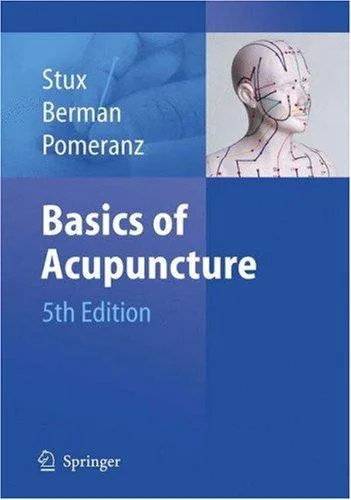
Basics of Acupuncture
 71
71

Basics of Acupuncture
Gabriel Stux, Bruce Pomeranz, and Petra Kofen’s "Basics of Acupuncture" offers a remarkably systematic introduction to a practice often shrouded in mystique for Western readers. Its strength lies in the clear progression from the philosophical underpinnings of Traditional Chinese Medicine to the practical application of needling specific points. The didactic emphasis on the 14 main channels and their most important points is particularly commendable, providing a solid framework for beginners. However, the original 1988 publication, while comprehensive for its time, occasionally feels dated in its presentation and scope when compared to more contemporary TCM texts that incorporate recent research or expanded theoretical models. The detailed description of diagnostic systems, while thorough, demands significant reader commitment. A standout section is the detailed explanation of channel morphology and clinical applicability, which grounds the theory in tangible practice. This book serves as a robust, if somewhat academic, primer for understanding the mechanics and philosophy of acupuncture.
📝 Description
71
Published in 1988, Basics of Acupuncture offers a structured introduction to Traditional Chinese Medicine.
Basics of Acupuncture systematically presents the diagnostic and therapeutic principles of acupuncture within the Traditional Chinese Medicine (TCM) framework. The book begins with the philosophical foundations of TCM before detailing the energetic system of channels and functional organs and their importance. It focuses on practical understanding, outlining the 14 main channels and their most clinically relevant acupuncture points.
This text is intended for practitioners and students of Oriental medicine who seek a solid grasp of acupuncture. It appeals to those who want to understand the reasoning behind acupuncture techniques, requiring engagement with diagnostic systems and theoretical structures. The book also benefits individuals interested in the historical development of medical practices.
Emerging in 1988, a period of growing Western interest in complementary medicine, Basics of Acupuncture aimed to codify and explain Traditional Chinese Medicine for a new audience. The authors sought to bridge the gap between ancient knowledge and modern medical education. This work contributed to making a practice, then gaining popularity but often lacking clear explanations, more accessible. It provided a systematic approach to acupuncture, emphasizing its theoretical underpinnings and practical use.
💡 Why Read This Book?
• Grasp the fundamental theory of Qi and meridians as presented in the 1988 edition, understanding how these concepts inform the diagnostic system of Traditional Chinese Medicine. • Learn the specific locations and clinical applications of key acupuncture points along the 14 main channels, as detailed in the book's didactic approach. • Comprehend the techniques of needling and moxibustion, foundational therapeutic methods within acupuncture, as described by authors Stux, Pomeranz, and Kofen.
⭐ Reader Reviews
Honest opinions from readers who have explored this book.
❓ Frequently Asked Questions
When was "Basics of Acupuncture" first published?
"Basics of Acupuncture" was first published on August 18, 1988. This original publication date is significant for understanding its place within the history of TCM's introduction to Western audiences.
Who are the primary authors of "Basics of Acupuncture"?
The primary authors of "Basics of Acupuncture" are Gabriel Stux, Bruce Pomeranz, and Petra Kofen. Their collaborative work aimed to systematically present acupuncture principles.
What is the main focus of "Basics of Acupuncture"?
The book focuses on the philosophical and theoretical background of Traditional Chinese Medicine, the diagnostic system of acupuncture, the system of channels and functional organs, and the significance of acupuncture points.
What therapeutic methods are detailed in the book?
The book details the methods of needling and moxibustion, providing descriptions of their application within clinical practice according to Traditional Chinese Medicine principles.
Does the book cover the entire spectrum of acupuncture points?
The book focuses on the 14 main channels and the most important acupuncture points for daily practice, emphasizing morphology and clinical applicability rather than an exhaustive list of all known points.
Is "Basics of Acupuncture" suitable for complete beginners?
While it is titled 'Basics,' the book delves into theoretical and diagnostic systems of Traditional Chinese Medicine, requiring a serious commitment from the reader. It is best suited for students or practitioners seeking a structured, in-depth introduction.
🔮 Key Themes & Symbolism
Meridian System
The work elaborates on the Traditional Chinese Medicine concept of channels, or meridians, as pathways for vital energy (Qi). It details the 14 main channels that traverse the body, connecting superficial points to internal organs. Understanding this intricate network is presented as fundamental to diagnosing imbalances and selecting appropriate acupuncture points for therapeutic intervention. The book emphasizes the morphological characteristics of these channels and their clinical relevance, providing a map for practitioners to read through the body's energetic landscape.
Diagnostic Framework
Central to the book is the presentation of the diagnostic system within Traditional Chinese Medicine. This involves understanding how imbalances in Qi and the functional organ systems manifest. The text introduces methods for assessing a patient's condition, moving beyond symptomatic treatment to identify root causes within the TCM paradigm. This diagnostic approach informs the selection of specific acupuncture points and therapeutic strategies, aiming for holistic patient care.
Acupuncture Points
The significance of acupuncture points is a primary focus, with the book detailing the most important points for daily practice along the 14 main channels. Each point is presented with an emphasis on its location, anatomical landmarks, and specific clinical applications. The authors highlight how stimulating these points, through techniques like needling and moxibustion, can influence the flow of Qi and restore balance within the body's energetic system.
Needling and Moxibustion
Beyond theoretical concepts, "Basics of Acupuncture" provides detailed descriptions of the physical techniques used in acupuncture therapy. Needling involves the insertion of fine needles into specific points to regulate Qi flow. Moxibustion, the application of heat derived from burning mugwort, is also explained as a complementary method to warm meridians and expel cold. These practical aspects are presented with attention to their clinical utility and safety.
💬 Memorable Quotes
Direct passages from the work, attributed to the author.
“The Chinese system of channels and functional organs.”
— This phrase expresses the core theoretical framework of Traditional Chinese Medicine as presented in the book, highlighting the interconnectedness of energetic pathways and physiological systems that practitioners aim to balance.
“Significance of the points are described.”
— This indicates the book's focus on not just the location but the functional role and therapeutic effect of specific acupuncture points within the broader context of TCM theory and practice.
“Didactic emphasis on morphology and clinical applicability.”
— This suggests the authors prioritized a teaching approach that clearly illustrates the physical form of channels and points, alongside practical guidance on how to use them effectively in treating patients.
“Methods of needling and moxibustion are described in detail.”
— This highlights the book's commitment to providing practical, step-by-step information on the primary physical techniques used in acupuncture therapy, crucial for learning the craft.
“Following an introduction to the philosophical and theoretical background of traditional Chinese medicine.”
— This points to the book's structured pedagogical approach, beginning with foundational concepts before moving into specific diagnostic and treatment protocols, ensuring a comprehensive understanding.
🌙 Esoteric Significance
Tradition
While "Basics of Acupuncture" primarily presents itself as a medical textbook, its foundation in Traditional Chinese Medicine places it within a lineage of philosophies that explore vital energy (Qi) and its flow, concepts that have parallels in various esoteric traditions. TCM's focus on energetic pathways (meridians) and balance shares common ground with Hermetic principles of correspondence and the flow of universal forces. The book’s approach, though clinical, engages with a system that views the body as an energetic microcosm connected to macrocosmic forces, a viewpoint often explored in more overtly esoteric literature.
Symbolism
The meridian system itself functions as a symbolic map of the body's energetic landscape within TCM. The 14 main channels can be seen as symbolic conduits, each associated with specific organ functions and emotional states, representing a symbolic language of health and disease. The acupuncture points, often named poetically, carry symbolic meanings related to their location and therapeutic actions, such as 'Sea of Tranquility' (CN 17) for calming the spirit, or 'Union Valley' (LI 4) for its powerful influence over the head and face.
Modern Relevance
Contemporary practices in integrative medicine and functional medicine often draw upon the principles outlined in foundational texts like "Basics of Acupuncture." Acupuncturists trained in modern programs still rely on the systematic understanding of channels, points, and diagnostic methods presented in such works. Furthermore, the broader interest in holistic health and mind-body connections, prevalent in many New Age and self-help circles, finds practical application through the techniques and philosophies described, demonstrating the enduring influence of this structured approach to energetic medicine.
👥 Who Should Read This Book
• Aspiring acupuncturists seeking a comprehensive introduction to the theoretical and practical foundations of Traditional Chinese Medicine, as presented in a structured format. • Practitioners of complementary therapies interested in understanding the diagnostic systems and energetic principles that underpin acupuncture practice. • Students of comparative medicine or history of science looking to explore the development and presentation of Eastern medical traditions within a Western academic context.
📜 Historical Context
Published in 1988, "Basics of Acupuncture" emerged during a period of burgeoning global interest in Traditional Chinese Medicine (TCM). Western engagement with acupuncture was growing, often through texts that sought to translate its complex theoretical framework into more accessible terms. This era saw figures like Ted Kaptchuk gaining prominence with works like "The Web That Has No Weaver" (1983), which also aimed to elucidate TCM for a Western audience. The Stux, Pomeranz, and Kofen text contributed by offering a highly structured, didactic approach, emphasizing the practical application of acupuncture based on the 14 main channels and key points. This systematic presentation was crucial in an academic and clinical environment that valued clear methodologies and evidence-based explanations, helping to legitimize acupuncture within a more scientific discourse.
📔 Journal Prompts
The diagnostic system of acupuncture and its emphasis on Qi flow.
The 14 main channels and their connection to functional organs.
The significance and clinical applicability of key acupuncture points.
Methods of needling and moxibustion in practice.
The philosophical background of Traditional Chinese Medicine.
🗂️ Glossary
Qi
The fundamental concept in Traditional Chinese Medicine representing vital energy or life force that flows through the body, animating all living things and maintaining health.
Channels (Meridians)
Specific pathways or conduits within the body through which Qi circulates, connecting acupuncture points and internal organs. There are considered to be numerous channels, with 14 primary ones detailed in the book.
Functional Organs
In TCM, these refer to organ systems (e.g., Liver, Kidney) not just in their anatomical sense but also their energetic and functional roles within the body's overall system of Qi circulation and balance.
Acupuncture Points
Specific locations on the body, primarily along the channels, where Qi can be accessed and manipulated through techniques like needling or moxibustion to restore balance and treat illness.
Needling
The therapeutic technique of inserting fine needles into specific acupuncture points to regulate the flow of Qi and blood, promoting healing and relieving pain.
Moxibustion
A traditional Chinese medicine technique that involves burning dried mugwort (Artemisia vulgaris) near the skin or on acupuncture points to warm the meridians, expel cold, and promote Qi and blood circulation.
Morphology
In the context of this book, morphology refers to the physical form, structure, and location of the channels and acupuncture points on the body.