Finding Grateful
 77
77

Finding Grateful
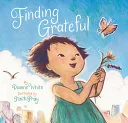
Dianne White’s *Finding Grateful* offers a refreshingly direct approach to cultivating thankfulness. The book’s strength lies in its simple, evocative prose, which bypasses complex philosophical arguments to focus on the tangible experience of gratitude. A particularly effective passage describes the feeling of sunshine on skin, a concrete sensory detail that grounds the abstract concept. However, the book occasionally verges on the overly simplistic, and for readers accustomed to deeper dives into psychological or spiritual texts, the lack of extensive exploration might feel like a missed opportunity for further contemplation. Despite this, White’s work provides a gentle, accessible reminder to pause and appreciate the present. It serves as a quiet, effective nudge toward greater contentment.
📝 Description
77
Published in 2024, Dianne White's Finding Grateful reframes gratitude as an active practice.
This picture book presents gratitude not as a passive feeling, but as a deliberate practice rooted in present-moment awareness. Through lyrical prose, White illustrates how cultivating thankfulness involves noticing small, everyday occurrences. The book suggests that this focused attention on details can foster hope and connection, even when facing difficulties.
Finding Grateful is for a wide audience, especially those seeking straightforward methods to improve their emotional well-being. It is useful for parents and educators aiming to teach children about mindfulness and appreciation. Adults interested in self-help and contemplative practices will also find the book accessible, particularly those drawn to evocative language and a gentle, encouraging tone.
While a contemporary work, Finding Grateful echoes a long tradition of contemplative literature. Its focus on present-moment awareness and finding joy in the ordinary aligns with practices found in various spiritual traditions, including Buddhist mindfulness and Stoic acceptance. The book's approachable format makes its message about an internal shift in perception widely available, distinguishing it from more academic or historically dense treatments of gratitude.
💡 Why Read This Book?
• Discover how to identify "glimmers of positivity" by focusing on sensory details, a technique White illustrates through examples like the "smell of newly cut grass," offering a tangible method for cultivating presence. • Learn to reframe challenging situations by actively seeking "little things," a practice White advocates for, providing a concrete, actionable strategy for fostering hope even when circumstances are difficult. • Experience the emotional benefit of "connection" through the book's emphasis on shared moments, such as "a smile, a hug," offering readers a practical way to deepen interpersonal bonds through mindful appreciation.
⭐ Reader Reviews
Honest opinions from readers who have explored this book.
❓ Frequently Asked Questions
When was Dianne White's 'Finding Grateful' first published?
Dianne White's 'Finding Grateful' was first published in 2024, marking it as a contemporary exploration of gratitude and mindfulness.
What is the central message of 'Finding Grateful'?
The central message is that gratitude is cultivated by actively paying attention to small, present-moment details and sensory experiences, fostering hope and connection.
Does 'Finding Grateful' offer practical exercises?
While not structured as a workbook, the book's lyrical prose and concrete examples serve as gentle invitations to practice mindful observation and appreciation in daily life.
Is 'Finding Grateful' suitable for children?
Yes, its accessible language and relatable examples make it suitable for children, serving as a valuable tool for parents and educators to teach mindfulness and gratitude.
What makes 'Finding Grateful' unique?
Its unique quality lies in its evocative, lyrical style that transforms the abstract concept of gratitude into a tangible, sensory experience, emphasizing presence over aspiration.
Where does the book suggest gratitude can be found?
The book suggests gratitude can be found everywhere, particularly in the "little things" like "a smile, a hug," and everyday sensory experiences, emphasizing immediate accessibility.
🔮 Key Themes & Symbolism
Gratitude as Active Awareness
This theme posits gratitude not as a passive feeling, but as a conscious act of noticing. White directs readers to observe "the little things" – a shared smile, the scent of cut grass – transforming mundane moments into opportunities for thankfulness. It’s about shifting perception to actively seek and acknowledge the positive elements present, fostering a sense of hope and connection.
The Power of Small Moments
The work emphasizes that significant emotional shifts can arise from appreciating seemingly insignificant details. These "glimmers of positivity" accumulate, building a foundation for a more hopeful outlook. The book uses striking prose to highlight how simple sensory experiences, like the warmth of sunshine, can anchor one to the present and cultivate inner peace.
Presence Amidst Challenge
A core tenet is finding gratitude even when facing difficulties. The book suggests that one doesn't need a grand plan or external validation to feel thankful. By paying attention to the immediate environment and small joys, such as "a hug," individuals can maintain a sense of presence and hope, irrespective of external circumstances.
Sensory Anchors for Well-being
White utilizes sensory input as a primary tool for cultivating gratitude. The smell of newly cut grass, the feeling of sunshine, or the sight of a smile are presented as concrete anchors to the present moment. This focus on tangible experiences provides an accessible pathway for readers to connect with feelings of appreciation and hope.
💬 Memorable Quotes
Direct passages from the work, attributed to the author.
“What does grateful look like? How does it feel? How do you find it?”
— These questions frame the reader's journey, inviting introspection and active engagement with the concept of gratitude. They signal that the book aims to explain thankfulness, presenting it as an accessible practice.
“Even in the face of a challenge, you don't need a map:”
— This phrase suggests that finding gratitude is an intuitive process, not requiring complex guidance or external solutions. It implies that the tools for cultivating thankfulness are already within reach, accessible through simple awareness.
“This heartfelt picture book is a reminder to pause, reflect, and take in the glimmers of positivity and connection.”
— This statement highlights the book's emotional tone and its function as a gentle prompt. It encourages readers to slow down, engage in self-reflection, and actively notice the subtle positive elements in their lives.
“Embracing the moment and finding gratitude right here, right now.”
— This serves as a concise summary of the book's core message, emphasizing the importance of present-moment awareness and the immediate accessibility of gratitude, regardless of time or circumstance.
💡 Key Ideas
Editorial paraphrase of the work's core concepts — not direct quotes.
You just need to pay attention to the little things - a smile, a hug, the smell of newly cut grass - that add up to a sense of presence and hope.
This quote expresses the book's central thesis: gratitude is found not in grand gestures or achievements, but in the mindful observation of everyday sensory details and simple human connections.
🌙 Esoteric Significance
Tradition
While not explicitly tied to a single esoteric lineage, *Finding Grateful* aligns with the principles of Western Esotericism's focus on inner transformation and the cultivation of consciousness. Its emphasis on present-moment awareness and finding meaning in the mundane echoes aspects of Hermeticism's focus on "as above, so below"—applying cosmic principles to the terrestrial experience—and Gnosticism's pursuit of inner illumination. The book offers a secularized interpretation of these ancient paths, making the practice of heightened awareness accessible without requiring adherence to specific doctrines.
Symbolism
The book employs subtle, everyday symbolism. 'A smile' and 'a hug' represent interpersonal connection and shared human experience, acting as symbols of immediate, tangible positivity. The 'smell of newly cut grass' or the feeling of 'sunshine' function as symbols of nature's simple gifts and the grounding power of sensory perception. These symbols collectively represent the accessible, often overlooked, sources of hope and contentment available in the present.
Modern Relevance
In contemporary spiritual and wellness circles, *Finding Grateful* speaks directly to the growing interest in secular mindfulness and positive psychology. Thinkers and practitioners focusing on emotional resilience, stress reduction, and intentional living find resonance in its message. Its approach complements practices like Acceptance and Commitment Therapy (ACT) and various forms of meditation that emphasize present-moment awareness. The book's gentle, non-dogmatic tone makes it a relevant tool for individuals seeking practical ways to enhance well-being outside of traditional religious or strictly defined esoteric frameworks.
👥 Who Should Read This Book
• Individuals new to mindfulness or contemplative practices seeking an accessible entry point, benefiting from the book's simple language and focus on everyday "little things." • Parents and educators looking for gentle ways to introduce concepts of gratitude and emotional awareness to children, utilizing the book's relatable examples like "a smile, a hug." • Adults experiencing stress or seeking to cultivate a more positive outlook, who can apply the book's encouragement to "pay attention" to "glimmers of positivity" in their own lives.
📜 Historical Context
Published in 2024, *Finding Grateful* arrives in an era saturated with mindfulness literature and self-help discourse. Its accessible, lyrical approach distinguishes it from more academic explorations of positive psychology or philosophical treatises on virtue ethics. While contemporary, its thematic resonance can be traced back to figures like Thich Nhat Hanh, whose teachings on mindfulness and present-moment awareness gained significant traction from the late 20th century onwards. Hanh's emphasis on finding joy in simple acts, much like White's focus on "the little things," offered an alternative to achievement-driven narratives. Unlike more esoteric traditions that might study complex ritual or philosophical systems, *Finding Grateful* prioritizes a universally understandable method of emotional cultivation. Its reception has been primarily positive, noted for its gentle encouragement rather than prescriptive demands.
📔 Journal Prompts
The "smell of newly cut grass" as an anchor for present-moment awareness.
Identifying "glimmers of positivity" in a challenging day.
Exploring the feeling evoked by "a smile" or "a hug."
How does "paying attention" shift your perception of the immediate environment?
Reflecting on the cumulative effect of appreciating "little things."
🗂️ Glossary
Embracing the moment
A core concept suggesting full engagement with and acceptance of the present experience, without dwelling on the past or anticipating the future.
Grateful
The state of being thankful, characterized by an appreciation for benefits received or simply for the experience of existence itself.
Little things
Refers to small, often overlooked details, sensory experiences, or simple interactions that contribute to a sense of well-being and positivity.
Presence
The state of being aware and fully attentive to the current moment, often cultivated through mindfulness practices.
Hope
A feeling of expectation and desire for a certain thing to happen; in this context, a positive outlook fostered by present-moment awareness.
Connection
A sense of belonging or relationship with others, fostered through shared experiences and mindful interaction.
Pay attention
To consciously focus one's awareness on specific details, sensations, or events, often as a practice of mindfulness.
This book appears in 1 collection
🔮 Readers Also Liked
Browse all →








From the “Mindfulness” Collection
View all →








More Free Occult Philosophy Books
View all →