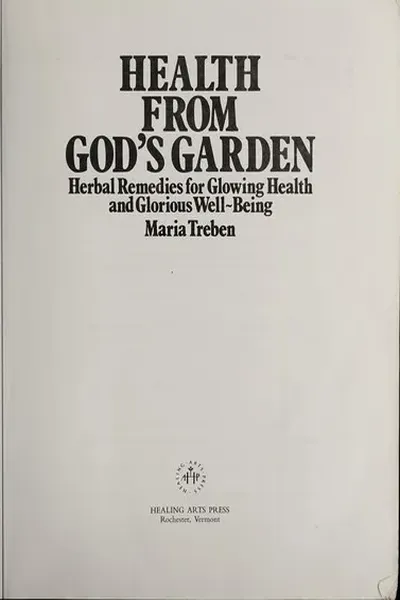
Health through God's pharmacy

 74
74

Health through God's pharmacy
Maria Treben's 'Health through God's Pharmacy' offers a comprehensive, if somewhat devotional, guide to herbal remedies. Its strength lies in the sheer breadth of practical applications detailed, drawing from a deep well of folk wisdom. Treben's conviction that nature is divinely provided for healing imbues the text with a unique spiritual authority. However, the work occasionally lacks the nuanced botanical or biochemical explanations favored by modern herbalists, relying more on traditional efficacy and anecdotal evidence. A particular passage detailing the use of St. John's Wort (Hypericum perforatum) for nerve pain, for example, is both specific and illustrative of Treben's direct, empirical approach. While the spiritual framing may not appeal to all, the practical knowledge presented remains valuable. It is a valuable resource for those seeking traditional herbal wisdom with a spiritual underpinning.
📝 Description
74
Maria Treben's 1994 book, 'Health through God's Pharmacy,' details herbal remedies rooted in folk traditions.
'Health through God's Pharmacy' collects herbal remedies and natural healing practices from Maria Treben. First published in 1994, the book draws heavily on traditional folk medicine and the author's personal experience with medicinal plants. It proposes a healing system that views herbs as nature's gifts, meant by a higher power to restore health.
The book provides specific applications for numerous ailments, with practical guidance on preparation and dosage. It is intended for individuals interested in natural health, herbalism, and alternative medicine. Readers seeking to complement conventional treatments with folk remedies will find it valuable. Those who appreciate a spiritual approach to health will also find resonance here, as will students of herbal medicine history and traditional healing knowledge.
Maria Treben's work appeared in the late 20th century, a time of renewed interest in natural healing and skepticism toward pharmaceutical solutions. While her earlier work gained attention, 'Health through God's Pharmacy' continued to popularize these methods. This period saw a larger movement toward holistic health, influenced by thinkers like Rudolf Steiner and the Anthroposophical movement, which examined the spiritual aspects of nature and healing. Treben's approach, grounded in Austrian folk traditions, offered a practical alternative to more academic systems.
This work fits within a tradition that sees divine providence in the natural world, specifically in plants. It aligns with folk spiritualism and a belief in nature as a source of healing power, guided by a higher intelligence. Treben's approach, while practical, is framed by a worldview where natural remedies are not merely biological agents but sacred gifts. This perspective connects to historical movements that sought to understand and utilize the spiritual energies and inherent properties of the plant kingdom for human well-being.
💡 Why Read This Book?
• Learn specific, time-tested herbal preparations for common ailments directly from Maria Treben's extensive experience, as detailed in chapters discussing remedies like the Swedish Bitters. • Understand the spiritual philosophy behind natural healing, viewing medicinal plants as a divine provision, a concept Treben emphasizes throughout the text. • Discover practical applications of specific herbs, such as the use of yarrow (Achillea millefolium) for wound healing or digestive issues, as described in the book's extensive plant profiles.
⭐ Reader Reviews
Honest opinions from readers who have explored this book.
❓ Frequently Asked Questions
What is the main philosophy behind Maria Treben's 'Health through God's Pharmacy'?
The book's core philosophy is that God has provided a 'pharmacy' in nature, specifically through medicinal plants, to heal humanity. Treben emphasizes using these natural remedies with faith and respect for their divine origin.
When was 'Health through God's Pharmacy' first published?
'Health through God's Pharmacy' was first published in 1994, continuing the legacy of Maria Treben's earlier works on natural healing.
Does the book offer scientific explanations for the herbal remedies?
While the book details practical applications and traditional efficacy, it primarily relies on folk wisdom and empirical observation rather than modern scientific or biochemical explanations for how the remedies work.
What kind of ailments does the book address?
The book covers a wide spectrum of ailments, from common issues like colds and digestive problems to more specific conditions related to nerves, skin, and internal organs, offering herbal solutions for each.
Is faith or spirituality important when using these remedies?
Yes, Treben strongly advocates for the importance of faith and spiritual intention. She believes that a respectful and faithful approach enhances the efficacy of the herbal treatments.
What are some of the key herbs discussed in the book?
The book discusses numerous herbs, including prominent ones like St. John's Wort, yarrow, sage, and the components of the famous Swedish Bitters, providing detailed instructions for their use.
🔮 Key Themes & Symbolism
Divine Provision of Nature
The central theme posits that medicinal plants are a divine gift, a 'pharmacy' provided by God for human health. This perspective elevates herbs beyond mere botanical resources, imbuing their use with spiritual significance. Treben encourages readers to approach these natural remedies with faith and gratitude, believing that their efficacy is amplified by a connection to their divine origin. This concept frames healing not just as a physical process but as a spiritual communion with nature's inherent restorative powers.
Traditional Folk Wisdom
The book is a repository of traditional European folk medicine, particularly drawing from Austrian herbal lore. It meticulously documents remedies passed down through generations, often relying on empirical observation and practical experience rather than laboratory science. This emphasis on time-tested methods highlights the enduring value of ancestral knowledge in maintaining health and treating illness, presenting a counterpoint to modern, often impersonal, medical systems.
Holistic Healing Approach
Treben's approach integrates the physical, spiritual, and psychological aspects of well-being. While detailing the physical applications of herbs, she consistently underscores the importance of the user's mental state, faith, and intention. This holistic perspective suggests that true healing involves addressing the whole person, not just isolated symptoms. The spiritual dimension is considered as crucial as the physical properties of the plants themselves.
Practical Application of Herbs
A significant focus is placed on the practical preparation and application of herbal remedies. The book provides detailed instructions for creating tinctures, teas, poultices, and compresses using specific plants. It guides readers on how to identify, gather, and utilize herbs effectively for a wide array of ailments, making complex traditional practices accessible to the home user seeking natural health solutions.
💬 Memorable Quotes
Direct passages from the work, attributed to the author.
“One should prepare the remedies with care and use them with faith.”
— This emphasizes the dual importance of diligent preparation and a faithful mindset in the efficacy of herbal treatments. It suggests that the practitioner's intention and belief are as crucial as the physical properties of the herbs themselves.
“Nature offers us a pharmacy in every herb.”
— This metaphor powerfully conveys the abundance and accessibility of natural healing resources. It encourages a perspective of looking to the plant kingdom for solutions to health challenges.
“Many illnesses can be healed through the simple use of herbs.”
— This statement reflects Treben's confidence in the power of herbalism, suggesting that a vast range of ailments can be effectively treated using natural methods, often with surprising simplicity.
💡 Key Ideas
Editorial paraphrase of the work's core concepts — not direct quotes.
The Lord has created all the plants that grow on earth and has given them healing powers.
This quote expresses Treben's core belief that nature, under divine guidance, provides the means for healing. It frames herbal remedies not as random discoveries but as intentional provisions for human well-being, accessible through faith and knowledge.
The Swedish Bitters are an old and well-tested home remedy.
Highlighting a specific, famous herbal preparation, this quote underscores the book's reliance on established folk traditions. It points to the long history and proven effectiveness of certain remedies within popular medicine.
🌙 Esoteric Significance
Tradition
Treben's work draws primarily from European folk magic and traditional herbalism, infused with a strong Christian spiritual overlay. While not strictly adhering to a formal esoteric lineage like Hermeticism or Kabbalah, it shares a common root with nature-based spiritual traditions that view the natural world as imbued with divine energy and healing potential. Her emphasis on faith and divine provision aligns with the devotional aspects found in many spiritual paths that seek healing through a connection with the sacred.
Symbolism
The most significant symbol is the 'pharmacy' of nature itself, representing divine providence and the inherent healing power within the plant kingdom. Specific herbs often carry symbolic weight; for instance, St. John's Wort (Hypericum perforatum) has historically been associated with protection against evil and the dispelling of darkness, reflecting its use for nerve ailments and melancholy. The act of preparing and administering remedies with faith symbolizes the user's active participation in their own healing, bridging the material (herbs) and immaterial (spirit, intention) realms.
Modern Relevance
Treben's work continues to influence contemporary herbalists and natural health practitioners who seek to integrate traditional knowledge with modern applications. Her emphasis on the spiritual dimension of healing appeals to the growing field of mind-body medicine and holistic wellness. Thinkers and practitioners in the 'eco-spirituality' movement often draw inspiration from her view of nature as a sacred source of well-being, while many online communities and forums dedicated to herbalism frequently reference her practical guides.
👥 Who Should Read This Book
• Individuals interested in practical, time-tested herbal remedies for common health concerns who value a spiritual approach to wellness. • Students of folk medicine and ethnobotany seeking to understand traditional European healing practices and their historical context. • Those exploring natural health solutions and seeking accessible, nature-based alternatives or complements to conventional medical treatments.
📜 Historical Context
Maria Treben's 'Health through God's Pharmacy' (1994) emerged during a period of heightened interest in alternative and complementary medicine, a trend that gained significant momentum from the 1970s onward. This era saw a growing public desire for natural remedies and a questioning of the side effects and limitations of conventional pharmaceutical interventions. Treben's work built upon earlier publications, notably 'Health from the Garden of the Lord,' resonating with a readership seeking spiritual and natural approaches to health, often influenced by movements like Anthroposophy (which Rudolf Steiner founded) that explored the holistic relationship between humans, nature, and the spiritual world. While Treben focused on practical folk herbalism, contemporary movements like the New Age spirituality also explored holistic healing. Her simple, faith-based approach contrasted with more esoteric or academic systems, making herbal medicine accessible to a broad audience. The reception was largely positive among those seeking natural healing, though mainstream medicine often viewed such practices with skepticism.
📔 Journal Prompts
Reflect on the concept of nature as a divine pharmacy and identify three plants in your local environment that might offer healing.
Document your experience preparing and using a specific herbal remedy mentioned in 'Health through God's Pharmacy,' noting both the process and any perceived effects.
Consider the role of faith and intention in healing, relating it to Treben's philosophy and your own experiences.
Analyze the historical significance of folk remedies like the Swedish Bitters and their place in modern healthcare.
Explore the symbolic meaning of a specific herb discussed, such as St. John's Wort, in relation to its physical and spiritual applications.
🗂️ Glossary
Swedish Bitters
A potent herbal tincture based on a historical recipe, traditionally used for a wide range of ailments including digestive issues, liver support, and general detoxification. Maria Treben frequently referenced its efficacy.
Tincture
An herbal extract produced by soaking plant material in alcohol or another solvent, creating a concentrated liquid form of the herb's medicinal properties.
Poultice
A soft mass of plant material, heated or unheated, applied to the body to relieve soreness and inflammation, often used for wounds, bruises, or sprains.
Folk Medicine
Traditional healing practices passed down through generations within a community or culture, often relying on empirical knowledge of herbs and natural remedies.
Holistic Healing
An approach to health that considers the interconnectedness of the mind, body, and spirit, aiming to treat the whole person rather than just isolated symptoms.
St. John's Wort
A flowering plant (Hypericum perforatum) known in traditional medicine for its use in treating nerve pain, depression, and wounds. Treben details its applications extensively.
Yarrow
An herb (Achillea millefolium) historically used for its blood-clotting properties (wound healing), digestive aid, and anti-inflammatory effects, frequently mentioned in traditional herbal compendiums.
🔮 Readers Also Liked
Browse all →









More by Maria Treben
All books →
More Free Occult Philosophy Books
View all →