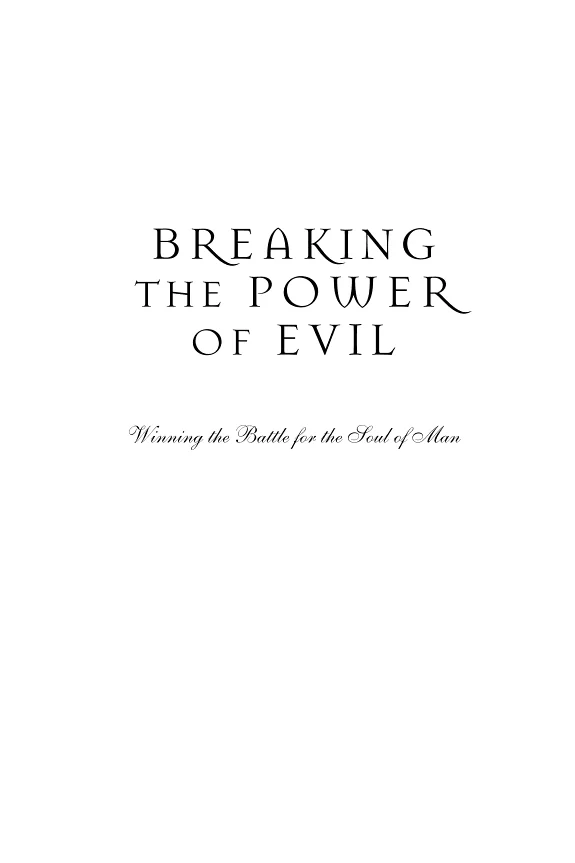
Breaking the Power of Evil
 76
76

Breaking the Power of Evil
Rick Joyner's 2002 treatise, "Breaking the Power of Evil," offers a direct challenge to the perceived encroachment of malevolent forces, framing the struggle as fundamentally internal. Joyner's assertion that "the battle is for the hearts of people" is the work's core, moving beyond mere theological exposition to a call for active spiritual engagement. A notable strength is the book's clarity in defining spiritual opposition not as an abstract force, but as a specific, targeted influence seeking to usurp divine authority within individual lives. However, the work's reliance on a particular charismatic theological framework might limit its immediate resonance for readers outside that tradition, occasionally presenting its interpretations as universally applicable without extensive qualification. The discussion surrounding the "breach" in evil's access, particularly how discernment and faith are presented as the keys to sealing it, is compelling, though the practical application can feel broad. Ultimately, "Breaking the Power of Evil" serves as a potent, if narrowly focused, call to spiritual vigilance and assertive faith.
📝 Description
76
Rick Joyner's 2002 book argues that evil's power is broken through spiritual discernment and disciplined will.
Published in 2002, Rick Joyner's "Breaking the Power of Evil" offers a theological and practical framework for confronting malevolent forces. This work is not fiction but a guide designed to equip readers with spiritual discernment and strategic approaches to oppose spiritual opposition. It examines the internal struggle for human allegiance and its wider implications for the world.
The book is for individuals seeking a deeper understanding of spiritual warfare and the nature of evil within a Christian eschatological framework. It speaks to those who feel called to engage in spiritual battles through prayer, faith, and a solid grasp of biblical principles regarding spiritual realities. Readers desiring concrete advice on reinforcing their spiritual defenses and identifying spiritual attacks will find valuable content here.
This book sits within a tradition of Christian mysticism that emphasizes direct spiritual experience and the active engagement with spiritual realities. It draws on concepts of spiritual warfare common in certain evangelical and charismatic circles, viewing the world as a site of conflict between divine and demonic powers. The focus on internal transformation and the power of faith aligns with contemplative practices that seek to align the individual will with divine will, thereby countering perceived malevolent influences.
💡 Why Read This Book?
• Gain practical strategies for spiritual discernment, learning how to identify and counter deceptive influences as detailed in Joyner's framework from "Breaking the Power of Evil." • Understand the theological underpinnings of spiritual warfare as presented in the book, particularly its emphasis on the human heart as the primary battleground since 2002. • Develop a stronger personal faith by exploring Joyner's concepts of spiritual authority and the strategic use of prayer and belief, as discussed throughout the 2002 publication.
⭐ Reader Reviews
Honest opinions from readers who have explored this book.
❓ Frequently Asked Questions
What is the main thesis of Rick Joyner's 'Breaking the Power of Evil'?
The book's central argument, presented in its 2002 publication, is that the primary battle against evil occurs within the human heart and mind, and that understanding and securing this inner territory is key to defeating malevolent influence.
When was 'Breaking the Power of Evil' first published?
Rick Joyner's 'Breaking the Power of Evil' was first published in 2002.
Does the book offer practical advice for combating evil?
Yes, Joyner aims to equip readers with spiritual weapons and strategies, focusing on prayer, discernment, and faith as means to create a 'breech' in evil's access, as explored in the 2002 text.
Who is the intended audience for 'Breaking the Power of Evil'?
The book is primarily for individuals interested in Christian spiritual warfare, seeking to understand and actively confront spiritual opposition through faith and theological insight, as presented in the 2002 edition.
What is the significance of the 'heart' in Joyner's concept of spiritual battle?
Joyner emphasizes the heart as the ultimate battleground because it is from the heart that one's allegiances and actions stem. Controlling or influencing the heart, therefore, is seen as the most effective way to combat evil's influence, a concept central to the 2002 publication.
How does Joyner suggest readers can breach evil's access?
Joyner proposes that by strengthening one's spiritual discernment, exercising faith, and understanding divine authority, readers can effectively create a 'breech' or opening to disrupt and overcome the influence of evil, as outlined in his 2002 work.
🔮 Key Themes & Symbolism
The Heart as the Battleground
This theme posits that the ultimate conflict against evil is not external but internal, centered on the human heart and will. Joyner, in his 2002 publication, argues that evil seeks to corrupt or control this core aspect of human identity. By understanding the heart's susceptibility and fortifying it through faith and spiritual discipline, individuals can prevent evil from gaining a foothold. This internal victory is presented as the prerequisite for any meaningful external resistance against malevolent forces, influencing one's spiritual posture and effectiveness.
Spiritual Discernment and Warfare
Joyner emphasizes the critical need for spiritual discernment to identify the subtle strategies of evil. The book, published in 2002, outlines how malevolent forces operate through deception, temptation, and misdirection. Consequently, developing the ability to distinguish between divine guidance and deceptive influences is paramount. This theme frames spiritual warfare not just as prayer, but as an active, informed engagement requiring wisdom and clarity to recognize and counter spiritual attacks effectively.
Faith as a Spiritual Weapon
Central to Joyner's 2002 work is the concept of faith as a powerful, offensive weapon against evil. It's presented not merely as belief, but as an active force that can create a 'breech' in the enemy's access. This theme explores how unwavering trust in divine power and promises can nullify the effects of fear, doubt, and spiritual oppression. The book encourages readers to wield their faith as a strategic tool to dismantle the power structures of evil in their lives and the world.
The Breach in Evil's Access
This motif refers to the strategic opening or vulnerability that evil exploits to influence individuals and the world. Joyner's 2002 text explains how this breach is often created by a lack of faith, moral compromise, or spiritual ignorance. The book's core purpose is to teach readers how to actively close these breaches and, conversely, to create a 'breach' in evil's dominion through spiritual means. It's about reclaiming territory and limiting the enemy's ability to operate.
💬 Memorable Quotes
Direct passages from the work, attributed to the author.
“The battle is for the hearts of people.”
— This statement captures the book's core thesis: that the most significant conflict against malevolent forces takes place within the individual's inner being, focusing on their will, desires, and allegiances.
“Evil's primary strategy is deception.”
— This interpretation underscores a key theme: that malevolent forces do not typically operate through brute force but through subtle manipulation, lies, and distortions of truth to lead individuals astray.
“Faith is the ultimate offensive weapon.”
— This interpretation emphasizes the book's view of faith as an active, powerful force capable of directly confronting and dismantling the structures and influences of evil.
💡 Key Ideas
Editorial paraphrase of the work's core concepts — not direct quotes.
Equips the readers with the necessary weapons to create a breech in the access of evil.
This paraphrased concept highlights the book's practical aim – to provide readers with spiritual tools and understanding that can actively disrupt and limit the influence of evil in their lives and the world.
Spiritual authority is key to overcoming opposition.
This paraphrase suggests that true victory over spiritual adversaries comes not from personal strength alone, but from understanding and rightly applying the authority granted by divine sources.
🌙 Esoteric Significance
Tradition
While rooted in a modern charismatic Christian framework, "Breaking the Power of Evil" touches upon themes that resonate with broader esoteric traditions concerning the nature of spiritual conflict and the power of focused intention. Its emphasis on internal spiritual battles and the harnessing of faith as a force aligns with concepts found in Hermeticism and certain schools of Western esotericism that explore the mind's power over material and spiritual realities.
Symbolism
The concept of a 'breach' itself functions as a potent symbol, representing vulnerability and an open door for negative influence. Conversely, the 'weapons' Joyner describes—faith, discernment, spiritual authority—symbolize the tools for defense and reclamation. The overarching symbolism contrasts light and darkness, divine order and chaos, reflecting a dualistic struggle common in many spiritual traditions.
Modern Relevance
Contemporary Christian practitioners of spiritual warfare, deliverance ministries, and those involved in intercessory prayer likely draw upon the principles outlined in Joyner's work. Its focus on the internal battleground and the practical application of faith continues to inform discussions within these communities, influencing approaches to spiritual counseling and personal spiritual development.
👥 Who Should Read This Book
• Individuals seeking to understand spiritual warfare from a Christian perspective, particularly those interested in the concept of the human heart as the primary battleground. • Believers looking for practical guidance on developing spiritual discernment and strengthening their faith as tools against perceived negative spiritual influences. • Readers interested in theological discussions from the early 2000s concerning the nature of evil and methods for spiritual resistance within a charismatic Christian context.
📜 Historical Context
Published in 2002, "Breaking the Power of Evil" emerged within a Christian landscape that had seen a resurgence of interest in spiritual warfare, partly influenced by popular fiction like Frank Peretti's "This Present Darkness" (1986) and non-fiction works exploring similar themes. The early 21st century was a period where evangelical and charismatic circles continued to grapple with concepts of demonic influence, spiritual mapping, and intercessory prayer as tools for societal change. This book contributed to that discourse, offering a theological framework for understanding and confronting perceived malevolent forces. It engaged with a growing body of literature focused on practical spiritual engagement, distinct from more academic theological discussions of theodicy or the problem of evil. While not directly engaging with specific named contemporaries in its core argument, its publication coincided with ongoing dialogues within the broader Pentecostal and Charismatic movements regarding spiritual dynamics and their impact on the world.
📔 Journal Prompts
The heart as the primary battleground: How does this concept shape your understanding of spiritual conflict?
Discernment strategies: List three ways you can actively cultivate discernment in your daily life, as inspired by the book's themes.
The 'breach' in evil's access: Reflect on potential areas in your life where such a breach might exist.
Faith as a weapon: Describe a time when your faith felt like an active force against a challenge.
Spiritual authority: How can understanding divine authority empower your spiritual stance?
🗂️ Glossary
Spiritual Warfare
The belief and practice that there is an ongoing conflict between spiritual forces of good and evil, and that believers are called to engage in this battle through prayer, faith, and other spiritual means.
Discernment
The ability to judge well, particularly the capacity to distinguish between divine guidance, human error, and malevolent spiritual influence.
Breach
In this context, a vulnerability or opening through which evil forces can exert influence or attack. The book aims to help readers close these breaches and create them in the enemy's influence.
Spiritual Authority
The God-given right and power to act against spiritual opposition, derived from one's relationship with God and adherence to His principles.
The Heart
Referred to as the seat of one's will, emotions, and core beliefs; presented as the central arena for the spiritual battle against evil.
Malevolent Forces
Spiritual entities or influences understood to be opposed to divine will and human well-being, seeking to cause harm, deception, or destruction.
Faith
More than just belief, it is presented as an active, powerful force that can influence spiritual and material realities, acting as a primary offensive weapon.
This book appears in 1 collection
🔮 Readers Also Liked
Browse all →









From the “Visions” Collection
View all →


More Free Occult Philosophy Books
View all →