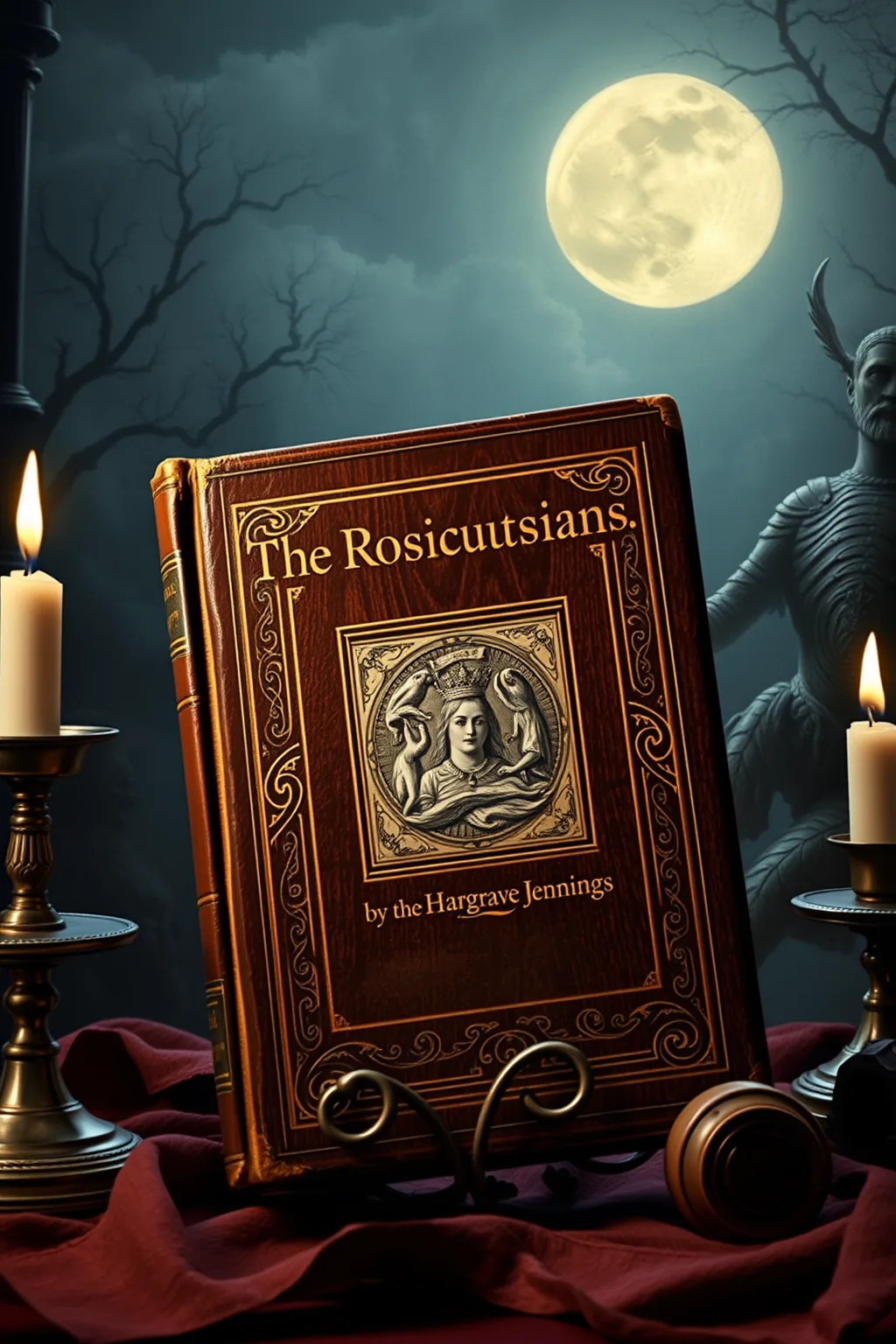
The Rosicrucians
 82
82

The Rosicrucians
Hargrave Jennings' The Rosicrucians presents a formidable, if dense, historical survey. Its strength lies in its comprehensive cataloging of alleged Rosicrucian connections across centuries, meticulously detailing textual references and symbolic parallels. Jennings' particular focus on the inherent symbolism within language itself, particularly the "Rosy Cross" and its implications, offers a unique lens. However, the work suffers from a certain opacity; its prose can be labyrinthine, often demanding significant prior knowledge of esoteric traditions. A passage discussing the supposed connection between Rosicrucianism and the Pythagorean concept of numbers, while intriguing, requires careful unpacking. While Jennings compiles an impressive amount of material, the narrative thread can become obscured by the sheer volume of historical data and symbolic interpretation. It is a valuable resource for dedicated researchers but less accessible for the casual inquirer.
📝 Description
82
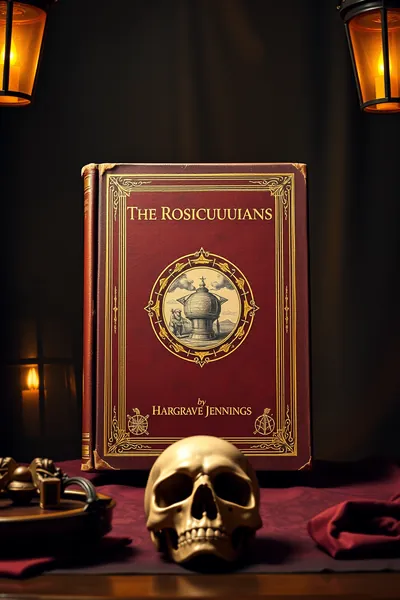
Hargrave Jennings' The Rosicrucians, first published in 1921, examines the historical and symbolic dimensions of the Rosicrucian movement.
This 1921 work by Hargrave Jennings serves as a historical survey of the Rosicrucian movement, rather than a practical initiation manual. Jennings traces the claimed origins and philosophical underpinnings of the order, situating it within Western esotericism. He investigates the lineage of Rosicrucian thought across different historical eras, scrutinizing claims of ancient roots and its presence in European intellectual history.
The book is aimed at students of esoteric history, comparative religion, and Western occult traditions. It will interest those who value detailed historical research and a thorough overview of a subject often shrouded in myth. Readers looking for a factual account, based on historical analysis instead of personal experience, will find this volume useful. It is particularly suited for individuals interested in the intellectual currents that influenced movements like Freemasonry and alchemy.
Jennings' study appeared in the early 20th century, a time marked by significant interest in occultism and secret societies. While published after the initial surges of Theosophy and Spiritualism, it shares their engagement with the search for ancient knowledge. The book's detailed examination of Rosicrucian lore connects it to early modern European intellectual history, a period featuring figures like Robert Fludd and Michael Maier involved in alchemical and Rosicrucian pursuits that challenged prevailing scientific and religious views.
💡 Why Read This Book?
• Gain a comprehensive historical overview of the Rosicrucian phenomenon, understanding its alleged origins and development from the early 17th century manifestos through to Jennings' contemporary period. • Explore the intricate symbolic language and philosophical underpinnings that Jennings associates with the Rosicrucians, including alchemy and Hermeticism. • Understand the intellectual climate of the early 20th century regarding secret societies and esoteric movements, as reflected in Jennings' extensive research and compilation of historical accounts.
⭐ Reader Reviews
Honest opinions from readers who have explored this book.
❓ Frequently Asked Questions
What is the primary focus of Hargrave Jennings' The Rosicrucians?
Jennings' work primarily focuses on the historical and symbolic aspects of the Rosicrucian movement, tracing its purported origins and influence on Western esoteric traditions from the 17th century onwards.
When was The Rosicrucians by Hargrave Jennings first published?
The book was first published in 1921, placing it within the early 20th-century resurgence of interest in occultism and historical secret societies.
Does Jennings' book offer practical Rosicrucian rituals or teachings?
No, Jennings' book is a historical and analytical study, not a practical manual for Rosicrucian practice or initiation. It examines the lore and history.
What historical documents are central to Jennings' discussion of Rosicrucianism?
Jennings extensively discusses the early 17th-century manifestos, particularly the *Fama Fraternitatis* and the *Confessio Fraternitatis*, as foundational texts.
What philosophical traditions does Jennings link to the Rosicrucians?
Jennings connects Rosicrucianism to traditions such as Hermeticism, Kabbalah, Gnosticism, and the symbolic language of alchemy and Pythagorean philosophy.
Is this book suitable for beginners in esoteric studies?
While informative, the book's dense prose and reliance on historical context may be challenging for absolute beginners. It is best suited for those with some background in esoteric history or philosophy.
🔮 Key Themes & Symbolism
Historical Lineage and Authenticity
Jennings meticulously investigates the claimed origins of the Rosicrucian Order, scrutinizing the historical evidence for figures like Christian Rosenkreutz and the authenticity of early manifestos such as the *Fama Fraternitatis* (published 1614). The work grapples with the challenge of separating historical fact from legend, examining how the Rosicrucian narrative evolved through various European intellectual and cultural movements across centuries. It highlights the continuous quest to establish a verifiable lineage for esoteric wisdom.
Symbolic Language and Alchemy
A central theme is the deep symbolic resonance Jennings finds within Rosicrucian lore, particularly its connections to alchemical traditions. He explores how alchemical processes and symbolism were interpreted allegorically, representing spiritual transformation rather than mere material transmutation. The 'Rosy Cross' itself is analyzed as a potent symbol, laden with multi-layered meanings rooted in both Christian mysticism and Hermetic philosophy, representing the union of opposites and the unfolding of spiritual knowledge.
Esoteric Philosophy and Western Thought
Jennings positions Rosicrucianism as a significant, albeit often hidden, current within Western intellectual history. The book connects Rosicrucian ideas to ancient philosophies like Pythagoreanism and Neoplatonism, as well as later Kabbalistic and Gnostic traditions. It argues that Rosicrucianism served as a conduit for preserving and transmitting esoteric knowledge, influencing subsequent movements and thinkers interested in spiritual development, hidden wisdom, and a more mystical understanding of the cosmos.
The Quest for Hidden Knowledge
Underpinning the entire work is the enduring human desire to uncover and understand hidden truths about existence, consciousness, and the divine. Jennings portrays the Rosicrucians as custodians of such knowledge, operating through cryptic texts and symbolic allegories. The book reflects the early 20th-century fascination with uncovering ancient mysteries and secret traditions, presenting Rosicrucianism as a key example of this persistent pursuit of esoteric enlightenment.
💬 Memorable Quotes
Direct passages from the work, attributed to the author.
“The Rosicrucian question is the question of the origin of modern occultism.”
— This statement expresses Jennings' view that understanding the Rosicrucian movement is crucial for grasping the historical roots and development of much of Western esotericism and occult philosophy that followed.
“The Rosy Cross implies a hidden doctrine.”
— Jennings suggests that the central symbol of the Rosicrucians, the Rosy Cross, is not merely decorative but a key to unlocking deeper, concealed philosophical and spiritual teachings.
“The *Fama Fraternitatis* announced a new era of wisdom.”
— This reflects Jennings' understanding of the impact of the 1614 Rosicrucian manifesto, which claimed to reveal forgotten knowledge and herald a renewal of learning and spiritual insight in Europe.
“Symbolism is the language of the initiated.”
— Jennings implies that esoteric traditions, including Rosicrucianism, rely heavily on symbolic representation, which requires a specific understanding or 'initiation' to fully comprehend.
💡 Key Ideas
Editorial paraphrase of the work's core concepts — not direct quotes.
Alchemy is the science of the soul.
This paraphrased concept highlights Jennings' interpretation of alchemy not just as a proto-chemistry but as a symbolic path for inner spiritual purification and transformation.
🌙 Esoteric Significance
Tradition
Jennings' work is firmly situated within the study of Western Esotericism, specifically focusing on the Rosicrucian current. It engages with Hermetic, Kabbalistic, and Gnostic traditions, viewing Rosicrucianism as a synthesis and continuation of these ancient streams of thought. The book treats Rosicrucianism not as a discrete, isolated phenomenon but as an integral part of a larger, continuous esoteric lineage that seeks to preserve and transmit hidden wisdom across ages.
Symbolism
The 'Rosy Cross' is a paramount symbol Jennings dissects, interpreting it as a unification of the rose (representing the feminine, the soul, spiritual awakening) and the cross (representing the material, the human form, the four elements). He also explores the symbolic language of alchemy, viewing its processes as allegories for spiritual purification and transformation, and connects these to Rosicrucian ideals of inner enlightenment and the pursuit of hidden knowledge.
Modern Relevance
Jennings' detailed historical and symbolic analysis continues to inform contemporary Rosicrucian organizations and scholars of Western Esotericism. Modern practitioners and researchers often reference his work when tracing the historical development and philosophical underpinnings of Rosicrucianism. Thinkers and groups exploring the intersection of alchemy, Hermeticism, and Christian mysticism still find value in his extensive compilation of historical connections and symbolic interpretations.
👥 Who Should Read This Book
• Students of Western Esotericism seeking a deep dive into the historical and symbolic dimensions of the Rosicrucian movement. • Researchers of secret societies and their influence on European intellectual history, particularly those interested in the period from the 17th century onwards. • Aspiring occultists and philosophers who wish to understand the foundational myths, texts, and symbolic frameworks associated with prominent esoteric traditions.
📜 Historical Context
Hargrave Jennings' *The Rosicrucians*, published in 1921, emerged during a fertile period for esoteric studies, following the widespread influence of Theosophy and Spiritualism. The early 20th century saw a renewed academic and popular interest in historical occultism, secret societies, and ancient wisdom traditions. Jennings’ work contributed to this milieu by meticulously examining the historical claims and symbolic interpretations surrounding the Rosicrucian Order, which had captured the European imagination since the publication of its manifestos in the early 17th century. His research engaged with the intellectual currents that sought to trace esoteric lineages, often drawing parallels with Freemasonry and Hermeticism. Contemporary figures like Aleister Crowley were also actively exploring and redefining esoteric traditions, though Jennings’ approach was more historically analytical. The book's reception likely aligned with the broader academic and occultist discourse of the time, contributing to the ongoing debate about the historical reality versus the symbolic mythos of the Rosicrucians.
📔 Journal Prompts
The historical claims surrounding Christian Rosenkreutz and the *Fama Fraternitatis*.
The symbolic meaning of the 'Rosy Cross' in relation to alchemical transformation.
Connections between Rosicrucianism and Hermetic or Kabbalistic philosophy.
The concept of hidden knowledge and its preservation across historical periods.
Jennings' interpretation of alchemy as a spiritual science.
🗂️ Glossary
Rosicrucianism
An esoteric movement, purportedly founded in the early 17th century through manifestos like the *Fama Fraternitatis*, which claimed to possess secret wisdom and aimed to reform European society and sciences.
Fama Fraternitatis
One of the foundational Rosicrucian manifestos, published in 1614, which announced the existence of a secret fraternity dedicated to esoteric knowledge and spiritual reform.
Confessio Fraternitatis
A second Rosicrucian manifesto, published in 1615, elaborating on the principles and aims outlined in the *Fama Fraternitatis* and further detailing the fraternity's philosophical outlook.
Alchemy
An ancient tradition involving the study of matter, transformation, and the pursuit of spiritual perfection, often expressed through symbolic language and allegorical processes related to metallurgy and chemistry.
Hermeticism
A philosophical and religious tradition based on writings attributed to Hermes Trismegistus, emphasizing divine wisdom, the correspondence between the macrocosm and microcosm, and spiritual enlightenment.
Kabbalah
A system of Jewish mysticism that explores the divine nature and the relationship between God and the created universe, often through complex symbolic interpretations of scripture and esoteric diagrams like the Tree of Life.
Pythagoreanism
An ancient Greek philosophical school founded by Pythagoras, emphasizing the importance of numbers, mathematics, music, and cosmology as keys to understanding the universe and the soul's purification.
🔮 Readers Also Liked
Browse all →








More by Hargrave Jennings
All books →




More Free Occult Philosophy Books
View all →