Satanic Feminism
 73
73

Satanic Feminism
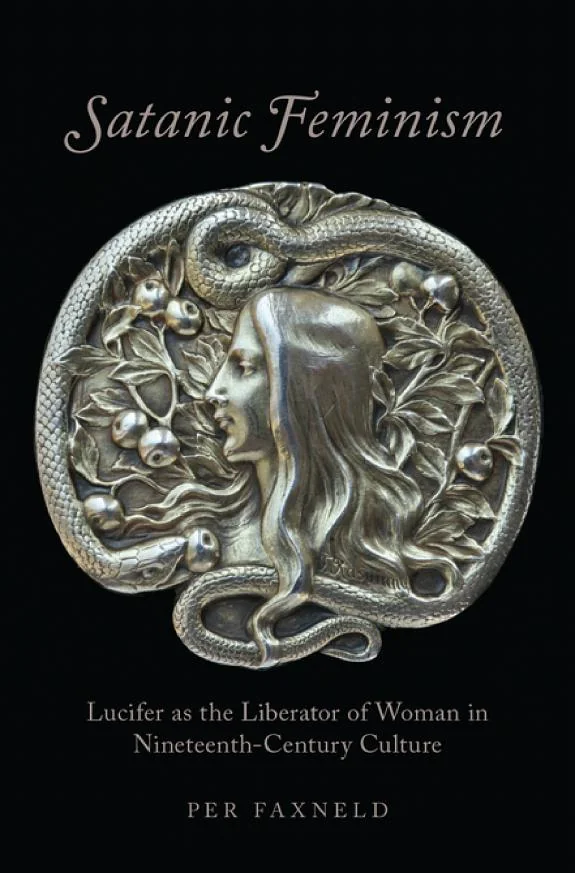
Per Faxneld's "Satanic Feminism" offers a compelling, if sometimes dense, exploration of how women and feminist thinkers have engaged with Satanic iconography. The strength of the work lies in its meticulous tracing of how figures like Eve and Lucifer, historically cast as villains in patriarchal religious narratives, were re-appropriated as symbols of liberation and rebellion. Faxneld demonstrates a keen eye for the subtle yet powerful ways these subversions occurred, particularly in the 19th century. A limitation, however, is the academic tone, which at times can feel removed from the visceral power of the symbols discussed. The section detailing the counter-readings of Eve as a proto-feminist figure is particularly illuminating, showcasing the intellectual gymnastics involved in transforming a symbol of sin into one of enlightenment. "Satanic Feminism" is an essential text for understanding the esoteric dimensions of feminist historical critique.
📝 Description
73
Per Faxneld's 2022 book traces the reinterpretation of Satan and Eve in feminist thought.
Per Faxneld's "Satanic Feminism" examines the historical engagement between Satanic imagery and feminist movements. The book details how figures like Satan and Eve were recontextualized by various feminist groups. It analyzes the theological and cultural roots of Satan as a symbol of resistance against patriarchal structures. This work situates its discussion within a history of anti-feminist religious discourse, particularly within Christianity, where figures like Eve were often portrayed as the source of evil. Faxneld then shows how 19th-century and subsequent movements began to alter these views, seeing Lucifer and Satan as symbols of liberation and female enlightenment.
The book considers concepts like the redefinition of Satanic figures, Eve's symbolic function, and the critique of patriarchal religious stories. It investigates the use of these symbols to question established religious doctrines and social orders. The work also covers historical individuals and groups who engaged in this symbolic repurposing. It is written for scholars and practitioners in occult philosophy, religious studies, and gender studies, as well as those interested in the historical development of religious symbolism and its use by counter-cultural and liberationist movements.
This book engages with traditions that have historically viewed the serpent or its symbolic representations, such as Lucifer and Satan, as figures of knowledge and rebellion against oppressive divine or social orders. It connects this to feminist critiques of patriarchal religion, particularly within Christianity, where the figures of Satan and Eve carry significant symbolic weight. The work traces how these potent symbols were reclaimed and re-signified by women seeking liberation from established religious and social hierarchies.
💡 Why Read This Book?
• Gain insight into the re-appropriation of patriarchal religious symbols, learning how figures like Eve were reframed as liberators, a concept explored throughout the book. • Understand the historical context of 19th-century feminist thought and its engagement with religious subversion, a specific period highlighted by the author. • Discover how Satanic imagery has been utilized as a potent symbol of rebellion against oppressive social and religious structures, a key theme analyzed by Faxneld.
⭐ Reader Reviews
Honest opinions from readers who have explored this book.
❓ Frequently Asked Questions
What is the central argument of Per Faxneld's 'Satanic Feminism'?
The central argument is that Satanic imagery, particularly figures like Eve and Lucifer, has been reinterpreted by feminist movements as symbols of liberation and rebellion against patriarchal religious traditions.
When was 'Satanic Feminism' first published?
'Satanic Feminism' was first published on August 24, 2017.
Which historical period is most emphasized in the book's analysis?
The book places significant emphasis on the 19th century, detailing how rebellious females and intellectual currents of that era began to perform counter-readings of misogynist religious traditions.
How does the book discuss the figure of Eve?
The book examines Eve's traditional portrayal as Satan's accomplice responsible for humanity's fall, and then explores how this narrative was subverted by feminist thinkers who saw her as a liberator of knowledge.
Is 'Satanic Feminism' a practical guide to Satanic practices?
No, 'Satanic Feminism' is an academic and critical work exploring the philosophical and historical intersections of Satanic symbolism and feminist thought, not a manual for occult practices.
What is the relationship between Satan and feminism explored in the book?
The book explores how Satan was reconceptualized by some feminists as a liberator of womankind, challenging the traditional religious view of Satan as an evil entity.
🔮 Key Themes & Symbolism
Eve as Liberator
The work meticulously dissects the biblical narrative of Eve, traditionally blamed for original sin. Faxneld details how various feminist thinkers and movements, particularly from the 19th century onwards, re-signified Eve's act of eating the forbidden fruit. This act is reframed not as disobedience leading to damnation, but as a courageous pursuit of knowledge and liberation from patriarchal control imposed by divine decree.
Luciferian Re-appropriation
Beyond Eve, the figure of Lucifer is examined as another potent symbol co-opted by feminist thought. Faxneld explores how Lucifer, the light-bringer and fallen angel, was reconceptualized as a champion of enlightenment and a radical challenger to oppressive religious dogma. This reinterpretation positions Lucifer as an ally to women seeking freedom from imposed ignorance and subservience.
Critique of Patriarchal Religion
A core theme is the book's critique of how established patriarchal religions have historically used figures like Satan and Eve to justify the subordination of women. Faxneld analyzes the theological justifications for female subservience embedded in scripture and tradition, demonstrating how Satanic imagery became a vehicle for feminist resistance against these very structures.
Symbolism of Rebellion
The book studies the broader symbolism of rebellion inherent in Satanic figures. It investigates how embracing the 'Satanic'—often a label for the heretical, the forbidden, and the outcast—became a strategic move for feminists to articulate their opposition to societal norms and religious dictates that confined women.
💬 Memorable Quotes
Direct passages from the work, attributed to the author.
“Eve was the first to heed Satan's advice to eat the forbidden fruit.”
— This foundational statement highlights the biblical origin of Eve's association with Satan, setting the stage for the book's exploration of how this narrative has been challenged and reinterpreted.
“The notion of woman as the Devil's accomplice is prominent throughout Christian history.”
— This points to the historical misogyny embedded in religious doctrine, which the book aims to unpack and show how it was countered by alternative readings of Satanic figures.
“In the nineteenth century, rebellious females performed counter-readings of this misogynist tradition.”
— This marks a crucial turning point, identifying the 19th century as a key period for the emergence of feminist reinterpretations of Satanic figures as symbols of liberation.
“Lucifer was reconceptualized as a feminist liberator of womankind.”
— This concisely captures the central thesis regarding the symbolic transformation of Lucifer within feminist discourse, shifting from a demonic figure to an emancipator.
💡 Key Ideas
Editorial paraphrase of the work's core concepts — not direct quotes.
Eve became a symbol of enlightenment and rebellion.
This summarizes the profound re-evaluation of Eve's role, moving beyond her traditional portrayal to represent intellectual awakening and defiance against established authority.
🌙 Esoteric Significance
Tradition
While not strictly adhering to a single lineage, "Satanic Feminism" engages with themes prevalent in Gnosticism and certain strands of Hermeticism, particularly regarding the pursuit of forbidden knowledge and the critique of demiurgic patriarchal systems. It departs from orthodox interpretations by focusing on the subversive potential within figures traditionally demonized by Abrahamic religions, offering a lens through which to view rebellion against perceived spiritual enslavement.
Symbolism
The primary symbols examined are Eve and Lucifer. Eve, beyond her biblical role, becomes a symbol of intellectual awakening and the courage to transgress imposed boundaries for the sake of knowledge. Lucifer, the 'light-bringer,' symbolizes enlightenment, radical individualism, and defiance against oppressive, dogmatic authority. Their reinterpretation offers a potent counter-narrative to traditional religious frameworks.
Modern Relevance
Contemporary occultism and certain feminist theological circles draw upon the ideas presented in "Satanic Feminism." Thinkers exploring radical theologies, post-theistic spirituality, and the deconstruction of patriarchal religious dogma find value in Faxneld's work. It informs modern discussions on reclaiming marginalized or demonized spiritual figures and symbols for empowerment.
👥 Who Should Read This Book
• Students of Comparative Religion and Gender Studies: They will gain a nuanced understanding of how religious figures have been recontextualized within feminist discourse. • Occult Philosophy Enthusiasts: Individuals interested in the historical and symbolic use of Satanic figures in counter-cultural thought will find rich material. • Academic Researchers: Scholars examining 19th-century intellectual history, religious subversion, and feminist theory will benefit from its detailed analysis.
📜 Historical Context
Published in 2017, "Satanic Feminism" emerged in an academic landscape increasingly interested in the intersection of religion, gender, and counter-cultural movements. The 19th century, a period rich with occult revival and burgeoning feminist activism, forms a significant backdrop. Thinkers like Helena Blavatsky and movements such as Theosophy were exploring alternative spiritualities, though not always directly engaging with Satanic symbolism in the way Faxneld details. The book's analysis of the re-appropriation of Eve and Lucifer appeals to broader post-structuralist critiques of religious narratives and their power structures. While not directly censored, its subject matter touches upon controversial interpretations of religious texts, positioning it within scholarly debates about religious symbolism and gender politics that continue to evolve.
📔 Journal Prompts
The re-signification of Eve's transgression.
Lucifer as a symbol of feminist liberation.
The historical critique of patriarchal religious narratives.
The use of Satanic imagery for rebellion.
Reinterpreting biblical narratives for personal empowerment.
🗂️ Glossary
Counter-reading
An interpretation that challenges, subverts, or reinterprets a dominant or traditional reading of a text, symbol, or narrative, often from a critical or oppositional perspective.
Patriarchal Tradition
A social system and set of beliefs where men hold primary power and authority, particularly in roles of political leadership, moral authority, social privilege, and control of property.
Misogynist Tradition
A set of beliefs, attitudes, and practices that express hatred, dislike, mistrust, or ingrained prejudice against women, often manifested in religious or cultural doctrines.
Rebellious Females
Refers to women throughout history who actively challenged established social, religious, or political norms and expectations, often through intellectual or symbolic acts of defiance.
Forbidden Fruit
In the biblical narrative, the fruit from the Tree of the Knowledge of Good and Evil, the consumption of which is forbidden by God, leading to the expulsion of Adam and Eve from Eden.
Occult Philosophy
A broad category of esoteric traditions and philosophical systems concerned with hidden knowledge, supernatural phenomena, and spiritual practices, often outside mainstream religious or scientific discourse.
Satanic Feminism
A theoretical framework and historical phenomenon where feminist thought appropriates and reinterprets Satanic figures and symbolism as representations of liberation, rebellion, and enlightenment against patriarchal structures.
This book appears in 1 collection
🔮 Readers Also Liked
Browse all →









From the “Western Esotericism” Collection
View all →









More Free Sacred Texts & Gnosticism Books
View all →