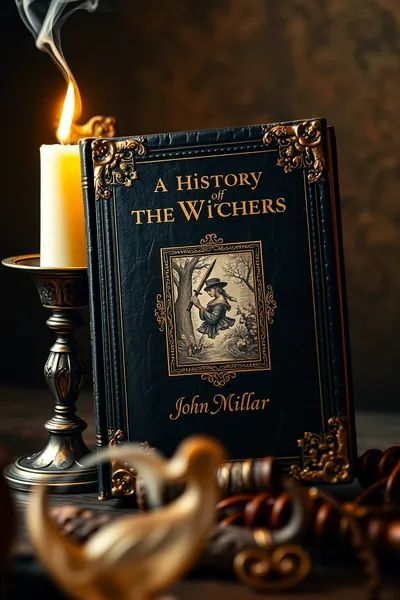
Harry Potter and the Philosopher's Stone

 84
84

Harry Potter and the Philosopher's Stone
The initial foray into Harry Potter's magical education reveals a surprisingly adept construction of a world that feels both familiar and entirely new. Rowling's genius lies in grounding the fantastical in the mundane, making Harry's discovery of magic a relatable awakening. The depiction of Hogwarts, particularly the Sorting Ceremony, captures a potent sense of belonging and destiny that will appeal to those seeking entry into a structured magical society. However, the antagonist's machinations, while present, feel somewhat underdeveloped here, serving more as a looming shadow than a fully realized threat in this first installment. The resolution of the Stone's protection, while clever, relies on a rather convenient series of challenges. Nevertheless, the book's strength lies in its meticulous world-building and the compelling introduction of its central trio, promising much for future revelations.
📝 Description
84
In 1997, J. K. Rowling introduced Harry Potter, an orphan unaware of his wizarding heritage.
Harry Potter lives a deprived childhood with his aunt and uncle, the Dursleys. On his eleventh birthday, he learns he is a wizard and is invited to attend Hogwarts School of Witchcraft and Wizardry. A half-giant named Rubeus Hagrid delivers this news and rescues Harry from his ordinary life.
Hogwarts functions as more than an educational institution; it is a refuge and a training ground for young magic users. Here, students learn spells, brew potions, and study the core principles of magic. The castle itself holds enchantments and secrets, watching over its students and its past. The curriculum includes subjects like Charms, Transfiguration, and Defense Against the Dark Arts, preparing them for a world hidden from non-magical people.
The central plot concerns the Sorcerer's Stone, an artifact rumored to grant immortality and wealth. This Stone, concealed within Hogwarts, becomes the objective of a dark figure aiming to seize its power. Harry, with his new friends Ron Weasley and Hermione Granger, confronts this threat, which connects to Harry's history and the dark wizard Lord Voldemort.
This book situates a modern narrative within a tradition of hidden worlds and magical education. It draws on archetypes found in Western esotericism, such as the secret school and the initiate's journey. The concept of a hidden magical society operating parallel to the mundane world echoes occult philosophies that posit unseen forces and dimensions. The narrative also touches on themes of innate power, the struggle against dark forces, and the importance of knowledge and community in spiritual development.
💡 Why Read This Book?
• Understand the foundational mythos of Harry Potter's world, including the significance of Hogwarts Castle as a nexus of magical learning established in the late 20th century. • Explore the early symbolic conflicts between light and shadow, particularly concerning the Sorcerer's Stone and its custodianship, mirroring ancient alchemical pursuits. • Witness the genesis of key relationships, such as the steadfast bond between Harry, Ron, and Hermione, forged through shared trials within the school's walls.
⭐ Reader Reviews
Honest opinions from readers who have explored this book.
❓ Frequently Asked Questions
When was Harry Potter and the Philosopher's Stone first published?
Harry Potter and the Philosopher's Stone was first published in the United Kingdom in 1997. This marked the beginning of a phenomenon that would later captivate readers worldwide.
What is the Sorcerer's Stone?
The Sorcerer's Stone, also known as the Philosopher's Stone, is a mythical alchemical substance said to grant immortality and the ability to turn base metals into gold.
Who are Harry Potter's closest friends at Hogwarts?
Harry Potter's closest friends at Hogwarts are Ron Weasley and Hermione Granger, whom he meets during his first year and with whom he shares many adventures.
What is the significance of the Mirror of Erised?
The Mirror of Erised shows the viewer their deepest, most desperate desire. For Harry, it reflects his lost family, highlighting themes of longing and the importance of confronting reality.
What is the name of the school Harry attends?
Harry attends Hogwarts School of Witchcraft and Wizardry, a renowned institution for magical education located in Scotland, where young witches and wizards learn to harness their abilities.
Who is the main antagonist Harry faces in this book?
The primary antagonist Harry confronts is Professor Quirrell, who is secretly attempting to steal the Sorcerer's Stone under the influence of the dark wizard Lord Voldemort.
🔮 Key Themes & Symbolism
The Alchemy of Self-Discovery
This work presents a compelling narrative of self-discovery framed through alchemical principles. Harry's journey from an unrecognized, oppressed child to a wizard of renown mirrors the alchemical process of transmutation, where base elements are refined into gold. The Sorcerer's Stone itself is a potent alchemical symbol of perfection and immortality, representing the ultimate goal of transformation. The narrative suggests that true power and longevity are not merely physical but spiritual, achieved through understanding one's inner nature and confronting external darkness.
The Threshold Between Worlds
The story masterfully depicts the liminal space between the mundane world of Muggles and the hidden area of magic. Hogwarts serves as a physical manifestation of this threshold, a sanctuary where the ordinary rules of society are suspended. The discovery of Platform 9¾ at King's Cross Station in 1997 is a literal gateway, symbolizing the point of no return for Harry. This theme appeals to initiatory rites found in various esoteric traditions, where passing through a portal signifies a profound shift in consciousness and reality.
The Power of Love and Sacrifice
Central to the narrative is the concept that love acts as a potent protective force, a magical shield stronger than any spell. Lily Potter's sacrifice for Harry, an act rooted in profound maternal love, imbues him with an ancient protection that Voldemort cannot overcome. This echoes Gnostic ideals where divine love or gnosis offers salvation from material corruption. The narrative posits that true strength is not derived from power or domination, but from selfless affection and the willingness to protect others.
Destiny and Free Will
The book grapples with the interplay between predetermined destiny and individual choice. Harry is told he is destined for greatness, yet his path is constantly shaped by his decisions and those of others. The Sorting Hat's deliberation before placing Harry in Gryffindor, despite his own initial fear and a potential Slytherin connection, highlights the agency of choice. This reflects philosophical debates found in Western esotericism, questioning whether one's fate is fixed or malleable through conscious action and spiritual development.
💬 Memorable Quotes
Direct passages from the work, attributed to the author.
“It is our choices, Harry, that show what we truly are, far more than our abilities.”
— This statement, attributed to Albus Dumbledore, underscores the theme that character is defined not by innate talents or circumstances, but by the ethical decisions one makes, especially under pressure.
“There are some things you can't share with anyone, not really, without going mad yourself.”
— Hermione's observation speaks to the isolating nature of profound experiences or knowledge, particularly those that deviate from societal norms or understanding, hinting at the personal burden of possessing esoteric insights.
“The Mirror of Erised shows us nothing more or less than the deepest, most desperate desire of our hearts.”
— Dumbledore explains the function of the Mirror of Erised, revealing its power to reflect not reality, but the soul's yearning, a concept familiar in mystical traditions that explore the subconscious and the pursuit of ultimate fulfillment.
“It takes a great deal of bravery to stand up to our enemies, but just as much to stand up to our friends.”
— This wisdom, also from Dumbledore, emphasizes that true courage extends beyond confronting external threats to maintaining integrity and honesty within personal relationships, a crucial aspect of ethical development.
“Fear of a name only increases fear of the thing itself.”
— Voldemort's avoidance of naming his adversary, Harry, illustrates how the unknown and the unspoken can amplify dread, a psychological principle relevant to overcoming phobias and confronting hidden truths.
🌙 Esoteric Significance
Tradition
The work draws loosely from Western Hermeticism and alchemical traditions, presenting a narrative of transformation and hidden knowledge. While not explicitly Gnostic, it shares themes of a hidden, superior reality and the struggle against a corrupting force. The concept of innate magical ability and destiny aligns with certain streams of Theosophy, which posit a spiritual hierarchy and latent potential within humanity. It departs from strict adherence to any single tradition, instead synthesizing archetypal elements into a broadly accessible magical framework.
Symbolism
The Sorcerer's Stone is a primary alchemical symbol, representing the main work—the creation of the elixir of life and the philosopher's gold, signifying spiritual perfection and immortality. Hogwarts itself acts as a symbolic crucible, a place of transformation and initiation where individuals are refined. The Mirror of Erised is a potent symbol of desire and the self's subconscious longings, reflecting the Hermetic principle 'As above, so below,' by revealing internal truths.
Modern Relevance
Contemporary practitioners of modern witchcraft and fantasy literature enthusiasts frequently engage with *Harry Potter* for its accessible introduction to magical concepts. The series' exploration of elemental magic, protective enchantments, and the power of intention informs discussions in online communities dedicated to spiritual development. It serves as a modern mythos, providing relatable archetypes and symbolic language that resonate with individuals seeking meaning and connection in a secular age, echoing the enduring appeal of Jungian archetypes.
👥 Who Should Read This Book
• Aspiring practitioners of Western Esotericism seeking accessible archetypal narratives that illustrate concepts of transformation and hidden potential. • Comparative mythology students interested in modern interpretations of the 'hero's journey' and the 'chosen one' archetype within a contemporary fantasy context. • Readers new to magical literature who are drawn to themes of self-discovery, friendship, and the discovery of a secret world operating alongside our own.
📜 Historical Context
Published in 1997, *Harry Potter and the Philosopher's Stone* emerged during a period of renewed interest in children's fantasy literature, yet it stood apart with its intricate world-building and darker undertones. The late 1990s saw a cultural landscape receptive to magical narratives, partly influenced by the resurgence of Neopaganism and New Age spirituality. While not directly engaging with academic esoteric circles, the book's themes of hidden worlds and innate magical ability resonated with a populace exploring alternative belief systems. Its immediate success led to widespread critical acclaim, though some early reviews, like those in the UK press, focused more on its whimsical charm than its deeper symbolic potential. Rowling's work offered a modern interpretation of the 'chosen one' archetype, a trope explored in various mythologies and esoteric lore, contrasting with the more overtly philosophical explorations of authors like Ursula K. Le Guin who were also active.
📔 Journal Prompts
Harry's cupboard under the stairs as a symbol of his initial hidden potential.
The Sorting Hat's choice and its relation to personal agency.
The Mirror of Erised's reflection of deepest desires.
The protective magic of Lily Potter's sacrifice.
The significance of Platform 9¾ as a threshold.
🗂️ Glossary
Muggle
A non-magical person, unaware of the existence of wizards and the magical world. The term denotes an outsider to esoteric knowledge and practices.
Hogwarts
A prestigious boarding school for young witches and wizards, serving as a central location for magical education and the development of magical abilities.
Sorcerer's Stone
A legendary alchemical artifact believed to possess the power to grant immortality and transmute base metals into gold, representing ultimate transformation.
Gryffindor
One of the four houses at Hogwarts, known for valuing bravery, daring, nerve, and chivalry. Often associated with the element of fire and assertive action.
Slytherin
Another Hogwarts house, historically associated with ambition, cunning, leadership, and resourcefulness. Often linked to water and subtler forms of power.
Quidditch
The popular wizarding sport played on broomsticks, involving multiple players, balls, and goals. It symbolizes the active pursuit of objectives within the magical world.
Patronus Charm
A defensive charm requiring concentration on a single, powerful happy memory to conjure a guardian made of positive energy, capable of repelling dark creatures.
This book appears in 1 collection
🔮 Readers Also Liked
Browse all →






From the “Philosopher's Stone” Collection
View all →









More Free Witchcraft & Paganism Books
View all →![Practicae novae imperialis Saxonicae rerum criminalium pars I.[-III.] ... Editio quarta correctior, ... 1658: Iss 198](/img/thumb/practicae-novae-imperialis-saxonicae-rerum-criminalium-pars-i-iii-editio-quarta-correctior-1658-iss-198-carpzov-benedict-1595-1666.webp)