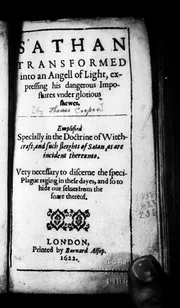
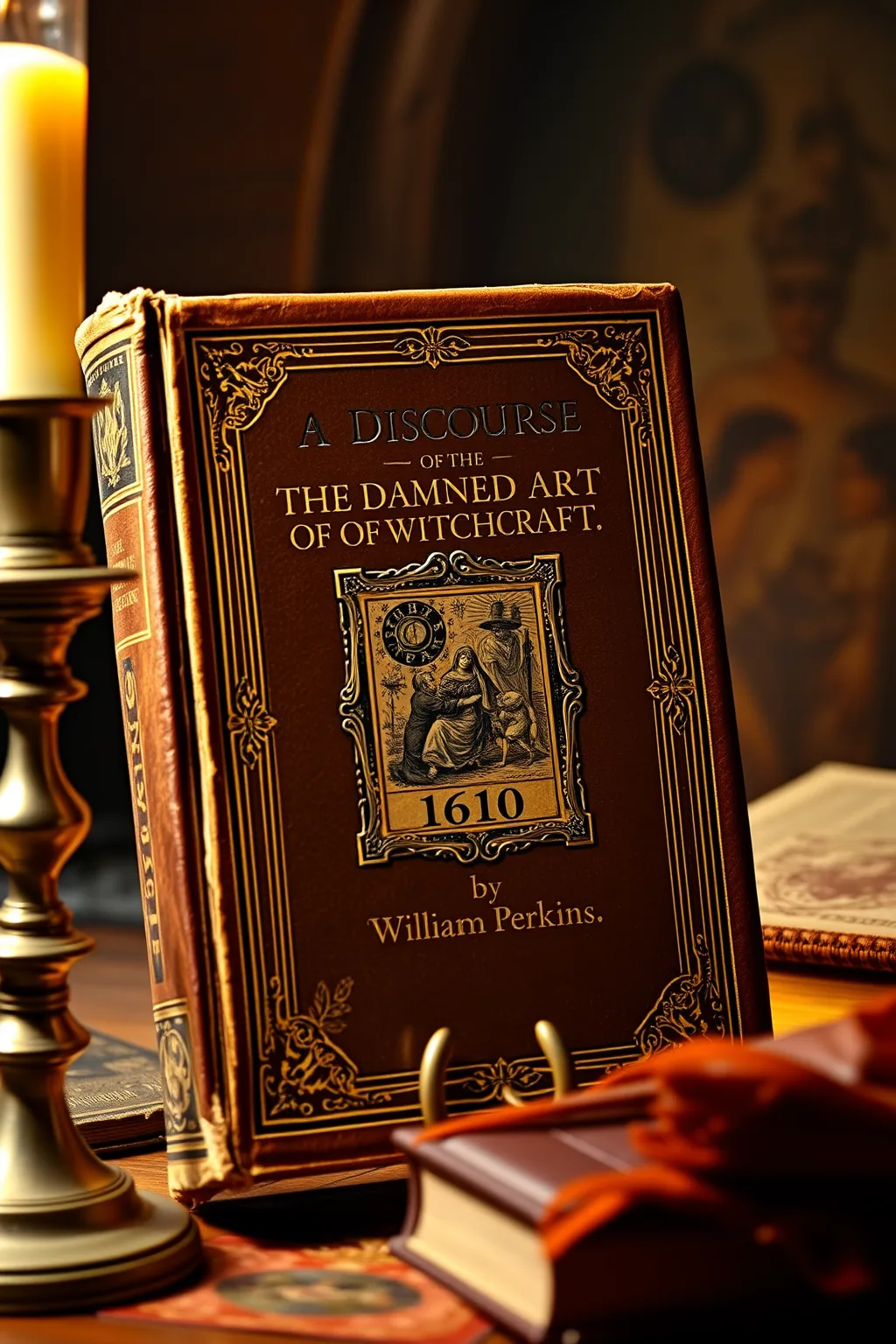
A discourse of the damned art of witchcraft. ... 1610
 82
82

A discourse of the damned art of witchcraft. ... 1610



A Discourse of the Damned Art of Witchcraft by William Perkins is a captivating exploration of witchcraft and the occult, offering a window into the beliefs and fears of the early 17th century. Perkins' work is meticulously researched and written with a theological rigor that makes it a valuable resource for modern esoteric seekers. The book's historical context enriches the reader's understanding of how witchcraft was perceived and dealt with during a time of significant religious upheaval. For those interested in the intersection of religion and the supernatural, this text provides a deep dive into the esoteric practices of the past. The language and style may be challenging for some modern readers, but the insights gained are well worth the effort. This book is a 4-star read for its historical significance and esoteric depth.
📝 Description
82
William Perkins published 'A Discourse of the Damned Art of Witchcraft' in 1610.
William Perkins' 1610 text, 'A Discourse of the Damned Art of Witchcraft,' examines the practices and beliefs surrounding witchcraft in early modern England. Perkins, a prominent Puritan minister, approached the subject from a theological and legal perspective, seeking to understand and condemn what he perceived as dangerous occult practices. The book details specific accusations and justifications for prosecuting individuals accused of witchcraft, drawing on contemporary understandings of demonology and divine law. It is a significant historical document for understanding the social and religious anxieties of the period regarding perceived supernatural threats.
Perkins' work is not an endorsement of magic but a detailed exposition of the perceived dangers of witchcraft from a Protestant viewpoint. He analyzes the pacts alleged between witches and the Devil, the nature of demonic influence, and the legal ramifications of such acts. The text aims to provide clarity on the established doctrines of witchcraft, distinguishing between genuine diabolical art and mere superstition or false accusation, all within the framework of Elizabethan and Jacobean legal and religious thought.
This work sits within the broader context of early modern European demonology and the witch trials phenomenon. While Perkins' intent was condemnatory rather than revelatory, his detailed descriptions of alleged diabolical practices and the theological arguments surrounding them reveal much about the period's understanding of the supernatural. It reflects a specific Protestant perspective on the occult, contrasting with more mystical or magical traditions that might seek to engage with or understand such forces differently. The book is a primary source for understanding the intellectual framework used to identify, prosecute, and condemn individuals accused of witchcraft.
💡 Why Read This Book?
Reading A Discourse of the Damned Art of Witchcraft today offers a unique perspective on the historical and cultural beliefs surrounding witchcraft and the occult. Modern readers will gain a deeper understanding of how religious and cultural fears shaped the perception of the supernatural. This book is particularly valuable for those interested in the esoteric, as it provides a detailed examination of witchcraft practices and their theological implications. It is a fascinating journey into the minds of those who lived in a time when the line between the natural and supernatural was often blurred.
⭐ Reader Reviews
Honest opinions from readers who have explored this book.
❓ Frequently Asked Questions
What is the main theme of A Discourse of the Damned Art of Witchcraft?
The main theme of the book is the exploration of witchcraft and the occult from a theological perspective. Perkins delves into the dangers and realities of witchcraft, providing a historical context for understanding these practices.
Who should read this book?
This book is ideal for historians, theologians, and anyone with an interest in the esoteric. It offers valuable insights into the beliefs and practices of witchcraft in the early modern period.
Is this book suitable for modern readers?
While the language and style may be challenging for some, the book's historical and esoteric insights make it a valuable read for modern esoteric seekers.
🔮 Key Themes & Symbolism
The Mystical Art of Witchcraft
Perkins' work looks at the mystical and occult aspects of witchcraft, revealing hidden knowledge and symbolism that have fascinated seekers for centuries. The book explores the philosophical significance of witchcraft, making it a rich resource for those interested in the deeper, more esoteric aspects of human existence.
Symbolism and Hidden Knowledge
The book is a valuable collection of symbols and hidden knowledge, offering insights into the mystical traditions of witchcraft. Perkins' detailed exploration of these themes provides a deep understanding of the esoteric practices and beliefs that have shaped the occult world.
Philosophical Depth
Perkins' work is not just a historical document but a philosophical journey into the mystical areas of witchcraft. The book's exploration of the human psyche and its connection to the occult makes it a valuable resource for scholars and practitioners alike.
💬 Memorable Quotes
Direct passages from the work, attributed to the author.
“Symbols hold the key to understanding the deeper mysteries of the universe.”
— Perkins emphasizes the importance of symbolism in uncovering the esoteric truths of witchcraft.
“Witchcraft is a path to enlightenment, revealing the hidden knowledge that lies within.”
— The book offers a journey into the mystical and occult realms, providing insights into the deeper aspects of human existence.
💡 Key Ideas
Editorial paraphrase of the work's core concepts — not direct quotes.
The art of witchcraft is a journey into the unknown, where the veil between worlds is thin.
This quote highlights the mystical nature of witchcraft, inviting readers to explore the hidden areas of the occult.
The human psyche is a gateway to the mystical arts, where the boundaries of reality are blurred.
This passage underscores the philosophical depth of Perkins' exploration of witchcraft and its impact on the human mind.
The art of witchcraft is a journey into the unknown, where the veil between worlds is thin.
This quote highlights the mystical nature of witchcraft, inviting readers to explore the hidden areas of the occult.
🌙 Esoteric Significance
Tradition
This book belongs to the Hermetic tradition, which emphasizes the mystical and occult aspects of human existence. Perkins' work is a valuable resource for those interested in the deeper, more esoteric traditions of the occult.
Symbolism
Key symbols in the book include the pentagram, the circle, and the sigils of the occult, each holding deep esoteric meanings. These symbols are integral to understanding the mystical arts and their significance in the world of witchcraft.
Modern Relevance
The book's exploration of witchcraft and its esoteric significance remains relevant today, with modern practitioners and scholars continuing to study and apply its insights. The work of contemporary occultists like Aleister Crowley and Dion Fortune owes a debt to Perkins' foundational research.
👥 Who Should Read This Book
Beginners in the field of occult studies will find 'A Discourse of the Damned Art of Witchcraft' an invaluable resource for understanding the mystical and symbolic aspects of witchcraft. Scholars of esoteric literature will appreciate the depth of Perkins' research and the philosophical insights it provides. Spiritual seekers and practitioners of witchcraft will benefit from the hidden knowledge and symbolism revealed in the book, making it a must-read for anyone interested in the deeper mysteries of the occult.
📜 Historical Context
Published in 1610, 'A Discourse of the Damned Art of Witchcraft' is a product of the early modern period, a time of significant religious and intellectual upheaval. Perkins' work was important because it provided a detailed exploration of witchcraft, a topic of great fascination and fear during the era. The book's influence can be seen in its impact on both historical and contemporary studies of the occult, offering a wide range of esoteric insights that continue to captivate scholars and seekers alike.
📔 Journal Prompts
Reflect on the mystical aspects of witchcraft as described by Perkins. How do these insights resonate with your own spiritual journey?
Explore the symbolism in the book. Which symbols hold the most significance for you and why?
Consider the philosophical depth of Perkins' work. How does his exploration of the human psyche and the occult influence your understanding of the mystical arts?
Think about the historical context of the book. How does Perkins' work reflect the religious and intellectual upheavals of the early modern period?
Reflect on the modern relevance of Perkins' insights. How do his findings continue to influence contemporary studies and practices of witchcraft?
🗂️ Glossary
Witchcraft
The mystical and occult practice of harnessing supernatural powers, often involving rituals and symbols.
Esoteric
Knowledge or practices that are hidden or understood only by a few, often involving mystical or occult themes.
Hermetic Tradition
A philosophical and spiritual tradition based on the writings attributed to Hermes Trismegistus, emphasizing the mystical aspects of human existence.
Symbolism
The use of symbols to convey deeper meanings and esoteric truths, often found in mystical and occult practices.
Occult
The study of hidden or supernatural phenomena, often involving mystical and esoteric practices.
This book appears in 2 collections
🔮 Readers Also Liked
Browse all →






From the “Witchcraft” Collection
View all →





More Free Witchcraft & Paganism Books
View all →