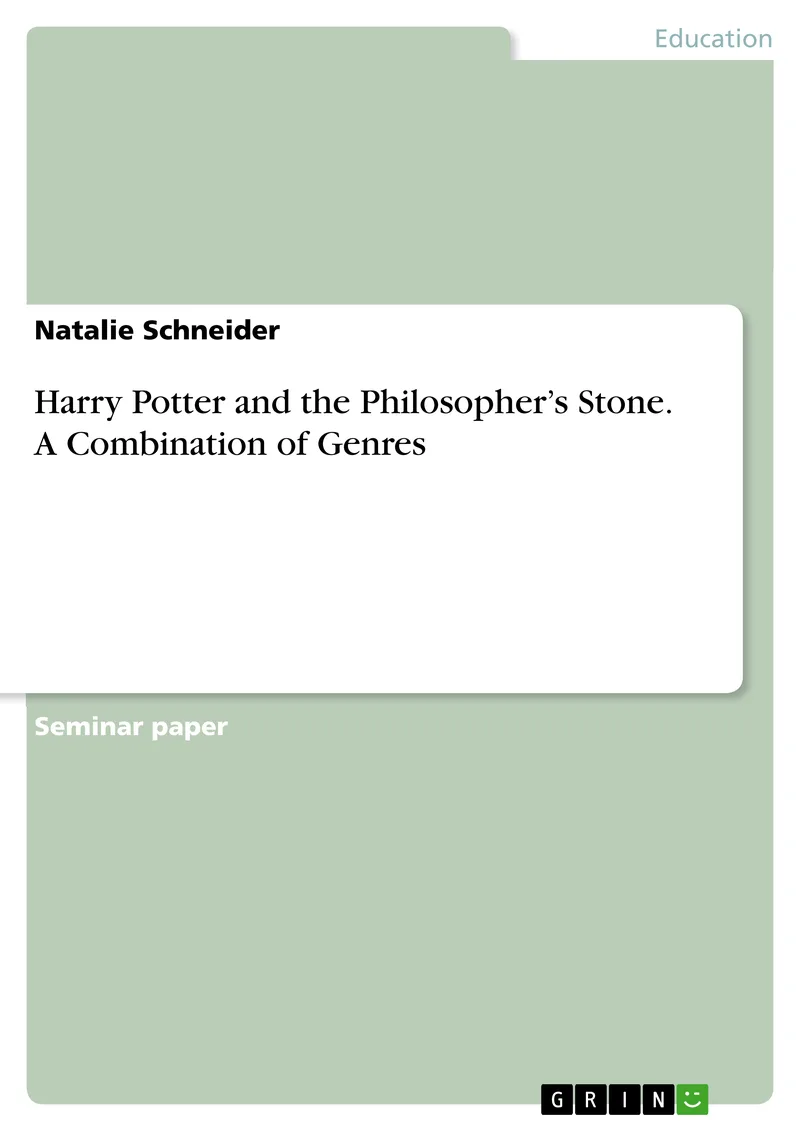
Harry Potter and the Philosopher’s Stone. A Combination of Genres
 74
74

Harry Potter and the Philosopher’s Stone. A Combination of Genres
Natalie Schneider’s analysis of genre in *Harry Potter and the Philosopher’s Stone* offers a welcome academic counterpoint to fan-centric discourse. The paper’s strength lies in its precise focus: dissecting how the fusion of disparate literary modes—fantasy, bildungsroman, mystery—constructs the narrative’s allure. Schneider avoids simple plot rehashing, instead presenting a structured argument for genre as a key component of reader fascination. A notable limitation, however, is the inherent constraint of a seminar paper; the exemplary analysis, while focused, feels constrained by its scope, leaving one wishing for a more expansive examination of the full series. The discussion around the school setting of Hogwarts, presented as a microcosm of societal structures and magical laws, is particularly well-articulated, demonstrating Schneider’s keen eye for how setting functions within genre expectations. Ultimately, Schneider provides a concise, academically grounded perspective on a literary juggernaut.
📝 Description
74
Natalie Schneider's 2018 seminar paper analyzes the genre combination in Harry Potter and the Philosopher's Stone.
This academic paper examines how the blend of different literary genres contributes to the widespread appeal of the Harry Potter series. Schneider identifies and analyzes the genre elements most commonly associated with the novels, offering a scholarly view on their narrative effect. The work considers genre theory in the context of popular children's literature. It is written for students of literature, literary critics, and educators interested in genre studies and the teaching of popular fiction. Researchers looking into the crossover appeal of fantasy, especially works for younger readers, will find the methodical approach useful. The paper also appeals to readers who enjoy a detailed look at the components that make a story engaging, going beyond plot to examine its structure and themes.
Published in 2018, Schneider's work appears at a time when the Harry Potter series had already established a global presence. The academic study of children's literature had grown significantly. Schneider's paper adds to this discussion by applying genre theory, influenced by thinkers like Mikhail Bakhtin, to a text that defies simple genre categorization. This demonstrates the book's lasting cultural and academic interest.
While not explicitly esoteric, Schneider's paper engages with the study of children's literature, a field that has increasingly questioned traditional boundaries. The work applies genre theory, drawing on thinkers like Mikhail Bakhtin, to analyze a text that has achieved immense cultural impact. It contributes to a broader academic discourse on how popular narratives shape understanding and engage audiences, particularly younger ones. The analysis of genre hybridization in a widely popular series touches on how cultural narratives are constructed and perceived.
💡 Why Read This Book?
• Understand the specific mechanisms by which genre blending, such as the mix of fantasy and mystery elements in the Hogwarts setting, creates narrative appeal, as analyzed in Schneider's 2018 paper. • Gain insight into how academic literary criticism applies to popular works like *Harry Potter*, moving beyond surface-level enjoyment to explore structural integrity and authorial intent. • Appreciate the scholarly dissection of how literary conventions, exemplified by the bildungsroman arc of Harry Potter, contribute to a work's enduring cultural impact and reader connection.
⭐ Reader Reviews
Honest opinions from readers who have explored this book.
❓ Frequently Asked Questions
What academic institution produced Natalie Schneider's work on Harry Potter genres?
Natalie Schneider's seminar paper on the genre combination in *Harry Potter and the Philosopher's Stone* was produced at the Karlsruhe University of Education.
When was Natalie Schneider's analysis of Harry Potter genres first published?
The academic work by Natalie Schneider, examining genre combination in *Harry Potter and the Philosopher's Stone*, was first published in 2018.
What is the primary focus of Schneider's essay on Harry Potter?
Schneider's essay primarily investigates how the combination of various literary genres contributes to the fascination and appeal of the Harry Potter novels, using an exemplary analysis.
Which specific genres does Schneider's paper mention in relation to Harry Potter?
While space restrictions limit a full analysis, Schneider's paper focuses on the genres most frequently mentioned in connection with the Harry Potter novels, likely including fantasy, mystery, and bildungsroman.
What is the academic subject area of Natalie Schneider's paper?
Natalie Schneider's paper falls under the subject of Didactics for English - Literature, Works, stemming from her studies at the Karlsruhe University of Education.
Does this book offer a plot summary of Harry Potter?
No, Natalie Schneider's work is an academic analysis of genre and literary construction, not a plot summary. It uses the novels as case studies for genre theory.
🔮 Key Themes & Symbolism
Genre Hybridization
Schneider's work centers on the concept of genre hybridization, specifically how the blending of elements from fantasy, bildungsroman, and mystery in *Harry Potter and the Philosopher's Stone* contributes to its broad appeal. This approach suggests that the magic of Hogwarts and its inhabitants doesn't exist in a vacuum but is constructed through familiar yet novel combinations of narrative frameworks. The paper likely explores how these interwoven genres provide readers with predictable structures for understanding complex magical concepts and character development, thereby enhancing engagement.
Archetypal Narrative Structures
The analysis likely touches upon the use of archetypal structures within the Harry Potter narrative, a common feature in esoteric and mythological studies. Schneider might examine how the journey of Harry, the orphaned hero, aligns with classic monomyth patterns. The school setting of Hogwarts itself can be viewed as an archetypal space for transformation and learning, mirroring esoteric initiatory schools. By identifying these deep-seated narrative patterns, the paper illuminates how the novel taps into universal human experiences and symbolic understandings.
Didactic Function of Literature
Schneider's paper, originating from a university of education, inherently considers the didactic function of literature. It likely explores how the various genres combined in the Harry Potter series serve not only to entertain but also to impart lessons or moral frameworks to young readers. The paper may discuss how genre conventions, such as the clear delineation of good and evil or the eventual triumph of virtue, contribute to a form of literary pedagogy, shaping readers' understanding of complex ethical dilemmas within a magical context.
The Appeal of the Magical Microcosm
A significant theme explored would be the appeal of the magical microcosm, exemplified by Hogwarts. Schneider likely analyzes how this contained, rule-bound world, separate from the mundane, offers a unique space for exploring themes of belonging, identity, and power. The intricate system of magic, the defined social hierarchies among students and faculty, and the looming external threats create a compelling narrative environment. This microcosm functions as a stage for character development and for the exploration of complex societal issues through an allegorical lens.
💬 Memorable Quotes
Direct passages from the work, attributed to the author.
“The combination of several different genres contributes to the fascination of the Harry Potter novels.”
— This core assertion highlights the paper's thesis: the appeal of J.K. Rowling's work stems not from a single genre but from a skillful amalgamation of multiple literary modes.
“Analysis of the three genres most frequently mentioned in connection with the novels.”
— This indicates a focused, evidence-based approach, suggesting the paper prioritizes the genres that critics and readers most commonly associate with the Harry Potter series.
“Seminar paper from the year 2018 in the subject Didactics for the subject English - Literature, Works.”
— This factual statement situates the work within an academic context, emphasizing its origin in educational theory and literary study, rather than purely popular criticism.
“Exemplary analysis of the three most frequently cited genres.”
— This implies a selective but representative approach, where specific examples are used to illustrate broader points about genre fusion and its impact on narrative engagement.
💡 Key Ideas
Editorial paraphrase of the work's core concepts — not direct quotes.
The work aims to find answers to the question of how genre combination contributes to fascination.
This paraphrased concept frames the paper as an investigative inquiry, seeking to uncover the specific reasons behind the enduring popular appeal of the Harry Potter books through a genre lens.
🌙 Esoteric Significance
Tradition
While not overtly claiming an esoteric lineage, Schneider's analysis of genre in *Harry Potter* touches upon elements resonant with traditions that explore archetypal narratives and symbolic meaning. The focus on how genre conventions structure reader understanding and fascination can be linked to Hermetic principles of correspondence and the idea that underlying patterns govern manifest reality. The study of a work often perceived as 'magical' through the lens of literary construction offers a secular yet insightful parallel to esoteric practices that seek to understand the mechanics of manifestation and belief.
Symbolism
The paper likely examines symbols such as Hogwarts itself, which functions as an archetypal initiatory school, representing a space of transformation and hidden knowledge. The Philosopher's Stone, the titular object, is a potent alchemical symbol representing perfection, immortality, and spiritual enlightenment. Schneider's analysis of genre might implicitly decode how these potent symbols are presented and integrated through narrative frameworks, making complex esoteric concepts accessible within a popular fiction context.
Modern Relevance
Contemporary thinkers and practitioners in fields like comparative mythology and literary analysis continue to draw on the Harry Potter series as a prime example of successful narrative construction. Schneider's approach, focusing on genre, aligns with modern critical methods that dissect how stories function culturally and psychologically. For those studying narrative archetypes or the psychological impact of fiction, her work provides a framework for understanding how seemingly simple stories can contain layers of meaning that resonate across different interpretive traditions, including those with esoteric leanings.
👥 Who Should Read This Book
• Students of comparative literature and genre theory seeking to understand how narrative frameworks contribute to popular appeal, particularly within fantasy fiction. • Educators and academics interested in the pedagogical implications of popular children's literature and how genre conventions function in educational contexts. • Literary critics and cultural analysts who wish to explore the underlying structural elements that make works like *Harry Potter* resonate deeply with diverse audiences.
📜 Historical Context
Natalie Schneider's 2018 paper arrives decades after J.K. Rowling's *Harry Potter and the Philosopher's Stone* first enchanted readers in 1997, by which time the series had become a global publishing phenomenon. Published by the Karlsruhe University of Education, the work engages with a well-established field of children's literature studies, which had seen significant scholarly attention since the late 20th century. Thinkers like Jacqueline Rose had already begun to deconstruct the perceived innocence of children's texts. Schneider’s contribution fits within this academic tradition by applying genre theory, a concept with roots in the work of Mikhail Bakhtin, to analyze the specific appeal of the Harry Potter universe. The paper emerges in an era where critical analysis of popular culture, including fantasy literature, was widely accepted, moving beyond earlier dismissals of such works as mere entertainment.
📔 Journal Prompts
The amalgamation of fantasy and mystery genres in Hogwarts.
Archetypal narrative structures within the bildungsroman framework.
The didactic function of the Philosopher's Stone narrative.
Symbolism of the Hogwarts microcosm.
How genre conventions shape reader fascination.
🗂️ Glossary
Genre Hybridization
The literary technique of combining elements from two or more distinct genres within a single work, creating a unique narrative effect and appealing to a broader audience.
Bildungsroman
A literary genre that focuses on the psychological and moral growth of the protagonist from youth to adulthood, tracing their journey of self-discovery.
Archetype
A recurrent symbol, character type, or narrative pattern that is believed to be common to human experience across cultures and time periods, often found in mythology and literature.
Didactic Literature
Literature primarily intended to instruct or teach, often conveying moral, ethical, or philosophical lessons to the reader.
Microcosm
A miniature world or system that represents or reflects the characteristics of a larger whole; in this context, Hogwarts as a representation of a magical society.
Philosopher's Stone
A legendary alchemical substance said to be capable of turning base metals into gold or silver and granting immortality; a potent symbol in esoteric traditions.
Karlsruhe University of Education
An institution in Germany focused on teacher training and educational research, from which Natalie Schneider's seminar paper originates.