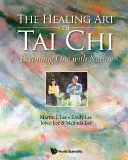
Healing Art Of Tai Chi, The: Becoming One With Nature
 72
72

Healing Art Of Tai Chi, The: Becoming One With Nature
Martin J. Lee, Emily Lee, and Joyce Lee’s "Healing Art of Tai Chi" offers a refreshing perspective by refusing to pigeonhole Tai Chi into a singular Western definition. The work’s strength lies in its synthesis of traditional movement with Dr. Lee's unique healing modality, promising relief for a wide array of modern afflictions. The integration of specific self-healing techniques alongside the art of Tai Chi itself provides a compelling, albeit ambitious, framework for holistic wellness. A limitation, however, is the occasional density of the text, which may require dedicated study for novices to fully grasp the nuances of Dr. Lee's methodology. The passage discussing the body's energetic pathways, while illustrative, could benefit from more direct practical application guidance for the average reader. Ultimately, the book provides a detailed exploration of a potent combination of practices for those willing to engage deeply.
📝 Description
72
Published in 2019, The Healing Art of Tai Chi by the Lee sisters presents a distinct self-healing methodology.
This book is not merely an introduction to physical Tai Chi postures. Instead, it frames Tai Chi as a comprehensive discipline that combines stretching, focused breathing, martial principles, and contemplative exercises. Central to the work is a specific self-healing approach developed by Dr. Lee, designed to address a wide range of physical and emotional concerns. It contrasts this holistic perspective with rigid Western medical classifications.
The intended audience includes individuals dealing with common modern complaints like stress, muscle aches, breathing issues, and headaches, which are often worsened by inactive lifestyles or sports injuries. It also speaks to those seeking remedies for deeper emotional difficulties. Readers with an interest in Eastern philosophies, the mind-body connection, and integrated healing practices will find its content valuable. The book is for anyone looking beyond standard treatments for a more complete path to well-being.
The text situates Tai Chi Chuan, a practice with roots in Chinese martial traditions, within a broader context of mind-body disciplines. Emerging in the West throughout the 20th century, Tai Chi has often been understood primarily as martial arts or gentle exercise. This book, however, aligns Dr. Lee's specific healing methods with the evolving perception of Eastern practices. It acknowledges how these traditions can challenge conventional Western frameworks for understanding health and the body, a point of interest for scholars of comparative philosophy and medicine.
💡 Why Read This Book?
• Learn to integrate Dr. Lee's specific self-healing methods with the foundational movements of Tai Chi, a practice with roots stretching back centuries, to address stress and chronic pain. • Discover how the principle of "Becoming One With Nature," central to the text, can foster a deeper connection between mind, body, and the external environment, offering unique relief. • Gain practical insights into applying Tai Chi beyond mere physical exercise, as presented in the 2019 publication, for treating a variety of office- and sports-related complaints.
⭐ Reader Reviews
Honest opinions from readers who have explored this book.
❓ Frequently Asked Questions
What specific ailments does "The Healing Art of Tai Chi" claim to address?
The book suggests relief for stress, breathing disorders, muscular ailments, chronic headaches, and various complaints related to modern office and sports activities, as well as deep emotional distress.
Who developed the unique self-healing method mentioned in the book?
The unique self-healing method integrated with Tai Chi in the book was developed by Dr. Martin J. Lee.
When was "The Healing Art of Tai Chi" first published?
The book was first published on January 30, 2019.
Does the book focus solely on the physical aspects of Tai Chi?
No, the book presents Tai Chi as encompassing stretching, deep breathing, martial arts, and prayer, integrating it with a specific self-healing method for a holistic approach.
What is the core philosophy behind the healing approach in the book?
The core philosophy is "Becoming One With Nature," suggesting a state of harmony and alignment achievable through the combined practices of Tai Chi and Dr. Lee's self-healing techniques.
Is this book suitable for complete beginners to Tai Chi?
While it aims to demystify Tai Chi, the integration with Dr. Lee's specific methodology might require dedicated study. Beginners interested in a comprehensive approach will find it valuable.
🔮 Key Themes & Symbolism
Holistic Healing Modalities
This theme explores the synergistic potential of combining traditional Tai Chi practices with Dr. Martin J. Lee's specific self-healing methodology. It moves beyond viewing Tai Chi as solely a physical exercise or martial art, instead presenting it as a vehicle for profound self-restoration. The book posits that this integrated approach addresses not just physical ailments like muscular discomfort or headaches, but also the deeper emotional distress often stemming from modern life's pressures. It emphasizes the body's innate capacity for healing when guided by these combined principles.
Becoming One With Nature
The central tenet of "Becoming One With Nature" signifies a profound state of equilibrium achievable through the practices detailed in the book. This concept suggests aligning oneself with the natural rhythms and flow of the universe, fostering a sense of interconnectedness. It implies that by harmonizing internal energies and movements with external natural forces, individuals can tap into a deeper wellspring of vitality and resilience. This philosophical undercurrent guides the practical application of Tai Chi and the associated healing techniques, aiming for a state of effortless being and well-being.
Challenging Western Categorization
A significant theme is the inherent difficulty in fitting ancient Eastern practices like Tai Chi into rigid Western analytical frameworks. The book highlights how Tai Chi transcends simple definitions, functioning simultaneously as a martial art, a meditative practice, a form of physical therapy, and a spiritual discipline. By embracing this many-sided nature, the authors advocate for a more inclusive understanding of wellness that respects the holistic essence of these traditions. This challenges readers to reconsider their own preconceived notions about health and healing, opening them to broader possibilities.
Mind-Body Integration for Wellness
The work fundamentally advocates for the inseparable connection between the mind and body in achieving optimal health. It details how the deliberate, mindful movements of Tai Chi, coupled with specific breathing techniques and Dr. Lee's healing principles, directly influence both physiological and psychological states. This theme underscores the idea that mental states have tangible physical repercussions and vice versa. The book provides a practical framework for cultivating this integration, aiming to alleviate a range of modern ailments by addressing the whole person.
💬 Memorable Quotes
Direct passages from the work, attributed to the author.
“Tai chi... does not fit strict Western categories.”
— This observation directly addresses the challenge of understanding Eastern practices within a Western scientific or philosophical paradigm. It suggests that the holistic nature of Tai Chi requires a broader, less compartmentalized approach to appreciate its full scope and benefits.
“The extraordinary self-healing method developed by Dr Lee”
— This highlights a key unique selling proposition of the book: the integration of a specific, proprietary healing system attributed to Dr. Lee alongside established Tai Chi practices. It signals a departure from standard Tai Chi instruction.
“relief for stress, breathing disorders, muscular ailments, chronic headaches...”
— This lists concrete, relatable health issues that the book promises to address. It serves to attract readers suffering from these common ailments by suggesting a tangible solution through the described practices.
“Becoming One With Nature”
— This phrase expresses the philosophical and spiritual aspiration of the practice as presented in the book. It implies a state of profound harmony, balance, and interconnectedness with the natural world.
“a variety of modern office- and sports-related complaints”
— This specifies a modern context for the book's applicability, appealing to contemporary individuals whose lifestyles often lead to physical strain and repetitive stress injuries.
🌙 Esoteric Significance
Tradition
While not strictly belonging to a single Western esoteric lineage like Hermeticism or Kabbalah, this work draws heavily from Taoist principles underlying Tai Chi. Taoism emphasizes living in harmony with the Tao (the Way), the natural order of the universe. The integration of Dr. Lee's method can be seen as a modern interpretation or extension of these principles, seeking to manifest the Tao's balance and flow within the individual for therapeutic purposes. It aligns with broader esoteric concepts of vital energy (Qi) cultivation and energetic healing.
Symbolism
The primary symbolism revolves around the concept of Yin and Yang, inherent in Tai Chi's philosophy, representing the dynamic balance of opposing yet complementary forces (e.g., stillness and movement, hardness and softness). The idea of 'Becoming One With Nature' itself symbolizes achieving a state of naturalness and effortless action (Wu Wei), free from artificial constraints. The slow, flowing movements of Tai Chi can also symbolize the cyclical nature of life, healing, and transformation, mirroring natural processes.
Modern Relevance
Contemporary thinkers and practitioners in fields like somatic experiencing, integrative medicine, and energy healing find resonance with the book's emphasis on mind-body connection and innate healing capacities. Schools and individuals exploring Qi Gong, mindfulness-based stress reduction, and holistic health coaching may draw inspiration from its approach. The book's fusion of ancient practice with a specific therapeutic system speaks to a modern desire for personalized, effective wellness strategies that bridge the gap between traditional wisdom and contemporary health challenges.
👥 Who Should Read This Book
• Individuals experiencing chronic stress, physical tension, or ailments linked to modern lifestyles (e.g., office work, sports injuries) seeking a comprehensive, integrated healing approach. • Practitioners of martial arts or meditative disciplines interested in deepening their understanding of Tai Chi beyond physical form, exploring its therapeutic and philosophical dimensions. • Students of Eastern philosophies and holistic health modalities looking for practical applications of Taoist principles and mind-body integration for personal well-being and self-healing.
📜 Historical Context
Published in 2019, "The Healing Art of Tai Chi" emerges at a time when Eastern wellness practices have become increasingly mainstream in the West, yet often remain simplified or commodified. The late 20th and early 21st centuries saw a surge in interest in mind-body disciplines, fueled by growing awareness of stress-related illnesses and a desire for holistic health solutions. This book arrives in a landscape populated by numerous Tai Chi manuals and general meditation guides. Its unique contribution lies in its explicit fusion with Dr. Lee's specific self-healing methodology, differentiating it from more orthodox approaches. The work implicitly engages with the broader discourse on psychosomatic medicine and complementary therapies, a field also explored by authors like Bessel van der Kolk, though from a different therapeutic angle. The reception of such works often navigates between academic interest in traditional practices and popular appeal for self-improvement, with varying degrees of critical engagement.
📔 Journal Prompts
The concept of 'Becoming One With Nature' as a healing principle.
Dr. Lee's self-healing method in relation to Tai Chi movements.
The challenge of fitting Tai Chi into strict Western categories.
Personal experiences with stress or muscular ailments addressed by the book.
The integration of breathing techniques with physical postures.
🗂️ Glossary
Tai Chi Chuan
An ancient Chinese martial art practiced for both its defense training and its health benefits. It involves slow, flowing, meditative movements and deep breathing.
Qi (Chi)
A fundamental concept in traditional Chinese culture, often translated as 'vital energy' or 'life force.' It is believed to flow through the body and influence health and well-being.
Yin and Yang
A core concept in Taoism representing complementary, interconnected, and interdependent forces. Their dynamic balance is seen as essential for harmony and health.
Wu Wei
A Taoist concept often translated as 'non-action' or 'effortless action.' It signifies acting in accordance with the natural flow of things, without force or resistance.
Self-Healing Method
A specific therapeutic system developed by Dr. Martin J. Lee, integrated within the book alongside Tai Chi practices, aimed at activating the body's innate restorative capabilities.
Holistic Approach
An approach to health and healing that considers the whole person—mind, body, and spirit—rather than focusing on isolated symptoms or parts.
Energetic Pathways
In the context of Traditional Chinese Medicine and practices like Tai Chi, these refer to the channels or meridians through which Qi is believed to flow within the body.