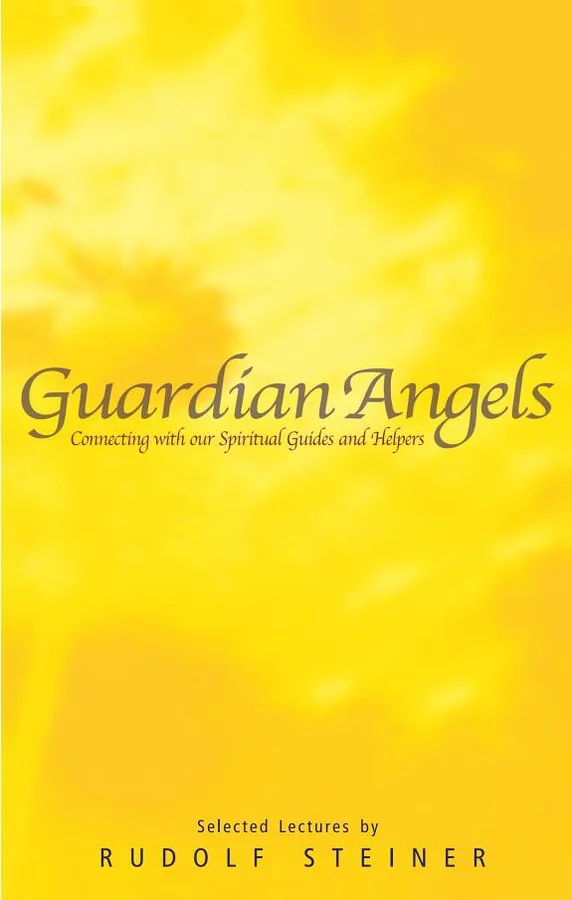
Guardian Angels
 77
77

Guardian Angels
Rudolf Steiner’s "Guardian Angels" offers a rigorous, albeit demanding, perspective on celestial beings. Rather than indulging in sentimental notions, Steiner frames these entities within a spiritual-scientific framework, asserting their existence is as factual as any physical phenomenon, discoverable through trained clairvoyance. His strength lies in demystifying these beings, presenting them as integral to human development and cosmic order. However, the work’s dense, conceptual language, characteristic of Steiner's oeuvre, can be a significant barrier for newcomers. The passage detailing the specific 'I' or ego-consciousness connected to angelic activity, while central to his argument, requires considerable intellectual effort to grasp. Ultimately, "Guardian Angels" provides a unique, systematic perspective for dedicated students of Anthroposophy, but demands significant prior engagement with Steiner's broader philosophical system.
📝 Description
77
Rudolf Steiner's "Guardian Angels" investigates spiritual beings guiding human lives.
Rudolf Steiner's "Guardian Angels" examines the active role of spiritual beings in guiding human lives. Steiner asserts these entities are not products of imagination but verifiable aspects of a spiritual cosmos, accessible through clairvoyant perception. The work aims to build a scientific foundation for understanding these celestial agents, treating their existence and function as subjects for rigorous spiritual research. This text is for individuals seeking a deeper, scientifically grounded understanding of spiritual realities beyond conventional religious or philosophical systems. It will appeal to those interested in Anthroposophy, esoteric Christianity, and the practical use of spiritual knowledge in daily life. Readers should come with an open mind and a readiness to engage with concepts that question materialistic worldviews.
The ideas in "Guardian Angels" come from lectures and writings by Steiner from the early 20th century. This was a time of significant interest in spiritualism and occultism. Steiner, a key figure in the Theosophical Society before founding his own Anthroposophical Society in 1913, interacted with contemporary spiritual thinkers while building his own philosophical and scientific method. His contributions offered an alternative to both materialistic science and established religious doctrine.
Rudolf Steiner's work on guardian angels is situated within the Theosophical and Anthroposophical traditions. These movements sought to synthesize Eastern and Western esoteric thought with modern science and philosophy. Steiner, in particular, developed a detailed cosmology and a method for spiritual perception he termed 'anthroposophy.' His approach emphasized the possibility of scientifically verifiable spiritual knowledge, accessible through disciplined inner development and clairvoyant faculties, distinguishing it from mere faith or subjective mysticism.
💡 Why Read This Book?
• Understand the Anthroposophical view of spiritual hierarchies, learning how Steiner specifically categorizes beings beyond the human realm, offering a structured cosmology distinct from other esoteric traditions. • Grasp the concept of spiritual-scientific research, discovering how Steiner proposed using clairvoyance as a method for investigating the spiritual world, analogous to physical science's empirical methods. • Explore the specific function of guardian angels in human evolution, moving beyond general protection to understanding their role in the development of individual consciousness and karma, as presented in Steiner's lectures.
⭐ Reader Reviews
Honest opinions from readers who have explored this book.
❓ Frequently Asked Questions
What is Rudolf Steiner's spiritual-scientific approach to guardian angels?
Steiner advocated for a 'spiritual-scientific' method, viewing clairvoyance not as mystical intuition but as a disciplined, researchable faculty capable of perceiving spiritual realities, including guardian angels, with scientific accuracy.
When did Rudolf Steiner first discuss guardian angels?
Rudolf Steiner lectured extensively on guardian angels and other spiritual beings throughout his career, primarily in the early 20th century, with many of these lectures compiled and published posthumously.
How does Steiner's concept of guardian angels differ from traditional religious views?
While acknowledging traditional roles, Steiner grounded guardian angels in a cosmic evolutionary framework and a specific spiritual hierarchy, emphasizing their scientific verifiability through clairvoyance rather than solely faith.
Is 'Guardian Angels' suitable for beginners in esotericism?
The book is best suited for those already familiar with Rudolf Steiner's Anthroposophy. Its dense, technical language requires a foundational understanding of his philosophical system.
What is the primary purpose of guardian angels according to Steiner?
According to Steiner, guardian angels are intimately connected to individual human karma and consciousness, guiding each person's spiritual development and evolution through life's experiences.
Can Steiner's ideas on angels be researched independently?
Steiner believed that through specific meditative practices and the cultivation of clairvoyant faculties, individuals could indeed research and verify the existence and activities of guardian angels for themselves.
🔮 Key Themes & Symbolism
Spiritual Hierarchies
Steiner delineates a structured cosmology of spiritual beings, detailing various hierarchies that precede and influence human existence. Within this framework, guardian angels occupy a specific, vital role, acting as intermediaries between higher spiritual realms and individual human consciousness. The work emphasizes that these beings are not static entities but active participants in the ongoing evolution of humanity and the cosmos, each hierarchy possessing distinct functions and levels of consciousness.
Spiritual Science and Clairvoyance
A central theme is the establishment of 'spiritual science' as a legitimate field of inquiry. Steiner argues that clairvoyance, when properly developed and disciplined, functions as a scientific tool for perceiving the spiritual world. This approach seeks to bridge the gap between materialistic science and traditional mysticism, offering a method for empirical investigation of non-physical realities, including the existence and actions of guardian angels.
Karma and Individual Development
The book connects the activity of guardian angels directly to the principles of karma and individual human development. These beings are presented not just as protectors but as karmic stewards, influencing the circumstances and experiences that shape an individual's soul and spirit. Understanding their role is crucial for comprehending the underlying spiritual dynamics of life's challenges and opportunities.
The 'I' as Spiritual Core
Steiner emphasizes the development of the human 'I' or ego-consciousness as the central task of earthly existence. Guardian angels are depicted as working in conjunction with this developing 'I', helping to guide its evolution and protect its essential spiritual nature from destructive forces. This focus on the individual spiritual core highlights the personal and intimate relationship between humans and their angelic guides.
💬 Memorable Quotes
Direct passages from the work, attributed to the author.
“Angelic beings are connected with the ego-consciousness that comes to expression in human beings.”
— This statement underscores Steiner's view that guardian angels are not distant, impersonal forces but are intimately linked to the development and expression of the individual human 'I' or self-awareness.
“Guardian angels prepare the spiritual body for the incarnation.”
— This interpretation highlights the pre-incarnational role Steiner attributes to these beings, suggesting they play a part in shaping the spiritual foundation of an individual before birth.
“We must learn to recognize the spiritual beings working around us.”
— This reflects Steiner's call for humanity to awaken to the presence and activity of spiritual entities, moving beyond ordinary sensory perception to a higher form of awareness.
“The evolution of humanity is guided by spiritual hierarchies.”
— This concept emphasizes that human progress is not random but is part of a larger, divinely orchestrated cosmic process directed by specific orders of spiritual beings.
💡 Key Ideas
Editorial paraphrase of the work's core concepts — not direct quotes.
The spiritual world can be investigated just as the natural world is investigated.
This paraphrase captures Steiner's core tenet of spiritual science: that the non-physical realms are amenable to disciplined, objective study and research, akin to empirical methods in natural sciences.
🌙 Esoteric Significance
Tradition
Steiner's work on guardian angels fits within the broad stream of Western Esotericism, particularly drawing from Christian mysticism, Gnosticism, and Neo-Platonism, while reinterpreting them through his unique Anthroposophical lens. He departs from purely devotional or symbolic approaches by insisting on the empirical, 'spiritual-scientific' verifiability of these beings, positioning them within a detailed cosmic and evolutionary schema that transcends earlier traditions.
Symbolism
Within Steiner's system, guardian angels themselves are potent symbols of divine providence and individual spiritual guidance. The concept of the 'I' or ego-consciousness, central to human identity, is symbolized as the unique spark that angels help to nurture and protect through karmic processes. The broader spiritual hierarchies represent the ordered, intelligent nature of the cosmos, symbolizing divine administration and the interconnectedness of all existence.
Modern Relevance
Contemporary practitioners of Anthroposophy continue to engage with Steiner's teachings on angels for personal development and understanding karma. His ideas also influence fields like Waldorf education and biodynamic agriculture, which seek to integrate spiritual principles into practical life. Thinkers exploring consciousness studies and the nature of spiritual experience may find Steiner's 'spiritual-scientific' methodology a compelling, albeit challenging, alternative to purely materialistic or conventionally religious viewpoints.
👥 Who Should Read This Book
• Students of Rudolf Steiner and Anthroposophy seeking a deeper understanding of his cosmology and the role of spiritual beings in human life. • Practitioners of Western Esotericism interested in comparative angelology and alternative frameworks for understanding spiritual hierarchies and divine guidance. • Individuals exploring the nature of consciousness and karma who are open to a spiritual-scientific methodology for investigating non-physical realities.
📜 Historical Context
Rudolf Steiner's exploration of guardian angels belongs to the fertile intellectual range of the early 20th century, a period rich with esoteric inquiry following the rise of spiritualism and movements like Theosophy. Steiner himself, after a significant period within the Theosophical Society, founded his own Anthroposophical Society in 1913, seeking to establish a more 'scientific' and ethically grounded approach to spiritual knowledge. His work stood in contrast to the prevailing materialistic scientific worldview and also offered a distinct path from traditional religious doctrines. Contemporaries like Annie Besant and the broader Theosophical movement shared an interest in spiritual hierarchies, though Steiner's specific formulations, particularly his emphasis on developing clairvoyance as a research faculty, marked his unique contribution. While not facing widespread censorship, Steiner’s ideas often generated controversy and skepticism from both academic and religious establishments, challenging established paradigms of understanding consciousness and reality.
📔 Journal Prompts
The specific function of guardian angels in relation to individual karma.
Cultivating clairvoyance as a spiritual-scientific research faculty.
The symbolic meaning of the 'I' within Steiner's angelic cosmology.
Ethical considerations in perceiving and interacting with spiritual beings.
The connection between angelic activity and human evolution.
🗂️ Glossary
Anthroposophy
A spiritual philosophy founded by Rudolf Steiner, seeking to understand the spiritual in nature, humanity, and consciousness through methods he termed 'spiritual science'.
Spiritual Science
Steiner's term for a disciplined, objective approach to investigating the spiritual world, analogous to natural science, utilizing cultivated clairvoyant faculties.
Clairvoyance
In Steiner's context, a developed spiritual faculty for perceiving non-physical realities and beings, considered a research tool rather than mere psychic phenomena.
I / Ego-consciousness
The individualized human self or spiritual core, which Steiner identified as the central point of human development and the focus of angelic work.
Karma
The spiritual law of cause and effect governing human lives, which Steiner believed guardian angels help to administer and guide.
Spiritual Hierarchies
Orders of spiritual beings, ranked according to their evolutionary tasks, that Steiner described as influencing the cosmos and human development.
Incarnation
The process of a spiritual being entering a physical body, particularly the human birth process, which Steiner linked to angelic preparation.
This book appears in 1 collection
🔮 Readers Also Liked
Browse all →








From the “Anthroposophy” Collection
View all →






More Free Theosophy & Anthroposophy Books
View all →