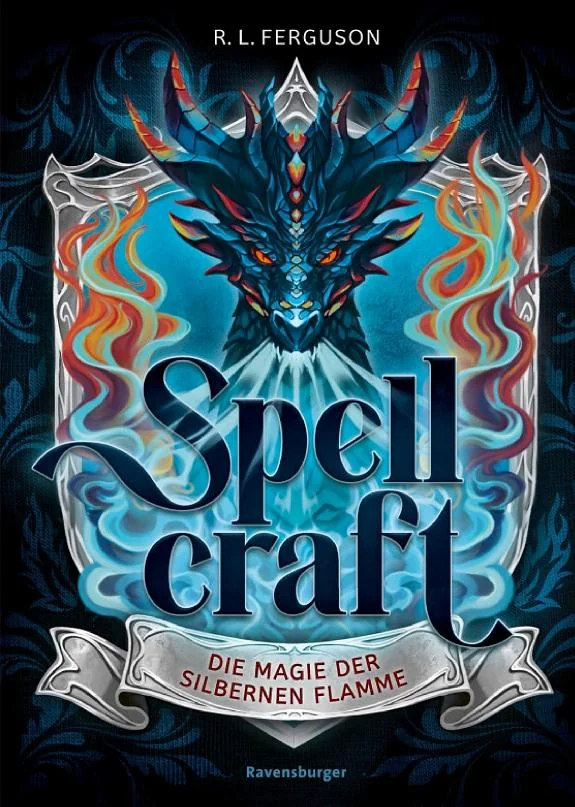
Spellcraft, Band 1: Die Magie der silbernen Flamme (Magisches Fantasy-Abenteuer im London der Gegenwart ab 10 Jahre)
 84
84

Spellcraft, Band 1: Die Magie der silbernen Flamme (Magisches Fantasy-Abenteuer im London der Gegenwart ab 10 Jahre)
R.L. Ferguson's "Spellcraft, Band 1" attempts to graft a modern fantasy sensibility onto a coming-of-age narrative, focusing on Lucy's discovery of her ability to imbue objects with magic. The concept of a 'Spellcrafter' is intriguing, presenting a unique take on magical practice where mundane items become conduits of arcane power. The setting of contemporary London, often overlooked in favor of more fantastical locales, offers a fresh canvas for supernatural events. However, the narrative, particularly in its initial stages, feels somewhat constrained by its target audience of readers aged 10 and above, leading to exposition that can feel a touch too direct. The urgency of Lucy's grandmother's disappearance is palpable, yet the mechanics of her memory loss and subsequent recovery, while driving the plot, lack a certain depth that could have elevated the emotional stakes. Despite these limitations, the promise of exploring the 'silver flame' and its implications for Lucy’s burgeoning powers offers a compelling hook for future installments.
📝 Description
84
In R.L. Ferguson's 2023 novel, a magical festival in London triggers a young girl's awakening.
The narrative follows Lucy, a young protagonist whose life is upended during a magical festival in a contemporary London where the magical and mundane worlds are intertwined. Her grandmother's sudden disappearance and Lucy's subsequent memory loss serve as the impetus for her discovery of arcane energies and hidden lore. Lucy learns she has a rare talent for imbuing objects with magical properties, a gift identifying her as a 'Spellcrafter'. This ability is central to the book's magical system, hinting at a lineage of practitioners who shape reality through enchanted artifacts. Her quest to find her grandmother is directly tied to her development of this power.
The search for answers leads Lucy and her companions down a dangerous path. The story unfolds as a suspenseful adventure, with London's familiar cityscape becoming the stage for rising stakes and magical confrontations. The title, 'Spellcraft, Band 1: Die Magie der silbernen Flamme', indicates a core magical force or philosophy within the book's cosmology, possibly a specific energy, guiding principle, or powerful entity. Understanding this 'silver flame' is key to unraveling the mysteries Lucy encounters.
This work situates itself within contemporary fantasy traditions that blend occult elements with a modern setting. It draws on themes common in urban fantasy, where secret magical orders and ancient powers operate beneath the surface of everyday life. The concept of 'spellcraft' and the 'silver flame' suggests an exploration of specific magical energies or philosophies, potentially referencing modern magical theories or invented cosmologies that echo older esoteric ideas about elemental forces and personal power.
💡 Why Read This Book?
• You will learn about the unique magical system of 'Spellcrafting', where ordinary objects are imbued with power, a concept central to the book's premise. • You will experience the thrill of a magical mystery unfolding within the familiar streets of contemporary London, a specific setting that grounds the arcane events. • You will be introduced to the 'silver flame,' a mysterious magical force that drives the plot and Lucy's quest, offering a unique cosmological element.
⭐ Reader Reviews
Honest opinions from readers who have explored this book.
❓ Frequently Asked Questions
What is the core magical ability in Spellcraft, Band 1?
The central magical ability is 'Spellcrafting,' where characters like Lucy can imbue ordinary objects with magical properties, essentially bringing them to life with arcane energy.
Who is the protagonist and what is her main challenge?
The protagonist is Lucy, a young girl whose life is upended when her grandmother is abducted. Her main challenge is to uncover the truth while grappling with her own forgotten memories and developing her unique Spellcrafter abilities.
What is the significance of the 'silver flame' mentioned in the title?
The 'silver flame' likely represents a core magical force, energy source, or guiding principle within the book's unique magical system. Its nature is central to the unfolding mystery.
At what age is this fantasy adventure recommended?
This magical fantasy adventure is recommended for readers aged 10 and above, indicating a narrative suitable for younger audiences while still engaging with complex magical themes.
Where does the story take place?
The story is set in contemporary London, a familiar urban landscape that serves as the backdrop for extraordinary magical events and a thrilling mystery.
When was Spellcraft, Band 1 originally published?
Spellcraft, Band 1 was first published on February 1, 2025.
🔮 Key Themes & Symbolism
The Nature of Spellcrafting
This theme explores the unique ability to imbue objects with magic, a core tenet of the book's esoteric system. It examines how mundane items can become powerful conduits for arcane energies, suggesting a form of sympathetic magic or animating force. The narrative positions Spellcrafting not just as a skill but as an intrinsic talent, hinting at a hidden lineage and the responsibility that comes with such power.
Memory and Identity
The protagonist's memory loss following her grandmother's abduction is a critical element. This theme looks at how forgotten pasts can shape present identities and motivations. The quest to recover lost memories becomes intertwined with uncovering external truths, suggesting that understanding one's history is vital to mastering one's abilities and reading through the magical world.
The Urban Magical Landscape
The setting of contemporary London is more than just a backdrop; it functions as a character in itself. This theme investigates how magic interacts with and is concealed within a modern, bustling metropolis. It explores the idea that extraordinary phenomena can exist hidden in plain sight, transforming the familiar into the extraordinary and suggesting a secret layer to urban life.
The Silver Flame's Influence
Central to the book's mythology is the 'silver flame.' This theme examines its potential role as a primary magical source, a guiding entity, or a specific school of arcane practice. Its influence on events and its connection to Lucy's developing powers are crucial to the unfolding mystery, promising deeper esoteric revelations.
💬 Memorable Quotes
Direct passages from the work, attributed to the author.
“Lucy has a special talent: she is a Spellcrafter and can imbue objects with magic.”
— This defines the protagonist's unique esoteric gift, establishing the core magical concept of the narrative and her potential within this arcane system.
“Her grandmother is abducted before her eyes, and Lucy can't remember anything afterwards.”
— This highlights the traumatic event and the subsequent amnesia, which serves as a dual mystery: the disappearance itself and the void in Lucy's own memory.
“She has friends who stand by her and her magical objects.”
— This points to the importance of allies and the practical application of her abilities, suggesting that her magical items will play a role in her journey.
“The search for the truth leads her on a dangerous trail.”
— This foreshadows the adventure and suspense, indicating that Lucy's quest will involve peril and the unraveling of a complex, potentially hazardous, mystery.
💡 Key Ideas
Editorial paraphrase of the work's core concepts — not direct quotes.
Lucy's life is turned upside down at a magical festival in London.
This paraphrased statement sets the immediate inciting incident, highlighting the disruption of normalcy and the introduction of the supernatural into a seemingly ordinary event.
🌙 Esoteric Significance
Tradition
While not explicitly tied to a single historical esoteric tradition like Hermeticism or Kabbalah, "Spellcraft, Band 1" appears to draw from broader concepts of animism and immanent magic. The idea of infusing objects with life or power echoes ancient shamanistic practices and certain interpretations of ritual magic where intent and focus animate the inanimate. The 'silver flame' itself may allude to alchemical symbolism or representations of divine or elemental fire.
Symbolism
The 'silver flame' is a primary symbol, likely representing a pure, potent, or perhaps lunar-associated magical energy. Other potential symbols include the 'magical objects' Lucy utilizes; their specific forms and enchantments would carry symbolic weight, representing the manifestation of will and intention in the material world. The act of imbuing objects itself symbolizes creation and the projection of consciousness.
Modern Relevance
This work appeals to contemporary interests in practical magic and the intersection of technology and esotericism. Modern practitioners exploring object-based magic, enchantment, or the concept of imbuing items with specific energies for personal or ritualistic use might find inspiration in Ferguson's 'Spellcrafting' system. The urban fantasy genre itself continues to be popular, indicating a public appetite for exploring the magical within everyday environments.
👥 Who Should Read This Book
• Young readers (10+) curious about magic and adventure, seeking relatable protagonists who discover extraordinary abilities. • Aspiring practitioners interested in unique magical systems, particularly those focusing on the enchantment of objects and the concept of elemental or symbolic flames. • Fans of urban fantasy who enjoy stories blending the mundane reality of cities like London with hidden supernatural elements and mystery plots.
📜 Historical Context
Published in 2025, R.L. Ferguson's "Spellcraft, Band 1" emerges in an era saturated with urban fantasy and young adult literature exploring hidden magical worlds within contemporary settings. This genre has seen significant growth since the early 2000s, influenced by works like J.K. Rowling's Harry Potter series and later urban fantasy authors such as Jim Butcher. Ferguson's work taps into this established market, differentiating itself by focusing on the specific mechanic of 'Spellcrafting' – imbuing objects with magic – and a distinct magical concept, the 'silver flame.' The narrative's grounding in London provides a specific, recognizable locus for its arcane events. While the genre often explores themes of chosen ones and secret societies, Ferguson's approach, particularly the emphasis on object-based magic, offers a unique angle within a landscape often dominated by spell-slinging wizards or innate psychic abilities. The initial reception, as indicated by its classification for readers aged 10+, suggests an intent to engage younger audiences with esoteric concepts.
📔 Journal Prompts
The memory loss following the grandmother's abduction: how does this void shape Lucy's immediate actions?
The concept of 'Spellcrafting': what mundane objects could you imbue with personal meaning or protective energy?
The 'silver flame': what qualities or associations does this symbol evoke for you?
Lucy's reliance on her magical objects: how does this differ from relying solely on innate power?
The contrast between the magical festival and the subsequent dangerous trail: what does this transition signify?
🗂️ Glossary
Spellcrafter
An individual possessing the unique talent to imbue inanimate objects with magical energy and properties, effectively bringing them to a state of arcane animation or function.
Silver Flame
A central concept or force within the book's magical system, likely representing a specific type of energy, a guiding principle, or a powerful entity central to the plot's mysteries.
Magical Objects
Items that have been imbued with magic by a Spellcrafter, used by characters to perform arcane tasks, defend themselves, or aid in their quest.
Contemporary London
The setting of the novel, a modern-day metropolis where magical events occur hidden within the fabric of everyday urban life.
Magical Festival
An event where magical occurrences are more overt, serving as the catalyst for the main plot and the protagonist's entanglement with the hidden world.
Memory Loss
A plot device where the protagonist, Lucy, loses her memory of key events, creating a dual mystery involving both external circumstances and her own past.
Dangerous Trail
Refers to the perilous path Lucy must follow in her investigation, suggesting suspense, risk, and the uncovering of potentially hazardous truths.
This book appears in 1 collection
🔮 Readers Also Liked
Browse all →








From the “Spellcraft” Collection
View all →


More Free Occult Philosophy Books
View all →