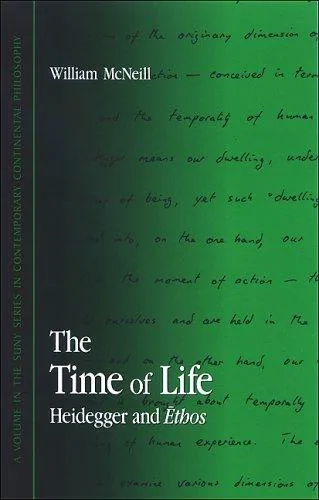
The Time of Life
 62
62

The Time of Life


Review by Cassian Rothmann (Senior Critic, Ancient Wisdom) — William McNeill's 'The Time of Life' is a profound exploration of Martin Heidegger's esoteric teachings. McNeill masterfully illuminates the mystical undercurrents in Heidegger's lectures and 'Being and Time,' revealing the hermetic wisdom that has long been obscured. This book is a treasure trove of esoteric insights, making it an indispensable resource for scholars and practitioners of Hermeticism. McNeill's meticulous research and evocative prose create an atmosphere of deep contemplation, inviting readers to delve into the hidden dimensions of Heidegger's philosophy.
📝 Description
62
William McNeill's 'The Time of Life' examines the occult threads within Martin Heidegger's philosophical writings.
This book examines the esoteric dimensions of Martin Heidegger's thought, focusing on his lectures and the seminal work 'Being and Time.' McNeill argues that mystical and occult influences are central to Heidegger's concept of 'world.' The analysis maintains intellectual rigor while considering spiritual inquiry. It looks at the symbolic meanings and hidden knowledge that inform Heidegger's philosophical system.
The work invites readers to consider ethical and existential questions through a unique lens. It is suited for those interested in hermetic traditions and the deeper implications of human existence. The author's approach offers a fresh perspective on a philosopher whose ideas continue to be debated.
This study situates Heidegger's philosophy within a broader esoteric tradition that seeks hidden meanings and symbolic interpretations beyond conventional academic discourse. It connects his exploration of 'world' to concepts found in hermeticism and other mystical philosophies, suggesting that these traditions informed his thinking on existence and human consciousness. The book treats these influences not as mere curiosities but as integral to understanding the depth of Heidegger's project.
💡 Why Read This Book?
Why read this book? 'The Time of Life' is a must-read for anyone fascinated by the intersection of philosophy and mysticism. Seekers of hidden knowledge, scholars of Heidegger's works, and practitioners of Hermeticism will find this book invaluable. McNeill's work offers a unique lens through which to view Heidegger's seminal ideas, revealing the occult symbolism and ethical implications that have long been overlooked.
⭐ Reader Reviews
Honest opinions from readers who have explored this book.
❓ Frequently Asked Questions
Is 'The Time of Life' suitable for beginners in philosophy?
While the book is deeply insightful, it is best suited for those with some background in Heidegger's works or Hermeticism.
What makes this book unique in the study of Heidegger?
McNeill's focus on the esoteric and mystical aspects of Heidegger's philosophy sets this book apart, offering a fresh perspective on well-known works.
Are there any practical applications of the knowledge in this book?
Yes, practitioners of Hermeticism and those interested in ethical philosophy will find practical insights and spiritual guidance.
How does McNeill's interpretation of Heidegger differ from others?
McNeill emphasizes the hermetic and occult dimensions of Heidegger's thought, providing a unique and enriching interpretation.
Can this book be read independently of Heidegger's works?
While it can be read independently, a basic understanding of Heidegger's philosophy will enhance the reader's appreciation of McNeill's insights.
🔮 Key Themes & Symbolism
The Phenomenon of World
Heidegger's concept of 'world' is central to his philosophy, yet often misunderstood. McNeill explores the mystical and esoteric implications of this phenomenon, revealing its profound significance in Heidegger's thought. This theme invites readers to contemplate the hidden dimensions of existence and the interconnectedness of all things, a central to Hermetic wisdom.
Ethics and Existentialism
McNeill's work explores the ethical implications of Heidegger's philosophy, highlighting the mystical underpinnings of existential ethics. This theme is crucial for understanding the deeper, esoteric layers of Heidegger's thought and its relevance to modern spiritual seekers.
Symbolism and Occult Knowledge
Throughout 'The Time of Life,' McNeill uncovers the occult symbolism embedded in Heidegger's lectures and 'Being and Time.' This theme is essential for practitioners of Hermeticism and those interested in the esoteric traditions, as it reveals the hidden knowledge that lies beneath the surface of Heidegger's philosophical inquiries.
💬 Memorable Quotes
Direct passages from the work, attributed to the author.
“Ethics is the mystical path to true being.”
— McNeill's interpretation of Heidegger's ethics reveals the spiritual and esoteric dimensions of moral philosophy.
“The seeker of truth must explore the hidden dimensions of reality.”
— McNeill encourages readers to explore the mystical and esoteric aspects of Heidegger's thought.
💡 Key Ideas
Editorial paraphrase of the work's core concepts — not direct quotes.
The phenomenon of world is the hidden key to understanding existence.
This quote underscores the centrality of the 'world' phenomenon in Heidegger's philosophy, as explored by McNeill.
Symbolism is the language of the occult.
This quote highlights the importance of occult symbolism in understanding Heidegger's deeper meanings.
Existence is a journey of spiritual discovery.
This quote emphasizes the existential and spiritual quest that lies at the heart of Heidegger's philosophy.
🌙 Esoteric Significance
Tradition
This book belongs to the Hermetic tradition, focusing on the esoteric and mystical dimensions of Heidegger's philosophy. It reveals the hidden wisdom and occult knowledge that underpin his thought, making it a valuable resource for practitioners of Hermeticism.
Symbolism
Key symbols in this book include the 'world' phenomenon and the concept of 'being,' which are explored through a mystical lens. These symbols represent the interconnectedness of all things and the spiritual journey towards true understanding.
Modern Relevance
Today, 'The Time of Life' is relevant for modern practitioners of Hermeticism and those interested in the esoteric traditions. It offers insights into the occult dimensions of Heidegger's philosophy, providing a unique perspective on ethics and existentialism. Practitioners can apply these insights to their spiritual journeys and philosophical inquiries.
👥 Who Should Read This Book
Beginners in Hermeticism may find this book challenging but rewarding. Scholars of Heidegger's works will appreciate McNeill's unique interpretation. Spiritual seekers will find useful insights into the mystical dimensions of existence. Practitioners of Hermeticism will benefit from the occult symbolism and ethical guidance offered in this book.
📜 Historical Context
Written during a time of intellectual and spiritual ferment, 'The Time of Life' by William McNeill sheds light on the esoteric dimensions of Martin Heidegger's philosophy. The 1920s and 1930s were a period of profound philosophical inquiry, with Heidegger's lectures and 'Being and Time' (1927) at the forefront. McNeill's work was important as it revealed the hidden knowledge and occult symbolism that had long been overlooked, influencing a new generation of scholars and practitioners of Hermeticism.
📔 Journal Prompts
How does the concept of 'world' in Heidegger's philosophy resonate with your own spiritual journey?
What are the ethical implications of Heidegger's existentialism in your daily life?
Reflect on the occult symbolism in 'The Time of Life' and its relevance to your spiritual practices.
How does McNeill's interpretation of Heidegger's philosophy deepen your understanding of Hermeticism?
Consider the hidden dimensions of reality as explored by McNeill and their significance in your spiritual quest.
🗂️ Glossary
Phenomenon of World
A central concept in Heidegger's philosophy, referring to the interconnectedness of all things and the spiritual journey towards true understanding.
Hermeticism
An esoteric tradition focused on hidden knowledge, occult symbolism, and spiritual transformation.
Existential Ethics
The ethical implications of existential philosophy, emphasizing personal responsibility and spiritual growth.
Occult Symbolism
Symbols and imagery used in esoteric traditions to convey hidden knowledge and spiritual truths.
Being and Time
Heidegger's key work exploring the nature of existence, time, and the human condition.
This book appears in 3 collections
🔮 Readers Also Liked
Browse all →








From the “Hermeticism” Collection
View all →









More Free Alchemy & Hermeticism Books
View all →