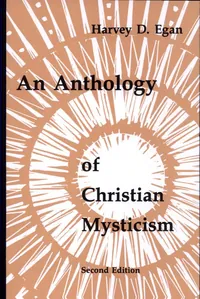
From glory to glory

 83
83

From glory to glory
Gregorius Nyssenus's From Glory to Glory offers a dense, yet rewarding, exposition on the soul's ascent. The strength of the work lies in its rigorous intellectual framework, meticulously drawing connections between early Christian thought and Neoplatonic philosophy. The author's persistent focus on theosis provides a coherent through-line for the spiritual journey. However, the text’s profound depth can also be a limitation; its philosophical language and lack of concessions to the modern reader might pose a barrier. A particularly striking section discusses the 'dark night of the soul' not as an absence of God, but as a divine presence experienced in a way that purifies the senses, a nuanced perspective often simplified elsewhere. For those committed to the rigorous study of Christian mysticism, this book provides substantial theological sustenance.
📝 Description
83
Gregorius Nyssenus's 1961 book traces the soul's ascent toward divine union.
Originally published in 1961, From Glory to Glory functions as a spiritual guide, not a historical study. The text interprets Christian doctrine through the lens of spiritual transformation and contemplative practice, drawing from the Neoplatonic tradition. It addresses serious students of Christian spirituality, mystical theology, and comparative religion who seek a deeper understanding of the contemplative life.
The book appeals to those interested in the philosophical underpinnings of ancient and medieval Christian thought. Readers focused on the soul's journey toward God, particularly within the Eastern Orthodox and patristic traditions, will find material to engage with. The work emerged during a period of renewed interest in patristic studies and Christian mysticism, with the author referencing early Church Fathers and the philosophical milieu of Neoplatonism.
This work is situated within the Christian Neoplatonic tradition. Gregorius Nyssenus, likely a pseudonym referencing Gregory of Nyssa, integrates Neoplatonic concepts, such as the soul's ascent and union with the divine, into a Christian framework. This approach was common among early Christian thinkers who adapted Platonic and Neoplatonic philosophy to articulate Christian doctrines of spiritual development and theosis. The book reflects a lineage of mystical thought that emphasizes inner transformation and direct experience of God.
💡 Why Read This Book?
• Gain a nuanced understanding of theosis, the Eastern Christian concept of deification, as explored through the lens of patristic theology and Neoplatonic thought, offering a distinct perspective from Western soteriology. • Comprehend the spiritual journey as a process of purification and illumination, moving from the earthly to the divine, as detailed in the work's stages of the soul's ascent. • Grasp the philosophical underpinnings of early Christian mysticism, specifically how figures like Gregory of Nyssa integrated Neoplatonic ideas to articulate concepts of union with God.
⭐ Reader Reviews
Honest opinions from readers who have explored this book.
❓ Frequently Asked Questions
What is the central doctrine explored in From Glory to Glory?
The central doctrine is theosis, or deification, a core concept in Eastern Orthodox Christianity. The book explores how the soul can achieve union with God through spiritual practices and divine grace.
Who is Gregorius Nyssenus?
Gregorius Nyssenus is the author of From Glory to Glory. The name is likely a pseudonym, referencing the 4th-century Church Father Gregory of Nyssa, known for his mystical theology and philosophical writings.
When was From Glory to Glory first published?
The book was first published in 1961, during a period of renewed academic and spiritual interest in early Christian mysticism and patristic theology.
What philosophical tradition influences the book?
The book is heavily influenced by Neoplatonism, a philosophical school that significantly shaped early Christian thinkers. This influence is evident in its discussion of the soul's ascent and union with the divine.
Is this book a historical overview of Christian mysticism?
No, From Glory to Glory is not primarily a historical overview. It functions as a spiritual guide and theological exposition, presenting a specific interpretation of mystical theology and the contemplative life.
What does the book say about the 'dark night of the soul'?
The book offers a nuanced view, interpreting the 'dark night' not as an absence of God, but as a divine presence that purifies the soul's faculties, enabling deeper spiritual perception.
🔮 Key Themes & Symbolism
Theosis and Deification
The central theme is theosis, the process of becoming godlike or united with God, a central to Eastern Christian theology. Nyssenus elaborates on this through the soul's journey, emphasizing that it is a participation in the divine life made possible by grace. This concept moves beyond mere salvation to a transformative union, where the human person, while remaining distinct, partakes in the divine nature. The work details how this union is achieved through spiritual discipline, prayer, and contemplation, aligning with the Neoplatonic idea of ascent towards the One.
Soul's Ascent and Purification
The book maps out a spiritual trajectory for the soul, moving from earthly attachments towards divine communion. This ascent involves stages of purification (katharsis) and illumination (theoria). Purification rids the soul of vices and worldly distractions, preparing it for higher spiritual perception. Illumination involves the reception of divine light and knowledge, leading to a deeper understanding of God and creation. This process is not a passive reception but an active engagement of the will and intellect in seeking God.
Neoplatonic Integration
From Glory to Glory demonstrates a sophisticated integration of Neoplatonic philosophical concepts into Christian mystical theology. Ideas such as the emanation of being from a transcendent source (the One), the soul's innate desire to return to its origin, and the hierarchical structure of reality are reinterpreted within a Christian framework. Nyssenus uses this philosophical language to articulate the nature of God, the creation, and the ultimate destiny of the soul, providing a rational structure for mystical experience.
Contemplation and Divine Love
The practice of contemplation is presented as the primary means by which the soul can achieve union with God. This is not mere intellectual reflection but a direct, experiential apprehension of the divine. The work highlights the role of divine love (agape) as both the source and goal of this contemplative life. It suggests that as the soul purifies itself and ascends, it becomes increasingly capable of receiving and reflecting God's love, culminating in a beatific vision.
💬 Memorable Quotes
Direct passages from the work, attributed to the author.
“The soul's journey is a constant movement toward the divine.”
— This expresses the dynamic, progressive nature of spiritual life as depicted in the book. It's not a static state but an active pursuit of God, a continuous striving for greater union and understanding.
“Purification is the necessary prelude to divine illumination.”
— This highlights the importance of asceticism and moral cleansing. Before the soul can perceive divine truths, it must shed the impurities and distractions of the material world and the lower self.
“Union with God is not absorption, but participation.”
— This clarifies the concept of theosis. It emphasizes that the individual soul retains its identity while partaking in the divine essence, a crucial distinction within Christian theology to avoid pantheism.
“The divine presence purifies even as it is perceived.”
— This offers a perspective on spiritual trials. Suffering or difficult spiritual states are reframed not as God's absence, but as His active, purifying work within the soul.
“Love is the ultimate end and means of spiritual progress.”
— This points to the affective dimension of spirituality. The drive towards God and the reception of His grace are fundamentally rooted in divine and human love.
🌙 Esoteric Significance
Tradition
The work is deeply embedded within the Christian mystical tradition, specifically drawing from the Eastern Orthodox patristic stream, heavily influenced by Pseudo-Dionysius the Areopagite and Gregory of Nyssa. It incorporates Neoplatonic metaphysical frameworks—such as emanation and ascent—to articulate Christian doctrines like theosis. This synthesis positions it within esoteric Christianity, bridging philosophical inquiry with direct spiritual experience and aiming for a union with the Absolute.
Symbolism
Key symbols include the 'descent' and 'ascent' of the soul, representing its movement away from and return to the divine source. Light (phos) symbolizes divine knowledge and presence, informative the soul during its purification and transformation. The concept of the 'divine darkness' also appears, not as an absence of God, but as an overwhelming divine reality beyond rational comprehension, a common motif in apophatic theology and Neoplatonism.
Modern Relevance
Contemporary interest in contemplative prayer, embodied spirituality, and interfaith dialogue finds echoes in Nyssenus's work. Thinkers and practitioners in fields like Christian meditation, psycho-spiritual integration, and comparative mysticism often reference the patristic emphasis on theosis. Its rigorous philosophical approach also appeals to those seeking a more intellectually grounded form of spirituality, connecting ancient wisdom with modern existential questions.
👥 Who Should Read This Book
• Students of Christian Mysticism: Those seeking to understand the theoretical and experiential dimensions of the soul's journey towards God, particularly within the Eastern Orthodox tradition. • Comparative Religion Scholars: Individuals interested in the intersection of Neoplatonic philosophy and early Christian theology, and how mystical concepts are expressed across traditions. • Aspiring Contemplatives: Readers dedicated to deepening their prayer life and seeking guidance on the stages of spiritual purification and illumination.
📜 Historical Context
Published in 1961, From Glory to Glory emerged in an era marked by significant theological and philosophical re-evaluation. The mid-20th century saw a resurgence of interest in patristic studies, particularly in the mystical and ascetical writings of the early Church Fathers. Nyssenus's work tapped into this current, offering a Neoplatonically-inflected interpretation of Christian spirituality. This contrasted with the more scholastic and existentialist theological trends prevalent at the time, such as those championed by Karl Barth or Paul Tillich. The book's emphasis on theosis and the soul's direct ascent toward God resonated with a growing segment of readers seeking contemplative depth, diverging from purely dogmatic or social-justice oriented theological discourse. Its reception was primarily within esoteric and specialized theological circles, rather than mainstream academic theology.
📔 Journal Prompts
The soul's ascent: Map your current spiritual orientation in relation to the stages of purification and illumination.
Reflect on the concept of theosis as presented in the work; how does it differ from conventional notions of salvation?
Analyze the role of divine love in the context of spiritual progress as described by Nyssenus.
Consider the symbolism of light and darkness in your personal spiritual journey.
How can the Neoplatonic framework help articulate Christian mystical experiences?
🗂️ Glossary
Theosis
The Eastern Christian doctrine of deification or divinization, understood as the process by which a believer, through grace and spiritual practice, becomes godlike and united with God, while retaining their distinct identity.
Purification (Katharsis)
The spiritual process of cleansing the soul from sin, vices, and worldly attachments. It involves ascetic practices and moral discipline to prepare the soul for higher spiritual perception.
Illumination (Theoria)
The stage of spiritual development where the soul receives divine light and knowledge, leading to a deeper understanding of spiritual realities and direct experience of God's presence.
Neoplatonism
A philosophical system originating with Plotinus, heavily influencing early Christian thought. It posits a transcendent One from which all reality emanates and to which the soul seeks to return through intellectual and spiritual ascent.
Apophatic Theology
A theological approach that describes God by negation, emphasizing what God is not rather than what He is, due to His transcendence and ineffability. Often associated with mystical traditions.
Divine Darkness
A mystical concept referring to the overwhelming, ineffable nature of God's presence, which surpasses human comprehension and intellectual understanding, often experienced in deep contemplation.
Ascent
In a spiritual context, the soul's upward journey from the material and temporal world towards the spiritual and eternal realm, culminating in union with the Divine.
🔮 Readers Also Liked
Browse all →




More by Gregorius Nyssenus
All books →


More Free Mysticism & Contemplation Books
View all →