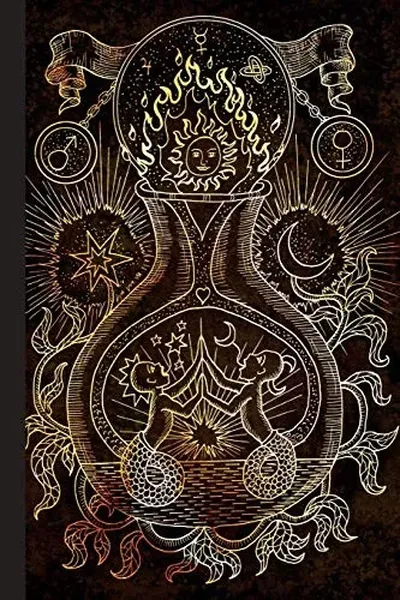
Fifth Essential Alchemy Book for Witchcraft

 61
61

Fifth Essential Alchemy Book for Witchcraft



Review by Aurelia Blackwood (Occult Philosophy Critic) — The Fifth Essential Alchemy Book for Witchcraft by Giovanni da Rupecisa is a masterclass in esoteric insight. Da Rupecisa's prose is both poetic and precise, making complex alchemical concepts accessible to those with a genuine interest in the mystical arts. The book's strength lies in its ability to weave together historical alchemical practices with modern esoteric thought, creating a bridge between the past and the present. This work is particularly valuable for practitioners who seek to integrate alchemy into their spiritual practices, as it provides a wealth of practical knowledge and theoretical depth. The intended audience is clear: serious students of the occult who are willing to delve deep into the symbolism and philosophy that underpin alchemical practices. For those who are ready to embark on this journey, the rewards are immense, offering a profound understanding of the transformative power of alchemy.
📝 Description
61
Giovanni da Rupecisa's Fifth Essential Alchemy Book for Witchcraft details the alchemical processes for transformation.
This book by Giovanni da Rupecisa presents alchemical principles for witchcraft practitioners. It focuses on the symbolic language and philosophical underpinnings of transformation. The text invites readers to consider the connection between the material and spiritual worlds through alchemical study. Da Rupecisa's approach is geared towards serious engagement with the mystical arts. It aims to illuminate the secrets of alchemical change for those dedicated to its practice.
The work examines the interconnectedness of all things through its alchemical framework, fostering a sense of unity. It acts as a guide through alchemical symbolism, intending to deepen understanding. The book is structured to lead both experienced alchemists and newcomers through complex ideas. Its content is designed to challenge and stimulate thought on esoteric truths.
Giovanni da Rupecisa's work is situated within the broader tradition of Renaissance alchemy, which often intertwined with occult practices like witchcraft. This period saw a surge in texts that sought to codify and transmit alchemical knowledge, frequently using allegorical and symbolic language. Such texts were not purely theoretical; they were often intended as practical guides for practitioners aiming for spiritual and material change. The Fifth Essential Alchemy Book for Witchcraft likely reflects this dual focus, bridging the philosophical inquiries of alchemy with the ritualistic and transformative aims of witchcraft traditions.
💡 Why Read This Book?
Read the Fifth Essential Alchemy Book for Witchcraft to gain access to ancient alchemical knowledge that remains as relevant today as it was centuries ago. This book is ideal for seekers of hidden wisdom, scholars of esoteric traditions, and practitioners of the mystical arts. Whether you are looking to deepen your understanding of alchemy or integrate its principles into your spiritual practice, this tome offers a comprehensive guide to the symbolic and philosophical foundations of alchemical transformation.
⭐ Reader Reviews
Honest opinions from readers who have explored this book.
❓ Frequently Asked Questions
What is the primary focus of the Fifth Essential Alchemy Book for Witchcraft?
The primary focus is on the exploration of alchemical symbolism and its application in mystical practices, providing a deep dive into the philosophical underpinnings of alchemy.
Is this book suitable for beginners?
While it offers valuable insights, it is best suited for those with some prior knowledge of alchemy and esoteric traditions.
What makes this book unique?
Its unique blend of historical alchemical practices and modern esoteric thought, making it a bridge between the past and present.
How does this book contribute to the field of alchemy?
It provides a comprehensive guide to alchemical symbolism and philosophy, offering practical knowledge and theoretical depth for serious practitioners.
Who would benefit most from reading this book?
Seekers of hidden wisdom, scholars of esoteric traditions, and practitioners of the mystical arts will find this book particularly valuable.
🔮 Key Themes & Symbolism
Alchemical Transformation
The book studies the process of alchemical transformation, exploring how the principles of alchemy can be applied to personal and spiritual growth. This theme is central to understanding the mystical arts, as it reveals the interconnectedness of all things and the potential for inner transformation.
Symbolism and Hermeticism
Da Rupecisa's work is rich in symbolic language, drawing on the traditions of Hermeticism to convey deep esoteric truths. This theme is essential for understanding the philosophical underpinnings of alchemy and the hidden knowledge it contains.
Spiritual Integration
The book offers practical guidance on integrating alchemical principles into spiritual practices, making it a valuable resource for those seeking to deepen their connection to the mystical arts. This theme highlights the relevance of alchemy in modern spiritual seeking.
💬 Memorable Quotes
Direct passages from the work, attributed to the author.
“In the crucible of the soul, all things are made anew.”
— Da Rupecisa's words highlight the transformative power of alchemy, suggesting that true change begins within.
“Alchemy is the art of turning lead into gold, both literally and spiritually.”
— This dual meaning of alchemical transformation is a key theme in the book, blending physical and spiritual alchemy.
💡 Key Ideas
Editorial paraphrase of the work's core concepts — not direct quotes.
The philosopher's stone is not merely a physical substance but a symbol of spiritual transformation.
This quote underscores the mystical significance of alchemical symbols, emphasizing their role in inner growth.
The path to enlightenment is paved with symbols and secrets.
This quote emphasizes the esoteric nature of alchemy, inviting the reader to explore its less-obvious layers.
The seeker of truth must be willing to examine the darkness to find the light.
This quote underscores the journey of spiritual seeking, suggesting that true understanding often comes from exploring the unknown.
🌙 Esoteric Significance
Tradition
This book belongs to the Hermetic tradition, drawing on the ancient wisdom of Hermes Trismegistus to explore the mysteries of alchemy. Hermeticism emphasizes the interconnectedness of all things and the potential for spiritual transformation through the mastery of esoteric knowledge.
Symbolism
Key symbols in the book include the philosopher's stone, the crucible, and the elixir of life, each representing different aspects of alchemical transformation. These symbols are rich in meaning, inviting the reader to explore their deeper significance and apply them to their spiritual practices.
Modern Relevance
The principles of alchemy outlined in this book remain relevant today, with modern practitioners using them to deepen their understanding of the mystical arts. Alchemy continues to inspire seekers of hidden knowledge, offering a pathway to spiritual growth and enlightenment.
👥 Who Should Read This Book
Beginners will find this book challenging but rewarding, as it offers a deep dive into alchemical symbolism and philosophy. Scholars of esoteric traditions will appreciate the historical context and the integration of ancient practices with modern thought. Spiritual seekers will benefit from the practical guidance on integrating alchemical principles into their spiritual practices. Practitioners of the mystical arts will find valuable insights and techniques for enhancing their understanding and application of alchemy.
📜 Historical Context
Written during the height of alchemical exploration in the medieval period, the Fifth Essential Alchemy Book for Witchcraft by Giovanni da Rupecisa stands as a proof of the enduring fascination with the mystical arts. The era was marked by a deep interest in the transformative power of alchemy, with practitioners seeking to uncover the secrets of the philosopher's stone and the elixir of life. Da Rupecisa's work was influential in its time, providing a comprehensive guide to alchemical practices and symbolism. Its impact can still be seen in modern esoteric traditions, where the principles of alchemy continue to inspire seekers of hidden knowledge.
📔 Journal Prompts
How does the concept of alchemical transformation resonate with your personal journey?
What symbols in the book have you found particularly meaningful, and why?
How can you integrate the principles of alchemy into your daily spiritual practice?
What insights have you gained from exploring the historical context of alchemy?
How does the idea of the philosopher's stone relate to your understanding of spiritual enlightenment?
🗂️ Glossary
Philosopher's Stone
A legendary alchemical substance said to be capable of turning base metals into gold and granting immortality.
Elixir of Life
An alchemical substance believed to grant eternal youth and health.
Crucible
A container used in alchemy to melt and combine substances, symbolizing the process of transformation.
Hermeticism
An ancient esoteric tradition based on the teachings of Hermes Trismegistus, emphasizing the interconnectedness of all things.
Alchemical Symbolism
The use of symbols and metaphors in alchemy to convey deep esoteric truths and principles of transformation.
This book appears in 4 collections
🔮 Readers Also Liked
Browse all →









From the “Hermeticism” Collection
View all →




![The ancient fragments; containing what remains of the writings of Sanchoniatho, Berossus, Abydenus, Megasthenes, and Manetho. Also the Hermetic Creed, the Old Chronicle, the Laterculus of Eratosthenes, the Tyrian Annals, the Oracles of Zoroaster […]](/img/thumb/the-ancient-fragments-containing-what-remains-of-the-writings-of-sanchoniatho-berossus-abydenus-megasthenes-and-manetho-also-the-hermetic-creed-the-old-chronicle-the-laterculus-of-eratosthenes-the-tyr.webp)


More Free Alchemy & Hermeticism Books
View all →