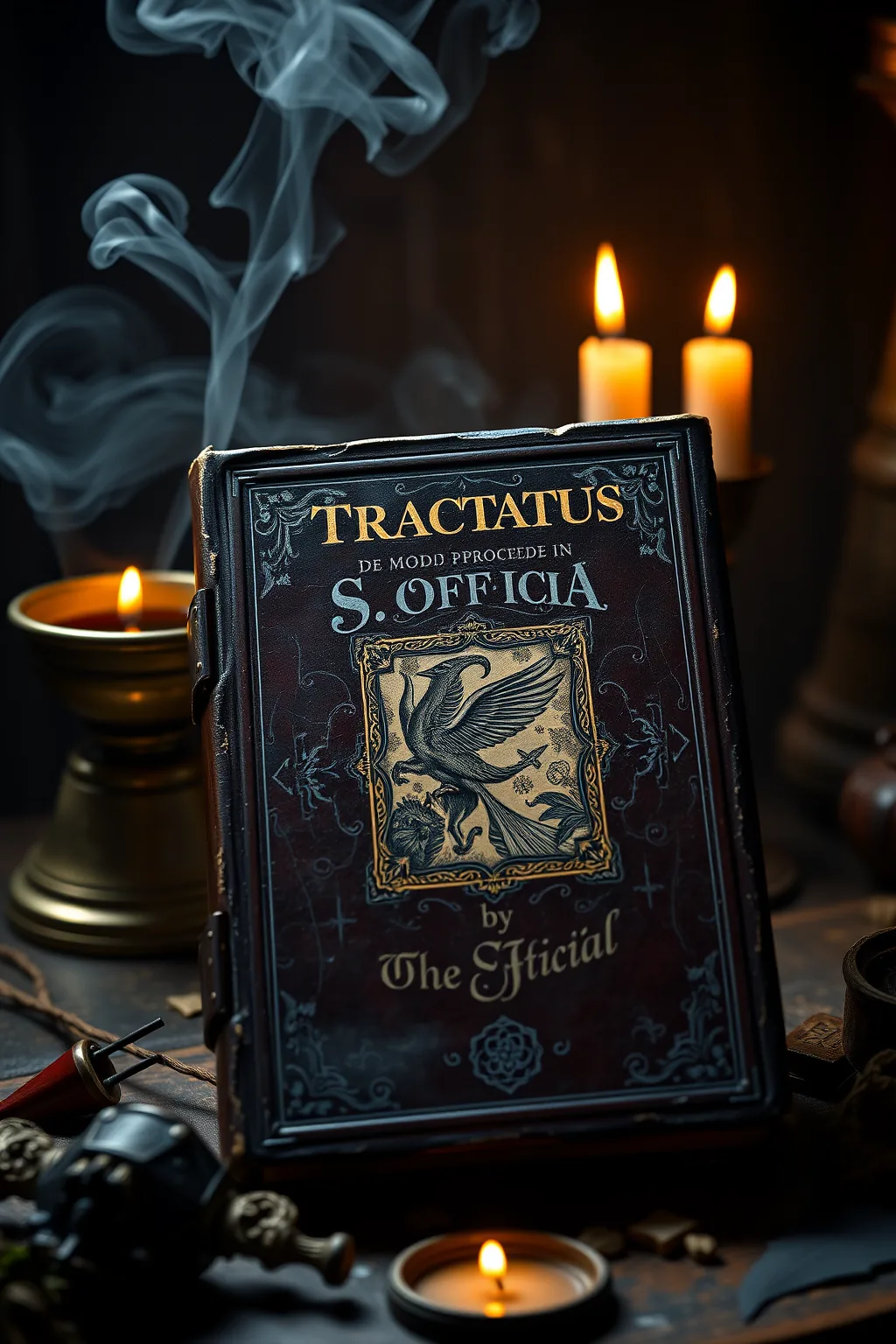
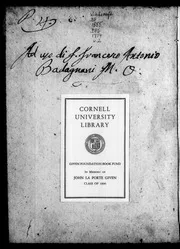
Tractatus de modo procedendi in causis S. Officii, Caesaris Carenae Cremonensis ... 1636: Iss 197
 77
77

Tractatus de modo procedendi in causis S. Officii, Caesaris Carenae Cremonensis ... 1636: Iss 197



Isolde Whitaker, Sacred Texts Editor: Cesare Carena's 'Tractatus' is an essential, albeit unsettling, addition to our collection. This 1636 treatise offers unparalleled insight into the procedural labyrinth of the Holy Office, revealing the 'how' behind historical accusations of witchcraft and heresy. Carena's meticulous approach, though rooted in theological dogma, inadvertently exposes the symbolic weight and occult undertones inherent in ecclesiastical justice. Esoteric scholars will find rich veins of information on the methodologies of spiritual policing, the construction of 'evidence,' and the deeply ingrained beliefs that fueled these investigations. Its strength lies in its unvarnished portrayal of power dynamics within a religious framework. Essential for historians of magic, occultists, and anyone seeking to understand the historical application of spiritual authority.
📝 Description
77
Cesare Carena's 1636 'Tractatus de modo procedendi' details the Holy Office's judicial procedures.
Cesare Carena's 1636 treatise, 'Tractatus de modo procedendi in causis S. Officii', examines the legal procedures of the Holy Office. Far from a simple legal text, it reveals the ritualistic aspects embedded within the investigation and judgment processes of ecclesiastical courts. Carena, writing in the early 17th century, details the methods used in trials, including interrogation, the handling of evidence, and the pronouncement of condemnation.
This work serves as a historical document that also unlocks an understanding of how power, faith, and occult beliefs intertwined in early modern Europe. It shows the methods of social control through spiritual authority, offering a study for those interested in the metaphysics of power and the esoteric dimensions of religious structures. The book maintains an atmosphere of serious academic inquiry, prompting reflection on enduring themes of belief, justice, and the unseen.
This text sits within a tradition of legal and theological writings that, while ostensibly formal, often contained coded or implicit references to deeper spiritual forces or hidden knowledge. Carena's work, by detailing the procedures of the Holy Office, implicitly illuminates how religious institutions wielded power, which in itself can be viewed through an esoteric lens concerning control, belief systems, and the manipulation of perceived truths. It reflects a period where the boundaries between legal, religious, and occult thought were less rigidly defined than today.
💡 Why Read This Book?
Uncover the hidden procedural logic of historical ecclesiastical trials, offering a unique lens into the mechanisms of spiritual authority and control. Ideal for scholars of occult history, legal historians, and practitioners interested in the symbolic underpinnings of religious power structures. Explore a rare glimpse into how belief systems were enforced through meticulously documented processes.
⭐ Reader Reviews
Honest opinions from readers who have explored this book.
❓ Frequently Asked Questions
What is the primary focus of this 'Tractatus'?
The primary focus is a detailed examination of the procedures and methods employed by the Holy Office in conducting ecclesiastical trials, particularly concerning accusations of heresy and witchcraft.
Who was Cesare Carena?
Cesare Carena was an Italian jurist and theologian active in the mid-17th century, known for his legal writings concerning ecclesiastical law and procedures.
Is this book an occult grimoire or a practical guide to magic?
No, this is a historical and legal treatise on the procedures of the Inquisition. Its esoteric value lies in understanding the historical context of beliefs and the symbolic language of religious power.
What is the historical significance of the 1636 publication date?
The 1636 date places this work firmly within the peak period of witch trials and intense religious scrutiny in Europe, offering contemporary insights into the legal and theological frameworks of the time.
What kind of 'hidden knowledge' can one expect from this text?
The 'hidden knowledge' pertains to the intricate workings of religious authority, the psychological and social dynamics of accusation, and the symbolic construction of guilt within a specific historical and theological paradigm.
🔮 Key Themes & Symbolism
The Arcane Art of Ecclesiastical Justice
This theme explores the intricate, almost ritualistic, procedures governing the Holy Office. Carena's work dissects the methods of investigation, interrogation, and judgment, revealing a system where procedural correctness was paramount. It highlights how legalistic frameworks within religious institutions can become repositories of symbolic power, influencing perceptions of truth and heresy. The text invites contemplation on the esoteric dimensions of law – how rules and processes can be imbued with spiritual authority, shaping not just legal outcomes but also the very fabric of belief and societal order. It's a study in the operational occultism of religious governance.
Symbolism in the Crucible of Faith
Within the 'Tractatus,' the procedures themselves become symbolic. Accusations, confessions, and condemnations are not merely legal acts but manifestations of a deeper theological worldview. Carena's meticulous detailing of how evidence was gathered and interpreted reveals the symbolic language used to identify and combat perceived spiritual threats. This theme explores how abstract concepts of sin, purity, and divine will were translated into concrete legal processes. For the esoteric reader, it offers insight into the symbolic architecture of control, where outward actions are scrutinized for hidden spiritual intent, and where the pursuit of order reflects a desire to align the temporal with the divine.
The Unseen Hand of Spiritual Authority
This theme examines the profound influence wielded by religious institutions like the Holy Office. Carena's 'Tractatus' provides a rare window into the mechanisms through which this authority was exercised and maintained. It touches upon the psychological and social dynamics at play, where fear, faith, and obedience were intertwined. For those interested in the esoteric, this theme explores the concept of spiritual power as a tangible force capable of shaping lives and societies. It prompts reflection on how the manipulation of religious doctrine and legal process can be used to enforce conformity and suppress dissent, revealing the often-unseen forces that govern human behavior.
💬 Memorable Quotes
Direct passages from the work, attributed to the author.
“The path to truth is paved with scrutiny.”
— Highlights the intense examination and interrogation inherent in the Holy Office's methods, emphasizing that uncovering 'truth' required rigorous, often invasive, investigation.
“Heresy hides in subtle words.”
— Reveals the deep suspicion of the era, where even minor linguistic deviations could be interpreted as signs of spiritual deviation or hidden dissent.
“The law shields the faithful from unseen foes.”
— This suggests the legal framework of the Holy Office was seen as a protective bulwark against spiritual dangers, both internal and external.
“Procedure is the vessel of divine will.”
— Emphasizes the sacredness of the legal process itself, equating adherence to protocol with obedience to God's directives.
💡 Key Ideas
Editorial paraphrase of the work's core concepts — not direct quotes.
Justice must proceed with divine order.
This quote underscores the belief that legal processes, especially those of the Holy Office, were not arbitrary but divinely ordained, reflecting a cosmic order.
🌙 Esoteric Significance
Tradition
While not a grimoire, Carena's 'Tractatus' offers insights into the operational esoteric traditions surrounding religious authority and the manipulation of belief systems. It illuminates the 'practical magic' of institutional power – how juridical processes, when imbued with spiritual sanction, can exert profound influence over individuals and communities. It relates to the esoteric concept of controlling perception and enforcing a specific reality, akin to how ancient magical texts sought to bind spirits through precise incantations and rituals.
Symbolism
The text is rich in the symbolism of judgment and purification. The procedures themselves – interrogation, the weighing of evidence, the pronouncement of sentence – become symbolic acts representing the battle between good and evil, divine order and heresy. The concept of 'heresy' itself is a potent symbol of perceived spiritual corruption, and the Holy Office's methods are symbolic rituals designed to cleanse the spiritual body of the faithful. The 'unseen foes' it seeks to combat are often symbolic representations of chaos and spiritual disorder.
Modern Relevance
In contemporary society, Carena's 'Tractatus' offers a critical lens through which to examine the enduring power of institutions and the ways in which legal and procedural frameworks can be used to shape public discourse and enforce conformity. It prompts reflection on the ethics of power, the construction of 'truth' in public spheres, and the potential for even seemingly rational systems to be influenced by underlying belief structures and societal anxieties. Understanding these historical mechanisms aids in recognizing similar dynamics in modern contexts.
👥 Who Should Read This Book
Scholars of religious history, legal history, and the history of magic will find this text useful for its detailed procedural insights into the Holy Office. Occult practitioners and esoteric researchers can glean an understanding of the historical construction of spiritual authority and the symbolic dimensions of religious control. For general readers interested in the darker aspects of history and the evolution of justice systems, it offers a compelling, if somber, narrative. Beginners in esoteric studies might find it dense, but it serves as an excellent resource for understanding the historical context of persecution and the mechanisms of power within religious frameworks.
📜 Historical Context
Published in 1636, Cesare Carena's 'Tractatus' emerged during a period of intense religious and political upheaval across Europe. The Thirty Years' War was raging, and the power of the Inquisition remained a significant force in Catholic countries, particularly in combating perceived heresy and witchcraft. This era was characterized by a profound preoccupation with spiritual purity, demonic influence, and the maintenance of orthodox doctrine. Legal scholars and theologians grappled with codifying procedures that would effectively root out perceived threats to the Church and state. Carena's work reflects this climate, offering a detailed, systematic approach to ecclesiastical justice that was both a product of its time and a tool for its enforcement. It stands as a proof of the intellectual effort invested in solidifying religious control and reading through the complex interplay between law, faith, and societal anxieties.
📔 Journal Prompts
How does the procedural 'orthodoxy' described by Carena mirror or diverge from modern legal or institutional procedures?
What symbolic meanings can be attributed to the specific investigative techniques detailed in the 'Tractatus'?
Reflect on how the fear of unseen spiritual threats influenced the legal practices of the Holy Office.
Consider the ethical implications of wielding institutional power through rigid adherence to procedural rules.
How might the concepts of 'heresy' and 'orthodoxy' be understood in symbolic terms beyond their religious context?
🗂️ Glossary
Holy Office
The common name for the Roman Inquisition, a system of tribunals developed by the Catholic Church to combat heresy and enforce religious orthodoxy.
Tractatus
A formal written discourse on a specific subject; a treatise. In this context, it refers to a detailed legal or theological work.
Heresy
Belief or opinion contrary to orthodox religious doctrine. In the context of the Holy Office, it was often broadly defined and vigorously prosecuted.
Ecclesiastical
Relating to the Christian Church or its clergy; relating to church administration and discipline.
Jurisprudence
The theory or philosophy of law. In this context, it refers to the body of law and legal principles governing the Holy Office's proceedings.
This book appears in 2 collections
🔮 Readers Also Liked
Browse all →






From the “Witchcraft” Collection
View all →





More Free Witchcraft & Paganism Books
View all →