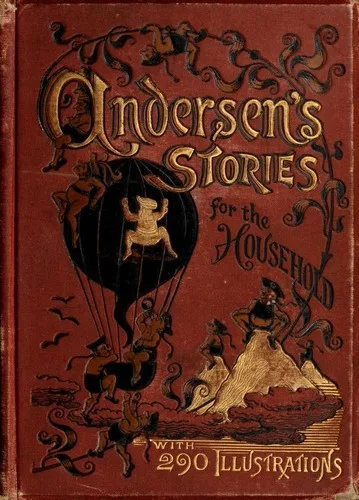
Fairy Tales and Stories
 79
79

Fairy Tales and Stories
Andersen's "Fairy Tales and Stories" is more than a collection of children's narratives; it is a profound exploration of the human psyche and societal structures, presented through a deceptively simple, often melancholic, lens. The strength of this volume lies in its allegorical depth. Consider "The Little Mermaid," a tale not just of unrequited love but of the profound existential cost of attempting to bridge disparate worlds, a sacrifice that Andersen portrays with heart-wrenching clarity. A limitation, however, can be the pervasive melancholy that colors many of the stories, reflecting a specific Danish sensibility that might feel somber to some modern readers. The enduring power of "The Snow Queen," with its crystalline depiction of emotional detachment and the arduous path to reintegration, exemplifies Andersen's unique ability to embed complex psychological states within fantastical quests. These stories remain potent for their exploration of inner landscapes. The collection is a vital text for anyone studying the symbolic resonance of popular narrative.
📝 Description
79
Hans Christian Andersen's collected fairy tales, first gathered in 1920, offer symbolic depth beyond children's stories.
Hans Christian Andersen's "Fairy Tales and Stories," collected around 1920, contains narratives that transcend simple entertainment. These stories, though appearing straightforward, hold layers of symbolic meaning and psychological depth. They frequently use allegorical figures and fantastical scenarios to examine the human condition, making them suitable for esoteric interpretation. The collection features famous tales like "The Little Mermaid," "The Snow Queen," and "The Ugly Duckling." Each story provides a distinct perspective on universal themes.
This volume is for readers who enjoy literature with multiple interpretations. It will attract those interested in comparative mythology, folklore, and the psychological aspects of storytelling. Esoteric practitioners focusing on archetypal patterns and the subconscious will find substantial material for reflection. Additionally, scholars of 19th-century European literature and culture can use these tales to understand the period's artistic expressions and prevailing ideas. Andersen's original stories were published between 1835 and 1872, a time of intellectual and artistic change in Europe.
Andersen's tales emerged during the Romantic period, a time when European culture showed interest in the supernatural and folk traditions. While not explicitly occult, the stories resonated with a cultural focus on imagination and symbolic life. This aligns with certain esoteric traditions that look for deeper meanings within folklore and myths, often identifying archetypal patterns and psychological processes within these narratives. The symbolic content allows for readings that connect to concepts of inner transformation and the exploration of the human psyche, common pursuits in esoteric philosophy.
💡 Why Read This Book?
• Gain insight into archetypal patterns of transformation and suffering, as exemplified in "The Ugly Duckling," which illustrates the journey from perceived inadequacy to self-realization. • Understand the symbolic representation of the soul's quest and the challenges of bridging different realms, a core theme in "The Little Mermaid" and its exploration of sacrifice. • Appreciate the psychological depth of 19th-century European storytelling, particularly through the allegorical portrayal of emotional coldness and warmth in "The Snow Queen."
⭐ Reader Reviews
Honest opinions from readers who have explored this book.
❓ Frequently Asked Questions
When were Hans Christian Andersen's fairy tales first published?
Hans Christian Andersen's fairy tales were published in installments across several years, beginning in 1835 and continuing until 1872. The collected edition, often referenced, was first published around 1920.
What are some of the most famous stories included in this collection?
The collection features widely recognized stories such as "The Little Mermaid," "The Snow Queen," "The Ugly Duckling," "The Emperor's New Clothes," and "The Steadfast Tin Soldier."
Are these stories only for children?
While enjoyed by children, Andersen's tales are rich with adult themes, psychological depth, and symbolic meanings that appeal to readers of all ages interested in literature and philosophy.
What historical period influenced Andersen's writing?
Andersen wrote during the Romantic era in Europe, a period characterized by a focus on emotion, individualism, and an interest in folklore and the supernatural, which influenced his storytelling style.
How do Andersen's tales connect to esoteric thought?
The tales often explore themes of transformation, the soul's journey, and the interplay between the material and spiritual worlds, making them relevant for esoteric interpretations of archetypes and symbolism.
Is this book in the public domain?
Given the original publication dates of the individual stories (starting 1835) and the collected edition (circa 1920), many versions of Andersen's fairy tales are indeed in the public domain, allowing for free online access.
🔮 Key Themes & Symbolism
The Archetype of Transformation
Many of Andersen's narratives center on characters undergoing profound change, often initiated by hardship or a desire for something beyond their current state. "The Ugly Duckling" is a prime example, depicting the painful but ultimately rewarding journey from ostracism to self-discovery and belonging. This theme appeals to esoteric concepts of spiritual evolution and the arduous path of the soul seeking higher consciousness or integration. The trials faced by characters often serve as initiatory rites, preparing them for a new state of being or understanding, mirroring alchemical processes of purification and refinement.
The Soul's Journey and Sacrifice
The concept of a soul's journey, particularly the sacrifices required for spiritual advancement or connection with a higher plane, is powerfully illustrated in "The Little Mermaid." Her desire to gain an immortal soul and escape her aquatic existence leads to profound physical and emotional suffering. This reflects esoteric traditions that view earthly existence as a temporary phase, with true fulfillment found in transcending material limitations. The pain endured by the mermaid can be interpreted as the necessary crucible through which the soul is tested and refined on its path toward spiritual enlightenment.
Duality and the Inner Conflict
Andersen frequently explores the tension between opposing forces, such as good and evil, light and darkness, or the material and the spiritual. "The Snow Queen" presents a stark dichotomy between the icy, rational world represented by the Snow Queen and the warmth of human connection embodied by Gerda. This duality mirrors the internal struggles many individuals face in their spiritual development, the constant negotiation between the ego's desires and the soul's higher calling. The stories often suggest that true understanding comes not from eliminating one side, but from integrating these opposing forces within oneself.
The Value of the Outcast
A recurring motif is the inherent worth and potential found in those who are marginalized, overlooked, or considered ugly or undesirable. "The Ugly Duckling" is the quintessential example, showing how perceived flaws can mask extraordinary potential. This theme aligns with esoteric philosophies that often emphasize the hidden spiritual significance of the humble or the rejected. It suggests that true value is not always apparent on the surface and that spiritual insight can emerge from unexpected quarters, challenging conventional societal judgments and highlighting the inner light within all beings.
💬 Memorable Quotes
Direct passages from the work, attributed to the author.
““It is really a fine thing to have been born among the chickens, when one has afterwards lived in a swan's nest.””
— This statement from "The Ugly Duckling" expresses the theme of transformation and unrecognized potential. It speaks to the idea that one's origins do not define ultimate destiny and that perceived limitations can be overcome, leading to a realization of one's true, perhaps more noble, nature.
““And the little mermaid felt her heart breaking.””
— This poignant expression of emotional agony from "The Little Mermaid" highlights the theme of suffering as a catalyst for change or a consequence of striving for the unattainable. It underscores the deep emotional cost involved in pursuing spiritual or existential goals beyond one's natural state.
““The whole world is a series of adventures to those who are ready to receive them.””
— This sentiment, reflecting the spirit of exploration and discovery, suggests an esoteric perspective where reality is not static but dynamic. It implies that receptivity and an open mind are key to perceiving the magical or significant events unfolding around us, turning mundane existence into a grand quest.
““It is only when we have lost everything that we can truly begin to find ourselves.””
— This interpretation of a common theme in Andersen's work speaks to the process of stripping away attachments and illusions. It suggests that profound self-knowledge and spiritual awakening often arise only after the loss of external comforts or ego-driven desires, a principle found in many ascetic and mystical traditions.
💡 Key Ideas
Editorial paraphrase of the work's core concepts — not direct quotes.
“The waves closed over her and sank her down into the cold, blue depths.”
From "The Little Mermaid," this line evokes the profound sacrifice and the immersion into a different, potentially perilous, realm. It symbolizes the descent into the unconscious or the unknown, a necessary step in many spiritual journeys, fraught with danger but also potential for transformation.
🌙 Esoteric Significance
Tradition
Andersen's tales can be viewed through the lens of Jungian archetypal psychology, which itself draws heavily from Gnostic and Hermetic concepts of the soul's journey and the activation of unconscious patterns. The stories' exploration of universal human experiences, the shadow self, and the process of individuation align with the Gnostic emphasis on inner knowledge and the soul's struggle against illusory material forces. They serve as modern myths, offering symbolic maps for reading through the inner world, a practice central to many esoteric traditions seeking self-realization.
Symbolism
Key symbols abound: the sea in "The Little Mermaid" represents the unconscious, emotion, and the feminine principle, a field of both danger and potential transformation. The ice and cold in "The Snow Queen" symbolize spiritual detachment, emotional paralysis, and the dominance of the intellect over the heart. The transformation of "The Ugly Duckling" into a swan is a potent symbol of spiritual rebirth and the manifestation of one's true, divine nature, hidden beneath a mundane or misunderstood exterior.
Modern Relevance
Contemporary thinkers in depth psychology, mythology, and even some branches of New Age spirituality continue to engage with Andersen's work. Joseph Campbell's work on the monomyth, while not directly focused on Andersen, shares a similar interest in archetypal narratives that resonate across cultures. Modern therapists and spiritual counselors often use these tales to illustrate psychological concepts like self-acceptance, overcoming trauma, and the search for meaning in a complex world, demonstrating their enduring power as vehicles for inner exploration.
👥 Who Should Read This Book
• Students of comparative mythology and folklore seeking to understand the evolution of archetypal narratives beyond their original cultural context. • Readers interested in the psychological underpinnings of storytelling and how seemingly simple tales can reveal profound truths about the human condition. • Individuals exploring themes of transformation, self-discovery, and the integration of the shadow self, who can find powerful allegories within these classic stories.
📜 Historical Context
Hans Christian Andersen's "Fairy Tales and Stories," with individual tales appearing from 1835 onwards, emerged from the heart of the European Romantic movement. This era championed emotion, imagination, and a renewed interest in folklore and the national past, a stark contrast to the Enlightenment's emphasis on pure reason. Andersen's literary approach, distinct from the more scholarly collection of the Brothers Grimm, infused traditional motifs with personal psychology and a unique, often melancholic, sensibility. His work was contemporary with the burgeoning field of psychology and the philosophical inquiries into the nature of consciousness prevalent in German Idealism. While not directly aligned with occult societies, the Romantic fascination with the numinous and the symbolic provided fertile ground for the deeper, archetypal interpretations his tales would later attract. Reception was generally positive, though the unconventional nature of some stories occasionally drew mild criticism for their departure from traditional didacticism.
📔 Journal Prompts
The transformation of the Ugly Duckling into a swan, and what that archetype signifies for personal growth.
Gerda's unwavering pursuit of Kai through the ice and snow, and its symbolic representation of devotion.
The Little Mermaid's desire for an immortal soul, and its connection to transcendent aspirations.
The Emperor's vanity and the child's innocent observation in "The Emperor's New Clothes," and their commentary on societal perception.
Reflect on the symbolic journey of the Steadfast Tin Soldier and its lessons on resilience in the face of adversity.
🗂️ Glossary
Archetype
A universal, inherited pattern of thought or imagery derived from the collective unconscious, often found in myths and fairy tales. Examples include the hero, the trickster, and the transformation.
Allegory
A story, poem, or picture that can be interpreted to reveal a hidden meaning, typically a moral or political one. Andersen's tales often function allegorically, with characters and events representing abstract ideas.
Symbolism
The use of symbols to represent ideas and qualities. In Andersen's stories, elements like water, ice, and animals carry symbolic weight, contributing to their deeper, often esoteric, interpretations.
The Unconscious
In psychology, the part of the mind of which one is not aware and which influences one's behavior. Esoteric traditions often explore accessing and understanding the unconscious for spiritual growth.
Individuation
A psychological term coined by Carl Jung, referring to the process of integrating the conscious and unconscious aspects of the personality to become a whole, unique individual. Many fairy tales mirror this process.
Romanticism
An artistic, literary, and intellectual movement originating in Europe toward the end of the 18th century, characterized by its emphasis on emotion, individualism, and glorification of the past and nature.
The Soul's Journey
A concept found in many spiritual and esoteric traditions, describing the progression of the soul through various states of existence, often involving trials, learning, and eventual transcendence or enlightenment.
🔮 Readers Also Liked
Browse all →








More by Hans Christian Andersen
All books →




More Free Magic & Ritual Books
View all →