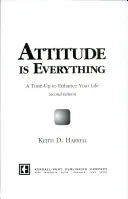
Evidence-based Acupuncture
 73
73

Evidence-based Acupuncture
Tang-Yi Liu and Ping-Chung Leung's Evidence-based Acupuncture (2012) confronts a persistent tension in traditional medicine: the gulf between learned technique and demonstrable effect. The authors’ directness in stating that "the evidence of efficacy remains subjective" is refreshing, cutting through the often-unquestioning acceptance of ancient modalities. They correctly identify literature search and expert sharing as interim measures for building confidence, but the book’s strength lies in its clear articulation of the need for scientific validation. A limitation, however, is the inherent difficulty in applying purely quantitative scientific methods to a practice so deeply rooted in qualitative experience and individual patient response. The work explores how to reconcile these, urging a move past reliance on historical precedent. The verdict: a necessary, if challenging, call for empirical grounding in acupuncture.
📝 Description
73
Tang-Yi Liu and Ping-Chung Leung published Evidence-based Acupuncture in 2012.
This 2012 book confronts the traditional practice of acupuncture with scientific validation. The authors acknowledge that acupuncture techniques themselves are often easy to learn, but they highlight the ongoing difficulty in proving their effectiveness. They argue that until rigorous scientific studies can confirm acupuncture's efficacy, practitioners should rely on careful literature review and the accumulated experience of skilled acupuncturists.
The book aims to help acupuncturists, medical researchers, and students of traditional medicine who are trying to incorporate empirical evidence into their work. It will particularly benefit those who want to connect anecdotal successes with scientifically verifiable results. The authors provide a structure for assessing current research and pinpointing areas needing more study.
Published during a period of increased scrutiny for complementary and alternative medicine, the book engages with the evidence-based medicine movement. It pushes practitioners to support traditional methods with contemporary scientific evidence, moving beyond historical precedent or personal authority.
While this book directly engages with scientific methodology, its subject matter, acupuncture, has deep roots in traditional East Asian medical systems. These systems, often considered esoteric, developed over centuries through observation and empirical practice rather than controlled laboratory experimentation. Liu and Leung's work situates itself within this historical lineage by demanding that these long-standing traditions be rigorously tested against modern scientific standards. It represents a contemporary effort to bridge the gap between ancient healing arts and contemporary biomedical paradigms, requiring a re-evaluation of established practices through a scientific lens.
💡 Why Read This Book?
• Learn how to critically assess existing acupuncture research by understanding the challenges in quantifying subjective therapeutic outcomes, a core concept explored since the book's 2012 publication. • Gain practical strategies for literature searching and expert experience synthesis, as advocated by Liu and Leung, to build confidence in efficacy while awaiting definitive scientific proof. • Understand the historical context of integrating evidence-based medicine (EBM) principles into traditional practices, recognizing the influence of figures like David Sackett on this critical evaluation.
⭐ Reader Reviews
Honest opinions from readers who have explored this book.
❓ Frequently Asked Questions
When was Evidence-based Acupuncture first published and by whom?
Evidence-based Acupuncture was first published on May 31, 2012, by authors Tang-Yi Liu and Ping-Chung Leung. It addresses the scientific validation of acupuncture techniques.
What is the main challenge highlighted in the book regarding acupuncture?
The book highlights the challenge that while acupuncture techniques are easily acquired, the evidence of their efficacy remains largely subjective and requires scientific exploration.
What is the proposed solution for building confidence in acupuncture's efficacy before scientific proof?
The authors suggest that confidence can rely on thorough literature searches and the sharing of expert experiences as interim measures until scientific explorations can sort out the evidence.
Who are the primary audiences for Evidence-based Acupuncture?
The book is aimed at acupuncturists, medical researchers, and students of traditional medicine who are interested in the scientific validation of acupuncture.
What is the Esoteric Library's categorization for this book?
The Esoteric Library categorizes Evidence-based Acupuncture under 'Esoteric,' recognizing its exploration of ancient practices through a modern, analytical lens.
Does the book claim acupuncture is ineffective?
No, the book does not claim acupuncture is ineffective. Instead, it focuses on the need for objective, scientific evidence to support its efficacy, acknowledging that current evidence is largely subjective.
🔮 Key Themes & Symbolism
The Subjectivity of Efficacy
This theme confronts the core challenge of evaluating acupuncture: while the physical techniques are readily learned, their therapeutic impact is often perceived subjectively. The authors, Liu and Leung, emphasize that until rigorous scientific methodologies can quantify these effects, practitioners and researchers must rely on a combination of existing literature and shared expertise. This approach acknowledges the current limitations in objective measurement, positioning the book as a guide to navigating this uncertainty and advocating for more empirical validation.
Bridging Traditional and Modern Medicine
Evidence-based Acupuncture (2012) serves as a crucial bridge between age-old healing traditions and contemporary scientific inquiry. It recognizes the value and historical depth of practices like acupuncture but argues for their integration into a modern healthcare framework that demands verifiable results. The work prompts a critical re-examination of traditional claims, encouraging a dialogue between anecdotal experience and empirical data, thereby fostering a more robust and accepted place for these therapies in mainstream medicine.
The Imperative of Scientific Exploration
Central to the book is the call for dedicated scientific exploration into the efficacy of acupuncture. Liu and Leung underscore that subjective confidence, while important for practitioners, is insufficient for broader acceptance and advancement. They advocate for systematic research that can move beyond the limitations of literature searches and expert opinion, establishing concrete, reproducible evidence. This theme champions a future where acupuncture's benefits are supported by robust scientific data, moving it from the area of belief to that of established fact.
Expert Experience as a Provisional Tool
While advocating for scientific rigor, the book acknowledges the practical necessity of leveraging expert experience in the interim. Tang-Yi Liu and Ping-Chung Leung recognize that for practitioners and patients alike, the accumulated knowledge and observations of seasoned acupuncturists form a valuable, albeit subjective, basis for confidence. This theme positions expert sharing not as an end goal, but as a vital provisional tool that helps maintain practice and guide research efforts until more definitive scientific evidence becomes available.
💬 Memorable Quotes
Direct passages from the work, attributed to the author.
“The technique of acupuncture is easily acquired although the evidence of efficacy remains subjective.”
— This foundational statement from the book's original blurb sets the stage for its critical examination of acupuncture, highlighting the disparity between the practical skill acquisition and the scientific validation of its therapeutic outcomes.
“the evidence of efficacy remains subjective”
— This phrase underscores the book's central thesis – that objective, measurable proof of acupuncture's effectiveness is still lacking, necessitating a critical approach to its evaluation.
“literature search and sharing of expert experiences”
— These are presented as the primary methods for building confidence in acupuncture's efficacy in the absence of conclusive scientific data, reflecting the book's practical, evidence-seeking orientation.
“scientific explorations”
— This term signifies the authors' primary directive: the urgent need for rigorous scientific study to establish the objective efficacy of acupuncture techniques.
💡 Key Ideas
Editorial paraphrase of the work's core concepts — not direct quotes.
Before the evidence can be sorted out through scientific explorations, confidence on efficacy can rely only on literature search and sharing of expert experiences.
This quote articulates the authors' pragmatic approach: acknowledging the current lack of definitive scientific proof, they propose reliance on existing research and collective practitioner knowledge as necessary interim strategies.
🌙 Esoteric Significance
Tradition
While not explicitly aligning with a single esoteric lineage, Evidence-based Acupuncture engages with the broader esoteric principle of seeking deeper truths beyond superficial appearances. Acupuncture itself has roots in Taoist philosophy and traditional Chinese cosmology, which are often explored within esoteric traditions. This work, however, departs from purely mystical interpretations by applying a Western scientific, analytical framework to these ancient practices, creating a unique synthesis that seeks to validate esoteric-adjacent modalities through empirical means.
Symbolism
The primary 'symbol' explored is the very concept of 'efficacy' itself, transformed from an assumed quality to a subject of rigorous proof. The book implicitly symbolizes the tension between the 'seen' (the observable technique, the patient's subjective report) and the 'unseen' (the underlying physiological mechanisms, the definitive therapeutic outcome). It calls for the 'unseen' to be illuminated by the 'seen' methods of science.
Modern Relevance
Contemporary thinkers and practitioners in fields like integrative medicine, functional medicine, and even those within biohacking communities, draw upon the spirit of this work. They seek to bridge the gap between traditional wellness practices and scientific understanding. The book's call for evidence remains highly relevant for any discipline aiming to legitimize and refine ancient healing arts through modern scientific inquiry, influencing how new research methodologies are applied to established therapies.
👥 Who Should Read This Book
• Acupuncturists seeking to bolster their practice with scientific validation, understanding how to interpret research and present evidence to skeptical patients or colleagues. • Medical researchers interested in the methodologies of evaluating traditional medicine, particularly those exploring the intersection of subjective experience and objective outcomes. • Students of traditional Chinese medicine and comparative health sciences who need to grasp the current scientific discourse surrounding acupuncture's efficacy.
📜 Historical Context
Published in 2012, Tang-Yi Liu and Ping-Chung Leung's Evidence-based Acupuncture emerged during a period of intensified scrutiny for complementary and alternative medicine (CAM). The global rise of Evidence-Based Medicine (EBM), heavily promoted by figures like David Sackett since the late 1990s, demanded that all therapeutic interventions demonstrate efficacy through rigorous scientific validation. This intellectual climate meant that practices like acupuncture, long supported by tradition and anecdotal success, faced pressure to conform to empirical standards. The book directly engaged with this movement, challenging the existing paradigms of acupuncture practice. It implicitly contrasted with purely traditionalist approaches that might resist such scientific interrogation. The work mattered because it provided a framework for acupuncturists and researchers to read through the complex demands of integrating subjective traditional knowledge with objective scientific proof, a crucial step for CAM's acceptance in mainstream healthcare.
📔 Journal Prompts
The subjective nature of acupuncture efficacy
Evaluating expert experience versus scientific data
Developing literature search strategies for traditional medicine
The role of scientific exploration in validating ancient techniques
Reconciling acquired skill with proven therapeutic outcomes
🗂️ Glossary
Efficacy
The ability of a treatment, intervention, or drug to produce a desired or intended result under ideal or controlled conditions, typically assessed through scientific studies.
Subjective Evidence
Information or findings based on personal feelings, perceptions, or interpretations rather than objective, verifiable facts. In medicine, this often relates to patient-reported symptoms or experiences.
Literature Search
A systematic process of identifying and retrieving relevant scientific articles, studies, and publications on a specific topic to gather information and understand the existing body of knowledge.
Expert Experience
Knowledge, skills, and judgments acquired by individuals through extensive practice and involvement in a particular field; often used as a source of information when objective data is limited.
Scientific Exploration
The process of investigating phenomena through systematic observation, measurement, experimentation, and the formulation, testing, and modification of hypotheses, aiming for objective and reproducible results.
Evidence-Based Medicine (EBM)
An approach to medical practice that integrates the best available research evidence with clinical expertise and patient values to guide healthcare decisions.
Traditional Medicine
The sum of knowledge, skills, and practices based on the theories, beliefs, and experiences indigenous to different cultures, used in the maintenance of health as well as in the prevention, diagnosis, improvement, or treatment of physical and mental illnesses.