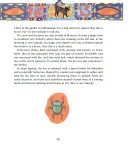
The Golden Verses of Pythagoras

 82
82

The Golden Verses of Pythagoras
The Masonic Publishing Company's presentation of "The Golden Verses of Pythagoras" offers a direct conduit to the ethical teachings of a figure often overshadowed by his geometric theorems. The text itself, a compilation of maxims attributed to Pythagoras's disciples, functions less as a narrative and more as a series of directives for spiritual and moral cultivation. Its strength lies in its stark, unadorned presentation of principles that have echoed through centuries of Western esoteric thought. A notable passage discusses the importance of abstaining from certain foods, framing it not merely as dietary advice but as a practice for purifying the body and mind, thereby aiding the soul's journey. However, the attribution to Pythagoras himself, and even directly to his immediate disciples, remains a subject of scholarly debate, a point this edition doesn't significantly elaborate on. The work's limitation is its brevity; it provides a framework but little in the way of expansive philosophical argument. Ultimately, "The Golden Verses" serves as a concise, if austere, manual for self-improvement rooted in ancient Greek wisdom.
📝 Description
82
This 1920 edition presents the Golden Verses, attributed to Pythagoras's disciples.
The Golden Verses of Pythagoras collects ethical and spiritual teachings attributed to the followers of the ancient Greek philosopher. These aphorisms focus on moral conduct, philosophical thought, and a spiritual path, distinct from Pythagoras's mathematical work. The text offers a view into the Pythagorean school's worldview, emphasizing virtuous living and self-mastery.
This collection is for students of ancient philosophy interested in the ethical and mystical aspects of Pythagoreanism. It will appeal to those examining the roots of Western esotericism, mystery schools, and philosophical development in Magna Graecia. Readers seeking guidance on achieving a higher state of being through contemplation and ethical practice will find value in its concise pronouncements.
The Golden Verses emerged from the Pythagorean tradition, a philosophical and religious movement founded by Pythagoras of Samos around the 6th century BCE. While Pythagoras himself left no written works, his followers compiled his teachings. This tradition flourished in Croton and later spread throughout Magna Graecia. The Verses represent the moral and ascetic doctrines transmitted by his disciples, offering insights into a way of life aimed at achieving a higher state of being. The work engages with early Greek philosophical currents, including Orphism, and anticipates later developments in Neoplatonism.
💡 Why Read This Book?
• Gain direct access to the ethical framework of Pythagoreanism, learning about the principles of 'sigē' (silence) and purification as taught by Pythagoras's followers around the 6th century BCE. • Understand the concept of soul transmigration (metempsychosis) as presented in the "Golden Verses," a key doctrine that informed early Greek philosophical and religious thought. • Explore practical directives for virtuous living and self-mastery, including specific admonitions on behavior and diet, as preserved by the Masonic Publishing Company's edition.
⭐ Reader Reviews
Honest opinions from readers who have explored this book.
❓ Frequently Asked Questions
What is the origin of "The Golden Verses of Pythagoras"?
The "Golden Verses" are attributed to the disciples of Pythagoras, the ancient Greek philosopher and mathematician who lived in the 6th century BCE. They are not direct writings of Pythagoras himself but rather a compilation of his ethical and spiritual teachings passed down by his followers.
What does "The Golden Verses" teach about the soul?
The verses present a doctrine of the soul's immortality and transmigration (metempsychosis), suggesting the soul journeys through various lives. The aim is purification and liberation from the cycle of rebirth through virtuous living and philosophical contemplation.
Why is silence (sigē) important in the "Golden Verses"?
Silence, or 'sigē', is emphasized as a crucial practice for achieving wisdom and self-understanding. It allows for introspection, the purification of the mind, and a deeper connection to the divine, moving away from the distractions of ordinary discourse.
What kind of lifestyle do the "Golden Verses" advocate?
The verses advocate for a disciplined, ascetic lifestyle focused on moral purity, justice, temperance, and the avoidance of harmful actions and desires. This includes specific recommendations regarding diet and social conduct.
Is this book about Pythagoras's mathematics?
No, "The Golden Verses" primarily focuses on the ethical, spiritual, and philosophical teachings of the Pythagorean school, not on the mathematical theories for which Pythagoras is more widely known.
Who published this edition of "The Golden Verses of Pythagoras"?
This particular edition was published by The Masonic Publishing Company, with its first publication date listed as 2017-10-25.
🔮 Key Themes & Symbolism
The Path of Purification
The "Golden Verses" present a rigorous path toward spiritual purification, essential for the soul's liberation. This involves strict adherence to moral principles, control over physical appetites (including dietary restrictions like abstaining from beans), and the cultivation of inner silence. The goal is to cleanse the soul from the impurities of earthly existence, preparing it for a higher state of consciousness and eventual release from the cycle of reincarnation. This emphasis on purification distinguishes Pythagoreanism as both a philosophical school and a way of life.
The Doctrine of Metempsychosis
A central tenet discussed is the transmigration of souls, or metempsychosis. The "Golden Verses" imply that the soul is immortal and undergoes a series of earthly lives, experiencing different forms and circumstances as a consequence of past actions. The ethical teachings within the verses are thus framed as a means to improve the soul's condition in subsequent incarnations, guiding it towards a more enlightened existence and ultimate freedom from the wheel of birth and death.
Virtue and Divine Harmony
The work strongly advocates for the cultivation of cardinal virtues such as justice, temperance, prudence, and fortitude. Living a virtuous life is presented not merely as a social obligation but as a fundamental aspect of aligning oneself with cosmic order and divine harmony. By embodying these virtues, individuals can achieve inner peace, contribute to the well-being of the community, and foster a deeper understanding of the rational principles governing the universe.
The Power of Sigē (Silence)
The practice of 'sigē,' or silence, is paramount in the "Golden Verses." This is not simply the absence of noise but a profound inner stillness conducive to contemplation and the reception of wisdom. Through silence, individuals can transcend the superficial chatter of the world, confront their inner selves, and gain access to deeper truths. It is a discipline that purifies the mind and opens the soul to philosophical and divine insights, acting as a gateway to higher knowledge.
💬 Memorable Quotes
Direct passages from the work, attributed to the author.
“Honor thyself.”
— This concise directive emphasizes the importance of self-respect and inner integrity. It suggests that true honor begins within, requiring individuals to recognize their own intrinsic worth and act in accordance with their highest principles.
“Do not sow in your head the seeds of regret.”
— This aphorism advises against actions or inactions that lead to future remorse. It encourages foresight and careful deliberation, promoting choices that align with wisdom and minimize the potential for future suffering or self-recrimination.
“Practice justice in deeds and words, and do not carelessly do anything.”
— This is a call to ethical conduct, urging consistency between one's actions and pronouncements. It highlights the need for mindful behavior, ensuring that all undertakings are guided by principles of fairness and rectitude.
“Revere yourself, and be temperate.”
— This combines self-veneration with moderation. It implies that respecting oneself involves maintaining balance and avoiding excess in all aspects of life, from physical desires to emotional responses.
“The soul is immortal and has no beginning or end.”
— This statement expresses the Pythagorean belief in the eternal nature of the soul, a core concept supporting the doctrine of transmigration and the pursuit of spiritual purification.
🌙 Esoteric Significance
Tradition
The "Golden Verses" are a foundational text within the Western esoteric tradition, particularly linked to Pythagoreanism and its subsequent revivals, including Neoplatonism and later Hermetic and Gnostic currents. They represent an early articulation of a soul-centric philosophy focused on ethical discipline as a means of spiritual ascent, a theme that permeates much of esoteric thought.
Symbolism
Key symbols include the Lyre, representing cosmic harmony and the ordering of the soul through music and reason; the Triangle, often symbolizing the divine triad or the structure of the cosmos; and the concept of 'Sigē' (silence), which symbolizes not just the absence of sound but the inner stillness required for divine communion and self-knowledge.
Modern Relevance
Contemporary practitioners of various spiritual disciplines, including modern Hellenistic revivalists, Neoplatonists, and those interested in virtue ethics, draw upon the "Golden Verses." Its emphasis on self-discipline, ethical living, and the pursuit of wisdom continues to inform individuals seeking a structured path to inner development and spiritual understanding.
👥 Who Should Read This Book
• Students of ancient Greek philosophy interested in the ethical and spiritual dimensions of Pythagoreanism, beyond its mathematical fame. • Seekers of esoteric wisdom looking to understand the roots of Western mystery traditions and their emphasis on purification and self-mastery. • Individuals interested in practical philosophy and virtue ethics who wish to explore ancient frameworks for living a disciplined and meaningful life.
📜 Historical Context
The "Golden Verses of Pythagoras" emerge from the intellectual milieu of ancient Greece, specifically the 6th century BCE, the era of Pythagoras of Samos. This period saw the rise of early philosophy, moving beyond mythological explanations to rational inquiry. Pythagoreanism itself was a unique synthesis of religious, philosophical, and mathematical thought, influencing later schools like Platonism and Neoplatonism. While Pythagoras is renowned for his contributions to mathematics, such as the theorem bearing his name, his followers developed a distinct ethical and mystical doctrine. The "Golden Verses" are considered a distillation of this latter aspect, reflecting a spiritual path focused on purification and harmonious living. They stand in contrast to the more overtly rationalist philosophies developing concurrently, such as those of the Milesian school, and engage deeply with Orphic traditions concerning the soul's fate.
📔 Journal Prompts
The Pythagorean admonition to 'Honor thyself' prompts reflection on personal integrity.
Consider the concept of 'Sigē' (silence) in relation to your own inner dialogue.
Reflect on the principle of avoiding actions that lead to future regret.
How does the idea of soul purification inform your daily choices?
Examine the connection between justice in deeds and words in your own life.
🗂️ Glossary
Metempsychosis
The doctrine of the transmigration of souls, a central belief in Pythagoreanism and other ancient philosophies, suggesting the soul passes from one body to another after death.
Sigē
Greek for 'silence.' In Pythagoreanism, it refers to a practice of inner stillness and contemplative quietude, considered essential for wisdom and spiritual purification.
Apatheia
A state of inner calm and freedom from disturbing passions or emotions, achieved through philosophical discipline and ethical living.
Theurgy
A system of ritual practices aimed at invoking divine assistance or communion, often associated with later Neoplatonic interpretations of Pythagorean and other ancient traditions.
Arête
Greek for 'virtue' or 'excellence.' It encompasses moral and intellectual qualities, signifying the highest form of human functioning and ethical conduct.
Magna Graecia
The coastal areas of Southern Italy and Sicily where Greek colonies were established from the 8th century BCE onwards, a significant center for Pythagorean philosophy.
Pythagoreans
Followers of the teachings of Pythagoras of Samos, a philosophical and religious movement influential in ancient Greece, known for ethics, mathematics, and cosmology.
This book appears in 1 collection
🔮 Readers Also Liked
Browse all →









From the “Mystery Schools” Collection
View all →







More Free Occult Philosophy Books
View all →