Mojo workin'

 76
76

Mojo workin'
Katrina Hazzard-Donald's "Mojo Workin'" offers a rigorous examination of Hoodoo, tracing its lineage with scholarly precision. The book excels in its detailed exploration of the socio-historical forces that shaped these practices, moving past superficial stereotypes. A particular strength lies in its meticulous dissection of specific ritual components and their syncretic origins, demonstrating a profound respect for the subject matter. However, the academic tone, while admirable for its depth, might present a barrier for readers seeking a more directly applicable guide to magical practice. The work's detailed discussion of the spiritual significance of water in ritual, for instance, is illuminating but requires careful attention to grasp its full implications. It is a vital academic contribution to understanding African American spiritual technologies.
📝 Description
76
Katrina Hazzard-Donald's 2013 book, "Mojo Workin'," examines the historical and cultural roots of Hoodoo and African American folk magic.
This book moves beyond simplistic notions of superstition to present Hoodoo as a complex system of spiritual practices, healing methods, and social support structures. Hazzard-Donald analyzes how these traditions syncretized West African spiritual concepts, Christian elements, and European folk magic, developing under the duress of slavery and its aftermath. The work addresses a scholarly gap concerning the deep history and sophisticated theology embedded within African American folk magic.
Published in 2013, "Mojo Workin'" situates these practices within the specific socio-political context of the American South, particularly during the 19th and early 20th centuries. Hazzard-Donald's research emerged during a period of increasing academic interest in vernacular religions and marginalized spiritual systems. It challenges earlier, often prejudiced, interpretations of these traditions, highlighting the agency of practitioners in shaping their spiritual lives and environments.
This work is situated within the study of African diaspora religions, specifically focusing on the development and practice of Hoodoo. It traces the lineage of these practices from West African spiritual concepts, demonstrating how they were adapted and transformed within the context of American slavery and its legacy. The book highlights the syncretic nature of Hoodoo, blending indigenous African beliefs with elements of Christianity and European folk magic, and emphasizes its role as a system of spiritual technology for survival, resistance, and community building among enslaved and post-emancipation African Americans.
💡 Why Read This Book?
• Understand the historical development of Hoodoo, specifically how its practices were shaped by the transatlantic slave trade and subsequent emancipation, providing context beyond generalized folklore. • Grasp the theological underpinnings of folk magic, moving beyond superstition to recognize the sophisticated spiritual systems practitioners utilized for agency and survival, as detailed in the analysis of "mojo" bags. • Appreciate the scholarly debate surrounding vernacular religions, learning how works like Hazzard-Donald's challenged previous academic dismissals and established Hoodoo as a significant spiritual tradition.
⭐ Reader Reviews
Honest opinions from readers who have explored this book.
❓ Frequently Asked Questions
What is the primary focus of Katrina Hazzard-Donald's "Mojo Workin'?"
The book's primary focus is the historical and cultural examination of African American folk magic traditions, particularly Hoodoo. It explores their roots, evolution, and function as spiritual technologies within the context of slavery and post-emancipation America.
When was "Mojo Workin'" first published?
"Mojo Workin'" by Katrina Hazzard-Donald was first published in 2013, contributing to contemporary scholarship on African American religious and folk traditions.
Does "Mojo Workin'" provide instructions for performing Hoodoo rituals?
No, "Mojo Workin'" is an academic study, not a practical grimoire. It focuses on the historical context, theological significance, and cultural function of Hoodoo practices rather than offering step-by-step instructions for practitioners.
What historical periods does the book cover?
The book primarily covers the periods of slavery and post-emancipation in the American South, examining the development of Hoodoo from the 19th century into the early 20th century.
What is the significance of the term 'mojo' in the context of the book?
In the book, 'mojo' refers to the spiritual power and efficacy attributed to various practices within Hoodoo, particularly associated with personal power bags (gris-gris) used for protection, prosperity, or other aims.
Who is Katrina Hazzard-Donald?
Katrina Hazzard-Donald is an author and scholar known for her work on African American folklore, spirituality, and Hoodoo. Her research critically examines these traditions within their historical and social contexts.
🔮 Key Themes & Symbolism
Syncretism in African American Spirituality
Hazzard-Donald meticulously details how Hoodoo practices represent a profound syncretism, blending West African spiritual principles with European folk magic and Christian elements. This fusion was a survival strategy, allowing enslaved Africans and their descendants to maintain spiritual continuity while adapting to new environments. The work explores how concepts like the Loa or Orisha were reinterpreted or mapped onto Christian saints, demonstrating a sophisticated theological negotiation that empowered practitioners and preserved cultural identity.
Spiritual Technologies of Resilience
"Mojo Workin'" frames Hoodoo not as mere superstition but as a system of 'spiritual technologies' developed for survival and resistance. The book examines how practitioners utilized rituals, amulets (like mojo bags), and spiritual consultations to navigate oppressive social structures, seek justice, and foster community well-being. This perspective highlights the agency of African Americans in actively shaping their spiritual realities and asserting control in environments designed to strip them of power.
The Theology of the Folk
The work studies the sophisticated, often unwritten, theology underpinning Hoodoo. It moves beyond simplistic notions of magic to discuss the cosmology, the hierarchy of spirits, the role of ancestors, and the inherent spiritual power in natural elements. Hazzard-Donald underscores that these beliefs provided a comprehensive worldview, offering explanations for life's challenges and frameworks for spiritual engagement that were deeply meaningful to practitioners.
💬 Memorable Quotes
Direct passages from the work, attributed to the author.
“Practices evolved under the duress of slavery.”
— This interpretation emphasizes the adaptive nature of Hoodoo. It suggests that the specific forms and functions of these magical and spiritual practices were not static but were significantly shaped and often necessitated by the brutal conditions and social control imposed by slavery.
“Katrina Hazzard-Donald positions Hoodoo as a sophisticated spiritual technology.”
— This interpretation emphasizes Hazzard-Donald's scholarly approach. By calling Hoodoo a 'spiritual technology,' she elevates it from folk superstition to a complex, functional system of belief and practice designed to achieve specific spiritual and material outcomes.
💡 Key Ideas
Editorial paraphrase of the work's core concepts — not direct quotes.
The work explores the "mojo" bag as a nexus of personal power.
This paraphrased concept highlights the central role of the 'mojo' or gris-gris bag in Hoodoo. It wasn't just an object but a focal point where an individual's spiritual intention and connection to ancestral or spiritual forces were concentrated for practical magical effect.
Hoodoo served as a vital system for community support and spiritual well-being.
This paraphrased concept underscores the communal aspect of Hoodoo. Beyond individual aims, the tradition provided a framework for mutual aid, emotional support, and collective spiritual health within African American communities facing systemic hardship and isolation.
The book examines the syncretic merging of African and European spiritual elements.
This quote points to the book's analysis of how diverse religious and magical traditions converged. It highlights the intellectual and spiritual work involved in reconciling West African cosmologies with Christianity and European folk practices to create a unique and resilient spiritual system.
🌙 Esoteric Significance
Tradition
While not strictly aligning with a single Western esoteric lineage like Hermeticism or Kabbalah, "Mojo Workin'" deeply engages with the principles of African Diasporic religions and folk magic. It examines a tradition that developed independently yet shares common ground with esoteric practices in its focus on spiritual forces, symbolic efficacy, and the manipulation of unseen energies for tangible results. Hazzard-Donald's work highlights how Hoodoo functions as a complex spiritual technology, offering a unique perspective within the broader field of esoteric thought.
Symbolism
Central to the book's exploration of symbolism is the "mojo" bag itself, a potent amulet often containing personal items, herbs, and other symbolic components intended to attract luck, protection, or specific outcomes. The work also studies the symbolic language of natural elements – herbs, roots, stones – and their correspondences within the Hoodoo cosmology. Furthermore, the syncretic mapping of African deities or spirits onto Christian saints represents a significant layer of symbolic negotiation and spiritual adaptation.
Modern Relevance
Contemporary practitioners of Hoodoo and related African Diasporic traditions, as well as scholars of religion and African American studies, continue to draw upon Hazzard-Donald's foundational research. Her work provides a critical historical and theological framework for understanding these living traditions. Thinkers and practitioners exploring themes of cultural resilience, spiritual technology, and the intersection of magic and social justice often reference "Mojo Workin'" as a key text for its scholarly rigor and respectful treatment of the subject matter.
👥 Who Should Read This Book
• Students of African American history and culture seeking to understand the spiritual dimension of enslaved and post-emancipation life, gaining insight into resilience strategies. • Researchers of comparative religion and folklore interested in syncretic spiritual systems, learning how traditions adapt and persist across cultural divides. • Practitioners of folk magic and Hoodoo looking for a scholarly grounding in the historical context and theological underpinnings of their craft, moving beyond anecdotal accounts.
📜 Historical Context
Published in 2013, Katrina Hazzard-Donald's "Mojo Workin'" arrived at a time when academic interest in African American vernacular religions was gaining significant traction. The work directly engaged with and sought to correct earlier, often biased, scholarly interpretations that relegated Hoodoo to the area of primitive superstition. Hazzard-Donald's meticulous research placed these practices within the concrete historical realities of the American South, particularly the 19th century, emphasizing their role as adaptive spiritual technologies forged under the brutal conditions of slavery and Reconstruction. Her approach stood in contrast to the more anthropological, sometimes exoticizing, studies of the early 20th century, such as those by Zora Neale Hurston, by focusing on the theological sophistication and agency inherent in the practices. The book's detailed exploration of syncretism also contributed to broader discussions on how marginalized communities maintain and transform their spiritual heritage under duress.
📔 Journal Prompts
The concept of 'spiritual technologies' as applied to Hoodoo.
Ancestor veneration practices discussed in the text.
The syncretic blending of African and Christian elements.
The purpose and composition of a 'mojo' bag.
How historical oppression shaped specific Hoodoo rituals.
🗂️ Glossary
Mojo Bag
A small pouch, often made of cloth, filled with herbs, roots, minerals, and personal items, used in Hoodoo for protection, luck, or other specific magical purposes. Also known as a gris-gris.
Gris-gris
An alternative term for a mojo bag, particularly in Louisiana Hoodoo. It refers to a charm or amulet believed to possess protective or magical powers, often worn or carried by the owner.
Syncretism
The merging or attempted merging of different religions, cultures, or schools of thought. In Hoodoo, it refers to the blending of West African spiritual traditions with Christianity and European folk magic.
Spiritual Technologies
A term used to describe the practical application of spiritual beliefs and practices, such as Hoodoo rituals, aimed at achieving specific outcomes in the material or spiritual world, often for survival or empowerment.
Vernacular Religion
Religious beliefs and practices as they are lived and expressed by ordinary people, often distinct from or existing alongside formal, institutionalized religious doctrines.
Hoodoo
An African American folk magical tradition that originated in the South, characterized by its syncretic nature, use of herbs and roots, divination, and spiritual healing practices.
Gris-gris bag
See Mojo Bag.
🔮 Readers Also Liked
Browse all →









More by Katrina Hazzard-Donald
All books →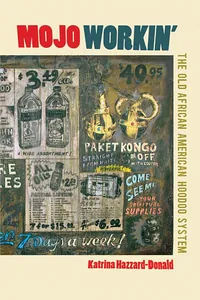
More Free Occult Philosophy Books
View all →