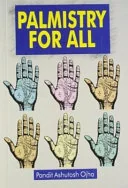
Palmistry For All
 73
73

Palmistry For All
Pt. Ashutosh Ojha’s "Palmistry For All" approaches the ancient art with a commendable directness, aiming to demystify hand reading for the uninitiated. Its strength lies in its systematic breakdown of hand features, moving from broad categories like hand shape and mounts to the finer details of line intersections and markings. The illustrations, though not explicitly detailed here, are described as copious, suggesting a strong visual aid for interpretation. A particular point of clarity appears to be the explanation of 'permutations and combinations' of features, which promises a more nuanced reading than often found in introductory texts. However, its primary limitation might be its sheer scope; while aiming for 'all,' it risks superficiality in some of the more complex interpretations, a common pitfall for comprehensive beginner guides. The emphasis on practical self-analysis is its most compelling aspect, encouraging readers to actively engage with their own hands for insight. It serves as a solid, if perhaps dense, entry point into chiromancy.
📝 Description
73
Pt. Ashutosh Ojha's Palmistry For All, published in March 2005, systematically explains hand reading.
This 2005 book provides a structured approach to palmistry, detailing the interpretation of various hand features. It covers major lines like life, head, and heart, alongside minor lines such as fate and sun lines. The text also discusses the significance of mounts and markings on the palm. Ojha focuses on practical application, aiming to equip readers with the skills to analyze palms themselves. The book is written to be accessible for both those new to the subject and those with some prior experience. Its clear explanations and illustrations are intended to aid understanding of how hand features relate to character and potential life paths.
The author designed this guide for individuals interested in self-discovery through chiromancy. It addresses curiosity about personal abilities, future possibilities, and personality traits as indicated by the hands. Readers engaged in personal growth, esoteric studies, or those seeking a methodical introduction to palmistry will find the content useful. The book aims to serve both casual inquirers and dedicated students of divination.
Palmistry, or chiromancy, has ancient roots in traditions from Greece and India. By the early 20th century, figures like William Gurney and Eliphas Lévi had contributed to its popularization in the West. Pt. Ashutosh Ojha's work engages with this long history, presenting a systematic method for understanding the hand. Published in 2005, the book emerged during a period of increased access to esoteric knowledge through print, while also existing in an academic climate that often questioned divination.
💡 Why Read This Book?
• Learn to identify and interpret the primary and secondary lines on your palm, such as the Life Line and Apollo Line, to understand personal energy levels and potential for success. • Discover the meaning of the seven mounts on your hand, from the Mount of Jupiter to the Mount of Luna, and how their development indicates character strengths and inclinations. • Understand how specific markings like stars or crosses interact with the lines and mounts, providing a more detailed and personalized forecast of life events and opportunities, as explored in the book's sections on permutations.
⭐ Reader Reviews
Honest opinions from readers who have explored this book.
❓ Frequently Asked Questions
What is the primary purpose of "Palmistry For All"?
The book aims to equip readers with the knowledge to perform their own palm readings, enabling them to understand their character, potential, and future through the analysis of hand lines, mounts, and markings.
Who is Pt. Ashutosh Ojha?
Pt. Ashutosh Ojha is the author of "Palmistry For All," a guide that presents a systematic interpretation of hand features. His work first entered circulation in March 2005.
How does the book explain complex palmistry concepts?
It uses simple and systematic explanations, detailing the prominent and less obvious features of the hand, their combinations, and their effects, making intricate interpretations accessible.
What kind of illustrations does "Palmistry For All" include?
The book is described as copiously illustrated, suggesting a wealth of visual aids to help readers identify and understand the various lines, signs, and markings on the palm.
Can this book help me predict my future?
Yes, the book's intention is to enable readers to 'predict the future' by analyzing their hands, helping them chart life to their advantage and draw on their best options.
Is "Palmistry For All" suitable for absolute beginners?
Absolutely. Its hallmark is its simple and systematic explanation, making it appealing and accessible for each reader, regardless of prior knowledge of palmistry.
🔮 Key Themes & Symbolism
Line and Mount Interpretation
The core of Ojha's approach lies in the systematic interpretation of the hand's physical features. This includes the major lines (Life, Head, Heart) and their variations, as well as the seven prominent mounts (Venus, Jupiter, Saturn, Apollo, Mercury, Mars, Luna). The book details how the development and markings on these mounts, alongside the length, depth, and breaks in the lines, correspond to specific personality traits, aptitudes, and potential life events, offering a dual lens for analysis.
Character Analysis Through Chiromancy
Beyond prediction, "Palmistry For All" emphasizes self-understanding. By analyzing one's hand, readers are encouraged to discover their hidden potential and inherent character. The text correlates specific hand shapes and the characteristics of the lines and mounts with psychological profiles, enabling individuals to gain insight into their strengths, weaknesses, and core nature, thereby fostering personal growth and informed decision-making.
Future Trajectory and Life Charting
The book empowers readers to 'chart out their life to your advantage' by learning to read the signs on their palms. It explains how to interpret the interplay of various lines and markings to foresee potential opportunities and challenges. This proactive approach allows individuals to leverage their understanding of their hand's map to navigate future circumstances and optimize their life path.
Systematic Learning of Palmistry
A significant theme is the book's pedagogical approach. Ojha presents palmistry not as arcane mystery but as a learnable skill through 'simple and systematic explanation.' It meticulously breaks down the 'permutations and combinations' of hand features, providing a structured framework that guides the reader step-by-step through the interpretive process, making the complex accessible.
💬 Memorable Quotes
Direct passages from the work, attributed to the author.
“Read and intercept each line, sign, and mark on your hand to discover your hidden potential and predict the future.”
— This captures the book's dual purpose: self-discovery and foresight. It highlights the hands as a text to be read, urging the reader to actively engage with its details to unlock personal capabilities and understand life's unfolding.
“Analyze your character, draw on your best options, and chart out your life to your advantage.”
— This phrase emphasizes the practical, empowering aspect of palmistry as presented by Ojha. It suggests that hand reading is not passive observation but a tool for strategic life planning and self-improvement.
“Its hallmark lies in its simple and systematic explanation and interpretation of the prominent and not-so prominent features of the hand.”
— This points to the book's pedagogical strength. The author prioritizes clarity and structure, making the intricate art of palmistry understandable and accessible to a broad audience, which is key to its value.
“Copiously illustrated, Palmistry for All has an appeal for each reader.”
— The emphasis on rich visual content suggests that the book is designed to be highly practical and user-friendly. Illustrations serve as crucial guides for identifying and interpreting the subtle nuances of palmistry.
“Its hallmark lies in its simple and systematic explanation and interpretation of the prominent and not-so prominent features of the hand, their permutations and combinations, and their effect on th”
— This highlights the author's methodical approach to teaching chiromancy. By detailing how various hand features interact ('permutations and combinations'), the book promises a more sophisticated and personalized reading than simplistic methods.
🌙 Esoteric Significance
Tradition
This work falls within the broad tradition of Hermeticism and Western esoteric practices, specifically focusing on chiromancy, a divinatory art with roots in ancient Greek and Roman traditions, heavily influenced by Indian Vedic knowledge. While not strictly Kabbalistic or Gnostic, it shares the Hermetic principle of 'As Above, So Below,' applying it to the microcosm of the human hand as a reflection of the macrocosm and individual destiny. It departs from purely mystical interpretations by emphasizing systematic, almost scientific, classification and interpretation.
Symbolism
Key symbols include the major palm lines—the Life Line (representing vitality and physical well-being), the Head Line (intellectual capacity and mental approach), and the Heart Line (emotional nature and relationships). The mounts, such as the Mount of Venus (love and passion) and the Mount of Jupiter (ambition and leadership), are also crucial symbolic areas. Markings like stars, crosses, and islands act as specific omens or modifiers, adding layers of meaning to the overall interpretation.
Modern Relevance
Contemporary practitioners of Western esotericism, particularly those interested in psychological astrology and somatic divination, continue to draw upon systematic chiromancy guides like Ojha's. It informs modern approaches that integrate palmistry with self-help and personal development, offering tangible methods for self-reflection. Thinkers exploring embodied cognition and the body as a site of knowledge may find its direct correlation between physical hand features and psychological traits relevant.
👥 Who Should Read This Book
• Aspiring practitioners of divination seeking a structured, step-by-step introduction to palmistry, benefiting from the clear explanations of lines, mounts, and markings. • Individuals interested in self-exploration and personal development who want to understand their character and potential through the lens of hand analysis. • Students of esoteric history and comparative religion looking to examine a practical application of ancient divinatory arts in a contemporary context.
📜 Historical Context
Published in March 2005, Pt. Ashutosh Ojha's "Palmistry For All" emerged during a period of renewed interest in esoteric subjects, fueled by the internet's proliferation of information. While palmistry has ancient roots, dating back to Vedic India and Hellenistic Greece, its 20th-century Western popularization was significantly shaped by figures like Cheiro (William John Warner) and A.E. Thierens. By the early 2000s, numerous authors were producing guides, making Ojha's work part of a broader contemporary wave. However, academic discourse often remained critical, with disciplines like psychology focusing on empirical validation rather than divination. This book likely found its audience among those seeking accessible, practical guides outside mainstream intellectual currents, aiming to synthesize traditional knowledge for a modern reader.
📔 Journal Prompts
The Mount of Venus on your palm: what prominent features do you observe, and how do they relate to your understanding of your emotional nature?
Reflect on the relationship between your Head Line and Heart Line as depicted in "Palmistry For All." What does their interaction suggest about your decision-making process?
Analyze a specific marking (e.g., a star, cross, or island) on your palm using the interpretations provided. How does this detail modify the reading of the primary lines?
Consider the shape of your hand as described in the text. Does this general classification align with your self-perception of your core personality traits?
How does the concept of 'permutations and combinations' of palm features, as explained by Ojha, change your view of palmistry from a rigid system to a nuanced one?
🗂️ Glossary
Chiromancy
The practice of fortune-telling or diagnosing character through the study of the palm of the hand, including its lines, mounts, and markings.
Mounts
The fleshy, raised areas on the palm, corresponding to various planets and associated with different aspects of personality and potential, such as the Mount of Jupiter for ambition.
Lines (Major)
The prominent creases on the palm, typically including the Life Line (vitality), Head Line (intellect), and Heart Line (emotions), which are central to palm interpretation.
Lines (Minor)
Secondary creases on the palm, such as the Fate Line (career and life path) or Apollo Line (success and creativity), which offer supplementary information.
Markings
Specific signs or symbols found on the palm, like stars, crosses, squares, or islands, which modify the general interpretation of the lines and mounts.
Permutations and Combinations
The concept that the meaning derived from a single palm feature is altered or enhanced by its interaction with other lines, mounts, and markings present on the hand.
Hand Shapes
The overall form of the hand (e.g., square, spatulate, conic, philosophical), which provides a foundational character assessment before detailed line and mount analysis.
This book appears in 1 collection
🔮 Readers Also Liked
Browse all →









From the “Palmistry” Collection
View all →








More Free Occult Philosophy Books
View all →