Enchantment
 83
83

Enchantment
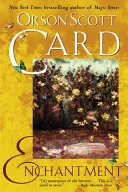
Orson Scott Card's "Enchantment" takes the familiar contours of "Sleeping Beauty" and imbues them with a palpable sense of dread and urgent adventure, far removed from any saccharine interpretation. The initial discovery of Princess Katerina by Ivan in the Carpathian forest is rendered with an unsettling quietude, immediately establishing a tone of peril. Card excels at depicting the subtle yet potent ways magic can corrupt or protect. While the narrative momentum is generally strong, particularly in Ivan's early interactions with the forest's guardians, the resolution occasionally feels a touch too convenient, especially considering the immense magical obstacles presented. However, the strength of the book lies in its vivid portrayal of a world where ancient enchantments have tangible consequences and where courage is the most potent weapon. It's a solid, engaging fantasy that reworks a classic with a darker, more adventurous spirit.
📝 Description
83
Orson Scott Card's 2005 novel "Enchantment" reimagines the Sleeping Beauty tale as a fantasy quest.
Princess Katerina's cursed slumber forms the center of Orson Scott Card's 2005 novel, "Enchantment." A young boy named Ivan stumbles upon her in a Carpathian forest, setting him on a dangerous path to break the spell. The story follows Ivan as he confronts magical forces and seeks to awaken the princess.
Card's narrative weaves together elements of romance and peril, focusing on the nature of enchantments and their impact. It appeals to readers who enjoy modern fantasy stories that draw heavily on folklore and classic fairy tales. Those interested in quests, the mechanics of curses, and the potential for ordinary individuals to achieve extraordinary things will find this novel engaging.
The book also explores Ivan's growth from a child into someone responsible for a significant task. It touches on themes of destiny and the power of belief in overcoming ancient magic. Fans of Card's previous work, known for its detailed world building and character development, will likely appreciate this retelling.
Published in 2005, "Enchantment" fits within a trend of contemporary authors revisiting classic folklore. This period saw a renewed interest in fairy tales and myths, often reinterpreted with modern sensibilities. Card's novel participates in this movement by examining enchantment not just as a magical sleep, but as a pervasive state affecting lives and circumstances. It questions the source of magic and the strength required to counter it, aligning with literary traditions that explore hidden worlds and the power of ancient forces.
💡 Why Read This Book?
• Gain insight into the mechanics of magical curses and their societal impact, as explored through the specific enchantment placed upon Princess Katerina. • Experience a unique fantasy adventure narrative, distinct from typical quest stories, focusing on Ivan's protective role and the nature of the "sleeping" princess. • Understand how Orson Scott Card reimagines classic fairy tales, demonstrating a particular approach to narrative structure and character development evident in his 2005 publication.
⭐ Reader Reviews
Honest opinions from readers who have explored this book.
❓ Frequently Asked Questions
What is the primary fairy tale "Enchantment" is based on?
The book "Enchantment" by Orson Scott Card is a retelling of the classic fairy tale "Sleeping Beauty." It expands upon the original story, introducing new characters and a more complex magical framework.
Who discovers the sleeping princess in the story?
The sleeping princess, Katerina, is discovered by a young boy named Ivan in a clearing within a dense Carpathian forest.
What year was Orson Scott Card's "Enchantment" first published?
Orson Scott Card's "Enchantment" was first published on May 31, 2005.
What genre does "Enchantment" fall into?
The book "Enchantment" is classified as fantasy, specifically a fairy tale retelling with elements of adventure and romance.
Where does the initial encounter with the princess take place?
The initial encounter with Princess Katerina takes place in a clearing within a dense Carpathian forest.
What is the central conflict in "Enchantment"?
The central conflict revolves around breaking the powerful enchantment placed upon Princess Katerina and protecting Ivan from the malevolent forces associated with the curse.
🔮 Key Themes & Symbolism
The Nature of Enchantment
The work explores enchantment not merely as a magical sleep but as a pervasive force that can trap individuals and distort reality. It questions what it means to be truly awake versus ensnared by external magical influences. The narrative examines how such enchantments can affect not just the cursed individual but also those around them, like young Ivan, who stumbles upon the sleeping princess. The book studies the idea that breaking an enchantment requires more than just a kiss; it demands understanding, courage, and a confrontation with the source of the magic.
Childhood and Responsibility
A significant theme is the transition from childhood innocence to the burden of responsibility. Ivan, a ten-year-old boy, is thrust into a situation far beyond his years when he discovers Princess Katerina. His journey forces him to mature rapidly as he confronts dangerous magical entities and makes critical decisions. The book illustrates how external circumstances can accelerate personal growth, pushing young protagonists to develop bravery and resourcefulness in the face of profound magical threats and the potential consequences of inaction.
Confronting Ancient Magic
The narrative centers on the clash between modern individuals and ancient, often malevolent, magical forces. The Carpathian forest setting becomes a crucible for this conflict, hiding both the cursed princess and the dark powers that maintain her slumber. The book suggests that these old magics, while powerful, are not invincible and can be challenged by those who possess determination and a clear purpose. It highlights the idea that understanding the history and nature of these forces is key to overcoming them.
Romance and Sacrifice
While primarily an adventure, "Enchantment" ties in elements of romance, particularly concerning the eventual awakening of Princess Katerina and the role Ivan plays. The story explores the idea that true connection and love can be a potent force against magical curses. It touches upon themes of sacrifice, as characters may need to give up something precious to break the enchantment and ensure a positive outcome, suggesting that profound emotional bonds can overcome even the most formidable magical obstacles.
💬 Memorable Quotes
Direct passages from the work, attributed to the author.
“Ivan stumbled upon a clearing in the dense Carpathian forest.”
— This opening sets a scene of unexpected discovery, hinting at a hidden world within the ordinary. It signifies the moment Ivan's life takes a dramatic, unforeseen turn, leading him into the heart of a magical predicament.
“Atop a pedestal encircled by fallen leaves, the beautiful princess Katerina lay still as death.”
— This vividly describes the initial appearance of the cursed princess. The imagery of stillness and the contrast with her beauty emphasizes the unnatural state of her enchantment and the mystery surrounding her condition.
“But beneath the foliage a malevolent presence stirred.”
— This phrase immediately introduces the lurking danger and the dark forces at play. It suggests that the princess's slumber is not a passive state but is guarded by an active, sinister power, raising the stakes for anyone who discovers her.
“Ivan scrambled for the safety of Cousin M...”
— This implies Ivan's immediate reaction to danger. His flight towards a relative signifies a return to the familiar world, contrasting with the magical peril he just encountered, and highlighting his vulnerability as a child.
“Orson Scott Card works his magic as never before.”
— This is an interpretive statement about the author's skill in the book, suggesting a masterful command of storytelling within the fantasy genre. It implies a level of craft that elevates the narrative beyond typical genre fare.
🌙 Esoteric Significance
Tradition
While not explicitly tied to a single esoteric lineage, "Enchantment" draws heavily on archetypal elements found across various Western esoteric traditions, particularly those influenced by Jungian psychology and folklore studies. The concept of the 'anima' or the trapped feminine principle, the journey of the hero (Ivan), and the confrontation with shadow elements (the malevolent presence) all echo themes explored in Hermeticism and Gnosticism, albeit through a fairy tale lens rather than direct doctrine.
Symbolism
The 'sleeping princess' can be interpreted as a symbol of dormant potential, spiritual unconsciousness, or a vital feminine force awaiting activation. The 'dense Carpathian forest' represents the untamed psyche, the field of the subconscious where hidden dangers and profound truths reside. The 'pedestal' upon which Katerina lies signifies her elevated, almost sacred, yet static state, detached from the living world until awakened.
Modern Relevance
Contemporary interest in narrative therapy and archetypal psychology finds resonance in "Enchantment." The book's exploration of how individuals are affected by 'enchantments'—whether literal curses or metaphorical limiting beliefs—and the journey required to break free, speaks to modern therapeutic approaches. Thinkers and practitioners in Jungian analysis and those exploring modern fairy tale interpretations continue to find value in its symbolic depth.
👥 Who Should Read This Book
• Readers interested in comparative mythology and fairy tale analysis, seeking to understand how classic narratives are deconstructed and rebuilt. • Young adult and adult fantasy readers who enjoy adventure stories with a focus on overcoming magical obstacles and character development. • Fans of Orson Scott Card looking for a fantasy novel that blends his characteristic narrative skill with folkloric themes and a touch of romance.
📜 Historical Context
Published in 2005, "Enchantment" emerged during a flourishing period for literary fantasy, particularly for authors engaging with classic folklore. This era saw a significant rise in fairy tale retellings and mythological reinterpretations. Orson Scott Card's work fits within this trend, offering a more adventurous and less purely romantic take than some contemporaries might have presented. The market was receptive to complex fantasy narratives, with authors like J.K. Rowling already dominating the young adult landscape and writers like Neil Gaiman exploring darker, more adult fairy tale themes. While not facing overt censorship, the genre itself was sometimes viewed with skepticism by more traditional literary critics, who might have questioned the depth of such retellings compared to original fiction. The book's reception was generally positive within its target audience, appreciating Card's signature storytelling.
📔 Journal Prompts
The malevolent presence stirring beneath the foliage: what does this represent in Ivan's journey?
Katerina's state of enchanted sleep: reflect on what dormant potential it symbolizes.
Ivan's flight for safety: consider the tension between seeking refuge and confronting the unknown.
The Carpathian forest as a setting: explore its symbolic meaning beyond a mere geographical location.
The concept of 'enchantment' as presented in the book: how does it differ from simple magic?
🗂️ Glossary
Enchantment
In the context of the book, enchantment refers to a powerful magical spell or curse that places a person or place under an unnatural influence, often causing a deep sleep or other profound alteration of state.
Carpathian forest
A mountain range in Eastern Europe, here serving as a symbolic setting for mystery, ancient magic, and the unknown, where the story's central events unfold.
Malevolent presence
An actively harmful or evil force or entity that exists within the narrative, posing a threat to characters and actively maintaining the magical conditions.
Sleeping Beauty
The classic fairy tale that serves as the primary source material for "Enchantment," featuring a princess cursed to sleep for a hundred years.
Ivan
The young protagonist who discovers the enchanted Princess Katerina, initiating his quest to understand and break the curse.
Princess Katerina
The central figure of the enchantment, a princess cursed to a death-like sleep, whose fate drives the narrative.
Pedestal
The elevated platform on which Princess Katerina lies, symbolizing her static, almost revered, yet trapped state within the enchanted clearing.
This book appears in 1 collection
🔮 Readers Also Liked
Browse all →








From the “Enchantment” Collection
View all →



More Free Occult Philosophy Books
View all →