The Northern Enchantment
 71
71

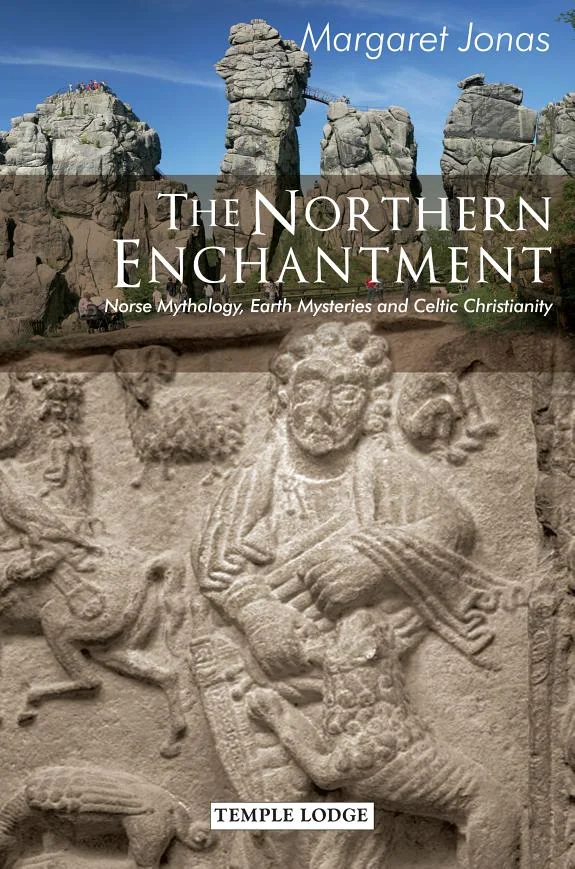
The Northern Enchantment
Margaret Jonas's "The Northern Enchantment" offers a compelling, if occasionally diffuse, exploration of the spiritual significance of the north. The author’s strength lies in her meticulous research, particularly in connecting Norse mythology with the historical trajectory of Celtic Christianity. A standout section details the syncretic practices that likely informed early British and Irish monasticism, moving beyond simplistic narratives of conversion. However, the book sometimes struggles to maintain a clear focus between geological 'Earth mysteries' and mythological interpretation, occasionally feeling like two distinct studies tenuously linked. The discussion of ancient prophecies, while intriguing, could benefit from greater specificity regarding their origins and verifiable content. Despite these limitations, Jonas provides a valuable perspective for those seeking a more geographically grounded spirituality. The work is a solid academic survey of a fascinating, under-explored topic.
📝 Description
71
Margaret Jonas's 2013 book, The Northern Enchantment, examines the esoteric significance of the cardinal direction north.
Published in 2013, Margaret Jonas's The Northern Enchantment investigates the magical and spiritual associations of the cardinal direction north. Moving beyond simple geographical or climatic observations, the book argues for a deeper, occult resonance attributed to northern regions across various cultures. Jonas synthesizes historical accounts, mythological narratives, and geological data to construct a spiritual geography.
The work is suited for readers interested in the connections between geography, mythology, and spirituality, especially those who consider the energetic qualities of places and how historical peoples interacted with their environments. It also appeals to those who question standard interpretations of history and myth. Jonas traces the emergence of Celtic Christianity in areas like Ireland, Scandinavia, and Germany, positioning this development within a larger framework of ancient prophecies and spiritual movements. The book suggests these northern territories became centers for unique syncretic spiritual traditions, merging indigenous beliefs with incoming religious systems.
The Northern Enchantment situates itself within traditions that view cardinal directions and geographical locations as holding inherent spiritual power. It connects to Earth mystery traditions that emphasize the energetic qualities of specific places and sacred sites. The book also touches upon the development of Western esotericism, particularly how indigenous beliefs and incoming religious frameworks can merge to create unique spiritual expressions, as seen in the historical example of Celtic Christianity in northern Europe.
💡 Why Read This Book?
• Gain insight into the concept of the north as a spiritual locus, moving beyond its climatic associations, as explored through Jonas's examination of historical sites and myths. • Understand the specific historical development of Celtic Christianity in the British Isles and Scandinavia, recognizing its unique spiritual currents and prophetic underpinnings as detailed in the text. • Explore the connection between Earth mysteries and ancient prophecies, learning how geographical features and geological phenomena might have informed ancient spiritual beliefs and practices.
⭐ Reader Reviews
Honest opinions from readers who have explored this book.
❓ Frequently Asked Questions
What is the primary focus of "The Northern Enchantment"?
The book's primary focus is the spiritual and magical significance attributed to the concept of 'north' across various ancient cultures, exploring its connection to mythology, sacred sites, and the development of Celtic Christianity.
Which historical periods and regions does Margaret Jonas cover?
Margaret Jonas covers ancient history, Norse mythology, and the early medieval period, with a specific focus on the British Isles, Ireland, Scandinavia, and Germany concerning Celtic Christianity.
How does the book relate Norse mythology to spirituality?
It examines how Norse mythological themes and the perceived qualities of northern lands influenced spiritual beliefs and practices, particularly in the context of early Christianity in northern Europe.
What are 'Earth mysteries' as discussed in the book?
Earth mysteries, as presented in the book, refer to the study of geological phenomena, sacred sites, and ancient landscapes believed to possess unique energies or spiritual significance, often linked to planetary alignments or ley lines.
When was "The Northern Enchantment" first published?
"The Northern Enchantment" by Margaret Jonas was first published in 2013.
Does the book explore specific prophecies related to the north?
Yes, the book explores ancient prophecies, particularly those that Jonas suggests were connected to the spiritual significance of northern regions and influenced the development of religious movements like Celtic Christianity.
🔮 Key Themes & Symbolism
The North as Sacred Geography
This theme posits that 'north' is more than a direction; it represents a spiritual and magical locus. Jonas examines how ancient peoples imbued northern lands with mystery and power, linking this perception to geographical features, celestial alignments, and mythic narratives. The book surveys historical and mythological evidence suggesting a consistent spiritual attraction to these regions, distinct from their physical characteristics.
Norse Mythology and Spirituality
The work integrates elements of Norse mythology to understand the cultural perception of the north. It explores how tales of gods, giants, and the cosmos shaped a worldview where northern landscapes held inherent spiritual significance. This mythological framework is presented as foundational to later spiritual developments in the region, influencing both pagan and early Christian expressions.
Celtic Christianity's Northern Roots
Jonas traces the origins of Celtic Christianity, arguing for its unique genesis in northern territories like Ireland and Scandinavia. The book suggests this spiritual movement was influenced by pre-existing beliefs about sacred geography and prophecy, acting as a syncretic force that blended indigenous spiritual currents with Christian doctrine.
Earth Mysteries and Prophecy
This theme connects geological formations and sacred sites to ancient prophecies. The book explores the idea that the land itself holds ancient wisdom and foretells future spiritual or historical events. Jonas investigates how these 'Earth mysteries' might have informed the prophetic traditions that, in turn, shaped religious movements in northern Europe.
💬 Memorable Quotes
Direct passages from the work, attributed to the author.
“The idea of "north" suggests much more than wintry cold, ice, and snow.”
— This opening concept sets the stage for the book's core thesis: that the direction north carries profound spiritual and symbolic weight, transcending its literal geographical and climatic attributes.
“This book explores the spiritual aspect of this attraction through a survey of ancient history, Norse mythology, and contemporary studies of Earth mysteries and sacred sites.”
— This statement clearly outlines the interdisciplinary approach Jonas takes, combining historical inquiry, mythological analysis, and geological/archaeological perspectives to understand the 'enchantment' of the north.
“Jonas traces the birth of Celtic Christianity in the British Isles, Ireland, Scandinavia, and Germany.”
— This highlights a key historical thread in the book, focusing on the emergence and specific characteristics of Celtic Christianity in northern European regions, suggesting a unique spiritual lineage.
“To many, it hints at something magical, enchanting, and mysterious.”
— This phrase captures the essence of the book's subject: the perceived mystical qualities associated with the north, which Jonas aims to explore through historical and cultural analysis.
“Revealing a time when ancient prophecies re-emerged with the spiritual landscape.”
— This suggests a period where ancient prophetic traditions were revitalized or reinterpreted in conjunction with the spiritual energies and beliefs associated with northern geography.
🌙 Esoteric Significance
Tradition
The work situates itself within the broader currents of Western esotericism that focus on sacred geography and the spiritual significance of place. It draws parallels with traditions interested in ley lines, geomancy, and the energetic properties of landscapes. While not strictly adhering to Hermetic or Kabbalistic frameworks, it echoes their interest in correspondences between the macrocosm (universe) and the microcosm (Earth and human experience), specifically focusing on the macrocosmic influence of cardinal directions.
Symbolism
The cardinal direction 'north' itself functions as a primary symbol, representing mystery, enchantment, and spiritual power in contrast to more commonly explored southern or eastern directions. The book also likely explores symbols within Norse mythology (e.g., Yggdrasil, runes) and Celtic Christianity (e.g., Celtic cross, Ogham) as they relate to the spiritual energies of northern lands, interpreting them as conduits for ancient wisdom and prophecy.
Modern Relevance
Contemporary practitioners of neo-paganism, Druidry, and landscape-focused spiritualities find resonance in Jonas's work. Thinkers and groups exploring geomancy, the energetic properties of sacred sites, and the spiritual significance of specific geographical regions can draw upon her research. Her synthesis offers a framework for understanding how ancient beliefs about place continue to inform modern spiritual quests for connection to the Earth.
👥 Who Should Read This Book
• Students of comparative religion and mythology: Those seeking to understand the syncretic development of Celtic Christianity and its unique relationship with pre-Christian beliefs in northern Europe. • Geomancers and sacred site enthusiasts: Individuals interested in the energetic qualities of landscapes, ley lines, and the historical spiritual significance of specific geographical locations, particularly in northern regions. • Readers exploring esoteric geography: Anyone fascinated by the idea that cardinal directions and specific lands hold inherent magical or spiritual properties beyond their physical characteristics.
📜 Historical Context
Published in 2013, "The Northern Enchantment" arrived at a time when academic and popular interest in landscape spirituality, paganism, and alternative historical interpretations was significant. Margaret Jonas's work engages with the field of Earth mysteries, which gained traction in the late 20th century through figures like John Michell and Paul Devereux, focusing on geomancy and sacred sites. The book's exploration of Celtic Christianity places it within a broader scholarly discourse examining the unique development of Christianity in the British Isles, often contrasted with Romanized continental Christianity. Contemporaries like Graham Hancock were also popularizing theories about ancient knowledge and lost civilizations, creating an audience receptive to such themes. While not subject to significant censorship or specific reception events, the work contributes to a niche academic and spiritual interest in the perceived energetic qualities of northern geography and its historical religious expressions.
📔 Journal Prompts
The concept of the north as a magical locus: How does this idea challenge or align with your current perceptions of geography?
Reflect on the integration of Norse mythological themes with early Christian practices in northern territories.
Consider the relationship between specific sacred sites and ancient prophecies mentioned in the book.
Analyze the 'Earth mysteries' discussed and their potential influence on spiritual beliefs in regions like Ireland and Scandinavia.
Explore the symbolic meaning of 'north' as presented in Jonas's work and its contrast with other directions.
🗂️ Glossary
Celtic Christianity
A distinct form of Christianity that developed in the British Isles and parts of Northern Europe, often characterized by a blend of indigenous spiritual traditions, unique monastic practices, and a strong connection to nature and the land.
Norse Mythology
The body of myths and legends originating from the ancient Scandinavian and Germanic peoples, featuring gods like Odin and Thor, giants, and cosmic narratives centered around realms like Asgard and Midgard.
Earth Mysteries
A field of study concerned with ancient sites, geological phenomena, and landscape features believed to possess special energies, spiritual significance, or connections to astronomical events and ancient wisdom.
Sacred Sites
Locations considered holy or imbued with spiritual power by ancient cultures, often marked by natural features, megalithic structures, or places of historical religious importance.
Ancient Prophecies
Foretellings or predictions attributed to ancient sources, often concerning spiritual developments, historical events, or the destiny of peoples and lands, as interpreted within the context of historical and mythological studies.
Geomancy
A system of divination or a practice related to the energetic qualities of the Earth, often involving the study of the land, sacred sites, and planetary alignments.
Syncretism
The merging or blending of different religious or cultural beliefs, practices, and symbols, often seen in the development of new religious movements or traditions.
This book appears in 1 collection
🔮 Readers Also Liked
Browse all →









From the “Earth Mysteries” Collection
View all →






More Free Occult Philosophy Books
View all →