Tierra en Ascenso
 71
71

Tierra en Ascenso
Argüelles's "Tierra en Ascenso" presents a dense, ambitious argument for re-evaluating our relationship with time itself. The book's primary strength lies in its audacious synthesis of disparate fields—Mayan calendrics, quantum physics, and ecological consciousness—creating a unique philosophical framework. However, the very ambition can be a limitation; the intricate web of concepts, particularly the "Law of Time" and its proposed implementation via the "13-Moon calendar," demands considerable reader investment and often reads as axiomatic rather than demonstrably proven. A particularly striking passage discusses the "Great Cycle" of 26,000 years, linking it to precession and cosmic shifts, which, while speculative, offers a compelling re-framing of human history within vast temporal scales. The work is less an accessible primer and more a challenging manifesto for those ready to question foundational assumptions about reality.
📝 Description
71
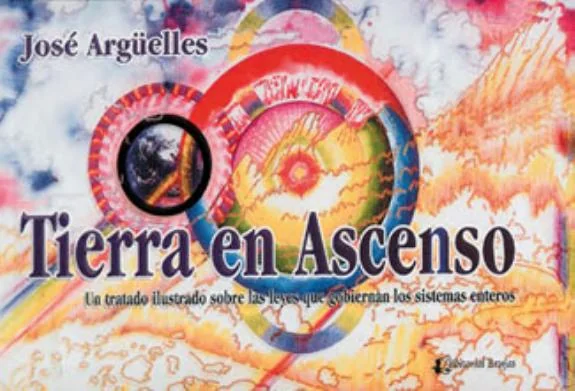
José Argüelles published Tierra en Ascenso in 2005, proposing a radical calendar reform.
Tierra en Ascenso, by José Argüelles, published in 2005, argues for a fundamental shift in human consciousness by challenging the Gregorian calendar. Argüelles contends that the calendar's linearity supports a materialistic worldview and is detrimental to planetary health. He advocates for his "Law of Time" as a more natural and harmonizing system, suggesting our current temporal perception is artificial.
This book is for readers questioning dominant ideas about time, history, and consciousness. It will appeal to those interested in alternative calendars, indigenous cosmologies, and the connection between spirituality and science. Readers may also find relevance if they have observed synchronistic patterns or are drawn to the Mayan Long Count calendar and its potential global impact. Familiarity with Argüelles's "Earthseed" concept will reveal a continuation of his thought.
Published in 2005, Tierra en Ascenso emerged amidst growing awareness of environmental issues and interest in indigenous knowledge. Argüelles built on his 1987 work, "The Mayan Factor," introducing his "Law of Time" and a 13-Moon calendar proposal. This concept, while niche, gained traction within certain New Age and alternative cosmology circles, often debated against mainstream scientific and historical views. The book engages with ideas about cyclical time and planetary consciousness, connecting Mayan cycles to contemporary global concerns.
💡 Why Read This Book?
• Gain a novel perspective on temporal mechanics, moving beyond linear chronology to understand time as a multidimensional phenomenon, as detailed in the "Law of Time" concept. • Explore the intricate cosmology of the "Galactic Maya," learning how Argüelles connects Mayan cycles to cosmic intelligence and planetary evolution. • Understand the practical implications of the "13-Moon calendar" as an alternative temporal framework for aligning personal and collective consciousness with natural cycles.
⭐ Reader Reviews
Honest opinions from readers who have explored this book.
❓ Frequently Asked Questions
What is the "Law of Time" proposed by José Argüelles?
The "Law of Time" posits that time is not a mechanical invention but a fundamental cosmic constant, the fifth dimension governing the four dimensions of space. Argüelles argues it's the primary organizing principle of the universe, influencing all consciousness and matter.
How does "Tierra en Ascenso" relate to the Mayan calendar?
The book heavily draws on Mayan cosmology, particularly the Long Count calendar, reinterpreting its cycles not as historical artifacts but as a sophisticated system revealing universal laws. Argüelles proposes the "13-Moon calendar" as a modern application of these principles.
What is the "13-Moon calendar" and why is it significant?
The "13-Moon calendar" is Argüelles's proposed alternative to the Gregorian calendar. It organizes the year into 13 months of 28 days each, totaling 364 days, plus a "Day Out of Time." It aims to harmonize human activity with natural cycles and enhance psychic awareness.
When was "Tierra en Ascenso" first published?
The book "Tierra en Ascenso" by José Argüelles was first published in 2005, building upon his earlier works that explored similar themes of time, cosmology, and consciousness.
What does Argüelles mean by "Galactic Maya"?
The "Galactic Maya" refers to Argüelles's concept that the Mayan civilization was a divinely orchestrated event, a "Mayan Factor," designed to transmit knowledge of the "Law of Time" and galactic cycles to humanity.
Is this book about historical Mayan civilization?
While it uses Mayan calendrics and cosmology as a foundation, "Tierra en Ascenso" is not a historical study. It's a visionary text proposing a new understanding of time and consciousness, using the "Galactic Maya" as a framework for universal principles.
🔮 Key Themes & Symbolism
Law of Time
The central concept is the "Law of Time," presented as a fundamental cosmic principle governing reality. Argüelles argues that our current, mechanically derived understanding of time is an illusion that disconnects us from natural cycles. He posits time as the "fifth-dimensional factor" of the universe, intrinsically linked to consciousness and synchronicity. The book advocates for adopting this natural "Law of Time" to realign human consciousness with universal rhythms, fostering planetary harmony and evolutionary advancement. This concept underpins his critique of the Gregorian calendar and his proposal for the 13-Moon calendar system.
Galactic Maya Cosmology
Argüelles reinterprets Mayan civilization not merely as a historical culture but as a divinely orchestrated "Mayan Factor" designed to transmit universal knowledge. This "Galactic Maya" framework suggests that the Mayan Long Count calendar and its cycles encode useful insights into cosmic intelligence and the "Law of Time." The book explores how these ancient cycles relate to planetary evolution and human consciousness, positioning the Maya as cosmic navigators who understood the true nature of time and space. This perspective challenges conventional historical and archaeological interpretations.
Calendar Reform
A significant aspect of Tierra en Ascenso is the proposal for a "13-Moon calendar" as a replacement for the globally dominant Gregorian calendar. Argüelles argues that the 28-day cycle of each of the 13 moons aligns with natural lunar cycles and human biological rhythms, fostering greater synchronicity and psychic clarity. This reform is presented as a practical tool for implementing the "Law of Time," enabling individuals and societies to transition from a state of temporal dissonance to one of natural harmony and conscious evolution. The "Day Out of Time" is a crucial element of this proposed system.
Consciousness and Evolution
The book strongly links our perception and measurement of time to the state of human consciousness and planetary evolution. Argüelles suggests that the linear, materialistic worldview fostered by the Gregorian calendar inhibits higher consciousness and contributes to global crises. By shifting to a more holistic, cyclical understanding of time as embodied in the "Law of Time" and the "13-Moon calendar," humanity can unlock latent psychic abilities, achieve greater collective coherence, and accelerate its evolutionary trajectory towards a higher state of being.
💬 Memorable Quotes
Direct passages from the work, attributed to the author.
“Time is the fifth-dimensional factor of the four-dimensional universe.”
— This core statement defines Argüelles's "Law of Time." It elevates time from a mere measurement to a fundamental cosmic force, integrating it with spatial dimensions and suggesting its role in organizing reality and consciousness.
“The Mayan Factor is the key to unlocking the mystery of human evolution.”
— This highlights the central role Argüelles assigns to Mayan cosmology. He viewed the ancient Maya not just as historical figures but as conduits of advanced knowledge concerning time, consciousness, and universal cycles crucial for humanity's development.
“The Gregorian calendar is an instrument of disconnect.”
— Argüelles criticizes the standard 12-month calendar for its artificiality and misalignment with natural cycles. He argues it fosters a fragmented perception of reality and hinders our connection to the planet and cosmic rhythms.
“Synchronicity is the measure of your alignment with the Law of Time.”
— This interpretation connects the experience of meaningful coincidences (synchronicity) to the adoption of Argüelles's temporal framework. Increased synchronicity is presented as evidence of tuning into the natural order proposed by the "Law of Time."
“The 13-Moon calendar is a tool for psychic evolution.”
— This emphasizes the practical application and benefit of the proposed calendar reform. Argüelles believed that adopting the 13-Moon system would enhance intuitive abilities and facilitate a deeper, more conscious evolutionary journey.
🌙 Esoteric Significance
Tradition
Argüelles's work draws heavily from a syncretic blend, primarily rooted in Mesoamerican cosmology, particularly Mayan calendrics, and infused with principles from quantum physics and general systems theory. It departs from strict Gnostic or Hermetic traditions by focusing on a scientifically-inflected, calendrical reordering of reality rather than solely on metaphysical or alchemical transformation. The "Law of Time" serves as its unique organizing principle, proposing a non-dualistic, multidimensional understanding of existence that aligns consciousness with cosmic cycles.
Symbolism
Key symbols include the "13 Moons" and "28 days," representing a natural, harmonious temporal cycle that Argüelles contrasts with the artificiality of the Gregorian calendar. The "Tzolkin" or "260-day count" from Mayan tradition is also central, interpreted as a matrix of psycho-spiritual information. The "20 kin" (solar seals) and "13 numbers" (tone cycles) form the basis of his "Dreamspell" calendar, symbolizing archetypal energies and evolutionary forces that govern consciousness and reality.
Modern Relevance
Argüelles's ideas continue to influence contemporary movements focused on time, consciousness, and ecological harmony. Thinkers and practitioners in fields like conscious evolution, alternative calendars, and integral spirituality often reference the "Law of Time" and the "13-Moon calendar." His work is particularly relevant to groups seeking practical tools for personal and collective transformation, resonating with those who feel disconnected by modern society's pace and seeking a return to natural rhythms and cosmic awareness.
👥 Who Should Read This Book
• Seekers of alternative temporal frameworks: Individuals interested in understanding time beyond its conventional, linear measurement and exploring systems like the "13-Moon calendar" will find this book foundational. • Students of Mesoamerican cosmology: Those fascinated by Mayan calendrics and seeking a modern, esoteric interpretation of its deeper meanings will appreciate Argüelles's "Galactic Maya" perspective. • Consciousness explorers: Readers engaged with how perception, consciousness, and planetary well-being are interconnected will find the "Law of Time" a compelling, albeit challenging, paradigm.
📜 Historical Context
Published in 2005, "Tierra en Ascenso" emerged within a milieu characterized by growing environmental concerns and a resurgence of interest in indigenous cosmologies, particularly those of Mesoamerica. José Argüelles had already established a significant following with "The Mayan Factor" (1987), which brought Mayan calendrics to a wider audience. The "Law of Time" concept, central to this 2005 work, positioned itself against the dominant Western scientific paradigm that viewed time as a linear, measurable dimension. While academic archaeology and anthropology focused on historical Mayan societies, Argüelles offered a visionary, almost prophetic interpretation, framing Mayan civilization as a sophisticated transmission of universal knowledge. His work existed alongside, yet distinct from, movements like the Gaia hypothesis and various New Age explorations of consciousness, offering a specific, calendrical approach to planetary healing and transformation. The reception was largely within esoteric and counter-cultural circles, with limited engagement from mainstream academia.
📔 Journal Prompts
Reflect on the "Law of Time" and its implications for your daily perception.
Analyze the structure of the "13-Moon calendar" and its potential benefits.
Consider the concept of the "Galactic Maya" in relation to historical timelines.
Explore personal experiences of synchronicity as evidence of temporal alignment.
Map the "20 kin" or "13 numbers" to significant life events or archetypes.
🗂️ Glossary
Law of Time
Argüelles's central thesis that time is a fundamental, fifth-dimensional cosmic constant governing the universe, rather than a human invention. It emphasizes natural cycles and synchronicity.
13-Moon Calendar
A proposed alternative calendar system consisting of 13 months of 28 days each, totaling 364 days, plus a "Day Out of Time." It aims to align human activity with natural lunar and solar cycles.
Galactic Maya
Argüelles's term for the understanding that Mayan civilization was part of a cosmic plan to transmit knowledge of the "Law of Time" and galactic cycles to humanity.
Day Out of Time
The extra day (often celebrated as July 25th) in the proposed 13-Moon calendar, intended as a day for reflection, creativity, and psychic renewal, outside the regular 28-day lunar cycle.
Synchronicity
Meaningful coincidences that occur without apparent causal connection. Argüelles links the experience of synchronicity to alignment with the "Law of Time."
Kin
In the context of Argüelles's "Dreamspell" calendar, a "kin" refers to a day, characterized by one of 20 "Solar Seals" (archetypal energies) and one of 13 "Galactic Tones" (vibrational frequencies).
Tzolkin
The ancient Mayan sacred calendar, a 260-day cycle composed of 20 day signs and 13 numbers. Argüelles incorporates its principles into his "Law of Time" framework.
This book appears in 1 collection
🔮 Readers Also Liked
Browse all →









From the “Geomancy” Collection
View all →








More Free Occult Philosophy Books
View all →