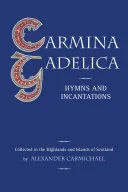
Carmina Gadelica
 82
82

Carmina Gadelica
The sheer volume of material collected by Alexander Carmichael in the Carmina Gadelica is its most striking feature, offering an expansive view of Gaelic oral poetry. The dedication to preserving these verses, often transcribed from the lips of individuals in remote locations, is commendable. However, the sheer breadth can sometimes feel overwhelming, lacking a more focused thematic distillation that might aid immediate engagement for a contemporary reader. A particular strength lies in the 'Invocation of the Great Day' (often found in sections dealing with eschatology), which vividly portrays a communal eschatological vision. While the language is rich, its archaic nature, even in translation, presents a barrier. The collection remains an indispensable, if demanding, resource for understanding a specific cultural and spiritual heritage.
📝 Description
82
Carmina Gadelica is a 1900 compilation of Gaelic oral poetry from Scotland's Highlands and Islands.
Gathered by Alexander Carmichael, this collection preserves verses and prayers passed down orally for generations. Carmichael's extensive fieldwork, beginning in the mid-19th century, aimed to document this rich cultural heritage before it faded. The publication, completed in the early 20th century, offers a direct look into the spiritual and daily lives of the people who created these verses.
This compendium is valuable for scholars of Celtic traditions, folklorists, and anyone interested in the history of religious and poetic expression. It serves as a primary source for understanding Scotland's pre-Christian and early Christian spiritual landscape. Readers interested in ancestral wisdom, the study of oral transmission, or the evolution of the Gaelic language and its poetic forms will find considerable value here. It also speaks to the enduring power of communal faith and memory.
Carmichael's efforts occurred during a time of broad European interest in folklore and vernacular literature. His work captured oral traditions as modernization began to reshape the Highlands and Islands. Published in the early 1900s, the collection reflects a period when print media and formal education systems were increasingly overshadowing oral traditions.
Carmina Gadelica falls within the tradition of collecting and preserving indigenous spiritual and cultural expressions. While not strictly Gnostic in the Mediterranean sense, its focus on oral lore, personal invocation, and a worldview often at odds with dominant religious structures aligns with broader esoteric interests in folk magic, animism, and the spiritual power inherent in language and nature. It provides a window into a lived, often localized, spirituality that persisted alongside more formalized religious practices.
💡 Why Read This Book?
• Learn about the intricate relationship between nature and spirituality through specific invocations of elements like the 'Sun of the Morning' and the 'Sea-King', understanding how they were seen as conduits of divine power in Gaelic tradition. • Gain insight into ancient healing practices and protective charms, analyzing specific verses designed for mending wounds or warding off ill fortune, as documented by Carmichael. • Explore the evolution of Christian belief in Scotland through the lens of Gaelic oral verse, observing how indigenous spiritual concepts were integrated with later theological frameworks, particularly in prayers to saints.
⭐ Reader Reviews
Honest opinions from readers who have explored this book.
❓ Frequently Asked Questions
When was the Carmina Gadelica first published?
The initial volumes of Carmina Gadelica were published in the early 20th century, with Volume I appearing in 1900 and Volume II in 1902. Alexander Carmichael dedicated much of his life to collecting this material before its publication.
Who was Alexander Carmichael and what was his role?
Alexander Carmichael (1832-1912) was a Scottish collector of folklore and Gaelic scholar. He spent decades traveling through the Highlands and Islands, meticulously gathering and transcribing the oral poetry and prayers that form the Carmina Gadelica.
What geographical areas does the Carmina Gadelica cover?
The collection draws from a wide sweep of the Gaelic-speaking regions of Scotland, specifically mentioned as 'from Arran to Caithness, from Perth to St. Kilda'. This indicates a comprehensive effort across the Highlands and Islands.
What types of texts are included in the Carmina Gadelica?
The book includes a vast array of Gaelic oral poetry, prayers, incantations, blessings, charms, and verses for various occasions, from daily life and work to significant rituals and spiritual observances.
Is the Carmina Gadelica available online for free?
Parts of the Carmina Gadelica, particularly the earlier volumes, are in the public domain and can be found on various online archives and digital libraries, often accessible without charge.
What is the significance of the oral tradition mentioned in the book?
The book emphasizes the importance of the oral tradition as the primary means of transmission for these poems and prayers. This living tradition shaped the content and context, reflecting a culture where spoken word held immense spiritual and social power.
🔮 Key Themes & Symbolism
Invocation of Nature
The Carmina Gadelica is rich with verses that personify and invoke natural forces – the sun, moon, sea, wind, and land. These are not mere descriptions but active participants in spiritual life, often addressed as divine or semi-divine entities. Carmichael meticulously documented prayers to the 'Sun of the Morning' and the 'Sea-King', illustrating a worldview where the sacred is immanent in the natural world. This theme underscores a pre-Christian animistic sensibility deeply interwoven with later Christian devotion, reflecting a holistic spiritual practice.
Healing and Protection Charms
A significant portion of the collection comprises incantations and charms intended for healing physical ailments and offering protection against spiritual and physical dangers. These verses often employ specific linguistic formulas, rhythmic patterns, and references to saints or divine powers to achieve their efficacy. The detailed documentation of these practices provides invaluable insight into folk medicine and belief systems. Concepts like the 'healing of the hand' or 'protection from the evil eye' are common, demonstrating a practical application of spiritual belief in daily life.
Christianity and Folk Belief
The Carmina Gadelica offers a unique perspective on the syncretism of indigenous Gaelic spiritual beliefs with Christianity. While many prayers are addressed to Christ, Mary, and various saints, they often retain traces of older, nature-based spiritualities. Carmichael's work captures prayers for 'the blessing of the hearth' alongside more orthodox Christian supplications. This fusion reveals how Christianity was adopted and adapted within the existing cultural framework, creating a distinct form of spiritual expression where ancient practices and new doctrines coexisted and intermingled.
The Power of the Spoken Word
Central to the Carmina Gadelica is the profound belief in the power of the spoken word. The verses were not static texts but living utterances, believed to possess inherent spiritual energy and the capacity to influence events. This emphasis on oral transmission highlights the performative aspect of these poems and prayers. The meticulous recording of these pieces by Carmichael underscores their value as artifacts of a culture where language, particularly in its poetic and ritualistic forms, was a potent force for connection, healing, and spiritual engagement.
💬 Memorable Quotes
Direct passages from the work, attributed to the author.
“The invocation of the Sun of the Morning.”
— This phrase represents a core theme of invoking natural celestial bodies as sources of divine power and blessing. It signifies a deep spiritual connection to the rhythms of the day and the life-giving energy of the sun, common in Gaelic oral tradition.
“A prayer for the blessing of the hearth.”
— This highlights the integration of spiritual practice into the most intimate aspects of domestic life. It shows how the sacred was invoked not just for grand occasions but for the everyday well-being and protection of the home and family.
“Chants for the healing of the hand.”
— This refers to specific verses collected by Carmichael intended to mend physical injuries, particularly to the hand. It exemplifies the practical, therapeutic function of oral charms and prayers within the community.
“Verses for warding off ill fortune.”
— This concept captures the protective aspect of Gaelic oral poetry. It demonstrates the belief that spoken words and rituals could actively shield individuals and communities from negative influences and misfortune.
“The Sea-King's blessing.”
— This invocation points to the personification of powerful natural forces, like the sea, as entities capable of bestowing blessings or curses. It reflects an ancient reverence for the sea and its potent, often unpredictable, nature.
🌙 Esoteric Significance
Tradition
The Carmina Gadelica draws from a deep well of indigenous Celtic spiritual traditions, often described as pre-Christian animism and nature reverence, which were subsequently interwoven with folk Christianity. It doesn't strictly adhere to a singular named esoteric lineage like Hermeticism or Kabbalah but represents a potent example of Western European folk magic and devotional practice. Its significance lies in its preservation of a living, orally transmitted spiritual system that emphasizes immanence, the sacredness of natural cycles, and the power of ritual language, offering a counterpoint to more codified magical systems.
Symbolism
Key symbols abound, notably the Sun ('An Ghrian') and Moon ('A' Ghealach'), representing divine light, cosmic order, and cyclical time. Water, especially the sea and wells, symbolizes purification, healing, and the liminal space between worlds. The invocation of specific saints, often imbued with pre-Christian archetypal qualities, also functions symbolically, bridging the gap between ancient deities and Christian figures. The human body itself, through prayers for healing and protection, becomes a symbolic range of spiritual vulnerability and resilience.
Modern Relevance
Contemporary practitioners of Celtic Reconstructionism, Neo-Paganism, and various forms of ecological spirituality frequently draw upon the Carmina Gadelica. Its emphasis on nature-based devotion, healing practices, and the power of place resonates strongly with modern searches for alternative spiritual paths. Thinkers and writers interested in indigenous knowledge systems, oral traditions, and the intersection of folklore and spirituality find it an invaluable resource for understanding ancestral wisdom and its potential application in contemporary contexts of ecological and personal well-being.
👥 Who Should Read This Book
• Students of Celtic mythology and folklore: Those researching the rich oral heritage of Scotland will find this an indispensable primary source for understanding ancient beliefs, poetic forms, and the syncretism of indigenous practices with Christianity. • Folklorists and cultural historians: Researchers interested in the documentation of vanishing traditions, the study of oral transmission, and the socio-religious range of the Scottish Highlands and Islands will benefit from Carmichael's extensive fieldwork. • Practitioners of nature-based spirituality: Individuals seeking to connect with older European spiritual traditions, particularly those emphasizing the sacredness of nature, elemental forces, and healing charms, will find profound inspiration and practical material.
📜 Historical Context
The collection and publication of Carmina Gadelica occurred during a period of intense interest in folklore and ethnography across Europe, particularly in the latter half of the 19th century and early 20th century. Alexander Carmichael's work, spanning decades and culminating in the first volumes published in 1900 and 1902, aimed to preserve the oral traditions of the Scottish Highlands and Islands. This era saw scholars like Andrew Lang and Walter Scott also engaging with folklore, though Carmichael's focus on the specific religious and poetic dimensions of Gaelic culture was unique. His meticulous documentation from 'Arran to Caithness' captured verses transmitted orally, a practice increasingly threatened by modernization and changing social structures. The reception by figures like the folklorist John Rhys acknowledged the immense cultural value of Carmichael's efforts, recognizing it as a vital record of a fading way of life and belief.
📔 Journal Prompts
The Sun of the Morning's invocation and its perceived power.
The spiritual significance of hearth and home in Gaelic verse.
Personal resonance with the healing charms for physical ailments.
Reflections on the Sea-King as a symbol of natural power.
The role of saints in Gaelic oral prayers and their pre-Christian echoes.
🗂️ Glossary
An Ghrian
Gaelic for 'The Sun'. In the context of Carmina Gadelica, it often refers to a powerful, benevolent natural force invoked for its life-giving and protective qualities, representing divine light.
Cailleach
A primordial figure in Gaelic mythology, often depicted as an old hag or goddess associated with winter, storms, and the creation of the landscape. While not always named directly, her archetypal presence informs many nature invocations.
Beannachadh
Gaelic for 'Blessing'. This term encompasses the various prayers, charms, and verses intended to invoke divine favor, protection, and well-being upon individuals, places, or objects.
Slàinte
Gaelic for 'Health' or 'Salvation'. Often used in toasts, it also appears in healing verses, signifying a holistic sense of well-being encompassing physical, spiritual, and social health.
Orain
Gaelic for 'Songs' or 'Poems'. This term refers to the lyrical and poetic compositions within the collection, ranging from devotional hymns to narrative verses and charms.
A' Ghealach
Gaelic for 'The Moon'. Like the sun, the moon is often invoked for its cyclical power, influence on tides and nature, and symbolic associations with mystery and feminine energy.
Duan
A Gaelic term for a song, lay, or poem, often implying a narrative or lyrical piece of considerable length and significance within the oral tradition.