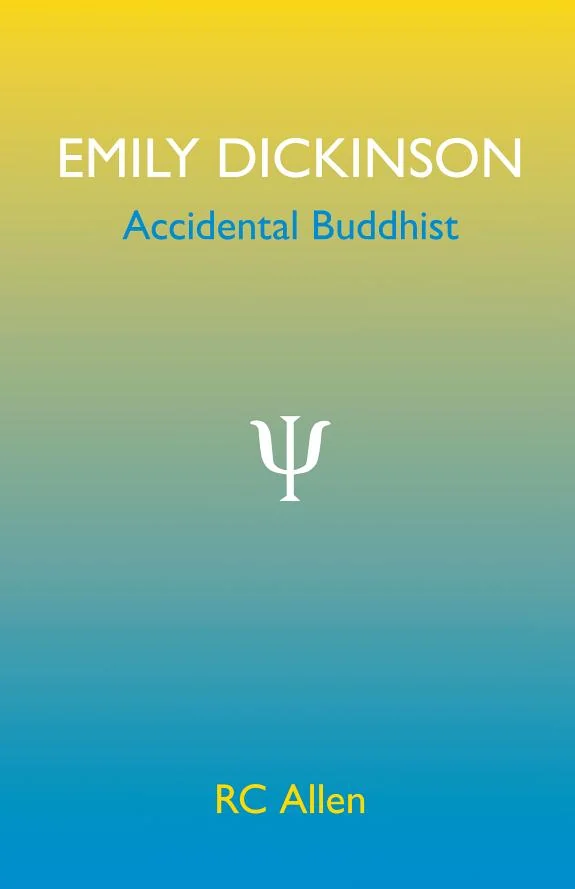
Emily Dickinson, Accidental Buddhist
 71
71

Emily Dickinson, Accidental Buddhist
Rupert C. Allen’s "Emily Dickinson, Accidental Buddhist" offers a compelling, if unconventional, perspective on the reclusive poet. Allen’s assertion that Dickinson achieved a state of Buddhist-like enlightenment, leading to her unique poetic voice and rejection of conventional religious dogma, is audacious and well-argued. The strength lies in Allen's meticulous textual analysis, drawing parallels between Dickinson’s themes of ego-transcendence and cosmic awareness and core tenets of Eastern spirituality. A limitation, however, is the occasional overreach in applying specific Buddhist terminology to Dickinson’s 19th-century American context, which sometimes feels anachronistic. The examination of Dickinson’s fascicles as self-published spiritual documents, however, is particularly illuminating. Ultimately, Allen provides a fresh, albeit speculative, lens through which to appreciate Dickinson's profound spiritual explorations.
📝 Description
71
Rupert C. Allen argues Emily Dickinson was an accidental Buddhist.
This book offers a new perspective on Emily Dickinson's poetry, suggesting her intense creative output originated not from standard 19th-century American religious thought, but from a state of ego transcendence similar to Buddhist enlightenment. Allen argues that Dickinson's "cosmic awareness" and her questioning of a traditional creator god align her with non-theistic spiritual paths.
The author examines Dickinson's poetic methods, such as compiling poems into fascicles, as a form of spiritual practice. The core idea is that Dickinson experienced an "awakened" state marked by ego dissolution and connection to a "Higher Self." Allen draws parallels between this state and Buddhist concepts like *anatta* (no-self) and *nirvana*, proposing that her poems document the experience of cosmic consciousness and the dissolving of the individual self. This interpretation positions Dickinson as an unconventional spiritual figure of her era.
The work is intended for those interested in the intersection of comparative spirituality and literary criticism, particularly with an esoteric focus. It challenges common understandings of Dickinson's biography and religious background, appealing to scholars of mysticism and poetry aficionados alike.
This book engages with traditions that explore consciousness beyond conventional religious frameworks, placing Dickinson within a lineage of figures who experienced altered states of awareness. It connects her work to non-dualistic philosophies and contemplative practices found in Buddhism, suggesting a universal quality to certain spiritual insights. By framing Dickinson as an 'accidental Buddhist,' Allen positions her within a broader mystical current that emphasizes direct experience over dogma, aligning her with individuals who found spiritual meaning through introspection and a redefinition of selfhood, independent of established religious institutions.
💡 Why Read This Book?
• Understand Emily Dickinson's poetry through the lens of ego-transcendence, gaining insight into concepts like 'cosmic awareness' that differ from standard literary analyses. • Explore the potential parallels between 19th-century American Transcendentalism and Eastern spiritual traditions, specifically Buddhism, as presented in Allen's analysis. • Discover how Dickinson's creative output and her practice of self-collecting poems into fascicles can be interpreted as a unique form of spiritual discipline and self-expression.
⭐ Reader Reviews
Honest opinions from readers who have explored this book.
❓ Frequently Asked Questions
What does Rupert C. Allen mean by Emily Dickinson being an 'Accidental Buddhist'?
Allen suggests Dickinson achieved a state of enlightenment and ego-transcendence, similar to Buddhist awakening, which profoundly influenced her poetry, even though she had no direct exposure to Buddhism.
When was Emily Dickinson, Accidental Buddhist first published?
The book was first published in 2007 by Rc Allen.
Does the book argue Emily Dickinson actively practiced Buddhism?
No, the title 'Accidental Buddhist' implies she arrived at similar states of consciousness and understanding through her own introspective and spiritual development, not through direct adherence to Buddhist practices.
What kind of esoteric concepts are explored in relation to Dickinson's poetry?
The book explores concepts like ego-transcendence, Higher Self, cosmic awareness, and the dissolution of the soul or deathless ego-self, aligning these with Buddhist philosophy.
Who is Rupert C. Allen?
Rupert C. Allen is the author of 'Emily Dickinson, Accidental Buddhist,' known for his esoteric interpretations of literature and spirituality.
What makes Dickinson's poetry 'heretical' according to this book?
Her poetry is seen as heretical because, like Buddhists, she recognizes no creator god and rejects the concept of a deathless ego-self (soul), challenging traditional Christian doctrines prevalent in her time.
🔮 Key Themes & Symbolism
Ego-Transcendence and the Higher Self
Allen posits that Dickinson's prolific poetry, spanning 35 years, was a direct result of achieving ego-transcendence. This awakening allowed her access to a 'Higher Self,' unleashing a torrent of creative energy. The work explores how this state, akin to Buddhist enlightenment, reshaped her perception and expression, leading her to document the phenomena of cosmic awareness rather than conventional human experience.
Non-Theistic Spirituality
A core argument is Dickinson's departure from traditional religious frameworks. Like Buddhists, she recognized no creator god and questioned the concept of an immortal soul. This book interprets her poems as reflecting a spiritual understanding that bypasses a divine creator, focusing instead on immanent consciousness and the dissolution of the individual ego, which positioned her outside the religious norms of her era.
Poetry as Spiritual Practice
The book examines Dickinson's method of compiling her poems into fascicles and her general secrecy surrounding their publication. Allen suggests this was not mere shyness but a deliberate spiritual discipline, a way of preserving and perhaps even enacting her clear insights into cosmic awareness and the nature of self. Her 'poetic enterprise' becomes a sacred act.
Cosmic Awareness Phenomena
Dickinson's extensive body of work is presented as a detailed record of 'cosmic awareness.' Allen interprets her verse as exploring states of consciousness that transcend ordinary perception, touching upon universal truths and the interconnectedness of existence. This perspective reframes her often enigmatic poems as explorations of mystical and metaphysical realms.
💬 Memorable Quotes
Direct passages from the work, attributed to the author.
“Ego-transcendence awakened her to the Higher Self, unleashing a torrent of creative energy.”
— This central thesis suggests Dickinson's genius was not merely talent but a direct outcome of a profound spiritual shift, enabling outstanding creative output.
“She (like the Buddhists) recognizes no creator god, much less a deathless ego-self in the form of a soul.”
— This highlights Allen's comparison of Dickinson to Buddhist philosophy, emphasizing her non-theistic views and rejection of the traditional Western concept of an immortal soul.
“Hence the secrecy of her poetic enterprise.”
— Allen links Dickinson's reclusive nature and the private circulation of her poems to her radical spiritual perspective, suggesting her work was too unconventional for public reception.
“Over the years she made booklets of her poems and stashed them.”
— This refers to Dickinson's practice of assembling her poems into fascicles, interpreted by Allen as a deliberate act of spiritual documentation and preservation.
“Producing hundreds of poems dealing with the phenomena of cosmic awareness.”
— This emphasizes the subject matter of Dickinson's poetry as interpreted by Allen: not just personal emotion, but detailed explorations of universal consciousness and metaphysical states.
🌙 Esoteric Significance
Tradition
This work engages with a lineage of esoteric thought that seeks universal spiritual principles underlying diverse traditions. It aligns with comparative mysticism, drawing parallels between Western poetic genius and Eastern contemplative practices, particularly Buddhism's emphasis on non-duality and the illusory nature of the ego. It departs from purely theological interpretations by focusing on experiential states of consciousness.
Symbolism
While not overtly symbolic in the manner of Tarot or Kabbalah, Dickinson's poetry, as interpreted by Allen, uses natural imagery and introspective states as metaphors for cosmic awareness. The 'Higher Self' functions as a symbol of liberated consciousness, while the act of writing and compiling poems represents the disciplined path toward spiritual realization, mirroring monastic traditions.
Modern Relevance
Allen's approach appeals to contemporary interest in mindfulness, non-dual awareness, and the intersection of creativity and consciousness. Thinkers and practitioners exploring altered states, the nature of the self, and the integration of Eastern spirituality into Western life find traces of Dickinson's perceived insights in modern contemplative psychology and transpersonal studies.
👥 Who Should Read This Book
• Students of comparative spirituality: Those interested in how seemingly disparate religious and philosophical traditions share common ground in their understanding of consciousness. • Literary critics with an esoteric focus: Readers who enjoy unconventional interpretations of canonical authors, particularly those exploring mystical or metaphysical dimensions. • Seekers of spiritual insight: Individuals drawn to explorations of ego-transcendence, non-duality, and the relationship between profound inner experience and creative expression.
📜 Historical Context
Published in 2007, Rupert C. Allen's work emerged during a period of renewed interest in both Dickinson's poetry and esoteric interpretations of literature. The early 21st century saw a growing academic and popular engagement with Eastern philosophies in the West, making Allen's comparison to Buddhism particularly timely. Dickinson herself lived and wrote in the mid-19th century, a period dominated by Protestant Christianity and the flourishing of American Transcendentalism, with figures like Ralph Waldo Emerson exploring themes of self-reliance and intuition. However, Allen argues Dickinson's radical non-theism and focus on ego-dissolution distinguish her sharply from her Transcendentalist contemporaries. The reception of Allen's work likely appealed to those seeking alternative readings of canonical figures, pushing against conventional biographical and religious analyses, though it may have faced skepticism from traditional Dickinson scholars.
📔 Journal Prompts
Reflect on Dickinson's concept of 'cosmic awareness' and how it might differ from ordinary perception.
Consider the implications of recognizing 'no creator god' for one's personal spiritual framework.
Explore the idea of the 'Higher Self' as a source of creative energy, as described in Allen's analysis.
How might the secrecy surrounding Dickinson's poetic enterprise be understood as a spiritual practice?
Examine the Buddhist concept of 'ego-transcendence' and its potential connection to artistic genius.
🗂️ Glossary
Ego-transcendence
A state of consciousness where the sense of a separate, individual self (ego) dissolves or is overcome, leading to a broader awareness.
Higher Self
In esoteric traditions, often refers to a more profound, spiritual aspect of the individual that is connected to universal consciousness, distinct from the personal ego.
Cosmic Awareness
A state of perceiving or understanding the universe and existence from a unified, interconnected perspective, transcending ordinary sensory input.
Deathless Ego-Self
A concept referring to the soul or an immortal, enduring aspect of the individual that persists after death, which Allen argues Dickinson rejected.
Fascicles
Small booklets or collections of pages, in Dickinson's case, containing handwritten copies of her poems, assembled by the poet herself.
Heretic
In this context, referring to someone whose beliefs or practices deviate significantly from accepted religious or spiritual dogma, particularly concerning the nature of God and the soul.
Non-Theistic
Relating to a spiritual or philosophical system that does not posit the existence of a personal creator deity.
This book appears in 1 collection
🔮 Readers Also Liked
Browse all →









From the “Ego Death” Collection
View all →





More Free Occult Philosophy Books
View all →