Pictish Orthodox Druidism
 76
76

Pictish Orthodox Druidism
Ray Hess's 'Pictish Orthodox Druidism' confronts a monumental task: reviving a spiritual tradition from the barest of whispers. The author’s dedication to historical fidelity is commendable, particularly in his efforts to differentiate Pictish practices from broader Celtic currents. Hess meticulously sifts through fragmented evidence, offering a plausible, if necessarily speculative, framework for understanding Pictish spirituality. A notable strength is the book's grounding in archaeological findings, such as the Pictish stones. However, the inherent limitations of the source material mean that much of the reconstruction relies on informed inference, which some readers might find less satisfying than a more definitive narrative. The section exploring the symbolism of the Pictish beast and the V-rod is particularly compelling, though it highlights how much remains unknown. Hess has produced a significant contribution for those dedicated to the academic and practical study of ancient British religions, though its esoteric nature may prove challenging for casual readers.
📝 Description
76
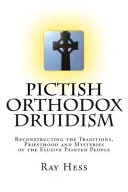
Ray Hess reconstructs Pictish Druidism from scant records in "Pictish Orthodox Druidism".
This book attempts to rebuild the religious and spiritual practices of the Picts, an ancient people of northern Scotland. Ray Hess works with limited historical accounts and archaeological evidence to reconstruct a form of Druidry. The focus is on a tradition distinct from later Celtic practices, rooted in the specific culture of the Pictish territories.
The work is for readers interested in ancient European spirituality, historical reconstruction, and the pre-Christian religions of Britain. It appeals to those who value thorough research and a practical approach to less common esoteric paths. The book acknowledges the speculative nature of its reconstructions while aiming for historical integrity.
The Picts, present from roughly the 3rd to the 10th century CE, left few records. Hess's study uses ogham inscriptions and stone carvings, drawing comparisons with other ancient British and Irish practices. It examines their societal structures and relationship with nature, emphasizing their unique identity during a period of shifting political power in Britain.
Pictish Orthodox Druidism occupies a niche within modern Paganism, distinct from the more prevalent traditions often labeled as Celtic Druidry. It addresses a historical gap, seeking to recover practices that predate or existed alongside the widespread influence of later Celtic cultures. The work engages with the challenge of reconstructing a spiritual path from fragmented evidence, aligning with a broader trend in esoteric studies to explore the roots of European indigenous religions beyond their most familiar expressions.
💡 Why Read This Book?
• Gain an understanding of a unique reconstructionist path distinct from common Celtic traditions, focusing on the specific historical context of the Picts in northern Britain. • Explore the challenges and methodologies of spiritual reconstruction from fragmented historical data, using the Pictish stones as primary evidence. • Discover potential spiritual practices and symbolic interpretations derived from the limited but intriguing material culture of the Picts, such as the ogham inscriptions.
⭐ Reader Reviews
Honest opinions from readers who have explored this book.
❓ Frequently Asked Questions
What makes Pictish Druidism different from other Celtic Druid traditions?
Pictish Druidism, as presented by Ray Hess, emphasizes the distinct geographical and cultural context of the Picts in northern Scotland. It aims to reconstruct practices based on the limited evidence specific to them, differentiating from the more widespread and better-documented Celtic traditions.
What kind of historical evidence does the book use for its reconstruction?
The book draws upon archaeological findings, including Pictish carved stones with their unique symbols and ogham inscriptions, alongside sparse foreign historical accounts of the Pictish people.
Is Pictish Orthodox Druidism a historical religion that can be practiced today?
The book presents a reconstructionist approach, meaning it attempts to rebuild an ancient tradition for contemporary practice. It is not a direct continuation but an adaptation based on scholarly research into historical fragments.
Who were the Picts?
The Picts were a tribal people who inhabited what is now Scotland from approximately the 3rd to the 10th century CE. They are known for their distinctive art, ogham script, and resistance to Roman expansion.
What is religious reconstructionism?
Religious reconstructionism is the process of rebuilding ancient or lost religious traditions based on available historical, archaeological, and cultural data, adapting them for modern practice while striving for historical integrity.
Where can I find more information on Pictish culture?
Further information can be found through academic studies of Scottish archaeology and early medieval history. Key resources include analyses of Pictish stones, ogham inscriptions, and historical texts mentioning the Picts.
🔮 Key Themes & Symbolism
Reconstructionist Methodology
The work grapples with the inherent difficulties of religious reconstructionism, particularly when dealing with a culture like the Picts, for whom historical records are exceptionally scarce. Hess outlines a disciplined approach that prioritizes evidence, however fragmented, over speculative invention. This involves carefully analyzing archaeological artifacts, such as the Pictish stones and their enigmatic symbols, and cross-referencing them with the few external accounts available. The focus is on building a spiritual framework from the ground up, respecting the limited data to maintain historical and cultural integrity.
Pictish Identity and Distinction
A central theme is establishing the unique identity of the Picts, setting them apart from their Celtic neighbors. The book explores how their geographical location in northern Britain, their societal structure, and their artistic expressions suggest a distinct spiritual path. Hess investigates the symbolism found in their art, such as the Pictish beast and the double-disc symbols, to infer their cosmological beliefs and ritual practices. This emphasis on distinctiveness is crucial for a reconstruction that aims for authenticity.
Practical Application of Ancient Traditions
Beyond academic reconstruction, 'Pictish Orthodox Druidism' aims to provide a basis for contemporary spiritual practice. The book explores how the inferred beliefs and symbolic systems of the Picts can be adapted for modern use while retaining their historical essence. This involves considering how ancient concepts of nature reverence, community, and spiritual connection might manifest today, offering a path for those seeking esoteric traditions rooted in a specific, under-explored historical context.
Symbolism in Pictish Art
The enigmatic symbols adorning Pictish stones form a significant part of the book's investigation. Hess analyzes recurring motifs like the Pictish beast, the Z-rod, the mirror, and the V-rod, attempting to decipher their potential spiritual or cosmological meanings. This exploration studies how these visual elements might have represented deities, abstract concepts, or elements of their worldview, providing a tangible link to the Picts' spiritual landscape and a basis for symbolic practice.
💬 Memorable Quotes
Direct passages from the work, attributed to the author.
“Pictish stones offer a direct window into their symbolic world.”
— This statement emphasizes the importance of archaeological evidence, particularly the carved stones, as the primary source for understanding Pictish religious beliefs and practices.
“We must distinguish the Pictish spiritual path from later Celtic Druidry.”
— This interpretation underscores the book's core objective: to establish and explore the unique religious identity of the Picts, separate from the more commonly studied Celtic traditions.
“Historical integrity is paramount in reconstruction.”
— This key idea stresses the author's dedication to maintaining accuracy and authenticity in the process of recreating the Pictish spiritual tradition, even with limited data.
💡 Key Ideas
Editorial paraphrase of the work's core concepts — not direct quotes.
The challenge is to rebuild a tradition from fragments, not fabrications.
This paraphrased concept highlights the author's commitment to a grounded, evidence-based approach to reconstructing Pictish spirituality, distinguishing it from speculative or invented traditions.
The field of northern Scotland shaped Pictish belief.
This paraphrased concept suggests that the specific environment inhabited by the Picts played a central role in forming their spiritual worldview and practices.
🌙 Esoteric Significance
Tradition
This work engages with the lineage of religious reconstructionism, a modern esoteric movement focused on reviving ancient belief systems. While not directly tied to established esoteric orders like the Golden Dawn or Theosophy, it shares their foundational interest in exploring pre-Christian European spirituality. It departs from traditions that heavily rely on recovered texts by building from archaeological fragments and adapting them for contemporary practice, focusing on a specific, under-documented cultural group.
Symbolism
The book heavily features the symbolism found on Pictish stones. Key motifs include the Pictish beast, a complex zoomorphic figure whose meaning is debated but often linked to power, lineage, or spiritual guardianship. Other significant symbols include the double-disc and V-rod, which may represent abstract concepts, cosmological principles, or ritual implements. Hess interprets these symbols as vital clues to the Picts' worldview, cosmology, and ritual practices, offering a visual language for modern practitioners.
Modern Relevance
Contemporary pagan and Druid revival movements, particularly those interested in British indigenous traditions, can draw inspiration from Hess's work. Thinkers and practitioners focused on landscape-based spirituality and archaeo-astronomy might find resonance in the book's emphasis on the Picts' connection to their environment. It offers an alternative to more established Druidic paths, appealing to those seeking a less common, historically-grounded spiritual framework rooted in the specific cultural milieu of ancient Scotland.
👥 Who Should Read This Book
• Students of historical reconstructionism and ancient European spirituality seeking to understand the methodologies and challenges involved in reviving traditions from limited evidence. • Practitioners of modern Druidry or paganism interested in exploring paths distinct from more common Celtic or Norse traditions, with a focus on the specific heritage of northern Britain. • Academics and enthusiasts of early medieval history and archaeology, particularly those studying the Picts, who are looking for a work that bridges historical research with potential spiritual interpretation.
📜 Historical Context
Ray Hess's 'Pictish Orthodox Druidism,' first published in 2015, engages with a historical period often overshadowed by its more documented neighbors. The Picts, inhabiting northern Britain from roughly the 3rd to the 10th century CE, left behind a legacy of enigmatic carved stones, ogham inscriptions, and sparse mentions in external chronicles. This lack of extensive primary source material places Hess's work within the area of historical reconstructionism, a field that demands meticulous scholarship and careful inference. The era Hess explores is one of significant transition in Britain, marked by the decline of Roman influence and the rise of various kingdoms. While contemporary scholarly interest in Celtic traditions was robust, the specific study of Pictish religion remained comparatively niche. Hess's work implicitly responds to this, seeking to carve out a distinct space for Pictish spirituality. Its reception would likely appeal to scholars and practitioners interested in pre-Christian European religions who are looking beyond the more common Neopagan reconstructions.
📔 Journal Prompts
The Pictish beast's form and its potential meanings.
Reflections on the V-rod symbol and its possible ritual uses.
How does the Pictish landscape influence your spiritual perspective?
Reconstructing a lost tradition: challenges and rewards.
The significance of ogham inscriptions for Pictish identity.
🗂️ Glossary
Pictish Stones
Large carved stones found primarily in Scotland, dating from the early medieval period, featuring intricate symbols, abstract designs, and sometimes inscriptions, believed to be created by the Picts.
Ogham
An ancient alphabet or script used for inscriptions in the early Irish and Scottish Gaelic languages, characterized by groups of lines or notches.
Religious Reconstructionism
A modern religious movement focused on rebuilding and practicing ancient or lost spiritual traditions based on available historical and archaeological evidence, aiming for historical and cultural authenticity.
Pictish Beast
A common, complex zoomorphic symbol found on Pictish stones, characterized by its intricate, often contorted, animalistic form, whose exact meaning remains a subject of scholarly debate.
Double-Disc and V-Rod
Recurring abstract symbols on Pictish stones. The double-disc, often accompanied by a bar or rod, is one of the most frequently depicted motifs, its interpretation ranging from ritual objects to cosmological representations.
Reconstructionism
In a spiritual context, the practice of attempting to revive and adapt ancient religious or spiritual traditions based on historical and archaeological research, rather than direct lineage.
Historical Integrity
The principle of maintaining accuracy and faithfulness to known historical facts and cultural context when attempting to reconstruct or interpret past practices or beliefs.