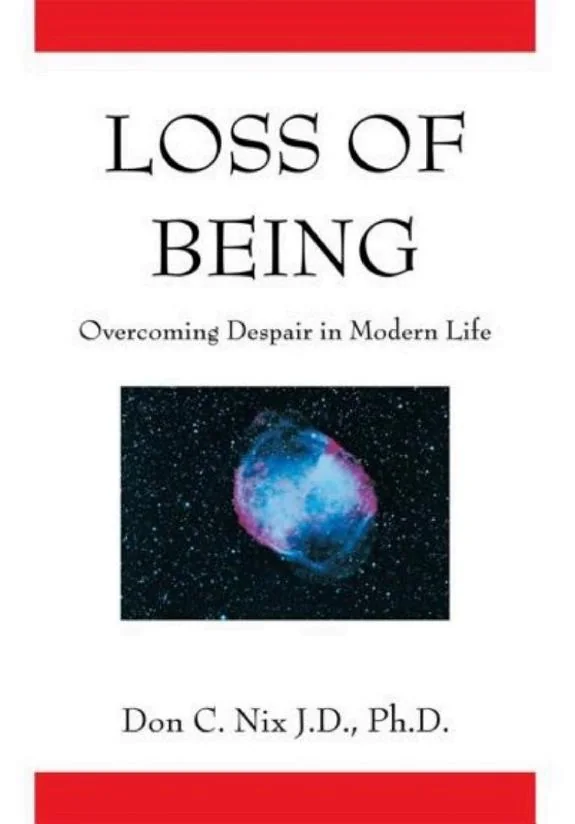
Loss of Being
 75
75

Loss of Being
Don C. Nix J.D., Ph.D. confronts the pervasive spiritual emptiness he identifies in Western consciousness with a raw, personal account. The book’s strength lies in its unflinching self-disclosure; Nix doesn't shy away from detailing his 1985 burnout crisis, making the abstract concept of "separation from Being" feel visceral. He effectively illustrates how this disconnection from a foundational reality breeds alienation. However, the personal narrative sometimes overshadows the philosophical exposition, occasionally making the transition between the two feel abrupt. A particularly striking passage describes the author's initial inability to articulate his profound sense of loss, a relatable moment for many experiencing existential unease. While the book offers a compelling diagnosis, its prescriptive elements feel less developed than its critique. Ultimately, Loss of Being is a valuable, albeit uneven, exploration of modern spiritual malaise.
📝 Description
75
Don C. Nix's 2005 book Loss of Being argues that modern Western culture suffers from a disconnection from existence itself.
Loss of Being examines a spiritual emptiness prevalent in contemporary Western society, which the author attributes to a fundamental break from the unmanifest field of existence. This separation, Nix contends, fuels widespread feelings of emptiness, alienation, and dread that define the modern psyche. The book blends personal narrative with philosophical guidance, recounting Nix's own experience of a significant personal crisis.
Individuals grappling with existential unease, a spiritual void, or a sense of displacement in modern life will find this text relevant. It aims to help readers understand the origins of this alienation within Western consciousness and to identify paths toward reconnecting with a deeper reality. Those interested in how personal crisis can lead to spiritual clarity will discover particular value here. The book also addresses the psychological effects stemming from this disconnect, such as burnout and personal fragmentation, placing it within broader discussions of mental well-being.
Published in 2005, Loss of Being engages with ongoing discussions in esoteric and philosophical circles concerning consciousness and the fragmentation of the self. It touches upon themes of secularization and consumer culture's impact on Western societies, positioning itself within a tradition that seeks to understand the perceived disconnect between the individual and a deeper, unmanifest reality. The book addresses the psychological and spiritual consequences of this perceived fragmentation, relating it to broader concerns about mental health and spiritual integration.
💡 Why Read This Book?
• Understand the concept of "separation from Being" as explained through Don C. Nix's personal 1985 crisis, offering a unique lens on existential alienation not found in purely academic texts. • Explore the psychological ramifications of spiritual disconnection, as Nix details the experience of burnout and emotional disintegration, providing concrete examples of the "loss of being" in practice. • Gain insight into the philosophical underpinnings of Western consciousness's perceived emptiness, moving beyond generalized critiques to engage with Nix's specific articulation of this core illness.
⭐ Reader Reviews
Honest opinions from readers who have explored this book.
❓ Frequently Asked Questions
What is the core illness of modern Western consciousness according to Don C. Nix in Loss of Being?
Don C. Nix identifies the core illness as "separation from Being" – a disconnection from the living, unmanifest field that underlies existence. This estrangement, he posits, leads to emptiness, alienation, and despair.
When was Loss of Being first published?
Loss of Being was first published in December 2005.
What personal experience does Don C. Nix draw upon in this book?
The book is framed by Don C. Nix's personal journey, particularly a significant period of crisis and emotional disintegration he experienced in 1985, which he termed burnout.
What is the relationship between personal crisis and teaching in Loss of Being?
Nix presents the book as a personal journey wrapped around a teaching. His own experience of crisis serves as a practical, lived illustration of the philosophical concepts he explores regarding the "loss of being."
What does the 'unmanifest field' refer to in the context of Loss of Being?
The 'unmanifest field' refers to the foundational, living reality of existence that is not perceptible through ordinary senses but is understood as the source or ground of all phenomena.
Who is the author of Loss of Being?
The author is Don C. Nix J. D., Ph. D. The first publication was in December 2005.
🔮 Key Themes & Symbolism
Separation from Being
This central concept posits that modern Western consciousness suffers from a fundamental estrangement from the unmanifest, living field of existence. This disconnection is presented not as a mere intellectual idea but as a lived reality that generates profound psychological distress. The work explores how this perceived void manifests as alienation, emptiness, and a pervasive sense of threat, leading to the characteristic angst of the modern mind. Nix argues this is the root illness, preceding more superficial psychological symptoms.
Personal Crisis as Spiritual Catalyst
Loss of Being utilizes Don C. Nix's personal experience of burnout and emotional disintegration in 1985 as a practical demonstration of the 'loss of being.' This approach grounds abstract philosophical concepts in lived reality, illustrating how profound personal breakdown can paradoxically serve as a gateway to deeper understanding. The narrative intertwines this personal journey with the unfolding of his teachings, showing the interconnectedness of inner turmoil and spiritual insight.
The Nature of Western Consciousness
The book offers a critical examination of the dominant modes of thought and perception within contemporary Western societies. It diagnoses a pervasive alienation stemming from a focus on the manifest world to the exclusion of its unmanifest source. This perspective critiques the cultural and philosophical underpinnings that contribute to a sense of fragmentation and existential despair, positioning the 'loss of being' as a defining characteristic of this consciousness.
Reintegration and Wholeness
While diagnosing the problem of separation, the work implicitly points towards a path of reintegration. By understanding the nature of our estrangement from Being, individuals can begin to re-establish a connection to the deeper, unmanifest reality. This process is not presented as a simple return but as a conscious re-orientation toward wholeness, moving from emptiness and despair toward a more grounded and authentic existence.
💬 Memorable Quotes
Direct passages from the work, attributed to the author.
“The separation leaves us empty, alienated, threatened, and in despair.”
— This concise statement expresses the central thesis regarding the consequences of being disconnected from the fundamental field of existence. It highlights the emotional and psychological toll of this estrangement.
“Loss of Being deals with the core illness of modern Western consciousness.”
— This assertion frames the book's primary objective: to diagnose and address a fundamental ailment within contemporary Western thought and experience, identifying a deep-seated spiritual disconnection.
“The book is presented as a personal journey wrapped around a teaching.”
— This description clarifies the book's structure, emphasizing that philosophical and spiritual insights are conveyed through the author's own lived experiences, particularly his crisis.
💡 Key Ideas
Editorial paraphrase of the work's core concepts — not direct quotes.
Burnout was the term I used for my personal crisis and emotional disintegration.
This quote grounds the abstract concept of 'loss of being' in a relatable, modern psychological experience, marking a specific point in the author's life (1985) that catalyzed his exploration.
We are separated from Being, the living, unmanifest field of our existence.
This paraphrased concept defines the core problem Nix addresses, distinguishing 'Being' as a dynamic, unmanifest reality from which modern individuals have become estranged.
🌙 Esoteric Significance
Tradition
While not explicitly tied to a single esoteric lineage, Loss of Being speaks to Gnostic and Neoplatonic traditions that emphasize the fallen state of consciousness and the alienation from a divine or ultimate source. The concept of an "unmanifest field" echoes ideas of the One or the Pleroma, and the diagnosis of separation aligns with the Gnostic notion of humanity's ignorance of its true origin. It departs from more ritualistic or magical traditions by focusing on a direct, existential confrontation with the nature of Being itself.
Symbolism
The primary symbolic motif is the "loss" itself, representing not just absence but an active estrangement from a vital source. The "unmanifest field" functions as a symbol for ultimate reality, the ground of all existence that remains unseen yet is the source of vitality. The author's personal "crisis" and "burnout" serve as potent symbols for the breakdown of the ego-centric self when confronted with this existential void, marking a potential turning point toward reintegration.
Modern Relevance
The work's focus on existential alienation and the disconnection from a deeper reality finds echoes in contemporary mindfulness movements, existential psychology, and certain strands of post-Jungian thought. Thinkers and practitioners exploring the impact of secularization on spiritual well-being, or those seeking non-dogmatic paths to meaning, may find Nix's analysis of "separation from Being" relevant. Its critique of modern consciousness continues to inform discussions on the psychological costs of hyper-individualism and materialism.
👥 Who Should Read This Book
• Individuals experiencing existential angst or a profound sense of spiritual void, seeking to understand the root causes of modern alienation beyond superficial explanations. • Students of Western philosophy and consciousness studies interested in critiques of secularism and materialism, particularly those focused on the psychological impact of societal structures. • Readers drawn to autobiographical accounts of personal crisis that serve as a catalyst for philosophical and spiritual inquiry, looking for a blend of lived experience and conceptual exploration.
📜 Historical Context
Published in December 2005, Don C. Nix's Loss of Being emerged during a period marked by increasing cultural introspection regarding the spiritual vacuum perceived in Western secular societies. The early 21st century saw a confluence of interest in psychology, philosophy, and esoteric traditions, as thinkers grappled with the effects of globalization, consumerism, and the perceived decline of traditional religious frameworks. Nix's work speaks to this milieu, offering a critique of Western consciousness akin to the concerns voiced by contemporaries exploring existentialism and post-modern thought, though with a distinct focus on an unmanifest source. While not directly engaging with specific publicized reception events or academic citations at its release, the book taps into a broader intellectual current that includes figures like Ken Wilber, who also explored consciousness and integration, albeit from different theoretical standpoints.
📔 Journal Prompts
The experience of "separation from Being" as described in the text.
Your personal understanding of the "unmanifest field" and its relation to your life.
The role of "burnout" or personal crisis in catalyzing spiritual insight.
How the "core illness of modern Western consciousness" manifests in your own observations.
Reflections on the state of "emptiness" and "alienation" discussed by Nix.
🗂️ Glossary
Separation from Being
The central concept in the book, referring to the estrangement of modern Western consciousness from the fundamental, unmanifest field of existence, leading to existential distress.
Unmanifest Field
The underlying, living reality of existence that is not perceptible through ordinary senses but is considered the source and ground of all phenomena.
Burnout
The term Don C. Nix uses to define his personal crisis and period of emotional disintegration experienced in 1985, serving as a practical illustration within the book.
Core Illness
Nix's designation for the profound disconnection from Being, which he posits as the fundamental problem underlying the angst and desolation characterizing modern Western minds.
Existential Angst
A feeling of dread, anxiety, and despair arising from the confrontation with the meaninglessness or groundlessness of existence, directly linked in the book to the separation from Being.
Emotional Disintegration
A state of profound psychological breakdown and loss of coherence, described by Nix as part of his personal crisis and a consequence of the loss of Being.
Alienation
A feeling of estrangement or isolation, presented in the book as a direct result of separation from Being and a defining characteristic of modern Western consciousness.
This book appears in 1 collection
🔮 Readers Also Liked
Browse all →









From the “Ego Death” Collection
View all →









More Free Occult Philosophy Books
View all →