Emerson and Neo-Confucianism
 76
76

Emerson and Neo-Confucianism
Y. Takanashi's comparative study, Emerson and Neo-Confucianism, offers a compelling argument for the convergence of seemingly disparate philosophical streams. The author's strength lies in the granular analysis of Zhu Xi's *li* (principle) and Emerson's transcendental moral sense, demonstrating how both identified an immanent ethical structure in reality. Takanashi is particularly adept at detailing Zhu Xi's methodical approach to understanding the universe through investigation, contrasting it with Emerson's more intuitive, yet equally grounded, assertions of innate moral intuition. A limitation, however, is the occasional dense prose that may require dedicated rereading for those less familiar with specific Neo-Confucian terminology. The section on the interrelation of universal law and the human mind, especially the discussion of *ge wu* (investigation of things) and Emerson's concept of 'correspondence,' provides a strong anchor for the book's central thesis. Ultimately, this work serves as a valuable bridge for understanding global ethical philosophies.
📝 Description
76
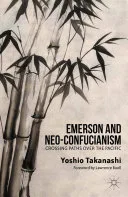
Y. Takanashi's 2014 book connects Emerson and Neo-Confucianism through shared moral philosophy.
This volume examines the philosophical connections between Ralph Waldo Emerson and Zhu Xi, a key figure in Neo-Confucianism. Takanashi details how both thinkers, despite their different eras and cultures, arrived at similar ideas about the universe's inherent moral structure and humanity's ability to align with it. The book traces shared ground concerning the intrinsic moral character of existence and the human capacity to harmonize with this order.
The analysis is situated within 19th-century American Transcendentalism, a movement that drew on Eastern thought, and Song Dynasty China, a period of Neo-Confucian flourishing. It notes Emerson's engagement with texts like the Bhagavad Gita and his interest in universal spiritual laws. The work contrasts this with Zhu Xi's thought, which became a dominant orthodoxy in East Asia. Its 2014 publication reflects a growing academic interest in global philosophical exchanges.
This study operates within the broad field of comparative mysticism and contemplation, specifically bridging Western Transcendentalism and East Asian Neo-Confucianism. It highlights how seemingly disparate traditions can converge on core metaphysical and ethical principles. The book explores the universalist leanings found within Emerson's thought, often associated with esoteric currents, and places them alongside the systematic moral philosophy of Zhu Xi, a cornerstone of East Asian intellectual and spiritual life.
💡 Why Read This Book?
• You will learn how Ralph Waldo Emerson's Transcendentalism shares foundational ethical principles with Zhu Xi's Neo-Confucianism, specifically concerning the moral nature of the universe as detailed in the 2014 publication. • You will gain insight into the philosophical concept of *li* (principle) as understood by Zhu Xi and its parallel in Emerson's notion of an inherent moral sense, offering a unique perspective on universal ethics. • You will discover how both thinkers developed theories on the connection between universal law and the human mind, providing practical frameworks for self-cultivation and ethical living, as explored in the book's comparative analysis.
⭐ Reader Reviews
Honest opinions from readers who have explored this book.
❓ Frequently Asked Questions
What is the primary philosophical connection between Emerson and Zhu Xi explored in this book?
The book highlights their shared belief that human morality originates from the inherently moral nature of the universe. Both Emerson and Zhu Xi posited that universal law and the human mind are deeply interconnected, stemming from this fundamental ethical structure.
When was Emerson and Neo-Confucianism first published?
The book was first published on February 20, 2014.
Who is the author of Emerson and Neo-Confucianism?
The author is Y. Takanashi.
What academic fields does this book primarily engage with?
It engages with comparative philosophy, intellectual history, and religious studies, focusing on American Transcendentalism and Chinese Neo-Confucianism.
Does the book discuss specific Neo-Confucian concepts in relation to Emerson?
Yes, it explores concepts such as *li* (principle) and *ge wu* (investigation of things) from Zhu Xi's philosophy and draws parallels with Emerson's ideas on transcendental morality and self-reliance.
What is the central argument regarding the human mind and universal law?
The central argument is that both Emerson and Zhu Xi developed theories where the human mind is seen as capable of apprehending and aligning with universal, inherently moral laws that govern the cosmos.
🔮 Key Themes & Symbolism
Universal Moral Nature
This theme examines the shared conviction between Emerson and Zhu Xi that the cosmos possesses an intrinsic ethical quality. Takanashi argues that both thinkers located the source of human morality not in societal constructs or divine decree, but in the fundamental, ordered nature of reality itself. This perspective suggests a universal moral compass inherent in existence, accessible through different cultural lenses. The work explores how this shared understanding informed their respective ethical systems and views on human potential for virtue.
Mind-Universe Interrelation
A central focus is the reciprocal relationship between the human mind and the universal order. Zhu Xi's concept of *li* (principle) and its investigation (*ge wu*) suggests that understanding the external world is key to understanding oneself and the cosmic law. Emerson, conversely, emphasizes the mind's innate capacity to perceive moral truths and universal laws through intuition and self-reliance. The book elucidates how both traditions posit that the individual mind is not separate from, but deeply interwoven with, the fabric of the universe.
Ethical Cultivation
The book probes how both Emersonian Transcendentalism and Neo-Confucianism offer pathways for personal and ethical development. For Zhu Xi, this involved rigorous study and the investigation of things to align one's mind with universal principle. For Emerson, it meant trusting one's inner genius, cultivating self-reliance, and acting in accordance with one's conscience, which he believed was a direct connection to the universal soul. Both advocate for a life lived in harmony with a perceived moral order.
Comparative Philosophical Method
Beyond specific doctrines, the work itself embodies a significant comparative approach. It demonstrates how rigorous scholarly analysis can bridge vast cultural and historical divides to uncover profound similarities in human thought. By juxtaposing Emerson's 19th-century American Transcendentalism with Zhu Xi's Song Dynasty Neo-Confucianism, the book showcases the power of cross-cultural dialogue in informative universal philosophical questions about ethics, reality, and the human condition.
💬 Memorable Quotes
Direct passages from the work, attributed to the author.
“Both thinkers traced human morality to the same source in the ultimately moral nature of the universe.”
— This statement expresses the core thesis: Emerson and Zhu Xi independently arrived at the conclusion that ethics are not arbitrary but are grounded in the very fabric of existence, suggesting a universal moral order.
“Theories of the interrelation of universal law and the human mind.”
— This highlights a key area of convergence, indicating that both philosophies explore how our internal consciousness connects with and apprehends the external, governing principles of reality.
“Emerson's Transcendental thought and Zhu Xi's Neo-Confucianism.”
— These are the two primary philosophical traditions analyzed, representing distinct cultural contexts (19th century America and Song Dynasty China) whose intellectual similarities are the subject of investigation.
“Alignment of the human mind with cosmic moral principles.”
— This describes the practical outcome and goal proposed by both philosophical systems: achieving a state of being where one's thoughts and actions are in harmony with the perceived ethical order of the universe.
💡 Key Ideas
Editorial paraphrase of the work's core concepts — not direct quotes.
The ultimate source of human morality is the universe's inherent ethical structure.
This paraphrases the central shared belief that ethical principles are objective and derived from the fundamental nature of reality, not merely subjective human inventions.
🌙 Esoteric Significance
Tradition
While not strictly belonging to a single Western esoteric lineage like Hermeticism or Kabbalah, this work engages with themes resonant in esoteric thought: the immanence of the divine or universal principle within nature and the human mind. It touches upon the Gnostic idea of inherent knowledge and the Hermetic concept of 'As Above, So Below' by exploring the correspondence between the macrocosm (universe) and the microcosm (human). The book bridges Eastern philosophical traditions with Western metaphysical explorations, offering a comparative lens that appeals to esotericists interested in universal wisdom.
Symbolism
While the book focuses on philosophical concepts rather than overt symbolism, the 'moral nature of the universe' itself can be seen as a grand symbolic representation of an underlying, ordered consciousness or divine blueprint. The 'interrelation of universal law and the human mind' symbolizes the potential for human consciousness to access and embody cosmic truths, akin to the esoteric concept of gnosis or illumination. The pursuit of aligning one's mind with this law represents the esoteric path of spiritual development and self-transformation.
Modern Relevance
Contemporary thinkers and practitioners exploring integral spirituality, comparative mysticism, and philosophical psychology find value in this work. It speaks to modern movements seeking to synthesize Eastern and Western wisdom traditions, offering a framework for understanding ethical living beyond rigid dogma. Practices focused on mindfulness, self-awareness, and cultivating an intuitive understanding of natural laws can draw inspiration from the parallels drawn between Emerson's self-reliance and Neo-Confucian self-cultivation.
👥 Who Should Read This Book
• Scholars of comparative philosophy: Those researching the intellectual connections between Eastern and Western thought will find a detailed analysis of parallels between American Transcendentalism and Chinese Neo-Confucianism. • Students of ethics and metaphysics: Individuals seeking to understand diverse philosophical foundations for morality and the nature of reality will benefit from the exploration of universal ethical principles. • Readers interested in Emerson and Eastern thought: Those familiar with Emerson's work who wish to explore potential cross-cultural influences or convergent ideas in Eastern philosophies will find this book informative.
📜 Historical Context
The intellectual landscape that birthed Emerson and Neo-Confucianism is marked by two distinct yet significant periods. In 19th-century America, Ralph Waldo Emerson was a leading figure in Transcendentalism, a philosophical and literary movement that reacted against the rationalism of the Enlightenment and emphasized intuition, individualism, and the inherent goodness of both humanity and nature. Emerson, in particular, was influenced by Eastern texts, including Hindu scriptures, which opened avenues for exploring universal spiritual laws. Meanwhile, in Song Dynasty China (960–1279), Zhu Xi synthesized Neo-Confucianism, establishing a philosophical framework that became profoundly influential throughout East Asia. His system emphasized the investigation of things (*ge wu*) to understand the universal principle (*li*) and its manifestation in both the cosmos and human nature. This book's publication in 2014 places it within contemporary scholarship that increasingly recognizes and analyzes such cross-cultural philosophical resonances, moving beyond earlier Eurocentric perspectives.
📔 Journal Prompts
Emerson's concept of the moral nature of the universe and Zhu Xi's *li*.
The interrelation of universal law and the human mind.
Reflecting on the source of one's own moral compass.
Investigating the external world to understand internal principles.
The practice of self-reliance in aligning with cosmic order.
🗂️ Glossary
Transcendentalism
A philosophical and literary movement prominent in the 19th century, emphasizing intuition, individualism, and the inherent goodness of humanity and nature, often seeing a divine spark within all things.
Neo-Confucianism
A revived and expanded form of Confucianism that emerged in China during the Song Dynasty, incorporating metaphysical and cosmological elements, notably the concepts of *li* (principle) and *qi* (vital force).
Zhu Xi
An important figure in Neo-Confucianism (1130–1200), whose synthesis of ideas became the orthodox interpretation of Confucianism in China and influenced East Asia for centuries.
Ralph Waldo Emerson
A central figure of American Transcendentalism (1803–1882), known for his essays on self-reliance, nature, and the oversoul, advocating for intuition and individual spiritual insight.
Li (理)
A fundamental Neo-Confucian concept, often translated as 'principle' or 'pattern,' referring to the underlying rational, ethical, and metaphysical order inherent in all things and the universe.
Ge Wu (格物)
A key Neo-Confucian practice, particularly emphasized by Zhu Xi, meaning 'investigation of things' or 'extension of knowledge,' aimed at understanding the *li* or principle within phenomena.
Universal Law
In the context of this book, refers to the inherent, ordered principles governing the cosmos, believed by both Emerson and Zhu Xi to be fundamentally moral and knowable by humans.