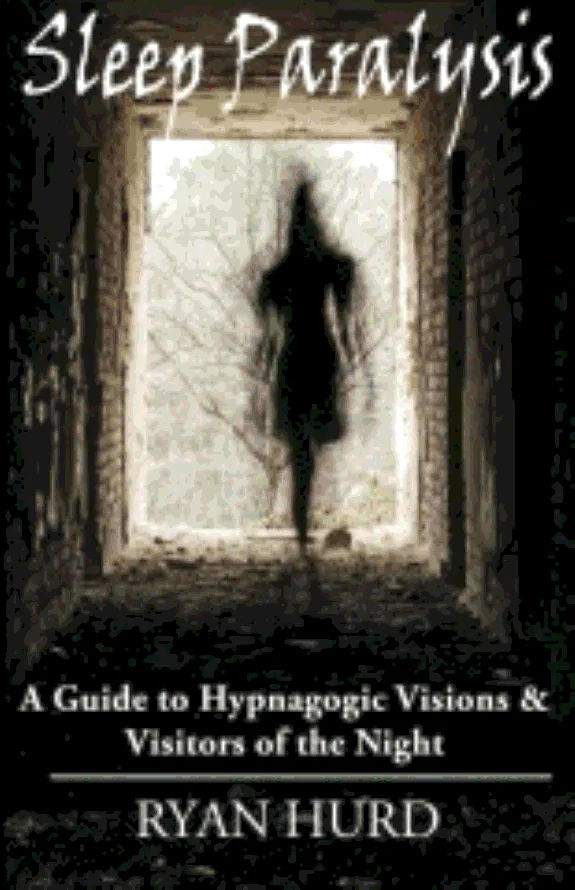
Sleep Paralysis
 77
77

Sleep Paralysis
Ryan Hurd's *Sleep Paralysis* offers a refreshing, science-informed perspective on an experience that has haunted humanity for millennia. The strength of the book lies in its delicate balance: it validates the visceral terror of ISP – the feeling of being held down by an unseen force – without dismissing the scientific underpinnings. Hurd skillfully connects the subjective horror, often attributed to succubi or spectral assailants, to the neurological events of REM sleep intrusion. A particularly compelling section dissects the commonalities in hallucination types, linking them to primal fears and cultural mythologies. However, the work could benefit from a more direct engagement with the radical interpretations of these states found in certain esoteric traditions, perhaps exploring the potential for lucid dreaming techniques within the paralysis itself more deeply. Despite this, *Sleep Paralysis* serves as a crucial primer for understanding a phenomenon that blurs the lines between the psychological and the paranormal.
📝 Description
77
Ryan Hurd's 2010 book reinterprets sleep paralysis, moving beyond supernatural explanations.
Sleep paralysis is a terrifying experience where one is awake but unable to move, often accompanied by frightening hallucinations. These sensations have historically been interpreted as supernatural visitations. Ryan Hurd's work examines this phenomenon, connecting subjective experiences with contemporary dream science. He presents Isolated Sleep Paralysis (ISP) not just as a disorder but as a potential doorway to altered states of consciousness. Hurd analyzes the vivid imagery, like hypnagogic and hypnopompic hallucinations, and relates them to figures from myth and folklore. The book suggests that by shifting perspective, these frightening visions can become sources of insight and personal empowerment, questioning typical views of reality.
This book appeals to those who have experienced the fear of being awake yet immobile, especially with perceived paranormal elements. It is for readers seeking scientific frameworks for experiences that feel supernatural. Those interested in the connections between psychology, neuroscience, and folklore, particularly concerning altered consciousness and the nature of fear, will find this text beneficial. Hurd's approach validates the intense subjective terror of sleep paralysis while grounding it in scientific understanding, offering a middle path between purely folkloric interpretations and clinical descriptions.
This work situates itself within traditions that explore consciousness beyond ordinary waking states. While acknowledging the scientific basis of sleep paralysis, Hurd engages with interpretations common in spiritualism and folklore, where such experiences are often seen as encounters with non-physical entities or realms. The book bridges the gap between clinical descriptions of a sleep disorder and the subjective reality of perceived paranormal phenomena. It treats the hallucinations not as mere neurological events but as potent symbolic experiences, aligning with esoteric thought that views altered states as potential avenues for spiritual insight or encounter.
💡 Why Read This Book?
• Understand the neurological basis of terrifying hallucinations, learning how REM sleep intrusion creates vivid, often monstrous apparitions, a concept detailed in the book's exploration of hypnagogic imagery. • Reframe perceived supernatural encounters, gaining tools to interpret the feeling of being held down and seeing entities not as external threats but as internal phenomena rooted in sleep science. • Explore sleep paralysis as a potential portal to altered states, moving beyond fear to recognize the extraordinary perceptual shifts described by Hurd, linking them to historical accounts and personal narratives.
⭐ Reader Reviews
Honest opinions from readers who have explored this book.
❓ Frequently Asked Questions
What is Isolated Sleep Paralysis (ISP) according to Ryan Hurd?
Ryan Hurd defines Isolated Sleep Paralysis (ISP) as the experience of being awake and aware in bed but unable to move, often accompanied by frightening hallucinations, which occurs outside of typical narcolepsy.
How does Ryan Hurd's book explain sleep paralysis hallucinations?
Hurd explains these vivid, often terrifying hallucinations, like seeing figures or feeling pressure, as a direct intrusion of REM sleep phenomena into wakefulness, connecting them to dream imagery.
Can sleep paralysis be a positive experience, as suggested by the book?
Yes, the book suggests that by understanding the phenomenon, terrifying visions can become a reliable portal to extraordinary states of consciousness, offering insights rather than just fear.
What historical figures or entities are linked to sleep paralysis experiences?
The book connects sleep paralysis experiences to historical interpretations involving entities such as ghosts, vampires, and succubi, reframing them through a scientific lens.
When was Ryan Hurd's book on sleep paralysis first published?
Ryan Hurd's *Sleep Paralysis* was first published on September 17, 2010, offering a contemporary perspective on the phenomenon.
Is this book for people who believe in the supernatural?
The book is for anyone experiencing sleep paralysis, whether they interpret it as supernatural or seek scientific understanding, bridging both perspectives by examining the subjective reality of the experience.
🔮 Key Themes & Symbolism
The Ghost in the Machine
This theme explores the terrifying entities often reported during sleep paralysis – ghosts, demons, or intruders – and reframes them not as external supernatural agents but as complex neurological events. Hurd examines how the brain, caught between sleep and wakefulness, generates vivid hallucinations that our minds interpret through cultural and personal frameworks, often leading to fears of supernatural assault. The work posits that understanding the 'ghost' as a product of brain activity can clarify the experience.
The Liminal Portal
Beyond the fear, the book investigates the potential of sleep paralysis as a gateway to altered states of consciousness. Hurd suggests that the intense sensory and perceptual distortions experienced during ISP can, with a shift in perspective, become a unique opportunity for insight. This theme examines how these states, often dismissed as mere nightmares, can resemble mystical or shamanic experiences, offering a unique window into the mind's capacity for perception beyond ordinary waking reality.
Science Meets Folklore
This theme highlights the book's central project: integrating contemporary dream science with ancient folklore and personal accounts of sleep paralysis. Hurd demonstrates how scientific explanations for phenomena like hypnagogic and hypnopompic hallucinations align with descriptions of supernatural encounters found across cultures and history. The work honors the subjective reality of these terrifying visions while providing a scientific framework for their genesis.
The Body's Betrayal
Focusing on the physical sensation of paralysis, this theme addresses the primal fear of being trapped and vulnerable. Hurd details the neurological mechanisms behind atonia, the muscle paralysis characteristic of REM sleep, and explains how its overlap with wakefulness creates the feeling of being held down or unable to move. This bodily betrayal is explored as a core element contributing to the terror and the subsequent interpretation of external malevolent forces.
💬 Memorable Quotes
Direct passages from the work, attributed to the author.
“Isolated sleep paralysis feels like being awake and aware in bed as something holds you down.”
— This concise statement captures the core, terrifying essence of the experience: the jarring dissonance between a conscious mind and a immobilized body, often attributed to unseen forces.
“These encounters with ghosts, vampires—and even succubi—are honored afresh from the perspective of contemporary dream science.”
— This highlights the book's unique approach, validating frightening subjective experiences by analyzing them through modern neurological understanding rather than dismissing them as purely supernatural.
“ISP visions can also be a reliable portal to other extraordinary states.”
— This suggests a transformative potential within sleep paralysis, shifting the focus from terror to the possibility of accessing unusual states of consciousness and perception.
“The mind is awake and aware... the body remains paralyzed.”
— This emphasizes the central conflict of sleep paralysis: the stark contrast between mental lucidity and physical helplessness, a hallmark of the phenomenon.
“Sensations are sometimes accompanied by frightening and realistic hallucinations.”
— This points to the vivid, often disturbing imagery that accompanies sleep paralysis, underscoring the psychological impact and the reality of these perceived events for the individual.
🌙 Esoteric Significance
Tradition
While not strictly adhering to a single esoteric lineage, Hurd's work engages with themes common in Gnostic and Hermetic thought concerning altered states of consciousness and the nature of perception. It explores the idea of the 'divine spark' trapped within limitations, here represented by the conscious mind within a paralyzed body. By examining visions interpreted as external entities, it echoes Gnostic discussions of Archons or illusory forces, offering a modern, scientific interpretation of perceived spiritual battles.
Symbolism
The primary symbol is the paralysis itself, representing a state of being trapped or imprisoned, a common motif in spiritual struggles. Hallucinations of figures like succubi or demons symbolize the darker, repressed aspects of the psyche or perceived external malevolent influences. The 'portal' aspect symbolizes transcendence, the possibility of moving beyond material limitations or ordinary consciousness into higher or deeper domains of awareness.
Modern Relevance
Contemporary thinkers in consciousness studies, lucid dreaming, and transpersonal psychology draw on Hurd's work. Practices exploring out-of-body experiences (OBEs) and astral projection often find parallels in the descriptions of sleep paralysis phenomena. Researchers investigating the neuroscience of altered states and the potential therapeutic applications of understanding dream states also find value in Hurd's grounded yet open-minded approach to subjective experiences.
👥 Who Should Read This Book
• Individuals who regularly experience sleep paralysis and seek a scientific understanding of the terrifying sensations and hallucinations they encounter. • Students of psychology, neuroscience, and parapsychology interested in the intersection of altered states of consciousness, fear, and subjective reality. • Readers fascinated by folklore, mythology, and historical accounts of supernatural encounters who wish to explore potential neurological explanations for these phenomena.
📜 Historical Context
Published in 2010, Ryan Hurd's *Sleep Paralysis* arrived at a juncture where popular interest in the paranormal surged, yet academic and scientific discourse on sleep disorders was becoming increasingly sophisticated. It emerged in a landscape populated by both sensationalist paranormal investigations and clinical sleep medicine texts. Hurd’s work sought to bridge this gap, offering a scientifically grounded explanation for experiences often relegated to folklore and superstition. Contemporaries like philosopher G. William Domhoff were exploring the cognitive aspects of dreaming, though perhaps with less focus on the specific terror of ISP. While not directly engaging with esoteric traditions like those of early 20th-century Theosophy, Hurd's reframing of 'supernatural' encounters through dream science offered a secularized interpretation of phenomena that had long been the domain of occult studies, providing a new framework for understanding historical accounts of demonic visitations and night terrors.
📔 Journal Prompts
The feeling of being held down during sleep paralysis: physical sensation versus perceived entity.
Interpreting hypnagogic hallucinations: archetypes or neurological artifacts?
The shift from terror to insight: how can ISP visions become a portal?
Comparing personal sleep paralysis experiences to historical accounts of demonic or spectral visitations.
The mind-body disconnect in sleep paralysis: exploring the boundaries of awareness and control.
🗂️ Glossary
Isolated Sleep Paralysis (ISP)
A condition characterized by the temporary inability to move or speak while falling asleep or waking up, often accompanied by vivid hallucinations and a sense of dread.
Hypnagogic Hallucinations
Vivid sensory experiences (visual, auditory, tactile) that occur as a person is falling asleep, often associated with sleep paralysis.
Hypnopompic Hallucinations
Similar to hypnagogic hallucinations, these occur as a person is waking up, frequently accompanying sleep paralysis.
REM Sleep
Rapid Eye Movement sleep, the stage of sleep during which most dreaming occurs. Muscle atonia (paralysis) is characteristic of this stage.
Atonia
The temporary loss of muscle tone that prevents the body from acting out dreams during REM sleep. Its intrusion into wakefulness causes sleep paralysis.
Succubus/Incubus
Demonic entities from folklore believed to have sexual intercourse with sleeping humans, often associated with the sensations of pressure and terror experienced during sleep paralysis.
Limbic System
The part of the brain associated with emotions, motivation, memory, and fear. Its activation during sleep paralysis contributes to the intense emotional experience.
This book appears in 1 collection
🔮 Readers Also Liked
Browse all →









From the “Sleep Paralysis” Collection
View all →







More Free Occult Philosophy Books
View all →