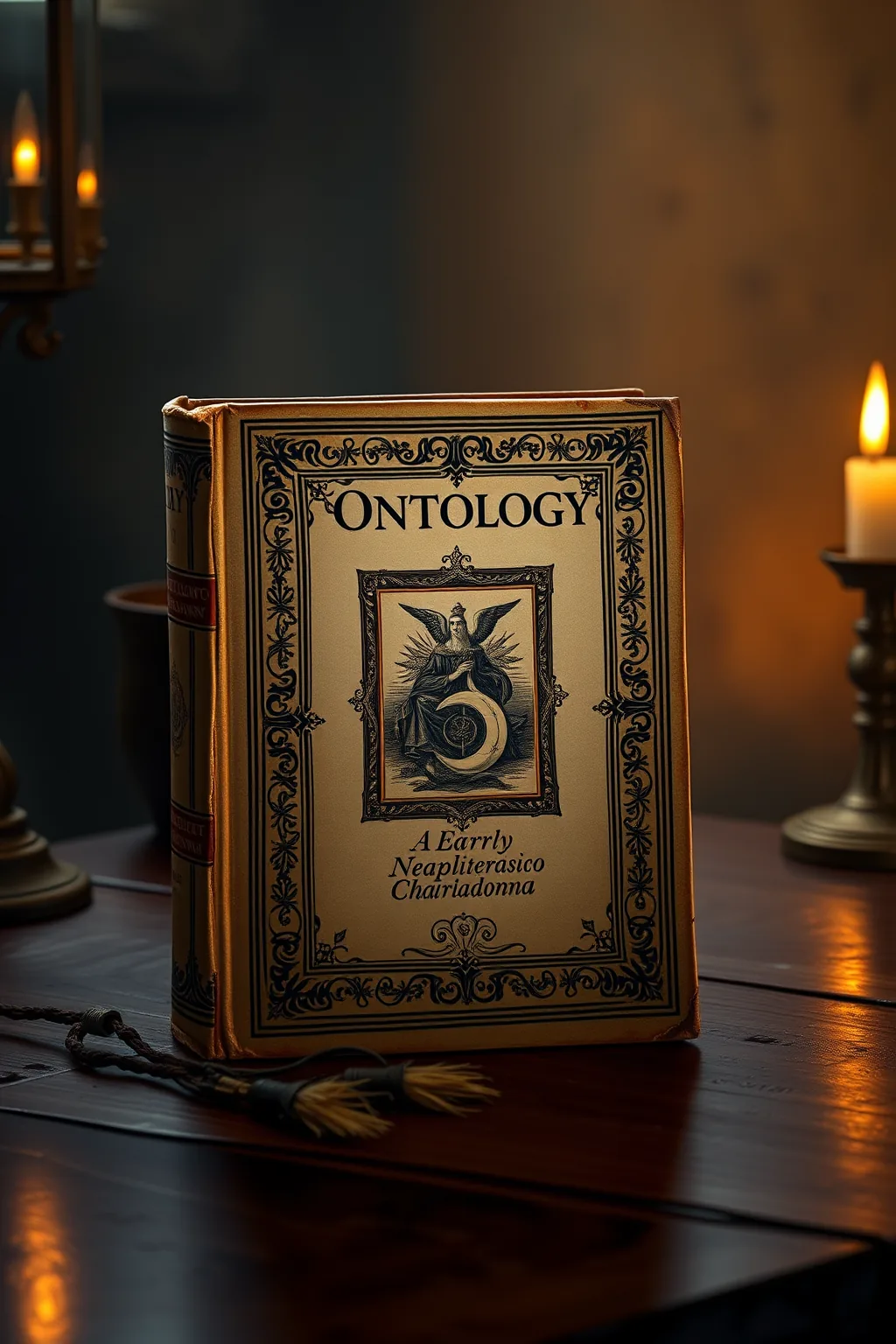
Ontology in Early Neoplatonism
 82
82

Ontology in Early Neoplatonism
Riccardo Chiaradonna's "Ontology in Early Neoplatonism" offers a dense, academic examination of how Plotinus, Porphyry, and Iamblichus integrated Aristotelian logic and metaphysics into their own systems. The strength lies in its granular textual analysis, revealing the sophisticated intellectual wrestling that occurred. For instance, the discussion on Porphyry's interpretation of Aristotle's Categories is particularly illuminating, showcasing a nuanced understanding of how abstract philosophical tools were employed. However, the book's highly specialized nature and dense prose can present a significant barrier to entry for those not already steeped in the intricacies of late antique philosophy. A more accessible introductory chapter for neophytes might have mitigated this. The exploration of Iamblichus's treatment of Aristotelian causality, while intellectually rewarding, assumes a familiarity with his complex cosmological framework. Ultimately, this is a vital scholarly resource for specialists, less so for a general esoteric audience seeking broad philosophical narratives.
📝 Description
82
Riccardo Chiaradonna's 2023 collection examines how early Neoplatonists engaged with Aristotle's logic and ontology.
This 2023 volume features ten essays that scrutinize the philosophical interactions between early Neoplatonists and Aristotle's logic and ontology. The essays concentrate on the 3rd and 4th centuries CE, a formative period for late antique thought. The work details how Plotinus, Porphyry, and Iamblichus contended with Aristotelian ideas, revealing a notable intellectual connection. This occurred as pagan philosophical traditions merged various streams of thought, partly in response to the rise of Christian intellectualism. The book, however, emphasizes internal philosophical arguments more than direct theological disputes.
Central to the analyses are Aristotle's concepts of substance (ousia), hylomorphism, causality, and logical argument structure. The book shows how these Aristotelian frameworks were adopted, changed, or critically assessed by the main figures of early Neoplatonism. It is intended for scholars of ancient philosophy, especially those focused on Neoplatonism, Aristotelianism, and the history of metaphysics and logic. Advanced students looking for detailed analysis of primary source interpretations within a specific historical context will also find it valuable.
This book situates its analysis within the intellectual milieu of late antiquity, a period where pagan philosophical systems like Neoplatonism sought to synthesize and preserve their traditions. While not overtly 'occult' in the modern sense, Neoplatonism represented a complex metaphysical and spiritual worldview that engaged deeply with earlier Greek philosophy. The study focuses on how these Neoplatonists adapted Aristotelian categories to articulate their own hierarchical cosmology and theories of the divine, demonstrating a sophisticated engagement with philosophical heritage during a time of significant cultural and religious transformation.
💡 Why Read This Book?
• Gain a precise understanding of how Plotinus, in the 3rd century CE, selectively incorporated Aristotelian concepts of substance into his own metaphysical hierarchy, offering a unique perspective on the development of abstract thought. • Appreciate the specific ways Porphyry, a key student of Plotinus, reinterpreted Aristotelian logic, particularly regarding predication and categories, providing concrete examples of philosophical adaptation. • Grasp the detailed analysis of Iamblichus's approach to Aristotelian causality, demonstrating how this 4th-century philosopher utilized logical frameworks to articulate his distinct theological and cosmological doctrines.
⭐ Reader Reviews
Honest opinions from readers who have explored this book.
❓ Frequently Asked Questions
What is the primary focus of "Ontology in Early Neoplatonism"?
The book centers on how Neoplatonists like Plotinus, Porphyry, and Iamblichus in the 3rd and 4th centuries CE engaged with and incorporated Aristotle's logic and ontology into their own philosophical systems.
Which specific Aristotelian concepts are discussed in relation to Neoplatonism?
The essays cover key Aristotelian ideas such as substance (ousia), hylomorphism (matter and form), causality, and the categories of being as interpreted by the early Neoplatonists.
What is the historical period covered by the book?
The book focuses specifically on the 3rd and 4th centuries CE, a crucial period for the development and systematization of Neoplatonic thought.
Who are the main Neoplatonic figures whose Aristotelian interpretations are examined?
The primary figures are Plotinus, his student Porphyry, and Iamblichus, all central to the development of early Neoplatonism.
What is the significance of this philosophical engagement for later thought?
The book argues that this Neoplatonist incorporation of Aristotelianism laid crucial groundwork for subsequent philosophical debates, particularly within medieval scholasticism and beyond.
Is this book suitable for beginners in philosophy?
While rich in detail, the book is aimed at scholars and advanced students due to its specialized focus and dense analytical style. Prior knowledge of Neoplatonism and Aristotle is beneficial.
🔮 Key Themes & Symbolism
Aristotelian Substance Reimagined
The work dissects how Plotinus, Porphyry, and Iamblichus grappled with Aristotle's concept of 'ousia' (substance). It highlights the Neoplatonists' project of integrating Aristotle's logical and metaphysical categories within their own hierarchical cosmology, often reinterpreting substance not as immanent matter-form composites, but as transcendent principles emanating from the One. This reveals a sophisticated dialogue where Aristotelian tools were employed to articulate distinctly Neoplatonic metaphysical structures, bridging the gap between immanent analysis and transcendent speculation for later medieval thinkers.
Hylomorphism and the Soul
Central essays explore the Neoplatonist reception of Aristotle's hylomorphism – the doctrine that substances are compounds of matter and form. The book details how figures like Porphyry considered the Aristotelian definition of the soul as the 'form of a natural body' and how they adapted or rejected this model. This engagement was critical for understanding the nature of the soul's embodiment and its potential for disembodiment, a core concern in Neoplatonic ascetic and metaphysical pursuits, influencing later discussions on soul-body dualism.
Logical Frameworks for Metaphysics
The collection emphasizes the foundational role of Aristotelian logic, particularly the Categories, in shaping Neoplatonic ontology. It demonstrates how Plotinus and his successors utilized Aristotelian analytical tools to dissect reality, identify fundamental principles, and establish the relationships between different levels of being. This systematic application of logic provided a rigorous structure for their often mystical doctrines, making complex metaphysical arguments accessible and paving the way for the formalized logic of medieval scholasticism.
Causality in the Neoplatonic Cosmos
The book examines the intricate ways Iamblichus, among others, engaged with Aristotle's theories of causality. It highlights how Neoplatonists adapted Aristotelian notions of formal, final, and efficient causes to explain the emanation of the cosmos from the divine principles. This involved not only adopting Aristotelian frameworks but also extending them to account for a radically different metaphysical structure, where divine causality operated through successive hypostases, a concept that profoundly shaped subsequent theological and philosophical discourse.
💬 Memorable Quotes
Direct passages from the work, attributed to the author.
“Plotinus incorporated Aristotle’s logic and ontology into their philosophies.”
— This statement underscores the core thesis: the early Neoplatonists were not merely reacting against Aristotle, but actively integrating his analytical tools into their own expansive metaphysical systems, creating a synthesis that redefined late antique philosophy.
“The process is of both intrinsic and historical interest.”
— This highlights the dual value of studying the Neoplatonist engagement with Aristotle: understanding the internal philosophical coherence of Neoplatonism itself, and recognizing its a central role in the transmission and transformation of philosophical ideas through the Middle Ages.
“Their discussions cover key issues in the history of logic and metaphysics.”
— This points to the specific philosophical terrain explored, emphasizing that the book looks at fundamental questions about being, predication, and causation as debated and reformulated by these important thinkers.
“The ten essays collected in this book focus on the readings of Aristotle by Plotinus, Porphyry, and Iamblichus.”
— This clearly delineates the scope, identifying the primary Neoplatonic figures and their specific engagement with Aristotelian texts as the central subject matter of the scholarly collection.
“This process paves the way for subsequent philosophical debates in the Middle Ages and beyond.”
— This emphasizes the long-term impact, suggesting that the specific way Neoplatonists synthesized Aristotelian thought created the intellectual conditions and provided the conceptual vocabulary for later philosophical traditions, particularly scholasticism.
🌙 Esoteric Significance
Tradition
This work engages with the lineage of Neoplatonism, a philosophical tradition often considered a central to Western esotericism. While rooted in Greek philosophy, Neoplatonism’s emphasis on mystical ascent, theurgy (in later forms), and the hierarchical structure of reality emanating from an ineffable One provides fertile ground for esoteric interpretation. Chiaradonna's study, by focusing on the philosophical underpinnings, illuminates how esoteric concepts of divine intermediaries and the soul's journey were articulated through rigorous logical and metaphysical frameworks inherited from Aristotle.
Symbolism
While the book itself is a scholarly analysis of philosophical concepts rather than a text rich in overt symbolism, the concepts discussed carry profound symbolic weight within esoteric traditions. 'Substance' (ousia) can symbolize the ultimate, unchanging reality sought in mystical experience. 'Hylomorphism,' the union of matter and form, speaks to the creation of the manifest world and the embodied soul. 'Causality' represents the divine creative process and the interconnectedness of all existence, from the transcendent One down to the material world, a key concern in cosmologies aimed at spiritual reintegration.
Modern Relevance
Contemporary esoteric thinkers and practitioners, particularly those within modern occult and philosophical revival movements, continue to draw upon the philosophical architecture established by the early Neoplatonists. Understanding how Plotinus, Porphyry, and Iamblichus synthesized Aristotelian logic with their metaphysics provides a crucial intellectual foundation for appreciating later figures like Marsilio Ficino, Pico della Mirandola, and even modern esotericists who engage with concepts of divine emanation, cosmic hierarchy, and the nature of consciousness. The rigorous philosophical engagement presented here offers a sophisticated lens through which to view these enduring esoteric themes.
👥 Who Should Read This Book
['• Advanced students of philosophy: Those pursuing graduate studies or independent research in ancient Greek philosophy, specifically Neoplatonism and Aristotelianism, will find this a valuable scholarly resource for detailed textual analysis.', '• Comparative religion scholars: Researchers examining the intellectual history of Western thought and the synthesis of pagan philosophy with emerging religious ideas will benefit from the historical context and philosophical rigor.', '• Practitioners of Western esotericism: Individuals interested in the philosophical underpinnings of traditions like Hermeticism and Kabbalism, and how concepts of reality and divinity were historically articulated, will gain insight into a foundational intellectual stream.']
📜 Historical Context
The 3rd and 4th centuries CE represented a dynamic period in late antique philosophy, characterized by intense intellectual cross-pollination and systematic development. Pagan philosophical schools, including Neoplatonism, were solidifying their doctrines and engaging deeply with the established traditions of Plato and Aristotle. This era saw Plotinus (c. 204/5 – 270 CE) laying the groundwork for Neoplatonism, followed by his influential student Porphyry (c. 234 – c. 305 CE), who meticulously edited Plotinus's works and contributed significantly to logic and metaphysics. Iamblichus (c. 245 – c. 325 CE) further elaborated the system, introducing more theurgic and mathematical elements. While Stoicism still held sway, and nascent Christian theological discourse was emerging, the primary intellectual battleground often involved refining and synthesizing Platonic and Aristotelian thought. The Neoplatonists’ engagement with Aristotle was not merely academic; it was a strategic appropriation, using his logical and ontological tools to articulate their own transcendent metaphysics, a process that profoundly influenced the subsequent development of medieval philosophy, both Christian and Islamic.
📔 Journal Prompts
Plotinus's integration of Aristotelian substance: how does it differ from Aristotle's own concept?
Porphyry's reinterpretation of Aristotelian categories: what are the implications for understanding predication?
Iamblichus's adaptation of Aristotelian causality: how does it serve his theological system?
The role of logic in Neoplatonic metaphysics: assess its necessity for constructing transcendent systems.
The historical trajectory from Aristotle to the Middle Ages: trace the influence of Neoplatonist syntheses.
🗂️ Glossary
Neoplatonism
A philosophical system originating in the 3rd century CE with Plotinus, building upon Plato's ideas but emphasizing a hierarchical structure of reality emanating from an ultimate, ineffable One.
Ontology
The branch of metaphysics concerned with the nature of being, existence, and reality; it asks what exists and what are its fundamental properties.
Aristotle's Categories
In Aristotle's logic, the fundamental classifications of types of predication or being, such as substance, quantity, quality, relation, time, and place.
Hylomorphism
The philosophical doctrine, most famously associated with Aristotle, that individual substances are compounds of matter (hyle) and form (morphe).
Ousia
A Greek term often translated as 'substance' or 'essence,' central to both Platonic and Aristotelian metaphysics, referring to the fundamental reality or being of a thing.
Plotinus
The 3rd-century CE philosopher considered the founder of Neoplatonism, whose major work, the Enneads, profoundly influenced subsequent Western philosophy and mysticism.
Iamblichus
A 4th-century CE Syrian Neoplatonist philosopher who developed Plotinus's system, incorporating more emphasis on theurgy, mathematics, and a complex hierarchy of divine beings.