Harmony
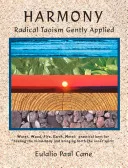
 73
73

Harmony
Eulalio Paul Cane's Harmony presents a refreshingly grounded take on Taoist principles, avoiding the usual mystical hyperbole. The author’s direct prose, particularly in sections discussing the "well-being" of mind and body, offers practical advice rooted in a specific interpretation of naturalness. A notable strength is its accessible integration of complex ideas, making them digestible for a general audience. However, the work sometimes leans heavily on personal reflection, which, while intended to foster connection, can occasionally feel less universally applicable. The exploration of "wu wei" (effortless action) is particularly well-articulated, serving as a concrete example of the book's effective synthesis of philosophy and practice. Harmony succeeds in its aim to illuminate a path toward personal equilibrium.
📝 Description
73
Eulalio Paul Cane's 2002 book Harmony connects Taoist philosophy to modern self-discovery.
Harmony, written by Eulalio Paul Cane and first published in 2002, offers a contemporary look at Taoist philosophy. The book structures a path toward personal wisdom and self-understanding, aiming to help readers grasp their own nature and position in the world. It is intended for people who want to blend old philosophical ideas with daily life. Those interested in personal growth, mental clarity, and finding a balanced state will find this work useful. Readers who prefer straightforward, personal direction toward inner peace are likely to value Cane's approach.
The book focuses on ideas such as 'well-being' as a state of 'naturalness,' known in Taoism as Ziran. It highlights the link between the body and mind. Cane guides readers to see and foster this natural condition through personal reflection and philosophical thought. The writing draws connections between old Taoist principles and the challenges of living today. This work provides a specific perspective on Taoist thought for those seeking to apply these concepts to their lives.
Harmony appeared in 2002 amidst a growing interest in Eastern thought within Western esoteric circles. This period saw many books attempting to reconcile ancient philosophical traditions with contemporary psychology and self-help ideas. Cane's work fits this trend by applying a specific Taoist framework to personal development. It addresses the practical application of concepts like Ziran, or naturalness, for contemporary individuals seeking inner balance and a clearer understanding of their place in the world.
💡 Why Read This Book?
• Gain practical methods for cultivating "naturalness" (Ziran), a core Taoist concept, as detailed in the book's approach to well-being. • Understand the modern implications of "wu wei" (effortless action) through the specific examples provided in the text. • Develop a more integrated mind-body connection by applying the personal insights and reflective exercises inspired by the 2002 publication.
⭐ Reader Reviews
Honest opinions from readers who have explored this book.
❓ Frequently Asked Questions
What is the central philosophy behind Eulalio Paul Cane's Harmony?
Harmony centers on a modern interpretation of Taoist philosophy, aiming to guide readers toward a state of "well-being" understood as "naturalness" (Ziran), fostering a harmonious connection between mind and body.
When was Harmony first published and what was the context?
Harmony was first published in 2002, aligning with a broader cultural interest in Eastern philosophies and their application to contemporary self-help and personal development.
Does Harmony offer practical exercises for self-discovery?
Yes, the book guides readers through personal insights and reflective practices intended to help them understand and cultivate their innate well-being and naturalness.
How does Harmony relate to traditional Taoist concepts?
It innovates upon traditional Taoist philosophy by presenting its core ideas, such as "wu wei", in a way that is directly applicable to the challenges and perspectives of modern life.
Is Harmony suitable for beginners in esoteric studies?
The book's direct approach and focus on personal well-being make it accessible for those new to esoteric concepts, particularly those interested in Eastern philosophies.
What is the primary goal of the 'naturalness' concept in Harmony?
The primary goal is to help readers regain or maintain their inherent state of equilibrium and well-being by aligning their actions and thoughts with their intrinsic nature.
🔮 Key Themes & Symbolism
Cultivating Naturalness (Ziran)
The concept of 'Ziran,' or naturalness, is central to Harmony. Cane explores how modern life often disconnects individuals from their innate state of being. The book provides frameworks for recognizing and restoring this natural balance, viewing well-being not as an acquired state but as a return to one's inherent, unadulterated essence. This theme emphasizes simplicity and authenticity as pathways to inner peace.
Mind-Body Equilibrium
Harmony underscores the inseparable link between mental and physical states. It argues that true well-being arises from harmonizing these two aspects. The work presents practical considerations for achieving this integration, suggesting that mental clarity and physical health are mutually reinforcing. Readers are encouraged to observe how their thoughts influence their physical sensations and vice versa.
Wu Wei in Contemporary Life
The Taoist principle of 'wu wei,' often translated as effortless action or non-action, is re-examined for its relevance today. Cane's interpretation moves beyond passivity, framing 'wu wei' as acting in accordance with natural flow, without force or resistance. This concept is presented as a strategy for navigating daily challenges with greater ease and effectiveness, reducing internal conflict and external friction.
Personal Wisdom and Self-Discovery
The book positions self-discovery as an ongoing process of uncovering one's inherent wisdom. Rather than seeking external validation, Harmony guides readers inward, encouraging introspection and personal insight. The journey is framed as one of rediscovery, where understanding one's true nature leads to greater self-awareness and a more fulfilling existence.
💬 Memorable Quotes
Direct passages from the work, attributed to the author.
“Well-being is not an achievement, but a return to naturalness.”
— This statement captures the book's core philosophy: that inherent balance is our natural state, and the pursuit of well-being is often about shedding artificial complexities to reconnect with it.
“The mind's clamor obscures the body's quiet wisdom.”
— This memorable phrase points to the imbalance often created by excessive mental activity, suggesting that true understanding and health require attending to the body's innate knowledge.
“Authenticity is the foundation upon which true harmony is built.”
— This sentiment underscores the book's focus on self-acceptance and genuine expression as essential components for achieving inner and outer balance.
“Modernity often mistakes activity for progress.”
— This interpretation suggests a critique of contemporary society's emphasis on constant doing, contrasting it with the Taoist ideal of action aligned with natural rhythms.
💡 Key Ideas
Editorial paraphrase of the work's core concepts — not direct quotes.
Effortless action requires understanding the current, not fighting it.
This paraphrased concept highlights the essence of 'wu wei' as presented in the book, emphasizing skillful alignment with circumstances rather than forceful opposition.
🌙 Esoteric Significance
Tradition
Harmony draws heavily from Taoism, a foundational tradition within Chinese esoteric philosophy. It adapts core Taoist principles like Ziran (naturalness) and Wu Wei (effortless action) for a contemporary, often Western, audience. While rooted in Taoist cosmology and ethics, the work reframes these concepts through a lens of personal psychology and self-discovery, making it accessible beyond traditional practitioners.
Symbolism
While not overtly symbolic in the Western esoteric sense, Harmony utilizes the concept of 'naturalness' (Ziran) as a guiding motif. This represents the primordial state of balance and harmony inherent in the universe and within individuals before societal conditioning. The 'flow' of water is another implicit symbol, representing the principle of Wu Wei – yielding, adapting, and moving with the path of least resistance.
Modern Relevance
Contemporary thinkers and practitioners in fields like positive psychology, mindfulness-based stress reduction, and even some branches of organizational leadership draw parallels to the principles espoused in Harmony. Its emphasis on reducing internal friction and acting in accordance with one's nature speaks to modern efforts to combat burnout and cultivate authentic living in a demanding world.
👥 Who Should Read This Book
• Individuals exploring Eastern philosophies for personal growth, seeking practical applications of Taoist principles like 'wu wei' and 'Ziran' beyond theoretical study. • Those experiencing stress or a sense of disconnect, looking for accessible guidance on achieving mind-body equilibrium and regaining a sense of natural well-being. • Readers interested in comparative philosophy who wish to understand how ancient wisdom can be interpreted and integrated into the context of 21st-century life.
📜 Historical Context
Eulalio Paul Cane's Harmony, published in 2002, arrived during a period where Western engagement with Eastern philosophies was burgeoning. The early 21st century saw a significant crossover between self-help movements and spiritual traditions, with many authors seeking to adapt ancient wisdom for modern audiences. This era followed the popularization of concepts like mindfulness and Zen by figures such as Thich Nhat Hanh and Shunryu Suzuki in previous decades. Harmony's approach to Taoism, particularly its focus on integrating 'Ziran' (naturalness) and 'wu wei' (effortless action) into daily life, positioned it within this intellectual current. It offered a distinct voice compared to more academic or strictly traditional interpretations of Taoism, aiming for direct personal application. The book did not face significant controversy but was part of a broader wave of literature seeking to reconcile ancient Eastern thought with Western psychological frameworks, standing alongside works exploring Buddhist psychology and vedantic principles.
📔 Journal Prompts
Reflect on the concept of 'naturalness' (Ziran) and how modern life may obscure it.
Consider a situation where applying 'wu wei' (effortless action) could alter the outcome.
Explore the connection between your mental state and physical sensations in daily activities.
Identify one aspect of your life where increased authenticity could foster harmony.
How does the idea of well-being as a 'return' rather than an 'achievement' shift your perspective?
🗂️ Glossary
Ziran
A core Taoist concept, translated as 'naturalness' or 'spontaneity.' It refers to the state of being in accordance with one's true nature, unburdened by artifice or external imposition. Harmony uses this to define innate well-being.
Wu Wei
Literally 'non-action' or 'effortless action.' In Taoism, it signifies acting in accordance with the natural flow of things, without force or excessive striving. It is about skillful, spontaneous action aligned with the situation.
Well-being
As presented in Harmony, this term signifies a state of holistic health encompassing both mental clarity and physical vitality, achieved through alignment with one's natural state.
Mind-Body Connection
The interconnectedness of mental and physical states. Harmony emphasizes that psychological harmony contributes to physical health, and vice versa, advocating for their integrated cultivation.
Self-Discovery
The process of gaining deeper understanding of one's own character, motivations, and potential. In Harmony, this is linked to uncovering innate wisdom and naturalness.
Esoteric
Relating to or accessible only by a relatively small number of people with specialized knowledge or interest. In this context, it refers to the deeper, often philosophical or spiritual, dimensions of traditions like Taoism.
Taoism
An ancient Chinese philosophy and religion emphasizing living in harmony with the Tao (the 'Way'), the fundamental principle that governs the natural world. Key concepts include Ziran and Wu Wei.